


Hello FDMB!
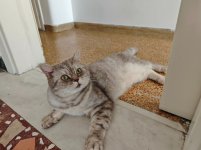
I've been lurking on the forum for the past few days and have decided to start my first post so that our lovely boy can get the best care possible.
My partner and I have a recently been to the vet due to our cat, Matroskin (Matty), experiencing diabetic symptoms.
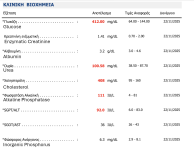
Today we got the call that the bloodwork confirmed he has diabetes, with a bloodwork reading of 412mg/dL. (the pet visit was HIGHLY stressful)
We are still waiting to collect some urine from him to see his ketone levels, and if there may be any other complications.
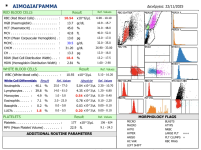
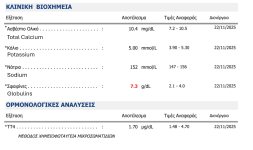
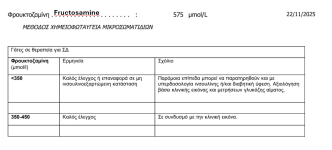
Aside from high glucose and cholesterol, his bloodwork is "good" according to the vet. I've attached the results for anyone who would find them useful (with English translations).
A little about Matty:
He is a neutered male British Shorthair, 11.5 years old.
Usually around 7kg but has recently dropped to 5.5kg.
He is an indoor cat, we live in a large apartment on the second floor.
We live in Athens, Greece - where it can be quite dirty and rough (many street cats) out on the streets, so we don't allow him to roam outside fearing the worst.
He's gentle and playful, loves the zoomies, loves a cuddle (only when it suits him) and otherwise keeps to his happy self.
Matty's diet:
Since a kitten he has been on Royal Canin breed specific food, Royal Canin British Shorthair.
We've tried wet food, home cooked meat and other kibble products over the years but he is a very picky eater.
Sometimes he'll happily munch on a grain-free, medium carb level kibble but eventually will be done with it. He'll then hang around the food cupboard until he gets his usual British Shorthair RC food.
Wet food has always been a struggle, he'll lick the liquid and leave the bits - we've tried countless brands and products.
He's never been interested in cooked meats or food that we may be eating. Matty can be quite peculiar, less interested in meats, more interested in rye breadsticks or something like sunflower seeds. We don't feed him these things, we've just noticed he's come for a sniff and a nibble when we've had them out for ourselves.
Whereas if you offer him a piece of cooked chicken or beef (no spices) he will look offended and speed walk away.
He loves his snacks (Churus and Vitacraft dry snacks and moist sticks), and admittedly I am guilty of over feeding him snacks, now realising that some of those snacks are also very high in carbs.
HOWEVER! It seems this diet pattern is starting to break. We assume it's something to do with the diabetes but can't be sure.
So lately (past month) he's been eating cooked chicken and salmon, I cook some up plain for him and he seems to enjoy small portions at a time.
Also, we tried wet food again this week and he is eating it! Bits and all! Not sure if this is permanent but I hope so.
He still has his appetite, eating 4-5 small meals a day.
Matty's water intake:
Matty has always enjoyed drinking water, it was never an issue for us to get him to drink.
We have multiple water bowls around the apartment that we change multiple times a day.
In the past few months he has been drinking A LOT more water, however, this coincided with us switching from tap to bottled water - so we thought he just really liked the bottled water.
We now know this was a symptom of the diabetes and an unfortunate coincidence.
Symptoms that prompted us to take him to the vet:
We notice that Matty was losing weight in his hind legs, specifically around the hip area. We first put this down to aging, but after some research we realised that combined with increase thirst and urination, it could be symptoms of diabetes. He then started getting fairly weak as well as a little lethargic (within the past week).
He lost some confidence when attempting to climb his cat towers, was slipping when hopping around and generally had a lack of energy.
Having said that, he can still hop up onto surfaces around 3-4 feet in height, albeit with a little bit extra of a calculation before doing so.
He hasn't had the zoomies in about a month and is looking fairly depressed, sleeping more than usual.
The current situation:
Tomorrow Matty will be returning to the vet so we can discuss a treatment plan. He will be having his first insulin shot there and then we will continue the treatment at home.
Both me and my partner work from home, so we're able to give him round the clock care.
We will be purchasing:
- A glucose meter
- Strips
- Insulin for shooting
I plan on also setting up a glucose curve spreadsheet as recommended by you lovely people in this forum.
But truth be told, we are OVERWHELMED! Not sure where to start and the amount of information can be difficult to sift through.
There's a few questions I do have, and would greatly appreciate any help, even if it's just pointing us in the right direction to other links on this forum.
Questions:
Glucose Meters:
Being in Greece, we are limited to what is offered over in the States. But we do have a variety of options.
Mainly we would like to know if the Abbott FreeStyle Libre 2 Glucose Meter is a suitable meter for us, given that Matty doesn't remove the sensor?
How reliable is this meter? I've read that they could be less accurate since they take intestinal glucose levels.
If not, would any glucose meter do? Is there anything we should be looking out for when purchasing these devices?
The thought of pricking our cats ears multiple times a day is terrifying, but obviously, we'll do whatever is necessary to give our cat the healthy lifestyle he deserves.
Diet:
We know, the RC British Shorthair food we've been feeding him his whole life was a bad choice. We feel terrible and are taking every action now to correct his diet.
Funnily enough.. The RC Diabetic kibble product has 23% carbohydrates.. What a joke!
We can see there are some kibble options available in the States with <10% carbs but these aren't readily available to us - and generally non-existent in Europe.
So the plan is to transition to wet food and home cooked food - but this will be a struggle because Matty LOVES dry food.
Does anyone have any recommendations on how we can achieve this?
Is it still safe to give him a small amount of kibble (high protein, 13% carbs, no sugars (the best we could find locally)) as we transition away from dry food?
Our plan for Matty is to enter remission.
Is it feasible to get him on a diet so that we can achieve this as well as gaining him some of his weight back and strengthening those hind legs?
I sincerely apologise for the huge post, and welcome any criticism and recommendations that will benefit our boy.
Thank You all so much!
I've been lurking on the forum for the past few days and have decided to start my first post so that our lovely boy can get the best care possible.
My partner and I have a recently been to the vet due to our cat, Matroskin (Matty), experiencing diabetic symptoms.
Today we got the call that the bloodwork confirmed he has diabetes, with a bloodwork reading of 412mg/dL. (the pet visit was HIGHLY stressful)
We are still waiting to collect some urine from him to see his ketone levels, and if there may be any other complications.
Aside from high glucose and cholesterol, his bloodwork is "good" according to the vet. I've attached the results for anyone who would find them useful (with English translations).
A little about Matty:
He is a neutered male British Shorthair, 11.5 years old.
Usually around 7kg but has recently dropped to 5.5kg.
He is an indoor cat, we live in a large apartment on the second floor.
We live in Athens, Greece - where it can be quite dirty and rough (many street cats) out on the streets, so we don't allow him to roam outside fearing the worst.
He's gentle and playful, loves the zoomies, loves a cuddle (only when it suits him) and otherwise keeps to his happy self.
Matty's diet:
Since a kitten he has been on Royal Canin breed specific food, Royal Canin British Shorthair.
We've tried wet food, home cooked meat and other kibble products over the years but he is a very picky eater.
Sometimes he'll happily munch on a grain-free, medium carb level kibble but eventually will be done with it. He'll then hang around the food cupboard until he gets his usual British Shorthair RC food.
Wet food has always been a struggle, he'll lick the liquid and leave the bits - we've tried countless brands and products.
He's never been interested in cooked meats or food that we may be eating. Matty can be quite peculiar, less interested in meats, more interested in rye breadsticks or something like sunflower seeds. We don't feed him these things, we've just noticed he's come for a sniff and a nibble when we've had them out for ourselves.
Whereas if you offer him a piece of cooked chicken or beef (no spices) he will look offended and speed walk away.
He loves his snacks (Churus and Vitacraft dry snacks and moist sticks), and admittedly I am guilty of over feeding him snacks, now realising that some of those snacks are also very high in carbs.
HOWEVER! It seems this diet pattern is starting to break. We assume it's something to do with the diabetes but can't be sure.
So lately (past month) he's been eating cooked chicken and salmon, I cook some up plain for him and he seems to enjoy small portions at a time.
Also, we tried wet food again this week and he is eating it! Bits and all! Not sure if this is permanent but I hope so.
He still has his appetite, eating 4-5 small meals a day.
Matty's water intake:
Matty has always enjoyed drinking water, it was never an issue for us to get him to drink.
We have multiple water bowls around the apartment that we change multiple times a day.
In the past few months he has been drinking A LOT more water, however, this coincided with us switching from tap to bottled water - so we thought he just really liked the bottled water.
We now know this was a symptom of the diabetes and an unfortunate coincidence.
Symptoms that prompted us to take him to the vet:
We notice that Matty was losing weight in his hind legs, specifically around the hip area. We first put this down to aging, but after some research we realised that combined with increase thirst and urination, it could be symptoms of diabetes. He then started getting fairly weak as well as a little lethargic (within the past week).
He lost some confidence when attempting to climb his cat towers, was slipping when hopping around and generally had a lack of energy.
Having said that, he can still hop up onto surfaces around 3-4 feet in height, albeit with a little bit extra of a calculation before doing so.
He hasn't had the zoomies in about a month and is looking fairly depressed, sleeping more than usual.
The current situation:
Tomorrow Matty will be returning to the vet so we can discuss a treatment plan. He will be having his first insulin shot there and then we will continue the treatment at home.
Both me and my partner work from home, so we're able to give him round the clock care.
We will be purchasing:
- A glucose meter
- Strips
- Insulin for shooting
I plan on also setting up a glucose curve spreadsheet as recommended by you lovely people in this forum.
But truth be told, we are OVERWHELMED! Not sure where to start and the amount of information can be difficult to sift through.
There's a few questions I do have, and would greatly appreciate any help, even if it's just pointing us in the right direction to other links on this forum.
Questions:
Glucose Meters:
Being in Greece, we are limited to what is offered over in the States. But we do have a variety of options.
Mainly we would like to know if the Abbott FreeStyle Libre 2 Glucose Meter is a suitable meter for us, given that Matty doesn't remove the sensor?
How reliable is this meter? I've read that they could be less accurate since they take intestinal glucose levels.
If not, would any glucose meter do? Is there anything we should be looking out for when purchasing these devices?
The thought of pricking our cats ears multiple times a day is terrifying, but obviously, we'll do whatever is necessary to give our cat the healthy lifestyle he deserves.
Diet:
We know, the RC British Shorthair food we've been feeding him his whole life was a bad choice. We feel terrible and are taking every action now to correct his diet.
Funnily enough.. The RC Diabetic kibble product has 23% carbohydrates.. What a joke!
We can see there are some kibble options available in the States with <10% carbs but these aren't readily available to us - and generally non-existent in Europe.
So the plan is to transition to wet food and home cooked food - but this will be a struggle because Matty LOVES dry food.
Does anyone have any recommendations on how we can achieve this?
Is it still safe to give him a small amount of kibble (high protein, 13% carbs, no sugars (the best we could find locally)) as we transition away from dry food?
Our plan for Matty is to enter remission.
Is it feasible to get him on a diet so that we can achieve this as well as gaining him some of his weight back and strengthening those hind legs?
I sincerely apologise for the huge post, and welcome any criticism and recommendations that will benefit our boy.
Thank You all so much!


 ohh it takes a week for the blood capillaries to swell! That’s a relief to read, when I had come across this info in other posts I imagined it takes months. Hopefully very soon then I’ll be able to switch to a smaller needle size. I’ll go down size by size, week by week. We’ve only been testing morning and night before the insulin shots these few days while struggling to get a hang of it, didn’t want to stress Matty out while learning how to make the experience calm. Vet said it’s okay to observe the water intake in the meantime as a measure of whether the glucose is ‘high’ or low. We do want to start measuring more, and as the insulin is kicking in more and more I think it’s the wiser thing to do. Thank you for reading the vents, and for the kind support, means the world to us
 devastated and feeling like fools, we just didn’t know whether to shoot the 2U or the 1U given the stress levels. So to err on the safe side of things we went with 1U. Another big mistake. Overnight his thirst was drastic, and we were depressed and feeling like failures to say the least. Come next morning, he’s 352mg/dl. We give the two units. Come night, 303. We give the two units. Come next morning 334 with the +5 measurement (which he stressed a lot at) 294. Next night 337mg/dl, morning after 336, night: 345. We finally reach to this morning at 312mg/dl. It feels like since the skipped dose and 66 dip we’ve been high without him dipping into normal glucose levels, and we’re really worried. Today we’ve acquired the Lantus with the syringe form so we’re preparing for dose adjustment when the time will come. Has the time come? Are we giving too much given the two 109mg/dl and 66mg/dl readings and skipping dose necessities? Are we maybe giving too little? We have no clue. Our vet is not familiar with Lantus and not saying much about dosing adjustments. We’re really worried as Matty looks tired today. He also developed a slight sway when sitting, which according to the AI chat bots is most likely a neurological development from prolonged high glucose. Sure enough the sway is worst when we know his readings are high. Any help or advice would be highly appreciated. P.S should we be posting for Lantus advice in the Lantus section of the forum?

 Always feel free to reach out


 as we had instantly fed him (boi was starving) post 99 BG test we had to wait 2 hrs to take another reading. When we did, it revealed 249. We didn’t shoot. Woke up an hour earlier today to bring the procedure up a little since we skipped dose. Had a whopping reading of 391. Highest yet we’ve had at home. We gave 2U. Big sigh. Perhaps as you suggested it’s time to bring it down to 1.75 and observe what happens. Waiting for the (new) vet to open to try and make an appointment asap in hopes of getting some more solid guidance. Would be interesting to see if his protocols match the protocols on here and if not if he’d be open for discussion.