

BJM
Member Since 2010
Sorry, Larry, but no; it shows error variance.
You'll seldom find a Pearson correlation of 1.0, which is perfect.
You need to acquire test data to get the distribution for both the home meter and the lab meter.
To review it visually, you plot on a graph to see where the pairs of tests display; this is not a statistical test, however.
You have to determine if each measurement tool shows the glucose as normally distributed or not, then determine if the Pearson correlation coefficient is the correct statistic to use (parametric) or some other statistic (non-parametric).
In measurement science, there is always error in measurement. For well standardized tools, such as distance, this is usually quite small. We already know that home human glucometers, testing human blood, are allowed to read anywhere within 20% of what a lab would get. Lab equipment has much narrower allowances than that.
BTW - I have over 25 years of experience in statistics and measurement science.
You'll seldom find a Pearson correlation of 1.0, which is perfect.
You need to acquire test data to get the distribution for both the home meter and the lab meter.
To review it visually, you plot on a graph to see where the pairs of tests display; this is not a statistical test, however.
You have to determine if each measurement tool shows the glucose as normally distributed or not, then determine if the Pearson correlation coefficient is the correct statistic to use (parametric) or some other statistic (non-parametric).
In measurement science, there is always error in measurement. For well standardized tools, such as distance, this is usually quite small. We already know that home human glucometers, testing human blood, are allowed to read anywhere within 20% of what a lab would get. Lab equipment has much narrower allowances than that.
BTW - I have over 25 years of experience in statistics and measurement science.

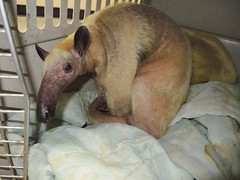 Grumpy Aurora
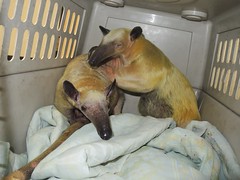 Pua clinging to Aurora
 Two peas in a pod


