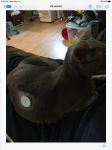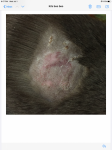


Freestyle libre meter

Status
Not open for further replies.
Hi all,
Thank you very much your kindness and good advice!!! I felt I need keep studying and deep consideration more. I haven't known the reader is not necessary if my mobile phone has apps.(am I correct? I will study later.:bookworm:)
Also my vet has worried that maybe my cat is smaller than US cats, so she said pictures oh this web site are not the same scale as my boy, so we must be careful.

I have already ordered the sensors (I haven't received yet...) but if I felt it is not going to work I will use it for myself on diet ...
I visit the amazon link pasted on here (thank you!) and I saw "Vet Wraps" seems nice, then checked amazon-JP. They have it! Once I will try it. My one of hobby is handmade, very good at it (hahaha) so I think I can make similar kittykollor! (I will post the photo when I made!):p

Usually I have used for checking his blood sugger by Freestyle Lite (for human) every morning and night. He is really shy and be frightened cat, trusts me ONLY. No one can check his blood sugger, even though my husband who lives together more than 10 years.:facepalm: When I need to be out I ask a cat sitter does injection with brind (without checking blood sugger), that makes me very very very much worry.:(
Before he became diabetie my hobby was traveling but in 3 years I haven't gone anywhere. So, using Freestyle Libre is I thought nice idea for me and him, also I would like to find his extreme spike.
 
I picked up two sensors yesterday and finished making a kollar. Also purchased some VetBond and and a #50 clipper blade. Have appointment next Friday to attached the sensor at the vet.
Kollar.jpg
 
My vet and I inserted a Libre sensor on Badger this morning. The insertion went OK. The "filament" is larger diameter than I expected. I say it is at least a large diameter as a 27 gauge needle. I will measure it when the sensor gets removed. The click when you insert the sensor is really loud but Bader did not really care. We applied tissue glue to the adhesive ring before insertion but got a little too much on/too close to the outer edge and it oozed out and contacted the insertion device which resulted in difficulty removing the insertion device since it was partially glued to the sensor. Finally go the insertion device remove. When I activated the sensor using my iPhone with the Libre app got message in the app said that sensore will be ready at 11:30, which is 1 hour after insertion. The sensor does read higher than my meter. The PMPS was 70 (a little low, usually in the 90's) and the sensor read 103.
 
Recently had a Libre sensor on my cat Bob, yes Bob. He has been on Prozinc for 5 years, with lots of ups and downs. Many day long glucose checks at the vets but poor results, always high. Now after having the sensor on for two weeks we see some really low readings 50 and below. Explaining his seizures ( low glycemia). Now his insulin dose is down to 1 unit and he is doing great. No seizures! The vet applied the sensor and removed it. Bob pretty much ignored it. Yes he had a shaved spot but that is already filling in. We will have another one applied in a couple months and make sure all is well.
 
Hello all,
Let me report my expreience of yesterday.(sorry my poor English.:p)
------
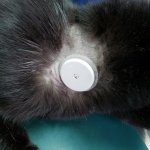
Yesterday I and Takara(black cat) went to animal hospital and he was shaved on his neck right side.
He seemed OK. Maybe he is very patience cat or maybe just he had been freezed by his scary vet. (Our vet is pretty and kind though!)
-----
my first failure was,,, I hadn't known my mobile has "NFC lock". it needed for reading sensor value, but at the time it was locked.
The hospital was very much clouded so once we back to home without checking the sensor was started.
------
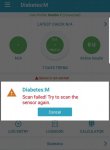
after turned on the NFC, it seems my mobile got started to read but apps shows "scan failed!" and "This sensor is not started"
Then I took him to animal hospital again.
------
checking with the vet, the sensor had been nicely sticked, needle also seems OK. but never came the numerical value to my mobile.
Screenshot_20190322-165335_Gallery.jpg Screenshot_20190322-165413_Gallery.jpg
I think it is Initial failure but I imported the sensor from out of Japan so nothing to do. Poor my boy he shaved on his beautiful black fur for nothing...
20190321_102412.jpg
------
anyway I and vet decided kept the sensor on his neck for getting used to the second try.
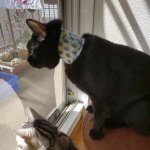
He seems, says to me "Mom? this new choker is thicker than old one." but OK to stay at home.
20190321_114120.jpg
------
when I went to my bed, I think I heard a lite sound, like something a plastic dropped off from somewhere then falled asleep.
This morning, it was the sensor. very sad.:(
------
should I try again?:banghead:
 
I am buying the sensor and reader for a diabetic feral cat. The Kollar goes over the sensor, right? Can you read the sensor through the kollar? My vet will be putting the sensor on, he has never done this before.
 
First experience with Libre sensor in Jan. 2019 went awesome, got all the info the vet needed and no complications. Sensor never read as easy as it looks on paper sometimes it took 5 or 6 scans to get the data but it worked. Went in two days ago for a new sensor due to unexplained weight and hair loss. Got up this morning and the sensor was on the floor, happy I didn't step on it. No it wasn't covered or wrapped because he never made any effort to remove it previously. Really need the data so I will probably head back to the pharmacy for a new one today. Waiting to hear back from the vet.
 
The Kollar goes over the sensor, right? Can you read the sensor through the kollar?
Correct. Yesterday I attached a sensor to my foster Wiggles. I attached it a little too far towards the back so a cloth color would not cover it I uses a little harness instead. Yes, some time one has to scan the sensor several times to get it to read.
 
First experience with Libre sensor in Jan. 2019 went awesome, got all the info the vet needed and no complications. Sensor never read as easy as it looks on paper sometimes it took 5 or 6 scans to get the data but it worked. Went in two days ago for a new sensor due to unexplained weight and hair loss. Got up this morning and the sensor was on the floor, happy I didn't step on it. No it wasn't covered or wrapped because he never made any effort to remove it previously. Really need the data so I will probably head back to the pharmacy for a new one today. Waiting to hear back from the vet.
Thank you. I saw a video on U-Tube of a vet claiming that a skin adhesive called Skin Tac was very helpful for keeping the sensor on a cat. I ordered some from Amazon. Also he said to put the sensor between the should blades and it would stay on longer. I don't think the Kitty Kollar that some board members are using would cover the sensor if placed in that spot.
Correct. Yesterday I attached a sensor to my foster Wiggles. I attached it a little too far towards the back so a cloth color would not cover it I uses a little harness instead. Yes, some time one has to scan the sensor several times to get it to read.
Thank you - where did you get the harness?
 
My cat is on his third freestyle libre sensor and I want to put in an enthusiastic plug for this device (I'm not associated with it or its manufacturer). It has provided far more detail to inform treatment than I could ever have gotten from ear pricks or curves. It records every 15 minutes and stores the data for eight hours. You must scan the sensor before the eight hour period ends. You upload the data to their web site and it generates all sorts of records and graphs. Your vet, assuming they are paying for this service, can view the results. It has made life much easier for me and my cat. I do see the cautions about double-checking highs and lows. And, it is temporary. They last for only 10 days, although there may be a more recent version that lasts slightly longer. Each of mine lasted eight days. But I observed lows that I did not know were taking place. This was very important to know to determine best dosage and avoid hypos. It seems to require a pretty skilled vet to place it securely, and not too many are using it yet. Mine came from our state vet school.
My cat just got the sensor. I notice that the graph does not go above 350 but my cats bg does. Were do I find information on uploading to the website so I can see those graphs? Thank you!
 
How are you reading the sensor?
I read my using my iPhone. That Libre app uploads the data to the Libre website.
I do not know if there is an app for Android phones.
If you use the dedicated Libre reader you have Install the Libre software on a computer and then connect the reader to a computer via USB
https://pat.libreview.com/
 
Hi do you attach the sensor yourself or does your Vet do that?
For my Badger, my vet helped me attached the sensor. The sensor comes with some adhesive already attached. I added some vet tissue glue since others have used it and said only using the attached adhesive was not sufficient for cats. For my foster, Wiggles, someone else and I attached the sensor, again with some tissue glue. One has to shave the area where the sensor is to be attached.
 
For my Badger, my vet helped me attached the sensor. The sensor comes with some adhesive already attached. I added some vet tissue glue since others have used it and said only using the attached adhesive was not sufficient for cats. For my foster, Wiggles, someone else and I attached the sensor, again with some tissue glue. One has to shave the area where the sensor is to be attached.

Thanks! Our vet has not done it before and recommended we see an internal medicine specialists for it. Just wanted to get an idea of whether it is difficult to attach if doing on one's own. Sounds like it is a two person job.
 
My vet has placed the three sensors (so far) on Duffy. The first sensor lasted 8 days, the second lasted 7, and the third only lasted part of one day (today). The readings are very helpful, but today was quite discouraging. My poor vet has several diabetic cats trying this sensor. Duffy's neck is rather small and the sensor was applied to the right side of his spine, on the shaved skin. He rubs the scent glands on both sides of his neck on the wall etc and apparently dislodges the sensor. Duffy survived Diabetic Ketoacidosis (sorry I don't remember the acronym) about a month ago, which occurred while using Prozinc. The vet used the graphs provided by the sensor to make the decision to switch to Bagalar. His numbers are still extremely high, but the extreme spike isn't there now. His low points regularly occur in the middle of the night, which would not be picked up by the usual glucose metering. I'm very new, but will try to upload pictures to illustrate.
Hello, I am new here and an getting one of these tomorrow for my cat. How do you give the insulin with the collar/disc on?? I will not be able to test within the 8 hours, so am still confused if all the data will be lost of how to download. Thanks
 
Hello, I am new here and an getting one of these tomorrow for my cat. How do you give the insulin with the collar/disc on?? I will not be able to test within the 8 hours, so am still confused if all the data will be lost of how to download. Thanks
this picture should help:
injsitesforcats1-jpg.44196
 
Thanks. I have seen that picture. I cannot usually get him on the scruff since he scruches up so I do tend to go more towards the side of checs, but try to get as high up as possible since lower hurts him. So sort of between the scruff and side of chest. It is hard with him because he has a very rough and tough hide/skin from being outside so long. My vet even told me it was hard to give him needles, so sadly I do hurt him every now and then. Plus he keep turning towards me. The only way I devised to be able to get him is put him in a box (the kind that paper reams come in) with the front part cut off so he cannot take off.
 
Did you have the three freestyle sensor’s in succession or was there a gap between them ( if there was a gap how long was it?)

Our cat has one now and there are about 6 days left to go.
Thanks


My cat is on his third freestyle libre sensor and I want to put in an enthusiastic plug for this device (I'm not associated with it or its manufacturer). It has provided far more detail to inform treatment than I could ever have gotten from ear pricks or curves. It records every 15 minutes and stores the data for eight hours. You must scan the sensor before the eight hour period ends. You upload the data to their web site and it generates all sorts of records and graphs. Your vet, assuming they are paying for this service, can view the results. It has made life much easier for me and my cat. I do see the cautions about double-checking highs and lows. And, it is temporary. They last for only 10 days, although there may be a more recent version that lasts slightly longer. Each of mine lasted eight days. But I observed lows that I did not know were taking place. This was very important to know to determine best dosage and avoid hypos. It seems to require a pretty skilled vet to place it securely, and not too many are using it yet. Mine came from our state vet school.
 
Did you have the three freestyle sensor’s in succession or was there a gap between them ( if there was a gap how long was it?)

Our cat has one now and there are about 6 days left to go.
Thanks
It does take a VERY skilled vet in putting them on!!! They do need to be bandaged in my opinion. The supposed pros vets at the local university said it just gets put on the shoulder. (my cat had it off in one day AND there is still a gluey substance on him). A lot of vides I see the put it up closer to the neck and bandage it so it stays on. Wishing everyone using these the best of luck. It was a godsend for when it lasted being able to see h e was crashing after the vet told me to give him insulin after the visit, even though I think he was just stressed which was why number were high. They do make a 14 day version. When I called Libre with a question about what the glue was they used, they flat out refused to answer, stating it was not meant for animal use. Again I hope everyone using it has better luck than me! One amazing thing has come about though. My semi-feral has actually been letting me do the ear prick and curve. Going on no insulin since his crash. Basically his numbers have been in the 90s!!! Remission???? Will keep testing daily for a while, then maybe every other day, etc. They say the majority of cats that go into remission do not stay that way:(
 
It does take a VERY skilled vet in putting them on!!! They do need to be bandaged in my opinion. The supposed pros vets at the local university said it just gets put on the shoulder. (my cat had it off in one day AND there is still a gluey
It does take a VERY skilled vet in putting them on!!! They do need to be bandaged in my opinion. The supposed pros vets at the local university said it just gets put on the shoulder. (my cat had it off in one day AND there is still a gluey substance on him). A lot of vides I see the put it up closer to the neck and bandage it so it stays on. Wishing everyone using these the best of luck. It was a godsend for when it lasted being able to see h e was crashing after the vet told me to give him insulin after the visit, even though I think he was just stressed which was why number were high. They do make a 14 day version. When I called Libre with a question about what the glue was they used, they flat out refused to answer, stating it was not meant for animal use. Again I hope everyone using it has better luck than me! One amazing thing has come about though. My semi-feral has actually been letting me do the ear prick and curve. Going on no insulin since his crash. Basically his numbers have been in the 90s!!! Remission???? Will keep testing daily for a while, then maybe every other day, etc. They say the majority of cats that go into remission do not stay that way:(

on him). A lot of vides I see the put it up closer to the neck and bandage it so it stays on. Wishing everyone using these the best of luck. It was a godsend for when it lasted being able to see h e was crashing after the vet told me to give him insulin after the visit, even though I think he was just stressed which was why number were high. They do make a 14 day version. When I called Libre with a question about what the glue was they used, they flat out refused to answer, stating it was not meant for animal use. Again I hope everyone using it has better luck than me! One amazing thing has come about though. My semi-feral has actually been letting me do the ear prick and curve. Going on no insulin since his crash. Basically his numbers have been in the 90s!!! Remission???? Will keep testing daily for a while, then maybe every other day, etc. They say the majority of cats that go into remission do not stay that way:(
 
It does take a VERY skilled vet in putting them on!!! They do need to be bandaged in my opinion.
I agree that a covering is required. The one on my Badger was covered and lasted the whole 14 days. My vet helped attach the sensor. I attached Wiggles first sensor but I attached it too far back so nether a neck wrap or harness would cover it and it only lasted 9 days. Yesterday I attached another sensor on Wiggles and this one gets fully covered by the neck wrap. I also used a couple of drops of tissue to help hold on the sensor. One has to be careful to not use too much glue. I one does (I did) the glue gets on the outer part and glues the sensor to the sensor applicator.
 
That’s amazing that your semi-feral lets you do that. You must have really good technique!
We are wondering if we’ll need to wait any certain amount of time after Bibi’s current (and first) 14-day Freestyle Libre stops recording in 6 days, before we can have the vet place a new one. Has anyone used these one-right-after- the-other? It’s on the back of her neck, no collar or anything just the glue the vet used. No problems with it coming loose. If anything I’m more worried we might have trouble getting it off.
 
If I do not plan on using the libre system on a regular basis to monitor everyday glucose, can I use the 10 day? I simply would lie to use it a few times to see what is actually going on throughout 24 hour period. Is there a site for dummies? ..NOT for placing the sensor but with all of the app links? I read that Ii can now use my android with NFC...but app links and uploading to pc? And reading terms like Libre vs Libre 14..I assume they mean 10 day vs 14 day? I understand timing differences but all what goes in to making the work? Can't I just place it properly. wait for activation and read it many times during day? Now, I see a notice that app link makes it so much easier..easier at what? I guess my real question is can i still use 10 day sensors in uSA? Thanks
 
If I do not plan on using the libre system on a regular basis to monitor everyday glucose, can I use the 10 day? I simply would lie to use it a few times to see what is actually going on throughout 24 hour period. Is there a site for dummies? ..NOT for placing the sensor but with all of the app links? I read that Ii can now use my android with NFC...but app links and uploading to pc? And reading terms like Libre vs Libre 14..I assume they mean 10 day vs 14 day? I understand timing differences but all what goes in to making the work? Can't I just place it properly. wait for activation and read it many times during day? Now, I see a notice that app link makes it so much easier..easier at what? I guess my real question is can i still use 10 day sensors in uSA? Thanks
 
I could no longer use the 10 day. Cant remember details. 10 day reader would not read 14 day sensor or something.
 
Googling tens to indicate that the 1-day sensor is phased out and replaced with the 14-day sensor. If you use a dedicated reader, the 10 day sensor reader will not read a 14 day sensor and I do not know if a 14 day sensor reader will read a 10 day sensor. An the iPhone (7 and later) w/app and will read both 10 day and 14 day sensors. I do not know what sensors work with what Android (w/app). One disadvantage of the 10 day sensor is that you have to wait 12 hours before you can take a reading. With the 14 day sensor you only have to wait for 1 hour
 
Hi I found this thread. I managed my cat with diabetes for 10 years and I am thankful for the support here. I am working on a passion project to design a product that will help pet owners manage their pet's diabetes through their mobile device. I remember having to find post its and scratch pads everywhere when I was tracking Nikita's numbers, time, meals etc. at home. I never knew of the libre meter when I had her, I wish I did. As the early part of the design process I would like to find some pet owners that would like to help me understand the current challenges they are facing. Please inbox me if you can help. :)

*It would just involve a 10 minute conversation by phone which would be best or I can create a questionnaire to be emailed if that is more comfortable for you.
 
My vet has placed the three sensors (so far) on Duffy. The first sensor lasted 8 days, the second lasted 7, and the third only lasted part of one day (today). The readings are very helpful, but today was quite discouraging. My poor vet has several diabetic cats trying this sensor. Duffy's neck is rather small and the sensor was applied to the right side of his spine, on the shaved skin. He rubs the scent glands on both sides of his neck on the wall etc and apparently dislodges the sensor. Duffy survived Diabetic Ketoacidosis (sorry I don't remember the acronym) about a month ago, which occurred while using Prozinc. The vet used the graphs provided by the sensor to make the decision to switch to Bagalar. His numbers are still extremely high, but the extreme spike isn't there now. His low points regularly occur in the middle of the night, which would not be picked up by the usual glucose metering. I'm very new, but will try to upload pictures to illustrate.
 
I come I come at this from a different angle as my husband had an insulin pumps which had to be inserted pretty much the same way as the sensor does on the cat so I'm familiar with it. The needle goes into the cat a little filaments stays in the cat when you pull off the inserter the needle goes away. My cat wears his sensor closer to his shoulder than his neck he's a big boy he goes out it stayed on for 2 weeks. As a matter of fact I can't figure out how to get it off! It's wonderful it's really really helped!
 
My vet has placed the three sensors (so far) on Duffy. The first sensor lasted 8 days, the second lasted 7, and the third only lasted part of one day (today). The readings are very helpful, but today was quite discouraging. My poor vet has several diabetic cats trying this sensor. Duffy's neck is rather small and the sensor was applied to the right side of his spine, on the shaved skin. He rubs the scent glands on both sides of his neck on the wall etc and apparently dislodges the sensor. Duffy survived Diabetic Ketoacidosis (sorry I don't remember the acronym) about a month ago, which occurred while using Prozinc. The vet used the graphs provided by the sensor to make the decision to switch to Bagalar. His numbers are still extremely high, but the extreme spike isn't there now. His low points regularly occur in the middle of the night, which would not be picked up by the usual glucose metering. I'm very new, but will try to upload pictures to illustrate.
I sympathasize, as I now have TWO diabetics (14-y-old litter mates) both wearing sensors! I am off tomorrow to have one replaced after about the same length of time as yours. My vet does use vetbond to affix it (you need adhesive remover to remove the sensor) and my cat wears a Kitty Kollar (designed to cover feeding tube) over it, but it looks like yours is also wearing something over top of the sensor. Sometimes I think it is just the luck of the draw as to whether it stays on or not.
 
To get creative, if there are certain spots he rubs on the wall, can you block him away from them?
 
If I do not plan on using the libre system on a regular basis to monitor everyday glucose, can I use the 10 day? I simply would lie to use it a few times to see what is actually going on throughout 24 hour period. Is there a site for dummies? ..NOT for placing the sensor but with all of the app links? I read that Ii can now use my android with NFC...but app links and uploading to pc? And reading terms like Libre vs Libre 14..I assume they mean 10 day vs 14 day? I understand timing differences but all what goes in to making the work? Can't I just place it properly. wait for activation and read it many times during day? Now, I see a notice that app link makes it so much easier..easier at what? I guess my real question is can i still use 10 day sensors in uSA? Thanks


Hi. I'm a T2D and have used the Libre on myself for a couple years. A couple thoughts:

1. If you have 10-day sensors around, do not throw them out! The 10-day sensors are still good, in fact, they are much better than the 14-day sensors that replaced them. Because the information they transmit is not encrypted, they can be read with Android or iOS apps, including Glimp and xDrip+, and they will read for 14 days (unlike Abbott's official reader). There is an Android app called Glimp S that will start the sensor.

2. The 14-day sensors are highly encrypted and AFAIK can only be read with Abbott's official 14-day reader or its very basic smartphone app.

3. BG blood tests are necessary, especially over the first few days, to check the Libre's readings. The apps that read the 10-day smartphone apps can be calibrated with BG spot readings, so the Libre curve will adjust to match them.

4. Using a CGM after spot BG readings is like going from a handful of still photos to a motion picture - an enormous difference in showing patterns, even if the absolute values are not especially reliable.
 
that is interesting information. Thank you. What I learned in my most recent use of the sensor is that sensor readings and actual BG readings (taken with an Alpha Trak) may vary considerably. My vet was aware of this, having seen it happen with other cats. For my own cat, the readings sometimes differed by 50 points and sometimes by 100 or more. The difference was less at lower readings and greater at higher readings. My vet said that, for some cats, one or the other reading may be consistently lower or consistently higher--individual cats differ. the message is: BEWARE.
 
One more tip I recently picked up: you can use either the phone app or the handheld reader. If you want to use BOTH, I believe you must FIRST scan the sensor with the handheld reader (i.e., before you start using the phone app). Readings from the two, even if you upload them to the vendor's site, will NEVER be together--they will be two separate sets of readings. Thus, using one or the other, and not both, is preferable IMHO. The phone app uploads data any time your phone is connected to the internet (something the vendor does not document, and which took me HOURS to figure out), while the reader has to be connected to a computer and you have to log into the vendor's site. The one advantage of the handheld reader is that anyone in the household can use it; or, if your pet goes back to the hospital with the sensor still on, the reader can go with it. Otherwise you either have to leave your phone at the hospital (LOL) or have ANOTHER sensor placed.
 
What I learned in my most recent use of the sensor is that sensor readings and actual BG readings (taken with an Alpha Trak) may vary considerably.
Remember, the Libre is a human meter, meant to interpret the components of human blood, not cat blood. There are algorithms in the meter, that interpret what the test strip "reads" from the blood drop.

The Alphatrak has slightly different algorithms built into it. Different ones, for different species since that pet meter can be set for dog, cat, rat, guinea pig, etc.

Human meters will read lower at lower numbers than a pet meter like the Alphatrak. The wider difference in BG readings between the pet and human meters is well known here on this message board. All our documentation is written for human meters, since the board has been around decades longer than pet specific meters have been around.

Too high is too high, when you are talking about blood glucose levels.

For my own cat, the readings sometimes differed by 50 points and sometimes by 100 or more. The difference was less at lower readings and greater at higher readings.

The Libre gets it's glucose data from the interstitial fluid. That data can lag behind the blood glucose, by some set amount of time, I don't know what it is. Something like 5-15 minutes difference would seem like a possibility, but not at all sure on that. Would not surprise me if it's more time than 15 minutes.
 
Remember, the Libre is a human meter, meant to interpret the components of human blood, not cat blood. There are algorithms in the meter, that interpret what the test strip "reads" from the blood drop.

The Alphatrak has slightly different algorithms built into it. Different ones, for different species since that pet meter can be set for dog, cat, rat, guinea pig, etc.

Human meters will read lower at lower numbers than a pet meter like the Alphatrak. The wider difference in BG readings between the pet and human meters is well known here on this message board. All our documentation is written for human meters, since the board has been around decades longer than pet specific meters have been around.
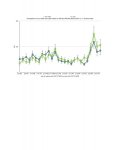
This is data I graphed of Badger's sensor rBG and that from the Libre. Not that which one read high switch.
BG comparison Libre JPG.jpg
 

Attachments

  • BG comparison Libre JPG.jpg
    BG comparison Libre JPG.jpg
    18.4 KB · Views: 5,382
Remember, the Libre is a human meter, meant to interpret the components of human blood, not cat blood. There are algorithms in the meter, that interpret what the test strip "reads" from the blood drop.

The Alphatrak has slightly different algorithms built into it. Different ones, for different species since that pet meter can be set for dog, cat, rat, guinea pig, etc.

Human meters will read lower at lower numbers than a pet meter like the Alphatrak. The wider difference in BG readings between the pet and human meters is well known here on this message board. All our documentation is written for human meters, since the board has been around decades longer than pet specific meters have been around.

Too high is too high, when you are talking about blood glucose levels.


The Libre gets it's glucose data from the interstitial fluid. That data can lag behind the blood glucose, by some set amount of time, I don't know what it is. Something like 5-15 minutes difference would seem like a possibility, but not at all sure on that. Would not surprise me if it's more time than 15 minutes.[/QUOTE

If you are looking at a stable BG level (pre-prandial), the time lag is not a big deal. But for dosing of insulin and treatment of hypos, the Libre's data far from ideal.
 
It seems a lot of the posts are old.
Update on purchasing and install:

My kitty Abby has bad kidneys and now mild diabetes. Vet has her on the Libre14 meter.
1. (2) Libre14 meters (sensors) are $60+tax at Costco. Ask for the Costco Member discount for items not covered by insurance. Reader is $65, and includes a blood glucose tester if you also buy the Libre Optium test strips. A newer NFC enabled phone (that can do checkstand payments) works as a Reader and lets you send the logs to the Vet IF they have a LibreView account number; due to 'Human' medical privacy laws, emails do not work. A screen shot might.
2. The vet put the sensor on the middle of my 8-9 lb. tabby cat's partially shaved back on the right side, about an inch (to the edge) from the spine. Neck is NOT recommended on cats (too 'bendy'). Little dots of dermal adhesive were put near the perimeter of the sensor prior to install. 3. Protection: Vet put a little vest on my cat to cover it, but she didnt like the vest and walked funny in it. Sensor does not seem to bother her at all, but she is a mellow cat. I bought some circular 'tough bandaids' (with waterproof glue, none in the center for easier changes) made for Libre sensors on Amazon to cover it since I am afraid she'll knock it off when squishing under my bed.
4. Coconut oil or other similar oil can be used to remove the adhesive and sensor, but clean off the oil well with some dish soap & let dry before wiping with alcohol & installing another sensor.
 
It seems a lot of the posts are old.
Update on purchasing and install:

My kitty Abby has bad kidneys and now mild diabetes. Vet has her on the Libre14 meter.
1. (2) Libre14 meters (sensors) are $60+tax at Costco. Ask for the Costco Member discount for items not covered by insurance. Reader is $65, and includes a blood glucose tester if you also buy the Libre Optium test strips. A newer NFC enabled phone (that can do checkstand payments) works as a Reader and lets you send the logs to the Vet IF they have a LibreView account number; due to 'Human' medical privacy laws, emails do not work. A screen shot might.
2. The vet put the sensor on the middle of my 8-9 lb. tabby cat's partially shaved back on the right side, about an inch (to the edge) from the spine. Neck is NOT recommended on cats (too 'bendy'). Little dots of dermal adhesive were put near the perimeter of the sensor prior to install. 3. Protection: Vet put a little vest on my cat to cover it, but she didnt like the vest and walked funny in it. Sensor does not seem to bother her at all, but she is a mellow cat. I bought some circular 'tough bandaids' (with waterproof glue, none in the center for easier changes) made for Libre sensors on Amazon to cover it since I am afraid she'll knock it off when squishing under my bed.
4. Coconut oil or other similar oil can be used to remove the adhesive and sensor, but clean off the oil well with some dish soap & let dry before wiping with alcohol & installing another sensor.
 
Very informative, thanks. One of the most important things I learned is that values may differ from the alpha trak, and the degree of difference may vary by individual cat. I found 30-60 points diff with my two diabetics. It may be higher or lower depending on individual cat, and the diff for me was greater at higher values. so, of course be sure to compare to alpha trak.
 
Where did you put the sensor? I've seen from lots of sites that it's a fairly long needle and I wonder about placement on lean cats.
Hi My cat had the Libre put on at 8 lbs she was still wearing it when she was down to 6 lbs .
The sensor is supposed to last 14 days but rarely does I got about 8 days out of 1 sensor . Please keep in mind this is not suppose to be permanent it is up to the Vet how long to keep it on ALSO they use surgical glue to put the sensor on so let me show you the results of the removal too . I Never put it on myself I Always had the Vet do this .
 

Attachments

  • B3F631D0-0DE1-4884-A5ED-24BB3337A802.png
    B3F631D0-0DE1-4884-A5ED-24BB3337A802.png
    336 KB · Views: 6
  • CC3FF75D-5F60-443E-ACBF-DDED5D01AF52.png
    CC3FF75D-5F60-443E-ACBF-DDED5D01AF52.png
    333.9 KB · Views: 6
I never put one on myself either although I think I might have been able to. I DID remove quite a few, using adhesive remover carefully applied, repeatedly, to the edges of the sensor. I observed this done at the vet and learned there. I used a q-tip, repeatedly moistened with adhesive remover, and gently dabbed around the edges of the sensor. It sometimes took an hour to remove one.
 
Status
Not open for further replies.
Back
Top