

Purrberry
Member Since 2020
Hello. I’ve been endlessly reading and trying to learn all I can here ever since my beloved cat Fred was officially diagnosed with DM on 12/11/20. It came as a total shock, as we had been very closely monitoring his urine since late October of 2020, for the reasons explained below. In essence, we thought it was his kidneys.
Fred is, in my humble opinion, is the most handsome fella. He is that cat…the cat that everyone loves, the dog-cat, that cat that makes people who hate cats say, “I don’t like cats, but Fred is awesome”. He and his “sister” Sadie, had a very tough start in life. They were adopted by me and my then-husband in 2011 when he was approximately 3 years old. Previous to that, he and Sadie had spent a year first in a shelter and then fostered in a kindly veterinary practice due to their extreme distress in the cage/shelter. Previous to THAT, he and Sadie…and about 40 other cats…were rescued from a hoarding situation. Given all that they went through, it's amazing what wonderful, if at times shy and skittish, cats they are.
Fred has always been a big boy. He truly is “big boned”, and we think he may be a Chartreux. His highest weight was about 20lbs, just in the last six months, but he is down to about 17.3 pounds, now. There’s so much more to Fred, but I’m going to try and succinctly outline the last few months as to what has led us here.
Since 2011, Fred and Sadie have been fed a homemade, raw chicken based diet for their two main meals, with dry food in between for snacks. (since changed to 1/2 Dr. Elsey’s, half Young again. Previously Instinct Ultimate Protein Duck). So essentially, he’s now on a 2-3% carb diet.
Historically, we know via ultrasound, starting from 2011, that his kidneys were not in the best shape. A subsequent ultrasound in 2017 showed his left kidney had become more calcified, so we have been watching them like a hawk ever since.
October 27, 2020: Brought to vet as I noticed new snoring (only in one specific position, but enough for me to notice), that his meow occasionally sounded different, and that he was absolutely hounding me for food all night. He always has done this to a degree, but this was like a frenzy. But only at night. I was convinced of hyperthyroidism, but all checked out fine. His blood glucose WAS elevated, but because he is literally the worst traveler you can possibly imagine, it was chalked up to stress hyperglycemia. At the vet, in any lab they’ve ever done on him, his BG is always elevated.
November 27th: Fred brought in because I noticed a teeny bump on his face, and was concerned. It was determined to be a mast cell tumor. :-( He also had protein in his urine, but not glucose. So we had “the talk” about possibly changing his diet to lower protein. (something I’ve always been against, as due to his long-standing high protein diet, some protein in the urine is expected) Surgery to remove the mast cell was scheduled for December 14th. (and I was a wreck about it worrying for the cytology and his kidneys)
December 10th: Fred rushed into the vet as his urine output had somewhat abruptly increased, and he seemed to be straining. Ultrasound and x-rays were performed, and he was not blocked. Everything looked well on the ultrasound. But this is when the glucose was finally found in his urine, and his BG was like 603. Like everyone else on this forum, I was horribly distressed to hear of the diabetes diagnosis, as well as knowing we’d now have to put off the mast cell removal. Blood pressure was perfect.
December 14th: Insulin started Lantus at 2 u, 2x a day, taking into account his weight and very high BG.
December 21st: Freestyle Libre implanted I used that time to also try and gain skill at home BG testing. Though it was buggy, it was a great asset. However, when it was removed, half his skin came with it. :-( As such, I’m reluctant to do it again.
January 2nd: bloodwork and fPLI. fPLI 3.4 (high end of normal)
January 15th: repeat fPLI 3.5 (high end of normal)
Since then…well, I think his spreadsheet speaks for itself. I am so utterly dismayed that his numbers will not come down. After all my reading and research, much of it on this forum, I’m convinced he has acromegaly. This is also because of the very first symptom I mentioned above….the new snoring.
I’m placing his SS out here in case anyone has other input, or if there’s anything I’m missing. It kills me to see Fred not feeling well. He was always my big, strong boy. He’s eating pretty well, though he is not the typical starving diabetic cat. That was only in the autumn. He urinates on average about 5-6 times a day. He has some weakness in his legs, and I am supplementing with Zobaline.
Please note: I am doing the absolute BEST I CAN with the home testing. I pretty much am able to always get an AMPS, but the evening test is much more difficult for various reasons. I generally try and test as close as I can to his injection, and given where his numbers are, I know he’s only going to go higher as the evening wears on. He’s injected at 9:30/9:30.
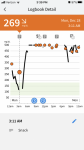
Finally, I’m attaching some photos of graphs caught on the Libre. It shows the abrupt plunges of BG during the early overnight hours. I know that was causing him to bounce super hard. And that was only on 2 units at night! But now it seems he’s just high and flat. Every time I test him, I hold my breath, praying for a good number, and every time, I’m so disappointed. :-(
I should finally say that my veterinary practice is very highly respected, and AAHA accredited. The main vet I see is lovely and knowledgeable. She’s very happy I’m doing home testing, but I’m not sure how far she’ll be able to take me should Fred’s treatment get tricky.
Thanks for reading this super long ramble!
**there are two pages in the spreadsheet. One for the meters, one for the Libre.**


Fred is, in my humble opinion, is the most handsome fella. He is that cat…the cat that everyone loves, the dog-cat, that cat that makes people who hate cats say, “I don’t like cats, but Fred is awesome”. He and his “sister” Sadie, had a very tough start in life. They were adopted by me and my then-husband in 2011 when he was approximately 3 years old. Previous to that, he and Sadie had spent a year first in a shelter and then fostered in a kindly veterinary practice due to their extreme distress in the cage/shelter. Previous to THAT, he and Sadie…and about 40 other cats…were rescued from a hoarding situation. Given all that they went through, it's amazing what wonderful, if at times shy and skittish, cats they are.
Fred has always been a big boy. He truly is “big boned”, and we think he may be a Chartreux. His highest weight was about 20lbs, just in the last six months, but he is down to about 17.3 pounds, now. There’s so much more to Fred, but I’m going to try and succinctly outline the last few months as to what has led us here.
Since 2011, Fred and Sadie have been fed a homemade, raw chicken based diet for their two main meals, with dry food in between for snacks. (since changed to 1/2 Dr. Elsey’s, half Young again. Previously Instinct Ultimate Protein Duck). So essentially, he’s now on a 2-3% carb diet.
Historically, we know via ultrasound, starting from 2011, that his kidneys were not in the best shape. A subsequent ultrasound in 2017 showed his left kidney had become more calcified, so we have been watching them like a hawk ever since.
October 27, 2020: Brought to vet as I noticed new snoring (only in one specific position, but enough for me to notice), that his meow occasionally sounded different, and that he was absolutely hounding me for food all night. He always has done this to a degree, but this was like a frenzy. But only at night. I was convinced of hyperthyroidism, but all checked out fine. His blood glucose WAS elevated, but because he is literally the worst traveler you can possibly imagine, it was chalked up to stress hyperglycemia. At the vet, in any lab they’ve ever done on him, his BG is always elevated.
November 27th: Fred brought in because I noticed a teeny bump on his face, and was concerned. It was determined to be a mast cell tumor. :-( He also had protein in his urine, but not glucose. So we had “the talk” about possibly changing his diet to lower protein. (something I’ve always been against, as due to his long-standing high protein diet, some protein in the urine is expected) Surgery to remove the mast cell was scheduled for December 14th. (and I was a wreck about it worrying for the cytology and his kidneys)
December 10th: Fred rushed into the vet as his urine output had somewhat abruptly increased, and he seemed to be straining. Ultrasound and x-rays were performed, and he was not blocked. Everything looked well on the ultrasound. But this is when the glucose was finally found in his urine, and his BG was like 603. Like everyone else on this forum, I was horribly distressed to hear of the diabetes diagnosis, as well as knowing we’d now have to put off the mast cell removal. Blood pressure was perfect.
December 14th: Insulin started Lantus at 2 u, 2x a day, taking into account his weight and very high BG.
December 21st: Freestyle Libre implanted I used that time to also try and gain skill at home BG testing. Though it was buggy, it was a great asset. However, when it was removed, half his skin came with it. :-( As such, I’m reluctant to do it again.
January 2nd: bloodwork and fPLI. fPLI 3.4 (high end of normal)
January 15th: repeat fPLI 3.5 (high end of normal)
Since then…well, I think his spreadsheet speaks for itself. I am so utterly dismayed that his numbers will not come down. After all my reading and research, much of it on this forum, I’m convinced he has acromegaly. This is also because of the very first symptom I mentioned above….the new snoring.
I’m placing his SS out here in case anyone has other input, or if there’s anything I’m missing. It kills me to see Fred not feeling well. He was always my big, strong boy. He’s eating pretty well, though he is not the typical starving diabetic cat. That was only in the autumn. He urinates on average about 5-6 times a day. He has some weakness in his legs, and I am supplementing with Zobaline.
Please note: I am doing the absolute BEST I CAN with the home testing. I pretty much am able to always get an AMPS, but the evening test is much more difficult for various reasons. I generally try and test as close as I can to his injection, and given where his numbers are, I know he’s only going to go higher as the evening wears on. He’s injected at 9:30/9:30.
Finally, I’m attaching some photos of graphs caught on the Libre. It shows the abrupt plunges of BG during the early overnight hours. I know that was causing him to bounce super hard. And that was only on 2 units at night! But now it seems he’s just high and flat. Every time I test him, I hold my breath, praying for a good number, and every time, I’m so disappointed. :-(
I should finally say that my veterinary practice is very highly respected, and AAHA accredited. The main vet I see is lovely and knowledgeable. She’s very happy I’m doing home testing, but I’m not sure how far she’ll be able to take me should Fred’s treatment get tricky.
Thanks for reading this super long ramble!
**there are two pages in the spreadsheet. One for the meters, one for the Libre.**






 Even caught her licking dirty plates in the sink. The one symptom she did have that I found out about later was a teary eye, due to her tear duct being blocked with soft tissue growth. And that teary eye showed up 6 months before her diabetes diagnosis. Only the last half year of her life did she have a slightly airy sound when breathing. She never snored. My non diabetic cat did. All of which is to say, I've also seen a study that says only about 1/3 of acrocats have clinical symptoms on diagnosis. More common sign is a pot belly, and weight gain in spite of being unregulated. Proteinuria is also a common acro sign, has Fred had a urine protein/creatinine ration test done? Or his blood pressure checked?


