First post and intro. Terribly distressed!

Status
Not open for further replies.

Purrberry

Member Since 2020
Hello. I’ve been endlessly reading and trying to learn all I can here ever since my beloved cat Fred was officially diagnosed with DM on 12/11/20. It came as a total shock, as we had been very closely monitoring his urine since late October of 2020, for the reasons explained below. In essence, we thought it was his kidneys.

Fred is, in my humble opinion, is the most handsome fella. He is that cat…the cat that everyone loves, the dog-cat, that cat that makes people who hate cats say, “I don’t like cats, but Fred is awesome”. He and his “sister” Sadie, had a very tough start in life. They were adopted by me and my then-husband in 2011 when he was approximately 3 years old. Previous to that, he and Sadie had spent a year first in a shelter and then fostered in a kindly veterinary practice due to their extreme distress in the cage/shelter. Previous to THAT, he and Sadie…and about 40 other cats…were rescued from a hoarding situation. Given all that they went through, it's amazing what wonderful, if at times shy and skittish, cats they are.

Fred has always been a big boy. He truly is “big boned”, and we think he may be a Chartreux. His highest weight was about 20lbs, just in the last six months, but he is down to about 17.3 pounds, now. There’s so much more to Fred, but I’m going to try and succinctly outline the last few months as to what has led us here.

Since 2011, Fred and Sadie have been fed a homemade, raw chicken based diet for their two main meals, with dry food in between for snacks. (since changed to 1/2 Dr. Elsey’s, half Young again. Previously Instinct Ultimate Protein Duck). So essentially, he’s now on a 2-3% carb diet.

Historically, we know via ultrasound, starting from 2011, that his kidneys were not in the best shape. A subsequent ultrasound in 2017 showed his left kidney had become more calcified, so we have been watching them like a hawk ever since.

October 27, 2020: Brought to vet as I noticed new snoring (only in one specific position, but enough for me to notice), that his meow occasionally sounded different, and that he was absolutely hounding me for food all night. He always has done this to a degree, but this was like a frenzy. But only at night. I was convinced of hyperthyroidism, but all checked out fine. His blood glucose WAS elevated, but because he is literally the worst traveler you can possibly imagine, it was chalked up to stress hyperglycemia. At the vet, in any lab they’ve ever done on him, his BG is always elevated.

November 27th: Fred brought in because I noticed a teeny bump on his face, and was concerned. It was determined to be a mast cell tumor. :-( He also had protein in his urine, but not glucose. So we had “the talk” about possibly changing his diet to lower protein. (something I’ve always been against, as due to his long-standing high protein diet, some protein in the urine is expected) Surgery to remove the mast cell was scheduled for December 14th. (and I was a wreck about it worrying for the cytology and his kidneys)

December 10th: Fred rushed into the vet as his urine output had somewhat abruptly increased, and he seemed to be straining. Ultrasound and x-rays were performed, and he was not blocked. Everything looked well on the ultrasound. But this is when the glucose was finally found in his urine, and his BG was like 603. Like everyone else on this forum, I was horribly distressed to hear of the diabetes diagnosis, as well as knowing we’d now have to put off the mast cell removal. Blood pressure was perfect.

December 14th: Insulin started Lantus at 2 u, 2x a day, taking into account his weight and very high BG.

December 21st: Freestyle Libre implanted I used that time to also try and gain skill at home BG testing. Though it was buggy, it was a great asset. However, when it was removed, half his skin came with it. :-( As such, I’m reluctant to do it again.

January 2nd: bloodwork and fPLI. fPLI 3.4 (high end of normal)

January 15th: repeat fPLI 3.5 (high end of normal)

Since then…well, I think his spreadsheet speaks for itself. I am so utterly dismayed that his numbers will not come down. After all my reading and research, much of it on this forum, I’m convinced he has acromegaly. This is also because of the very first symptom I mentioned above….the new snoring.

I’m placing his SS out here in case anyone has other input, or if there’s anything I’m missing. It kills me to see Fred not feeling well. He was always my big, strong boy. He’s eating pretty well, though he is not the typical starving diabetic cat. That was only in the autumn. He urinates on average about 5-6 times a day. He has some weakness in his legs, and I am supplementing with Zobaline.

Please note: I am doing the absolute BEST I CAN with the home testing. I pretty much am able to always get an AMPS, but the evening test is much more difficult for various reasons. I generally try and test as close as I can to his injection, and given where his numbers are, I know he’s only going to go higher as the evening wears on. He’s injected at 9:30/9:30.

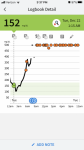
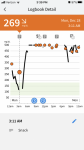
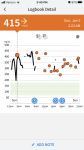
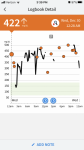
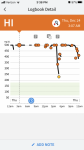
Finally, I’m attaching some photos of graphs caught on the Libre. It shows the abrupt plunges of BG during the early overnight hours. I know that was causing him to bounce super hard. And that was only on 2 units at night! But now it seems he’s just high and flat. Every time I test him, I hold my breath, praying for a good number, and every time, I’m so disappointed. :-(

I should finally say that my veterinary practice is very highly respected, and AAHA accredited. The main vet I see is lovely and knowledgeable. She’s very happy I’m doing home testing, but I’m not sure how far she’ll be able to take me should Fred’s treatment get tricky.

Thanks for reading this super long ramble!

**there are two pages in the spreadsheet. One for the meters, one for the Libre.**
2021-01-29_15-37-55_000.png
2021-01-29_15-39-24_000.png
2021-01-29_15-40-26_000.png
2021-01-29_15-39-48_000.png
2021-01-29_15-38-48_000.png
2021-01-29_15-37-55_000.png
2021-01-29_15-39-24_000.png
2021-01-29_15-40-26_000.png
2021-01-29_15-39-48_000.png
2021-01-29_15-38-48_000.png
 

Attachments

  • 2021-01-29_15-37-55_000.png
    2021-01-29_15-37-55_000.png
    126.3 KB · Views: 311
  • 2021-01-29_15-39-24_000.png
    2021-01-29_15-39-24_000.png
    121.7 KB · Views: 316
  • 2021-01-29_15-40-26_000.png
    2021-01-29_15-40-26_000.png
    127.8 KB · Views: 307
  • 2021-01-29_15-39-48_000.png
    2021-01-29_15-39-48_000.png
    127.4 KB · Views: 295
  • 2021-01-29_15-38-48_000.png
    2021-01-29_15-38-48_000.png
    122.6 KB · Views: 310
Sorry...I did want to also mention that I do test for ketones continually. I know they are a danger at these sustained high numbers.
 
Hi Kathleen,
Just wanted to say don't lose hope. Keep going, because he might surprise you out of the blue. That's what Buddy did. I also started reading all about Acromegaly and thinking that he had that because most cats seemed to need much less insulin than Buddy. (He's a big boy as well) But something clicked at the end of last year when he was getting 4.5 units and the numbers suddenly started getting better. Buddy's also a snorer by the way. But he's been since I've taken him in which was less than a year ago.
 
It may be a bit early to think about an acre diagnosis. We generally don't recommend testing until you're at over a 5.0u dose. It's also good to test for both acromegaly and insulin resistance (insulin auto-antibodies) at the same time.

I'm tagging our resident expert on high dose cats - @Wendy&Neko

One thing that does stand out is that you should be dosing the same amount at AM and PM shot times. Because of the insulin depot, if you are changing the dose at each shot, you will likely get wonky numbers.
 
Hi Kathleen and Fred and welcome to you both.
Thank you for setting up the spreadsheet and the signature. They are both super helpful to us.
You have had a lot going on but obviously love your kitties and are a great Mom!:cat:

You are feeding a low carb diet and testing the BGs which is good.

One thing I do notice is you are not giving the same dose of Lantus both night and morning. Lantus likes consistency so it is better to stick to the same dose and not swap around. Lantus is a depot insulin and the depot needs to settle. Keep testing during both the cycles as we need to know how low the dose takes Fred. Lantus is dosed on the nadir, not the preshot.
For the moment I would give 4 units for both cycles and let the depot settle for 3 days then we can see what is happening.
I see Sienna has tagged Wendy which I was also going to do also.
Bron
 
Thank you so much for your replies.
@Bron and Sheba (GA), I see you are from Sydney! My husband is from Perth.

I also should have explained the different AM/PM dosing. My vet felt it might be safer to do it that way given that he had those sharp drops overnight. I did question her about it, knowing about the depot, but she said it would be fine. I have since been trying to work him up to 4 and 4, but didn't want to make the PM jump too abruptly from 2.5 to 4. Though I know he was in normal numbers, (the best I've ever recorded) it freaked me out to see those big check mark shaped graphs! I guess that's another reason I'm worried about a type of resistance...the more I up the dose, the more his numbers climb. :(
 
Welcome to you, Kathleen.

I've nothing to add to the good suggestions you've already received above. I just wanted to say that Fred is a really beautiful cat! Lovely picture of him in your avatar.

I'm glad you've posted. There are some highly experienced Lantus users here who will be able to provide you with sound feedback and practical help.

:bighug:


Mogs
.
 
Hello and welcome to you and handsome Fred.

I'm going to talk about the acromegaly part, as the others have talked about dose. My girl had both acromegaly and IAA (insulin auto antibodies), both are secondary endocrine conditions that can, but not necessarily, mean that a cat needs a higher dose. There was a study at the Royal Veterinary Clinic in England that showed 1 in 4 diabetic cats there have acromegaly. And some of those cats had doses as low as 1 unit. We say to get testing done if you get to 6 units, because the chances are if you get that high, there is another condition present. We have seen cats up to that size dose turn it around. There have actually been cases of non diabetic cats with acromegaly, diabetes is thought to be a later stage condition.

Having said that, if a caregiver thinks their cat might have other conditions, there is no harm in testing for it, other than to your wallet. I will say that other studies out of RVC have said that you should wait at least 73 days after starting insulin before getting the test done, as otherwise there is a good percent of the tests that will provide false negatives. We just had one case of it happen here.

My Neko was on a low carb diet when she was diagnosed with acromegaly. She had no physical symptoms (that I knew of) at the time, except for a savage hunger. All bread products had to be put under lock and key. The kitchen counter was her domain. :rolleyes: Even caught her licking dirty plates in the sink. The one symptom she did have that I found out about later was a teary eye, due to her tear duct being blocked with soft tissue growth. And that teary eye showed up 6 months before her diabetes diagnosis. Only the last half year of her life did she have a slightly airy sound when breathing. She never snored. My non diabetic cat did. All of which is to say, I've also seen a study that says only about 1/3 of acrocats have clinical symptoms on diagnosis. More common sign is a pot belly, and weight gain in spite of being unregulated. Proteinuria is also a common acro sign, has Fred had a urine protein/creatinine ration test done? Or his blood pressure checked?

Just a word or two about dosing, the check marked "curve" is very common in newly diagnosed cats. And we find that consistent dosing makes it a lot easier to figure out how to change doses going forward. And finally, nothing wrong with using the Freestyle instead of the AT meter if you want to save money. Our dosing methods are all based on human meters, as that's pretty much all that was out there when I started. The pet meters are a fairly recent thing.
 
Welcome to FDMB. I love your story of Fred and Sadie...how wonderful of you all to adopt them together.

I noticed you are feeding him Dr. Elsey’s as a snack. I also know they advertise this as Low carb (LC) but I want to share with you Henry’s Spreadsheet (click on dark blue for link). His caregiver was also feeding Dr. Elsey’s as a snack and decided he wanted to follow the tight regulation protocol. TR as a prerequisite of kitty only eating canned or raw, and no dry food. Henry’s dose got up to 4.75u twice a day. Robert stopped the Dr. Elsey’s on Dec 3......look what happened.

Was it totally getting rid of the dry, did we break through glucose toxicity, and/or was the 4.75u just the dose that finally worked? We don’t know but I suspect getting rid of the dry helped. Also, with a kidney potentially not working at full capacity, Fred should probably stick with raw and or canned food and no dry so he can stay hydrated.

You are a dedicated mom and we are glad to have you and Fred here!
 
Thank you all again for your replies and encouragement.

@Wendy&Neko Thank you for all the info on acromegaly, especially the bit about not testing until 73 days. That is excellent to know. I have a vet appointment scheduled on 2/10 and I was toying with having her test for IAA and Acro at that time. However, we wouldn't quite be 73 days since he started insulin. Also, thanks for reassuring me that those "check mark" curves are fairly normal. Why is that, do you think? Could it be something like their bodies say, "Ooooh, look! Insulin! Yay!", and then the body kind of fights back? That's what it's feeling like with Fred...that his body is fighting the insulin. He is definitely perkier when he's in the higher numbers; I believe he's used to it there. I have a very strong suspicion he has been diabetic since the autumn, but he just wasn't crossing the renal threshold quite yet, so I didn't see any outward signs. I did have his blood pressure checked when he was diagnosed in December, and it was perfect. I do keep a watch on that for his kidneys as well. He did have a urine protein/creatinine ratio test done, and it came back just over normal. So he did have true proteinuria, and that is one sign I had not heard of for acro. According to the IRIS kidney staging chart, Fred is currently just squeaking in Stage I. But we basically know the higher levels will come, so we treat him as if he were in a higher stage.

Re: the Dr. Elsey's...I know any dry food isn't the best. Ideally, there would be none. But as Fred and Sadie were hoarded, they have never quite lost that mentality of "I'm never going to get food again". Fred has always been a master of middle of the night torture unless he has a snack. I've used timers for years, but I think it's attention as well as hunger. Additionally, Fred HATES any commercial wet cat food and is even fussy with his raw. What I'm doing now is a half and half mix of Dr. Elsey's and Young Again, to further bring down the carbs. Let's just say their tummies have some adjusting to do to the Young Again!
 
Also, thanks for reassuring me that those "check mark" curves are fairly normal. Why is that, do you think? Could it be something like their bodies say, "Ooooh, look! Insulin! Yay!", and then the body kind of fights back?
I didn't talk about insulin auto antibodies (IAA) above, but that's exactly what happens with them. Sort of like an allergic reaction to the injected insulin. The antobodies grap onto the insulin, rendering it useless for the body for the life time of the antibody. There is very little research been done on this, and the two research papers on small numbers of cats contradict each other on how common it is. Sometimes I can spot it in a spreadsheet, but it's not clear that's what is happening with Fred. As Mogs said, there also seems to be some initial reaction to insulin, as the body gets used to it. It is a hormone, not a drug, so the body does have to learn how to work with it.

As far as the 73 days goes, the risk of testing early is that you get a negative result, and have to go back later to retest. The false negatives I seem to remember were in about 1/3 of the cases.
 
I have nothing to add other than welcome and yes, Fred is a handsome boy!!!

I love adopt stories because I’m a firm believer in adopt don’t shop and all my cats have been rescue cats.

I agree with everyone that Lantus requires consistency so it’s better to go down 1/2 unit or 1/4 for each shot. We here, btw, do dose increases abs deceases by 1/4 unit so I’d also recommend getting yourself 1/2 units marked syringes. I also worried about Minnie going too low overnight and sadly the one way I figured out to avoid that was training myself to get up to go to the bathroom and feeding her a snack then. Even then, cats may always have the tendency to go lower at night which is why we also recommend taking that +2 test at night so you can where he’s headed for the evening.

welcome again and they’re both luck to have you!!! :bighug::bighug::bighug:
 
He was starting to get some good numbers at 3.5 and I honestly believe that once you give him the same dose am and pm you’ll see improvements. Your draining the depot right now in the evenings and so his numbers are bit going to come down during the day while that’s happening. Then there’s the dry food which is keeping his numbers elevated most likely as well.
 
Thank you...Fred appreciates all the compliments!

He was starting to get some good numbers at 3.5

Though it looked like he was getting better numbers at 3.5, that was because, for that time, I was using the Freestyle Lite human meter. When I went back to the Alphatrak, I was slapped back into the reality of his high numbers. :( I've gotten HUGE discrepancies between the Lite, the AT, and the Libre. So I thought I'd just try and stick with one testing method. That may change if I do another Libre.
 
Hi welcome! I am a newbie too and am also struggling with drastic drops with my Hurley due to his pancreatitis. I'm still working on some kind of consistency for him and that includes a diet change. I only wanted to give you some advice on the libre because that is what I will use until I get Hurley leveled out. I've learned to place it at home so there is no extra trip to the vet every two weeks, but I wanted to give you some advice on removal that is less dramatic. When removing dont just peel it off or let the vet do it. Remove it your self, I like to use skin tac adhesive removers (you can find them on Amazon) they work amazing on removing adhesive and are gentle. You could also use alcohol wipes, but I find that the skin tac remover works really well, just start on one side and wipe at the adhesive under the monitor until it slowly peels off. No skin tearing happens. If you would like to continue with the libre that is.
 
Thank you...Fred appreciates all the compliments!


Though it looked like he was getting better numbers at 3.5, that was because, for that time, I was using the Freestyle Lite human meter. When I went back to the Alphatrak, I was slapped back into the reality of his high numbers. :( I've gotten HUGE discrepancies between the Lite, the AT, and the Libre. So I thought I'd just try and stick with one testing method. That may change if I do another Libre.
The libre is also a human meter. I use human meters. Most of us do. Believe me, the consistency in the Lantus dose is way more important than what meter you’re using. He won’t get regulated until you do that. A lot of vets say that it doesn’t matter, but I truly does. Just google Lantus dosing. But you should stick to pet or human. Comparing freestyle to ReliOn is okayish but not freestyle to AT
 
Hi welcome! I am a newbie too and am also struggling with drastic drops with my Hurley due to his pancreatitis. I'm still working on some kind of consistency for him and that includes a diet change. I only wanted to give you some advice on the libre because that is what I will use until I get Hurley leveled out. I've learned to place it at home so there is no extra trip to the vet every two weeks, but I wanted to give you some advice on removal that is less dramatic. When removing dont just peel it off or let the vet do it. Remove it your self, I like to use skin tac adhesive removers (you can find them on Amazon) they work amazing on removing adhesive and are gentle. You could also use alcohol wipes, but I find that the skin tac remover works really well, just start on one side and wipe at the adhesive under the monitor until it slowly peels off. No skin tearing happens. If you would like to continue with the libre that is.

Thank you! There is also a Facebook group for dogs and cats who use the Libre, and I've received the same good advice. My question is, do you use any extra adhesive i.e. Vetbond to keep the sensor on? That is what we did the first time, and though I'm sure that's what kept the sensor in place, it's also what tore the skin. Fred was not into sitting still while I tried to use a different adhesive remover! He had also licked around the sensor, and he had created a little sore spot. I was so afraid to put alcohol on it and hurt him. But I'd love to place it at home.

My very best to you and Hurley!


The libre is also a human meter. I use human meters. Most of us do. Believe me, the consistency in the Lantus dose is way more important than what meter you’re using. He won’t get regulated until you do that. A lot of vets say that it doesn’t matter, but I truly does. Just google Lantus dosing. But you should stick to pet or human. Comparing freestyle to ReliOn is okayish but not freestyle to AT

Yes, I know the Libre is human, which is why, when it came off, I went to the Freestyle Lite. I thought it might give me some consistencies in the numbers....human to human...to see if any progress was being made. But trying to then figure out in "pet numbers" made my brain hurt! So I will stick with the AT from now on...unless I get another Libre-lol.
 
Thank you! There is also a Facebook group for dogs and cats who usethe Libre, and I've received the same good advice. My question is, do you use any extra adhesive i.e. Vetbond to keep the sensor on? That is what we did the first time, and though I'm sure that's what kept the sensor in place, it's also what tore the skin. Fred was not into sitting still while I tried to use a different adhesive remover! He had also lickedaround the sensor, and he had created a little sore spot. I was so afraid to putalcohol on it and hurt him. But I'd love to place it at home.

My very best to you and Hurley!

I Actually use two things when I apply. I use this product called skin tac adhesive barrier (you can get on amazon it comes in liquid version or wipes. I prefer the liquid to make it more precise. It is also hypoallergenic)After you have shaven the area and sterilized you put on the skin tac and wait a minute or two to let it get tacky. This acts as a tacky barrier between the skin and the adhesive on the monitor. After it has gotten tacky I apply the monitor like normal and use vet bond as my glue adhesive. Its creates a solid seal and usually I cant get a full 14 day hold on. I place the monitor on his neck where the muscle is. It's a pretty flat area. Also if he is having problems licking at the monitor or even scratching you should wrap it with some vet wrap or flex tape. The skin tac brand also comes with the removal wipes and thats what I mentioned previously, you can get the job done pretty fast with those. I usually use those and then take a warm cloth and wipe the area afterwards. Usually you have left over adhesive and honestly the best way to get rid of it and not have Hurley lick at it is I take my clippers and shave out the adhesive it's faster then trying to wipe out the adhesive. The skin tac is seriously amazing at first I was lucky to even get 3 or 4 days of the monitor on before it falling off. I Introduced skin tac to me vet and they started using it and applying it for me, once Hurley got diagnosed with pancreatitis his levels were just all over the place. I didnt wanna pay for the monitor and the application fee twice a month, and stressing him out with 2 trips to the vet every month. My vet allowed me to come in and let me watch the whole process so I could do it myself. I also dont give him back to back monitors I let him take a break between monitors and then do manual readings. It's too much stress to remove it and then have to apply another one. Also if you are going to apply at home, you will need help, it is not a one person job. This is my routine and works for Hurley who can be a little difficult, but hopefully you can use some of these tips.
 
Wow! I used a libre with my cat's last bout w diabetes and had the vet put it on, then waited for it to fall off. He got into remission so quickly I didn't have to keep reapplying the sensor, really wondered how people used it repeatedly. Very interesting!
 
Wow! I used a libre with my cat's last bout w diabetes and had the vet put it on, then waited for it to fall off. He got into remission so quickly I didn't have to keep reapplying the sensor, really wondered how people used it repeatedly. Very interesting!

Awesome that you had a quick remission!. I seem to have a problem child. If his numbers weren't so drastic I would just do manual readings, but I have to rely on the continous glucose monitoring. I just found what works for us. Two extra trips to the vet a month is too much for my Hurls and stresses him out more then the 10 mins or less it takes for me to put it on at home. He might have an attitude with me for about an hour, but he gets some freeze dried chicken as a treat and that helps soften him back up
 
@Beanie071 Thank you so much. That information and detail are extremely helpful! So the idea is that the skin is protected from the adhesive and the glue? I've heard of people using another adhesive, but I didn't want to compound the problem! I will definitely look into it.
 
Yes and not just a protector, but also helps to keep the monitor on for the full 14 day duration. The biggest thing to is for you to remove it before it gets ripped off and not to just peel it. Since I've been using it the monitor comes off his fur has already grown out so it might pull some fur out, but will not rip the skin. As soon as I see it flapping to point the filament is visible I remove it with skin tac removers so no damage can be done. I have noticed that Hurley scratches at it more once it starts to lift, so I tend to wrap him any time he starts to scratch heavely. Also if you do decide to apply at home once the monitor is done and your ready to place another alternate sides of the neck to give the recent side a break! Glad I could help!
 
Status
Not open for further replies.
Back
Top