Cat Food Help

Status
Not open for further replies.

mjc1976

Member Since 2022
Hi all. So, my cat is 11 and diagnosed with diabetes. Due to her nature, I cant administer insulin so have been trying to go down the diet route having researched extensively. At first she went for the assorted brands I tried, namely Smilla, Animonda and Feringa, but then pulled away from them completely to the point of I have had to go back to whiskas and felix or she just wouldnt eat. I didn't like doing it, but I cant see her starve. After much discussion with the vet, we believe it is mainly the texture that is the issue, and partly the flavour - I could get her to eat with crushed up freeze dried treats at first, but that isnt working either now.
Anyway, I tried blink today and she wouldnt even try it. sniffed and turned up her nose. TBF, I thought it was insanely pungent as well.

So my cat wants something that doesnt smell to bad, has the texture of whiskas or felix, and has a good bit of variety. Any ideas? (Im in UK)
 
Have you tried giving insulin. You may have more luck if you used a pen. We don’t normally recommend using pens because they only go up in 1unit increments but if you definitely can’t give insulin via a syringe it would be worth trying a pen. Lantus has a pen and it’s called a Lantus solostar pen.

While it is worth while seeing if food will solve the problem, if it doesn’t you will still be left with having to try and give insulin if you want to save your kittys life. In the meantime I would recommend you test your kittys urine if you can for ketones using Keto diastix which you can get from a pharmacy. When diabetic cats do not get insulin, many of them can get ketones which can be dangerous.

I don’t live in the UK so I don’t know for sure if Felix and whiskas is low carb (but I thought they were) but if they are low carb they would be fine to feed. I’m going to tag @Teetee (UK) as he is in the UK and might be able to help you with food.
 
Hi @Bron and Sheba (GA) and @mjc1976 Merry Christmas.
There are quite a few foods you can try on this UK cat foods page that show the carb content.
https://docs.google.com/spreadsheets/d/1J5JpMe6TDXrHq_aTl9hUtHy6Gs9oRBqlz4nPGKxtySA/pubhtml#
I don't know if you have seen this UK Information page, it's brilliant and has helped me a lot.
https://www.felinediabetes.com/FDMB...-vit-b12-and-other-need-to-know-stuff.137376/
Also it's always wise to double check the Analysis on the food box when you buy it as they can and do change, i use this carb calculator to double check things.
https://secure.balanceit.com/tools/_gaconverter/index.php?
I have also created this UK food spreadsheet below that might help you, it has carb content, calories per gram of food and how many calories a cat needs per day.
Luckily my cat Duke loves and eats Felix fine flakes in jelly.
Just reading your previous posts and i noticed that you feed Dreamies, to be honest that should be a no no as they are massivly high in carbs.
As a treat we give our Duke plain roast chicken, zero in carbs and high in protein.
 

Attachments

Have you considered a raw diet for your cat? You can adjust the texture yourself and most ground meat has minimal odor. You could do a "taste test" with your kitty first to see if the raw food is appealing. If you go the raw route, you will need to purchase supplement. Plain ground meat is not nutritionally complete. This link has information on making an appropriate diet for a cat. In the US, there are pre-mixes that you can add to a cat's food that supply all of what's needed. I don't know if they are available in the UK.
 
thanks both for the replies

in terms of insulin....you know when you see those help videos where they administer the injection and the cat sits there on their lap nice and lets them do it. impossible with mine. she isnt a lap cat and she absolutely will not tolerate being handled unless she wants it. on the ultra rare occassions she does come and sit on your lap, even assuming you happened to have the insulin available at that point, she would run off the second you started attempting. ive spent two months trying to "train" her to get used to being handled in that way in any way I can think of and nothing works. I live alone, and as far as I can tell, the only way to do this is to semi -aggressively pin her down. and i am absolutely not going to do that. if meal/ injection times end up being a battle, i dont think that is going to do either of us any good

back to food. thanks for the recommendations. i've read all the things mentioned already, but they dont address part of my point. a good portion of the issue is the texture of the food we have tried. she has never been a fan of pate kind of things (or gravy), and the foods we have tried are basically a mush once chopped up. she hates it. she likes little bite size things, a la whiskas, and some times flakes, a la felix. and both of them are full of stuff they shouldnt be having like sugar. hence my request if theres anything more texture wise in line with what she likes.
 
The option of making your own food means you can control the texture. My guys will eat ground meat like ground lamb or beef. However, at one point when I was truly making my own, my grinder broke and I used a food processor. The food was chunkier. At least in the US, there are brands of freeze or air dried raw food which is a different texture than the pate style foods.

While this may not be an option, burrito wrapping your cat may be a way to administer insulin or to test. My concern is that even if you get the food issue sorted out, your cat may still need insulin. It that's the case, it's not a good option to forego the insulin.
 
she likes little bite size things, a la whiskas, and some times flakes, a la felix. and both of them are full of stuff they shouldnt be having like sugar. hence my request if theres anything more texture wise in line with what she likes.
Hiya, waving from Surrey!
Tee mentioned Sheba fine flakes in his post above. And this is a popular low carb food with quite a few UK folks with diabetic kitties. I wonder if this might be the right sort of texture?
And I second what Tee said about Dreamies, these are really high carb and will raise blood glucose...

Regarding the insulin shots, quite a few folks just give the shot while the cat is eating. The food is a great distraction. A few yummy treats should do the same job. Giving an insulin shot takes just a few seconds.
And it is very possible to 'desensitise' the kitty to the process. This can be done in small increments and involves getting the cat to associate the sounds and sensations involved with something positive like a reward, a treat or some food. This is most effective if the reward is something that the cat really likes.
For some the process may mean rustling the syringe pack and then giving a treat. Or, next, it may be stroking the cat, pulling up the scruff for a second or two, and then praising the cat and giving a treat. If you can pull up the scruff and the cat is OK with that then you can just pull up a 'tent' of skin and quickly press against the side of that 'tent' with the tip of your little finger for a moment, and then given a treat. Then you can try the same thing with a capped syringe. And then try the real thing...

It can also be surprisingly helpful to talk to your cat about what you're doing. Of course they're not going to understand every word. But they absolutely can pick up on the 'feeling' of your words, your 'intention'... So, it can be helpful to tell the cat what you're doing and why you're doing it. ..."Hey Fluffy, I want to try to help you to feel better. So I'm going to give you some medicine that I'm sure is going to help you. I know this is new thing for both of us. But I love you and really want to help..." - Or whatever words feel right to you. :cat: ....Some people sing to their cats, anything that comes into their heads. And strange as it sounds this can really help to relax both human and cat. ...Conversely, if we approach it with the idea that we're going to be doing something that the cat is going to hate, and we really don't want to be doing it, the cat can pick up the feeling of that too.
There's a great little video about desensitizing cats to injections. The vet in this video talks really fast though, so it can be worth watching it a couple of times (I thought so anyway, haha!)
Here's the link:

...It may well be that diet change alone is not sufficient. 'Most' cats do need to be on insulin, either temporarily or permanently. And if they need insulin but don't get it then their diabetes is likely to get worse. They may also be at risk of developing a highly dangerous condition (also very expensive to treat), diabetic ketoacidosis (DKA).
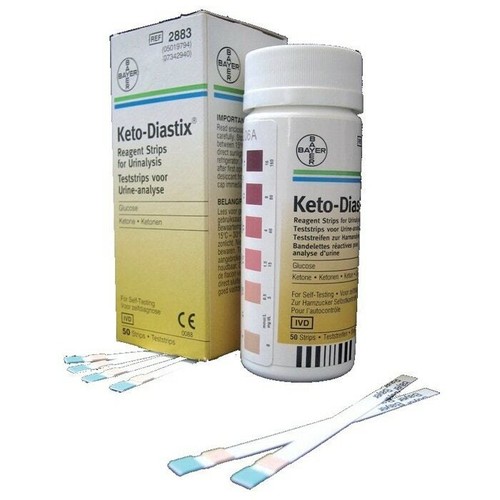
...I second what Bron says about testing the kitty's pee. You can get Keto-Diastix urine test strips from most pharmacies. These test the pee for both glucose and ketones. The glucose test is not equivalent to a blood glucose test but should at least show you whether the cat's blood glucose has been above or below the 'renal threshold' since the last time the kitty peed.
Hopefully you'll get a negative ketone test. But anything above a 'trace' result is a reason to talk to your vet ASAP.
You only need a drop of pee for a test. Putting crumpled clingfilm loosely over the cat litter is often a fairly easy way to get a pee sample. Or if your cat isn't shy about her toilet habits you may be able to stick a spoon in the urine stream while she's peeing. The test must be timed for the correct number of seconds, as the little squares on the test strip may continue to change colour after the time is up.

Eliz
 
Last edited:
Hiya, waving from Surrey!
Tee mentioned Sheba fine flakes in his post above. And this is a popular low carb food with quite a few UK folks with diabetic kitties. I wonder if this might be the right sort of texture?
And I second what Tee said about Dreamies, these are really high carb and will raise blood glucose...

Regarding the insulin shots, quite a few folks just give the shot while the cat is eating. The food is a great distraction. A few yummy treats should do the same job. Giving an insulin shot takes just a few seconds.
And it is very possible to 'desensitise' the kitty to the process. This can be done in small increments and involves getting the cat to associate the sounds and sensations involved with something positive like a reward, a treat or some food. This is most effective if the reward is something that the cat really likes.
For some the process may mean rustling the syringe pack and then giving a treat. Or, next, it may be stroking the cat, pulling up the scruff for a second or two, and then praising the cat and giving a treat. If you can pull up the scruff and the cat is OK with that then you can just pull up a 'tent' of skin and quickly press against the side of that 'tent' with the tip of your little finger for a moment, and then given a treat. Then you can try the same thing with a capped syringe. And then try the real thing...

It can also be surprisingly helpful to talk to your cat about what you're doing. Of course they're not going to understand every word. But they absolutely can pick up on the 'feeling' of your words, your 'intention'... So, it can be helpful to tell the cat what you're doing and why you're doing it. ..."Hey Fluffy, I want to try to help you to feel better. So I'm going to give you some medicine that I'm sure is going to help you. I know this is new thing for both of us. But I love you and really want to help..." - Or whatever words feel right to you. :cat: ....Some people sing to their cats, anything that comes into their heads. And strange as it sounds this can really help to relax both human and cat. ...Conversely, if we approach it with the idea that we're going to be doing something that the cat is going to hate, and we really don't want to be doing it, the cat can pick up the feeling of that too.
There's a great little video about desensitizing cats to injections. The vet in this video talks really fast though, so it can be worth watching it a couple of times (I thought so anyway, haha!)
Here's the link:

...It may well be that diet change alone is not sufficient. 'Most' cats do need to be on insulin, either temporarily or permanently. And if they need insulin but don't get it then their diabetes is likely to get worse. They may also be at risk of developing a highly dangerous condition (also very expensive to treat), diabetic ketoacidosis (DKA).
...I second what Bron says about testing the kitty's pee. You can get Keto-Diastix urine test strips from most pharmacies. These test the pee for both glucose and ketones. The glucose test is not equivalent to a blood glucose test but should at least show you whether the cat's blood glucose has been above or below the 'renal threshold' since the last time the kitty peed.
Hopefully you'll get a negative ketone test. But anything above a 'trace' result is a reason to talk to your vet ASAP.
You only need a drop of pee for a test. Putting crumpled clingfilm loosely over the cat litter is often a fairly easy way to get a pee sample. Or if your cat isn't shy about her toilet habits you may be able to stick a spoon in the urine stream while she's peeing. The test must be timed for the correct number of seconds, as the little squares on the test strip may continue to change colour after the time is up.

Eliz

thank you for the reply and I will certainly add Sheba to the list. Dreamies have long since bit the bullet

I appreciate the time you have spent writing all that, but believe me, that has all been tried. I know how to condition the cat. But as I say, she isn't a cat that likes to be handled unless its on her terms. I tried the conditioning while eating for example. strokes she is fine with, but the second you attempt more than that she just leaves in disgust and wont return to eating until I leave her to it. as for treats, I havent found a good dreamies alternative yet. she did go for weebox sticks for example, but seems to have had her fill of those. but the situation is the same. I try anything other than feeding her the treats, and she just departs.

Its not a decision I have taken lightly regarding insulin, but just the food situation is breaking my heart and not doing my mental health any favours. throwing in battles twice a day to try and inject her on top of that isnt going to do either of us any favours.
 
thanks both for the replies

in terms of insulin....you know when you see those help videos where they administer the injection and the cat sits there on their lap nice and lets them do it. impossible with mine. she isnt a lap cat and she absolutely will not tolerate being handled unless she wants it. on the ultra rare occassions she does come and sit on your lap, even assuming you happened to have the insulin available at that point, she would run off the second you started attempting. ive spent two months trying to "train" her to get used to being handled in that way in any way I can think of and nothing works. I live alone, and as far as I can tell, the only way to do this is to semi -aggressively pin her down. and i am absolutely not going to do that. if meal/ injection times end up being a battle, i dont think that is going to do either of us any good

back to food. thanks for the recommendations. i've read all the things mentioned already, but they dont address part of my point. a good portion of the issue is the texture of the food we have tried. she has never been a fan of pate kind of things (or gravy), and the foods we have tried are basically a mush once chopped up. she hates it. she likes little bite size things, a la whiskas, and some times flakes, a la felix. and both of them are full of stuff they shouldnt be having like sugar. hence my request if theres anything more texture wise in line with what she likes.

I am so sorry your cat is that problematic. If insulin really is not an option (which we MIGHT be able to help with, but YOU KNOW more than we do about your cat, nobody here means to tell you otherwise) then i have a few food suggestions.

1. Purina ProPlan DM skillets; 4 CAD per 5.5 oz can. Skillets of some meat with gravy.

2. Fancy feast turkey and giblets; 90 cents CAD per 3 oz can, larger skillets covered in gravy (low carb).

3. Fancy feast chunky chicken; might be too much pate for your cat, has larger chunks.

4. Dr Elsey’s dry food (lowest carb dry food i can find).

5. Raw food. I know nothing about this, maybe someone who does could chime in? The


As a bit of background; sam DESPISED me holding him in one place. That took 3 months of daily treats that he adored consistently. Then

I had to aggressively pin sam down to inject him. He scratched me a few times. Now he was just sleeping on the couch, and i was able to inject him with no problems.

But you know your cat best. Be aware though that insulin is almost always needed to regulate a diabetic cat. Without it most will die far earlier than they ought to (typically within 1 year at most from diagnosis based on the 2 studies I read).
 
Last edited:
Its not a decision I have taken lightly regarding insulin, but just the food situation is breaking my heart and not doing my mental health any favours. throwing in battles twice a day to try and inject her on top of that isnt going to do either of us any favours.
Aw, I hear you. And I'm very sorry that you are having such a hard time with this. (((Hugs)))

I'm on my second diabetic kitty now (adopted as diabetic). She has been much more of a challenge than the first. She does not really like being handled much at all. And at first it was quite stressful. Not only did she not like to be touched much, but she didn't know me at all either. So, I was trying to manage her diabetes at the same time as trying to earn her trust. At times it was very upsetting, and I cried quite a few times (not a pretty sight, haha!)
I knew I had to give insulin though. I'd adopted her to try to help her because she was doing so badly in the cat rescue. And I felt honour bound to try to fulfil that responsibility. So I dialled things back to what she 'was' OK with, and went forward in tiny weeny baby steps, very gradually increasing her tolerance.
...She would tolerate being stroked. And it transpired that she also loved to be brushed for brief spells. So I did these things a number of times every day (probably 6 or 7 times a day) just for a very short time. Repetition is key when it comes to desensitizing. And in the middle of a little stroking session I'd sometimes (not always) briefly pull up some skin and then let it go. And I'd also briefly hold or massage one of her ears, just for a second, not enough to stress her, but stopping short of that. Then I'd reward with a treat. After a couple of weeks of this she was fine with insulin shots (mostly!), and she was also well on the way to being OK with having her blood glucose tested on a regular basis (with a tiny drop taken from the edge of the ear).

Something else that really helped with her was doing these things in a place where she felt comfortable and safe. She seemed to favour a particular armchair. So it was there that I did most of the desensitization. And in fact I'd get the treat bag, sit next to the armchair and call her to the chair. And she'd come along, hop up on there and get a treat. Sometimes all I did was give a treat, nothing more. The armchair was a safe place where nice things happened. And four years on that is still the case, albeit that she now also gets all her insulin shots and blood glucose tests there.

I totally understand that things are difficult and stressful for you right now. But this may not necessarily always be the case. So please don't give up hope. (((More hugs)))

Maybe focus on the things that you can do for now?
- Do try to feed the lowest carb wet diet that your kitty will eat. The lower the carb content of the diet, the less the impact on the blood glucose levels.

- Do try to test your kitty's pee for glucose and ketones. Routine monitoring for ketones is extremely important in diabetic kitties, and especially so when insulin is being withheld for any reason. Anything above a trace result is a reason to contact your vet. And if your kitty seems unwell, lethargic and/or off her food, this greatly increases the risk of a ketone situation developing into DKA (a medical emergency). Be aware that the test strips don't pick up all ketones, so also have an awareness of how your kitty's breath smells. It should smell like normal cat breath (!). If you notice a smell like acetone this can indicate ketones in the blood.

- Keep kitty well hydrated. Cats in high blood glucose levels can lose a lot of water from their bodies because of peeing a lot, and they can become dehydrated. Adding a little water to all wet food can help. Ensure there are plenty of places for kitty to have the opportunity to drink from. Some cats like water that chicken (or turkey) has been simmered in, or the water from a can of tuna (no salt added).

- Keep stroking her in the way that she does like, and perhaps try to very slowly increase and build on that. Maybe just try to pick a spot (that she likes and that you like) where she goes and where you stroke her, perhaps rewarding with treats also. This could be a stress free way of beginning to establish a pattern and a routine. Maybe stroke her at the times when you would otherwise be giving her an insulin shot...?

BTW, posting a pic of Keto-Diastix below so you know what you are looking to buy.

s-l500.jpg
 
Status
Not open for further replies.
Back
Top