Hiya, waving from Surrey!
Tee mentioned Sheba fine flakes in his post above. And this is a popular low carb food with quite a few UK folks with diabetic kitties. I wonder if this might be the right sort of texture?
And I second what Tee said about Dreamies, these are really high carb and will raise blood glucose...
Regarding the insulin shots, quite a few folks just give the shot while the cat is eating. The food is a great distraction. A few yummy treats should do the same job. Giving an insulin shot takes just a few seconds.
And it is very possible to 'desensitise' the kitty to the process. This can be done in small increments and involves getting the cat to associate the sounds and sensations involved with something positive like a reward, a treat or some food. This is most effective if the reward is something that the cat really likes.
For some the process may mean rustling the syringe pack and then giving a treat. Or, next, it may be stroking the cat, pulling up the scruff for a second or two, and then praising the cat and giving a treat. If you can pull up the scruff and the cat is OK with that then you can just pull up a 'tent' of skin and quickly press against the side of that 'tent' with the tip of your little finger for a moment, and then given a treat. Then you can try the same thing with a capped syringe. And then try the real thing...
It can also be surprisingly helpful to talk to your cat about what you're doing. Of course they're not going to understand every word. But they absolutely can pick up on the 'feeling' of your words, your 'intention'... So, it can be helpful to tell the cat what you're doing and why you're doing it. ..."Hey Fluffy, I want to try to help you to feel better. So I'm going to give you some medicine that I'm sure is going to help you. I know this is new thing for both of us. But I love you and really want to help..." - Or whatever words feel right to you.

....Some people sing to their cats, anything that comes into their heads. And strange as it sounds this can really help to relax both human and cat. ...Conversely, if we approach it with the idea that we're going to be doing something that the cat is going to hate, and we really don't want to be doing it, the cat can pick up the feeling of that too.
There's a great little video about desensitizing cats to injections. The vet in this video talks really fast though, so it can be worth watching it a couple of times (I thought so anyway, haha!)
Here's the link:
...It may well be that diet change alone is not sufficient. 'Most' cats do need to be on insulin, either temporarily or permanently. And if they need insulin but don't get it then their diabetes is likely to get worse. They may also be at risk of developing a highly dangerous condition (also very expensive to treat), diabetic ketoacidosis (DKA).
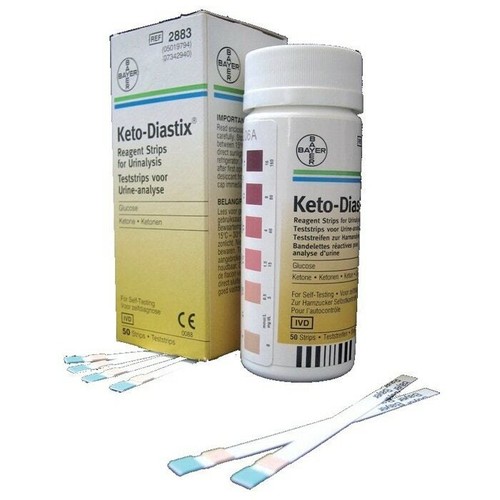
...I second what Bron says about testing the kitty's pee. You can get Keto-Diastix urine test strips from most pharmacies. These test the pee for both glucose and ketones. The glucose test is not equivalent to a blood glucose test but should at least show you whether the cat's blood glucose has been above or below the 'renal threshold' since the last time the kitty peed.
Hopefully you'll get a negative ketone test. But anything above a 'trace' result is a reason to talk to your vet ASAP.
You only need a drop of pee for a test. Putting crumpled clingfilm loosely over the cat litter is often a fairly easy way to get a pee sample. Or if your cat isn't shy about her toilet habits you may be able to stick a spoon in the urine stream while she's peeing. The test must be timed for the correct number of seconds, as the little squares on the test strip may continue to change colour after the time is up.
Eliz