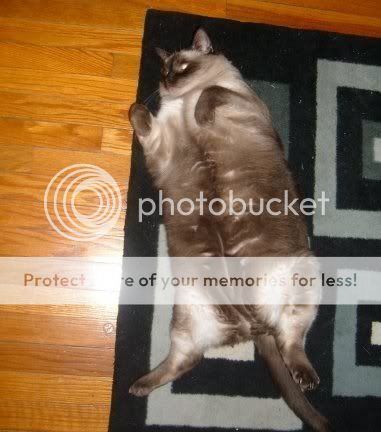
Smiffy's Fructosamine result

Status
Not open for further replies.

Looby & Smiffy

Member Since 2016
As some of you probably know, Smiffy's fructosamine result was 405 which according to my Vet is within the range of 350-450 that they look for in a stabalixed diabetic cat and much reduced from when she had her first test .... I was really pleased about this until someobody from another International Feline Diabetes Group on Facebook said the following @Elizabeth and Bertie @Diana&Tom @Marlena: No that is not a good fructosamine. That is equivalent to an average BG of around 240/13.3. That is over renal threshold and puts him in danger of organ damage.... and also for developing ketones that can lead to a life threatening diabetic ketoacidosis (DKA). Having him on high carb food is simply counter-productive to helping him get better... aside from all the damage that dry food does ........... what do you think about that .. it has me worried sick as the Vet was really pleased at the reading and said that her being right in the middle there was ticking one of the two major boxes for getting her well - the other being to get her weight down ....
 
The group that said the above were the Diabetic Cat International on Facebook ..... I am really anxious to hear if you think this is true ... worried sick now .. once again!!!
 
According to the Caninsulin website 405 is in the range for Good control:

Normal non-diabetic cat 190-365
Newly diagnosed diabetic cat 350-730
Treated diabetic cats:
Excellent control 350-400
Good control 400-450
Fair control 450-500
Poor control >500

So who do I believe?
 
Hi Looby
The trouble with the fructo test is that it gives an AVERAGE reading of the cat's BGs over a period of time, probably weeks. So, some BG numbers on some days may have been on the high side, some may have been on the low side, some may have been perfectly acceptable - but they have averaged out to produce this result. This is why, whilst vets tend to use the fructo test as a measure of a diabetic cat's progress, it still isn't giving enough data to know how the cat is on a day-to-day basis. The only way you will ever know exactly what the BG is at any given moment at any given point in the cycle, and whether it's fine and you can relax, or it's too low and you need to monitor closely in case of hypo, is by testing BGs at home. If your vet says the fructo test result is acceptable for a stabilised diabetic cat, that's his call. But you're the owner with day-to-day responsibility, and you would gain great peace of mind by testing yourself - even if just once or twice a day, pre-shot, to start with. It's your decision but you know what people on this board would advise.

It's true that experienced diabetic cat owners will advise you not to feed dry. It's simply not ideal for the condition (or for a healthy cat, come to that). What animals in the wild, in nature, can you think of who only eat dry biscuits? None. It's not the natural diet for a cat. Many people on this board fed their cat dry food before they understood that it's not an optimum diet for an animal. Some probably do still feed a certain amount of dry at times, for various reasons, but as a complementary food, not the main form of food. Simply, dry food is not great for diabetics and most people find it easier to get their cat into better numbers and reach regulation if they feed mainly wet. So yes, the longer a cat is in unacceptably high numbers, ie over renal threshold, the greater the risk of organ damage; it's usually easier to get numbers down, and reduce that risk, by feeding a wet diet.

I think you have a choice: go by whatever the vet tells you, feel reassured that his opinion is correct, and live with being in the dark about what BGs are on a daily basis; or try very hard indeed to get to grips with home testing, which will give you so much valuable information about how the insulin is working which will give you the greatest peace of mind. When you know that numbers are good for most of the day, you can relax more. And you may be able to identify a stage when you can start to transition to a healthier, at least part wet food diet, which may well reduce the need for as much insulin.

I know this is tough but these are the facts, but when it comes down to it and whatever anyone tells you on here or FB, the choice of how you treat your cat is yours and yours alone.

Diana
 
Journal of Veterinary Internal Medicine (2008)

http://onlinelibrary.wiley.com/doi/10.1111/j.1939-1676.1993.tb03183.x/pdf


"Fructosamines are glycated serum proteins that, depending on their life span, reflect glycemic control over the previous 2 to 3 weeks. The nitroblue tetrazolium reduction method adapted to autoanalysis appeared to be a practical means to assay fructosamine quickly, economically, and accurately. The upper limit of the reference range is 374 pmol/L in dogs (95% percentile) and 340 pmol/L in cats (95% percentile)."


As Diana said the fructosamine test is only an average reading over a 2 week period. If your kitty has had some higher high numbers and some lower low numbers it could still come up with an AVERAGE reading in the normal range. Doing regular home testing is a much better indicator how the insulin is working on a day to day basis.


As was already said dry food is not good for any kitty, least of all a diabetic kitty. Even if a kitty manages to go into remission they should not be fed dry food as it increases the risk of the diabetes re-occuring. A low carb wet food is a much better choice for any kitty. Cats do not need carbs and dry food tends to dehydrate them, since they by nature do not have a big thirst drive.
 
Hi Looby
The trouble with the fructo test is that it gives an AVERAGE reading of the cat's BGs over a period of time, probably weeks. So, some BG numbers on some days may have been on the high side, some may have been on the low side, some may have been perfectly acceptable - but they have averaged out to produce this result. This is why, whilst vets tend to use the fructo test as a measure of a diabetic cat's progress, it still isn't giving enough data to know how the cat is on a day-to-day basis. The only way you will ever know exactly what the BG is at any given moment at any given point in the cycle, and whether it's fine and you can relax, or it's too low and you need to monitor closely in case of hypo, is by testing BGs at home. If your vet says the fructo test result is acceptable for a stabilised diabetic cat, that's his call. But you're the owner with day-to-day responsibility, and you would gain great peace of mind by testing yourself - even if just once or twice a day, pre-shot, to start with. It's your decision but you know what people on this board would advise.

It's true that experienced diabetic cat owners will advise you not to feed dry. It's simply not ideal for the condition (or for a healthy cat, come to that). What animals in the wild, in nature, can you think of who only eat dry biscuits? None. It's not the natural diet for a cat. Many people on this board fed their cat dry food before they understood that it's not an optimum diet for an animal. Some probably do still feed a certain amount of dry at times, for various reasons, but as a complementary food, not the main form of food. Simply, dry food is not great for diabetics and most people find it easier to get their cat into better numbers and reach regulation if they feed mainly wet. So yes, the longer a cat is in unacceptably high numbers, ie over renal threshold, the greater the risk of organ damage; it's usually easier to get numbers down, and reduce that risk, by feeding a wet diet.

I think you have a choice: go by whatever the vet tells you, feel reassured that his opinion is correct, and live with being in the dark about what BGs are on a daily basis; or try very hard indeed to get to grips with home testing, which will give you so much valuable information about how the insulin is working which will give you the greatest peace of mind. When you know that numbers are good for most of the day, you can relax more. And you may be able to identify a stage when you can start to transition to a healthier, at least part wet food diet, which may well reduce the need for as much insulin.

I know this is tough but these are the facts, but when it comes down to it and whatever anyone tells you on here or FB, the choice of how you treat your cat is yours and yours alone.

Diana
Thanks for taking the time to write this .... I know that wet food and home testing is the way that everybody feels is the best route but I am stuck as my husband emphatically wants to go by what the Vet is telling us and to go with the plan ...... Smiffy is also supposed to be losing weight so even if I could put her on a wet diet, I wouldn't know the right amount to give her daily whether she was on a slimming diet or otherwise ... she is 6 kilos and the Vet says that is the main thing that is inhibiting her pancreas from working ...... I don't know how to home test and only have a AccuChek meter that has such a loud click to it there is no way I would be able to test her before her meal .... at the moment I put her food down and she just stares at it as she knows I am going to get a needle out so I have to feed her by hand - just a few biscuits at a time and a stroke and then after the fourth time I go in with the needle as gently as possible ...... is she in danger of just collapsing with her average level quite high? Does 405 Fructosamine really mean 13.3 average and is that really over the renal threshold and how long can her kidneys tolerate that? Her organ functions were all blood tested and the results were 'pretty good for her age' ....... what signs should I be looking out for then? Sure if the average is now around 13.3 under stress, her numbers are decreasing at a good rate considering her first ever BG at the Vet was 26 just a month ago?
 
Journal of Veterinary Internal Medicine (2008)

http://onlinelibrary.wiley.com/doi/10.1111/j.1939-1676.1993.tb03183.x/pdf


"Fructosamines are glycated serum proteins that, depending on their life span, reflect glycemic control over the previous 2 to 3 weeks. The nitroblue tetrazolium reduction method adapted to autoanalysis appeared to be a practical means to assay fructosamine quickly, economically, and accurately. The upper limit of the reference range is 374 pmol/L in dogs (95% percentile) and 340 pmol/L in cats (95% percentile)."


As Diana said the fructosamine test is only an average reading over a 2 week period. If your kitty has had some higher high numbers and some lower low numbers it could still come up with an AVERAGE reading in the normal range. Doing regular home testing is a much better indicator how the insulin is working on a day to day basis.


As was already said dry food is not good for any kitty, least of all a diabetic kitty. Even if a kitty manages to go into remission they should not be fed dry food as it increases the risk of the diabetes re-occuring. A low carb wet food is a much better choice for any kitty. Cats do not need carbs and dry food tends to dehydrate them, since they by nature do not have a big thirst drive.
I fed one of my cats dry food all her life and she lived to a healthy age of 16 ..... where is the evidence that I can show my Vet that wet food is better and beneficial for cats and especially a Diabetic cat ...... if the upper limit for cats is 34o then Smiffy is surely doing well if her reading is 405 after just one month of treatment?
 
i don't have much respect for the fructosamine test.

mr b was drinking a lot, and peeing a lot, and acting weird, and i'd complain to the vet - for months - and all i'd hear from the vet was "we have good control. his fructosamine is normal". it got to the point where the glucose was starting to show up in his urine WITH trace ketones, and his liver enzymes were showing inflammation, that the vet scratched her head and said she didn't understand how that could be. to which my response was imagining myself strangling her. anywaaaaaaaaays I digress...

as stated above, really the only way to know what the heck is unquestionably going on with your cat is to test at home. believe me I didn't want to hear that. I didn't want to home test. I bought the testing kit but after one unpleasant try, it got set aside for weeks.

I gave up on that vet, went back to my old vet, and started doing home testing. this all happened only recently but already I feel so much better seeing where my cat is at, and giving this info to the vet which has helped us plan his treatment.

that's been my experience. maybe your smiffy really is doing ok. I can tell you that my cat was definitely not ok though his fructosamine said he was. is smiffy still acting like a diabetic? were any other tests done, like blood glucose and urine glucose?

IMHO dry food isn't good for any cat, especially diabetic.
 
Last edited:
I fed one of my cats dry food all her life and she lived to a healthy age of 16 ..... where is the evidence that I can show my Vet that wet food is better and beneficial for cats and especially a Diabetic cat ...... if the upper limit for cats is 34o then Smiffy is surely doing well if her reading is 405 after just one month of treatment?


Unless you are feeding one of the few dry foods that is low carb then the carb content of dry food is too high. A human diabetic has to count their carbs each day. No human endocrinologist would tell their patient to just eat what they want. My two diabetic kitties are 15 1/2 and I hopefully will have them for many more years to come. There have been people on this forum whose kitties have lived to be 20++ years even with diabetes.

In the end it is your choice what you feed and whether you home test. I have had TOO many instances where numbers have suddenly dropped very low with both my kitties and if I hadn't intervened with syrup and high carb food I do not want to think what the consequences could have been.
 
I know that wet food and home testing is the way that everybody feels is the best route but I am stuck as my husband emphatically wants to go by what the Vet is telling us and to go with the plan
Looby, since you have some time on your own at the moment this could be the perfect time to learn to hometest.
Hometesting doesn't have to derail 'the plan'; but it will give you detailed information about how the plan is working. If it's working well; great! If it's not working well you can ditch it and get a new plan.

The fact that the Accuchek pen has a loud click shouldn't be a problem. You can use it as a training device. Click the pen next to Smiffy and then give her a treat. Click again, and give her another treat. Hold or massage one of her ears for a couple of seconds, click the pen, give her a treat. Never give her a treat without clicking the pen, that way she'll quickly build up an association that the clicking of the pen means yummy treats. Cats are very good at associating things with sounds, that's why so many will come running when they hear the tin opener.

You can also get used to how the glucose meter works. Test the process out on yourself (by pricking the side of a finger tip).

In a matter of a few days or a week you could be hometesting successfully.

One thing is certain: If you don't try to hometest then it's never going to happen.
But if you do earnestly try then you may surprise yourself.
There is surely nothing to lose by trying...?

Eliz
 
Looby,
you don't need to prove to the vet that wet low carbohydrate food is better for your cat than what he wants you to use!
You are the caregiver and it is you who puts that food bowl in front of your cats to eat so no vet has any influence on that whatsoever! You don't even have to tell your vet what you feed your cat!
All the information provided here is for you to read and get that knowledge to use for your advantage. Why, do you think, we all switched to proper diet for our cats? Is it because we want to complicate things or we want to have an argument with vets???????
You can't win an argument with a vet as they always seem to think that they are superior because they are experts, but you know what? - I have stopped trusting experts long time ago. I'll spare you examples of that.
What I do when I go to my vet: I listen to what she says then I tell her what I think (she: Purina DM diet is best, I: raw homemade with supplement is best) and if she insists I just smile and do what I want to do and I do NOT buy Purina from the vet.
I hope that my explanation will help you somehow to handle the vet's issue.
Best regards,
Marlena
 
Hi Looby
Everyone on here who follows Rosie's progress will tell you the fear, reluctance and struggle I had with home testing. I knew what everyone was saying was excellent advice but I just couldn't see me ever being able to do it and I felt a failure. I even wrote a post saying that i wasn't going to put me and Rosie through that ordeal and we would just deal with the consequences!
But now I can test and it gets easier each time. Sometimes Rosie is resistant and I have to abandon it (usually thinking she'll never let me again!) but next time it's fine. I don't always get blood but after two tries I just let her go and we try later.
I find with Rosie having a bowl of food ready on the side that she wants helps because she knows if we do it she gets the food after. You will find the right reward for Smiffy, it all just takes time and lots of patience.
The main thing is to try because what @Diana&Tom is saying is so true that the peace of mind it brings is priceless. Xx
 
you don't need to prove to the vet that wet low carbohydrate food is better for your cat than what he wants you to use!
You are the caregiver and it is you who puts that food bowl in front of your cats to eat so no vet has any influence on that whatsoever!
I agree that it is your choice about what to feed Smiffy, Looby. If you do change diet then you MUST home test during the transition and adjust insulin dose as necessary; to do otherwise would be to put Smiffy in greater danger of hypoglycaemia. Your only other option would be to book Smiffy into the vets for several days so that they do the food switch, monitor her BG levels throughout and adjust her dose during the food transition to keep her safe.

You don't even have to tell your vet what you feed your cat!
I disagree with the above. If the vets are making dosing decisions for Smiffy then they absolutely require full knowledge of the carbohydrate load of Smiffy's diet (just as they require full knowledge of all meds and supplements a cat may be receiving for any health condition in order to make appropriate and safe treatment recommendations).


Mogs
.
 
Last edited:
Mogs,
I have not said anything about changing the cat's diet without a transition period.
We have wrote about diet transition many times so Looby hopefully is fully aware how to proceed with diet change if she decides to follow that advice.
Yes, I agree about vets knowing the carbohydrate load when making dosing decisions but there other components as well when giving insulin and one of them would consistent dosing.
My point was to highlight the problem of feeding any cat and especially diabetic cat low carbohydrate diet even if the vet is not aware of benefit of such feeding.
Best regards, Marlena
 
Mogs, I have not said anything about changing the cat's diet without a transition period.
I didn't think that for even a moment, Marlena. I'm sorry if my post came across to you that way; it certainly wasn't my meaning. :)

We have wrote about diet transition many times so Looby hopefully is fully aware how to proceed with diet change if she decides to follow that advice
I'm not confident of how much of the advice and information posted thus far by members about keeping a cat safe during insulin treatment is actually being taken onboard because the same questions keep getting asked. I therefore thought it safer to err on the side of caution and reinforce the message of how vital it is to test BG and adjust dose as required when transitioning to a low carb diet should Looby ever decide she wants to switch Smiffy to a more diabetic-friendly, species-appropriate food.


Mogs
.
 
I'm not confident of how much of the advice and information posted thus far by members about keeping a cat safe during insulin treatment is actually being taken onboard because the same questions keep getting asked. I therefore thought it safer to err on the side of caution and reinforce the message of how vital it is to test BG and adjust dose as required when transitioning to a low carb diet should Looby ever decide she wants to switch Smiffy to a more diabetic-friendly, species-appropriate food.
Mogs,
that's a very good point, totally agree with you.
Please forgive my spelling or grammar mistakes if you see any as I'm still feeling effects of anaesthesia ha ha ha!
Feeling a bit dizzy.
With love to you,
Marlena
 
@Marlena - no worries on the language front! :D

:bighug:


Mogs
.
Thank you, my darling.
I'm foreign but I love English language and try my best to be fluent in it so I feel a bit conscious how I speak and write.
I used to have a dear colleague at work who was my language "advisor", very well read and intelligent. I miss her.
But it is totally off the topic of FD, forgive me.
Marlena;)
 
HI!
My vet admitted form the beginning that he did not know enough about FD and he is learning so much from how we are treating Dre-
He has seen his BG come back lower and lower with each blood panel. At this point he asks if he can give his clients with FD my info to help them ...
I knew nothing before FDMB. I am still learning and I guide people here where the real life experience is. I am not qualified to give dose advice etc... but I can steer them the right way... long way of saying sometimes the vet has to let the ego go for the good of the cat.:bighug:
 
My vet admitted form the beginning that he did not know enough about FD and he is learning so much from how we are treating Dre-
He has seen his BG come back lower and lower with each blood panel. At this point he asks if he can give his clients with FD my info to help them ...
I knew nothing before FDMB.
So true, Jayla. There are some vets who are really switched on when it comes to the treatment and management of feline diabetes but sadly they appear to be very much in the minority. If vets in general knew more about feline diabetes best practice then perhaps there would not be such a desperate need for groups like FDMB to educate diabetic cat caregivers about the most effective treatments. I, for one, am beyond grateful for all I have learned from the highly experienced members of this forum; I could very well have lost Saoirse were it not for the knowledge and wisdom they so generously share here.


ETA:

Saoirse certainly would not have done anything like as well as she has if I had just swallowed the pile of garbage spouted at me by the vet who failed to even recognise her symptoms and refused to run diagnostics when I knew there was something seriously wrong with my girl. If I had accepted her assessment of Saoirse as being "good for her age" I honestly believe Saoirse would not still be with me. Same goes for the specialist who said that Saoirse would never achieve remission (wrong! :p) That was when Saoirse was still on the Hill's w/d kitty cornflakes/Caninsulin 'doggie protocol'.:rolleyes:


Mogs
.
 
Last edited:
So true, Jayla. There are some vets who are really switched on when it comes to the treatment and management of feline diabetes but sadly they appear to be very much in the minority. If vets in general knew more about feline diabetes best practice then perhaps there would not be such a desperate need for groups like FDMB to educate diabetic cat caregivers about the most effective treatments. I, for one, am beyond grateful for all I have learned from the highly experienced members of this forum; I could very well have lost Saoirse were it not for the knowledge and wisdom they so generously share here.


Mogs
.
Me too Mogs--
Dre would have been in big trouble if not for this forum. It is disturbing that vets who call themselves "specialists" are reading the same information we read. I consulted with 2 of them and spent ridiculous money to learn nothing more than what the forum has taught me. 1 actually told me to leave his ears alone and get a life-:eek:
I cannot imagine shooting without testing.... and there are times Dre surely could have been in danger had I not monitored.
I too am very grateful...:bighug:
 
1 actually told me to leave his ears alone and get a life-:eek:


iu

.
 
I seem to have started a whole debate about Vets ..... I am going to have to retire a bit from this thread because I am finding it really overwhelming - we have gone off at a tangent - I was talking about her fructosamine result which although not ideal is at the top end of good stabilisation of her condition ... I may ask the Vet to do her full bloods again the next time we see her (they were fine when she was diagnosed) .... I am doing the desensitising ritual with the insulin pen still and struggling with that so to try to desensitise her with the meter as well would be too much for her at the moment ... she is not about enough for me to do it anyway in this humid weather - she has her spot upstairs where she rests that is under the chair in the bedroom .... I do the desensitising on her scruff with treats in between meals as you say @Elizabeth and Bertie so not got to the meter yet .... she is an adorable cat but she is not a lap cat nor does she like to be touched a lot at the best of times ..... I am also going to take some reference material with me to the Vet at the next visit too so see what he has to say about it ..... Smiffy seems to be much happier at the moment .... gave me kisses and purrs this morning for the first time in ages . Thank you for all your advice .... I would absolutely have to change her diet under the supervision of the Vet along with the right dose .... remember she is also on a slimming diet as 6kg is too high for her now ..... hopefully she will now start to lose weight healthily ....... I don't think I am asking the same questions over and over ..... I understand what you are all saying ..... I want to remain as postive as I can for her ... I am so tired - sorry not making a lot of sense .. anxiety is really tiring and I am on my own for two weeks now then we will see the Vet on June 1st and see if we need or want to make any changes ...... Thank you for all your help ... I have lots of knowledge now ... tired ... sorry have to go now ...... take care all and thanks again
 
remember she is also on a slimming diet as 6kg is too high for her now
You would stand a far better chance of getting Smiffy to her target weight and maintaining it there if you were able to switch her to a wet, low-carb, moderate fat, high protein diet, log the amount you feed, buy a digital baby scales to monitor weight changes, and use a body condition chart to help you gauge her ideal weight. I speak from direct experience. Saoirse's previous vet prescribed prescription kibble after prescription kibble for her; that is what caused Saoirse to gain weight in the first instance (she has never been a greedy cat) and the Rx dry foods also failed spectacularly to help her lose it. See the following page from Dr Pierson DVM's Site:

http://catinfo.org/?link=felineobesity

If you search online or here you will find plenty of anecdotal evidence of cats who had similar difficulty with weight control when being fed dry kibble - including the weight management Rx foods. Since doing what I recommended above Saoirse has no difficulty whatsoever in maintaining her ideal weight. Other members here would probably recommend the very same approach based on similar experiences with their cats.


Mogs
.
 
Last edited:
I agree, any "slimming" diet the vet gives you is going to be bad for your cat, and the diabetes. Bandit was on one of these diets many years ago when he was overweight, and the only reason he lost any weight on it was because it gave him some serious health issues (concurrent pancreatitis, liver upset, and bowel disease). Let me show you what a low carb, canned diet did for Bandit!

This is him at age 6, on Hills W/D prescription diet (weight management dry food).
SkinnyBandit.jpg
SkinnyBandit.jpg


This is him just a couple years later at age 8, after having been on a low carb, high protein, non-prescription canned diet for a year:
SkinnyBandit-1.jpg
 
I agree, any "slimming" diet the vet gives you is going to be bad for your cat, and the diabetes. Bandit was on one of these diets many years ago when he was overweight, and the only reason he lost any weight on it was because it gave him some serious health issues (concurrent pancreatitis, liver upset, and bowel disease). Let me show you what a low carb, canned diet did for Bandit!

This is him at age 6, on Hills W/D prescription diet (weight management dry food).
SkinnyBandit.jpg
SkinnyBandit.jpg


This is him just a couple years later at age 8, after having been on a low carb, high protein, non-prescription canned diet for a year:
SkinnyBandit-1.jpg
wowza!
 
Looby--the fruc test is just an average--you can do the same if you average your test numbers....I think it is a 2 week average-
I don't even get it anymore because I have enough data...
 
I will give my Vet some references ...... Would like to get Smiffy onto wet if she would eat it so will talk to Vet about that too ...... At the moment lm having trouble getting shots in so using desensitising process. At each meal time with a few biscuits at a time ....... I can't think about home testing until we get over this blip of her running away from her food at main meal times - can you all understand that? It would be impossible to test her before a meal at the moment much that I would like to ..... I've watched all the videos by the way about desensitising so know how to do it ..... She is being REALLY difficult .....
 
Would like to get Smiffy onto wet if she would eat it so will talk to Vet about that too
That's great, Looby.
But DO remember that it's only advisable to switch to wet when you have learned to hometest. It's not safe to switch otherwise.

Did you see what I wrote about getting Smiffy used to the sound of the Accuchek pen? (Clicking and rewarding with a treat?) And can you work out how to use your meter by trying it on yourself?

Eliz
 
Looby,
I can understand how difficult it is for you when Smiffy does not want to cooperate.
I used to have a cat Pippin which was, I think much more of a challenge and it was frustrating.
He was scared of everything and everybody, he bit a vet when he was a kitten and then bit me sinking his teeth in the flesh of my hand (I had to take a course of antibiotics to prevent a serious infection). He was not vicious, he was just very nervous but otherwise very sweet puss. He had asthma and I used inhalers on him without a problem but if I had to inject him that would have been a different story.
So I do understand how much of a struggle it must be for you looking after Smiffy when she is even more of a challenge when treated for diabetes.
I hope that some members will offer you advice how to deal with such a kitty and I'm sure with time things will get better for you.
Please try to think positive about making small steps, learning all the way to recovery!
In the meantime we are supporting you with your efforts and the more steps you make the easier it becomes.
My FD journey was very bumpy and stressful and, until recently I struggled a little with lanceting Rocky's ears as I had to find my ways of doing it the way it was working for me.
I feel very lucky to have a cat like Rocky because I can do anything to him and he doesn't mind! Vets love him as he is a very good patient so it helps a lot so I sympathize with you when you have a challenging cat.
Lets be positive and climb that ladder slowly step by step.
Wish you luck.
Marlena
 
That's great, Looby.
But DO remember that it's only advisable to switch to wet when you have learned to hometest. It's not safe to switch otherwise.

Did you see what I wrote about getting Smiffy used to the sound of the Accuchek pen? (Clicking and rewarding with a treat?) And can you work out how to use your meter by trying it on yourself?

Eliz
Yes I did see ...... if you look above at my post I use the desensitisation every day with Smiffy just to get her injection in ..... and I know absolutely by now that I cant switch to wet food without home testing ..... all this knowledge is part of my pshycy now ..... this thread started out as a query about fructosamine .... don't know how the person that told me that 405 was equivalent (ish) so an average of 13.3? All I know is that it is CONSIDERABLY better than when we started treatment so I am pleased about that and only 5 points over what would be 'excellent' stabilization .......... thanks for all you comments ... hope you and Bertie are OK? Good luck with your other affairs this week xxxxLoooby
 
Yes I did see ...... if you look above at my post I use the desensitisation every day with Smiffy just to get her injection in ..... and I know absolutely by now that I cant switch to wet food without home testing ..... all this knowledge is part of my pshycy now ..... this thread started out as a query about fructosamine .... don't know how the person that told me that 405 was equivalent (ish) so an average of 13.3? All I know is that it is CONSIDERABLY better than when we started treatment so I am pleased about that and only 5 points over what would be 'excellent' stabilization .......... thanks for all you comments ... hope you and Bertie are OK? Good luck with your other affairs this week xxxxLoooby
As we speak, Smiffy is at the top of the stairs eating a few biscuits at a time and I have to find some way of getting her futher down the stairs so that I can get her .... as I have said we have a tiny tiny house - it is really really hard .... have to go ....
 
Seems like Smiffy is not cooperating and injecting her is very difficult for Looby.
Not sure what to do.
Could other members with experience of difficult cats give some advice and help Looby in this very difficult situation?
 
I have just done her morning injection ..... but I had to follow her up to the bedroom to do it and move a bit of furniture .... I didn't man handle her but just slid it in but before that I was trying to desensitize her by giving her a few biscuits, massage her scruff, move away, give her some more, massage, move away but she soon got the jist of what I was doing and strated to growl at me! She went upstairs .... she has had her shot and half her food so I am going to have to stomach the fact that she is sulking big time with me now ... she was purring before I put her bowl down ... feel so badly for her and it is breaking my heart ......... she will be OK later on in the day though ... she won't do much today beacause it is so hot out there so maybe she will go out a bit tomorrow when the weather is a bit cooler .... I have just noticed a small bubble at the bottom of the Caninsulin cartridge ... the Vet loaded it up and I finished it off at home .... is that a bad thing? I will google it ....
 
As we speak, Smiffy is at the top of the stairs eating a few biscuits at a time and I have to find some way of getting her futher down the stairs so that I can get her .... as I have said we have a tiny tiny house - it is really really hard .... have to go ....

Looby, it must be difficult for you when Smiffy dislikes the shots so much. Hopefully others here can help with suggestions. (I understand that you are still persisting with trying to desensitize her to the shots.)

Meanwhile, here are two things you can do that don't involve having to touch Smiffy. Doing these things may be of huge help to Smiffy, and may also enable you to feel that you have a bit more control over the situation:

1).
Irrespective of whether you plan to hometest, you can at least familiarise yourself with how your glucose meter works. You can practice on yourself. ;)
That way, if the worst happens and you do find yourself in a situation where you suspect that Smiffy is having a hypo you will be able to test her and find out. And then you can, hopefully, take appropriate action to keep her safe.
You can learn how to use the meter without involving Smiffy at all.

I do suggest that you buy an extra tub of test strips so that you have enough to practice with, and also plenty to use in an emergency (you can get through a lot of strips in a hypo situation).

2).
If Smiffy will use a litter tray you can also get a tub of Ketodiastix and test her pee for glucose and ketones. Although not as useful as hometesting this can still be a helpful 'alternative monitoring' tool. Crumpling clingfilm in the litter tray is a good way to catch a sample, and you only need a couple of drops to test.
Here is a page of info on urine testing:
http://www.sugarpet.net/urine.html

Are you willing to try these things?

Eliz
 
Hi Looby, sorry to hear you're having injection problems but you got there in the end.

BTW yes, this thread started as a query about the fructosamine test result which yes, showed an improvement on the original result at dx before Smiffy was being given insulin. So you're right to be pleased with that. BUT - as we have explained - the fructo result is only an indicator of what BGs have been on average over a two or three week period of time. During that period, Smiffy may have been very high or very low - or both, at different times. The vet is using this test to tell him if an animal is diabetic. It doesn't tell him much else. He's not living with the animal 24/7 and has no way of knowing what the picture is in any given day. You can have that knowledge, by testing. This is what people are trying to tell you and why the discussion may have appeared to veer off the subject of the fructo test - because that result is a picture of overall control from the vet's point of view, not day to day control which is up to you to manage. So it's important to realise that vets, however well-qualified and best-intentioned, are nevertheless limited in what they can do.

Threads often start off with queries on a particular issue and then meander off onto other areas of FD management, but usually very much related to the original question. Treating FD is absolutely not just one thing - insulin, food, home testing, or vet support - but a combination of those things working together which enables owners to give their cats the very best chance of a long and healthy life.

You're learning all the time and no-one would say that all this should be easy, but you would feel a lot more in control if you could get your head round home testing. Everyone on every FD board will say the same. If I were you I would take Elizabeth's excellent suggestion above and just get the meter out and practise a couple of times on yourself. Reward yourself with a nice cuppa for your efforts! Then try again later in the day, still on yourself. When you see how easy it actually is you will feel more confident in testing Smiffy... Not today, not just yet, but in the future. You have nothing to lose and potentially so much to gain.

Diana
 
Seems like Smiffy is not cooperating and injecting her is very difficult for Looby. Not sure what to do. Could other members with experience of difficult cats give some advice and help Looby in this very difficult situation?
Looby,

As I've posted before, Caninsulin may be the problem, not the injections themselves. Cats are really smart and Smiffy could be associating the act of injecting her with something making her feel not all that hectic afterwards (a bit like the way a cat may avoid using the litter box if it has a bad urinary tract infection - it hurts to pee so they incorrectly identify the litter box as the cause of the pain). If Caninsulin is disagreeing with Smiffy that may be behind her obviously strong desire to hide from you when you're trying to dose her.

As I posted before, Saoirse absolutely despised getting Caninsulin even though it was doing something to help her BG, she was grooming again, etc. I also found it very distressing to keep giving her the insulin she had to receive in order to keep her alive when it was obviously so distressing for her to receive it. A change to a different insulin (Lantus in Saoirse's case) completely eliminated Saoirse's urge to hide come injection time - and she became a much happier cat overall. The difference was like night and day, and life immediately got a lot better - for both of us.

Saoirse is not unique in having issues with Caninsulin. Other cats have problems with other insulins. Smiffy might have a similar problem. She can't speak to you, so you need to play detective. It took several months for me to work out Saoirse's problems with Caninsulin because it took time to learn how to 'listen' to what she was telling me.

Please, please let your vet know about Smiffy's massively strong aversion to her Caninsulin injections and at least discuss the potential benefits of trialling a different insulin for Smiffy. It could make the world of difference.


Mogs
.
 
Last edited:
she was purring before I put her bowl down ...
Tell your vet about this as well. It could be that Smiffy feels better when the Caninsulin dose has worn off.

Also, if she's avoiding coming downstairs to eat then put some food up beside her. ETA - With insulin in her system, Smiffy needs to get food onboard so make it as easy as possible for her to get at it on her terms.


Mogs
.
 
Last edited:
Looby, it must be difficult for you when Smiffy dislikes the shots so much. Hopefully others here can help with suggestions. (I understand that you are still persisting with trying to desensitize her to the shots.)

Meanwhile, here are two things you can do that don't involve having to touch Smiffy. Doing these things may be of huge help to Smiffy, and may also enable you to feel that you have a bit more control over the situation:

1).
Irrespective of whether you plan to hometest, you can at least familiarise yourself with how your glucose meter works. You can practice on yourself. ;)
That way, if the worst happens and you do find yourself in a situation where you suspect that Smiffy is having a hypo you will be able to test her and find out. And then you can, hopefully, take appropriate action to keep her safe.
You can learn how to use the meter without involving Smiffy at all.

I do suggest that you buy an extra tub of test strips so that you have enough to practice with, and also plenty to use in an emergency (you can get through a lot of strips in a hypo situation).

2).
If Smiffy will use a litter tray you can also get a tub of Ketodiastix and test her pee for glucose and ketones. Although not as useful as hometesting this can still be a helpful 'alternative monitoring' tool. Crumpling clingfilm in the litter tray is a good way to catch a sample, and you only need a couple of drops to test.
Here is a page of info on urine testing:
http://www.sugarpet.net/urine.html

Are you willing to try these things?

Eliz
I have two cats that both use the litter tray so I would have to get keytone strips and try to catch her when she pees - she has just peed now and I would have been able to take a sample as she always pees at the front of the litter tray and sometimes outside it just to be more difficult ... which ones should I order from Amazon?

I will try to understand how to use the AccuChek meter when I next have a visitor ... I am by no means stupid but when it comes to gadgets and instructions I draw a blank!!!

I have started a separate thread as Marlena suggested which describels what I have to go through every time I try to inject Smiffy ....
 
Status
Not open for further replies.
Back
Top