Hi, I'm wondering if anyone else on here had problems getting enough blood on the strip. I know there was enough blood because I tested Elvis with the pet glucometer. It is the advocate PET test glucometer. The advocate PET test glucometer with its test strip seems to be very easy to get the blood on the strip. I could not get the blood on the strip with the ReliOn and I only have two more test strips for the pet test glucometer and I had to order those before and I can't order any cause they will not get here in time for me to test with them. I have the ReliOn meter and 100 test strips but they are not working well or maybe I have to do something different, I don't know. I know things are a little hectic around here now because my roommate has company and Elvis's number was 336 this evening because I think he was aggravated that there was company and to tell you the truth I don't like company because Elvis doesn't really like company, because it's different and he just doesn't fare well with company around. I'm on Elvis's side .What Elvis wants Elvis gets and if Elvis doesn't like something, I don't like it either!
This is a late reply but - be sure you are placing the tip of the test strip in the drop of blood and make sure you don't push the tip into the surface of the ear.
Think of the test strip as a straw, the open end must contact the drop of blood. If you push the opening against the ear, it will be blocked. When the test strip is properly placed in the drop of blood, capillary action (related to surface tension) draws blood into a narrow channel where it encounters chemicals in the test strip. The glucose in the blood reacts with the chemicals and produces a small electrical current which the glucometer reads as the amount of glucose in the sample.
However, you have to properly place the tip of the test strip in the drop of blood for all of this to occur correctly.
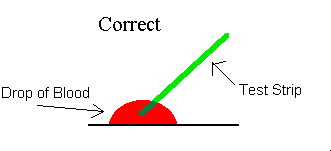
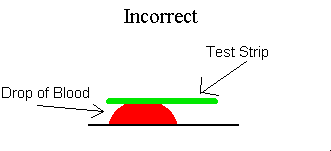
When we got a glucometer (Bayer EliteXL) I tried it on myself and then Sharon did herself. I was reading the manual and she says, "I didn't get any blood in the strip." I glanced over and saw that she had put the side of the strip on top of the drop of blood, not the end in the drop of blood. It turns out this is a rather common error.
Here's an image that shows how its done correctly:
Here's an image showing it being done incorrectly
The one thing that makes a great difference in how much blood your get is the temperature of the ear. We used some reusable chemical hand warms at first but after only a couple of months, we abandoned that and never had trouble completing a test.
But, if you want to heat the cat's ear, put a handful of rice, in a white sock (white just to eliminate any potential problem with any dyes) and microwave it. You want it fairly hot but not so hot that you can't hold it in your hand indefinitely. Push the ear against the cat's head with the rice-sock and warm the ear until it is nice and toasty warm.
Prick the ear and you should see what we call a gusher - a large amount of blood.
Simon's home testing page is at
http://www.sugarcatsimon.com/original/hometest.html
http://www.sugarcatsimon.com/original/hometest.html
Bear in mind that Simon's site, was primarily written in the Summer of 2000. I've updated a bit it and corrected any errors but it is still pretty much as I wrote it in 2000.
It was my first website and it shows it - the format is far from optimal but it contains good information on a variety of subjects concerning diabetes and feline diabetes in particular.
His original site is at:
http://www.sugarcatsimon.com/original/
I started a total replacement a few years ago but I never followed through and finished it.
Hope this help.
Bob & Simon(GA) & Arthur