Hello,
Last time I wrote here was when our vet gave me Humilin to shoot my Kitty twice a day and went on vacation. I was alone with syringes and Humilin in my hands, and of course, I refused to give her shots under those circumstances. It was also the time I started to try to learn to hometest. I am doing it very well know with the help and tolerance of my Kitty.
I decided to change my vet, and after an interview, I went to another vet. He also consulted a professor for the diagnoses and treatment. The other had diagnosed Kitty with diabetes only by looking at the BG at the vet, nothing else. The professor made a complete check-up with ultrasound and all the blood tests. Good news: Kitty has no other health problem (he saw in the ultrasound that her liver is a little bit fatty, although its not a fatty liver disease and there were no symptoms of it, so it was an early diagnoses for her liver and we also treat it with vitamins now) and her diabetes is not a complicated one, as the professor says. Her fructosamine was checked. Her BG was always between 300-350 during the day, not higher (only with diet change). The prof. told us to give her wet food and the vet told us to ignore the BG measured at the vet and encouraged hometesting!!!!!!
For 2 days, we gave her only vitamins and low fat wet food. Her BG lowered from 345 to 280. The 3rd day they started to give her pills for diabetes (2 mg. onece a day). The next day she was 250. It's been almost 2 weeks now, and this morning her BG was 187. I know and I read that pills are not a good idea and most of the time cats do not respond to them and giving pills is a waste of time but I think she is responding well to the oral tablets. At least for now.
I asked them when I should decide that tablets are not working as Kitty's BG is always at the same level and what the other alternative will be if it does not work (I wanted to see if they will give us insulin, or they will insist on giving something that obviously won't work). They told me to bring Kitty there again after a month, they will have blood and hormone tests to see Kitty's reaction to the treatment, and we will sit down and talk about alternative treatments together considering Kitty's and my conditions. So, as far as I understand, they want to start slow, and see the effect of the diet change and the pills for a short time. They seem to know what they have been doing (for the first time Ive met a vet who knows about hometesting and wet food for diabetes treatment), they are full of detailed explanations for my questions and their first treatment for only a week seems to work well for Kitty (she is down from 345 to 187 already). I also told them that I read pills might cause liver damage. They said it is true if it is used for a long time. This, I think, means they are not planning to use pills for a long time.
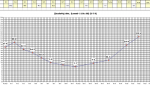
However, I have a question. I hope you can help me. I test Kitty's BG early in the morning before she has breakfast. That's always the lowest value of the day (today 187). I realize during the day, it is never that low. In the evening, it is always around 300-320. I know BG rises after food intake, but does it rise so much? Yesterday it was 220 in the morning, and in the evening (after she eats 2 more meals during the day) it was 319. 100 points in between!! This morning at 8.30 it was 187, and 15 minutes ago at 12:30 it was 280. Are these values normal? I also have to say that Kitty has a habit of not eating one at a time. She eats a little and goes away, then comes back and eats a little more. For example, she finished the meal I served her this morning at 9:00 at 12:00 in the afternoon. I tested her at 12:30 and it was 280.
I hope I managed to explain my question well. In summary; is it normal to have a difference of 100-120 points between the BG values tested in the morning and in the evening? I don't give her shots, just 2.5 tablets a day (before she eats breakfast, after I test her).
Thanks in advance
Last time I wrote here was when our vet gave me Humilin to shoot my Kitty twice a day and went on vacation. I was alone with syringes and Humilin in my hands, and of course, I refused to give her shots under those circumstances. It was also the time I started to try to learn to hometest. I am doing it very well know with the help and tolerance of my Kitty.
I decided to change my vet, and after an interview, I went to another vet. He also consulted a professor for the diagnoses and treatment. The other had diagnosed Kitty with diabetes only by looking at the BG at the vet, nothing else. The professor made a complete check-up with ultrasound and all the blood tests. Good news: Kitty has no other health problem (he saw in the ultrasound that her liver is a little bit fatty, although its not a fatty liver disease and there were no symptoms of it, so it was an early diagnoses for her liver and we also treat it with vitamins now) and her diabetes is not a complicated one, as the professor says. Her fructosamine was checked. Her BG was always between 300-350 during the day, not higher (only with diet change). The prof. told us to give her wet food and the vet told us to ignore the BG measured at the vet and encouraged hometesting!!!!!!
For 2 days, we gave her only vitamins and low fat wet food. Her BG lowered from 345 to 280. The 3rd day they started to give her pills for diabetes (2 mg. onece a day). The next day she was 250. It's been almost 2 weeks now, and this morning her BG was 187. I know and I read that pills are not a good idea and most of the time cats do not respond to them and giving pills is a waste of time but I think she is responding well to the oral tablets. At least for now.
I asked them when I should decide that tablets are not working as Kitty's BG is always at the same level and what the other alternative will be if it does not work (I wanted to see if they will give us insulin, or they will insist on giving something that obviously won't work). They told me to bring Kitty there again after a month, they will have blood and hormone tests to see Kitty's reaction to the treatment, and we will sit down and talk about alternative treatments together considering Kitty's and my conditions. So, as far as I understand, they want to start slow, and see the effect of the diet change and the pills for a short time. They seem to know what they have been doing (for the first time Ive met a vet who knows about hometesting and wet food for diabetes treatment), they are full of detailed explanations for my questions and their first treatment for only a week seems to work well for Kitty (she is down from 345 to 187 already). I also told them that I read pills might cause liver damage. They said it is true if it is used for a long time. This, I think, means they are not planning to use pills for a long time.
However, I have a question. I hope you can help me. I test Kitty's BG early in the morning before she has breakfast. That's always the lowest value of the day (today 187). I realize during the day, it is never that low. In the evening, it is always around 300-320. I know BG rises after food intake, but does it rise so much? Yesterday it was 220 in the morning, and in the evening (after she eats 2 more meals during the day) it was 319. 100 points in between!! This morning at 8.30 it was 187, and 15 minutes ago at 12:30 it was 280. Are these values normal? I also have to say that Kitty has a habit of not eating one at a time. She eats a little and goes away, then comes back and eats a little more. For example, she finished the meal I served her this morning at 9:00 at 12:00 in the afternoon. I tested her at 12:30 and it was 280.
I hope I managed to explain my question well. In summary; is it normal to have a difference of 100-120 points between the BG values tested in the morning and in the evening? I don't give her shots, just 2.5 tablets a day (before she eats breakfast, after I test her).
Thanks in advance