
New to the forum with a diabetic old cat.

Status
Not open for further replies.

Geoff Chadwick

Member Since 2020
My wife's cat Hatter, who we think is somewhere around 12-14 if not older. He topped out at 20lb but is currently down to 17 and change at his last vet appointment.

He's also missing most os his teeth, has megacolon and has been hospitalized several times in his life for obfuscation and even bladder spasms. He's a happy cat, just not the most healthy.

He's been on vetsulin 5.5u 2x per day (and he takes cisapride, enulose and miralax for the megacolon) and over the first month we transitioned up from 1u to 5.5, and it's been a 3 month journey so far.

With giving him insulin at 8:30am/pm each day the vet has kept up with his blood sugar and last week we finally got our own meter and checking it around 3pm with their meter both were about 135 within a few points so tomorrow we are finally going to do our own BG curve.

He's been doing "okay" but he still drinks a metric ton of water and pees a LOT and has intermittent issues going to the bathroom outside the litterbox. Sometimes on a bath mat or a towel on the floor, but often literally just outside the litterbox like he just can't make it the last few steps. Our flat is 1400sq ft and we have 3 litter boxes in the house.

Every time this happens the vet suggests we drop him onto antibiotics for a week for a potential bladder infection, but they make him miserable, give him a wicked case of the runs, and he can't make it to the litter box when on them... And they're expensive.

The vet has him on Purina Pro plan's diabetic food (dry) with matching wet food to help him take his meds. I'm concerned that the bathroom problems (especially all the thirst) is part of it and definitely not a good sign, but the BG of 130 at 6 hours after insulin says he may not need more insulin, but that before food his BG may be insanely high (curve coming tomorrow).

We'd love to get him into remission obviously, but we understand that may not be possible - If we can get his bathroom use under control and his thirst under control (both likely related to his diabetes) we'd take that at least. Our hardwood floors are taking a serious beating.

Sorry for the long intro.

Really, my question is if there are any suggestions on thirst issues even with insulin? Our plan is to do the curve then talk to our vet on Monday. My only idea is to transition him (life long kibble cat) to 100% ProPlan diabetic wet food with the hope it mitigates some of his thirst, but before we do that we need to discuss an insulin strategy with the vet to reduce his insulin significantly to make sure we don't over dose.
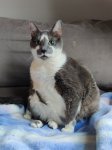
 

Attachments

  • IMG_20200915_182702.jpg
    IMG_20200915_182702.jpg
    41.3 KB · Views: 132
Oh my goodness waht a HANDSOME bot Hatter is! swoooon

WELCOME TO FDMB The best site on this planet to help you learn everything you need to know about feline diabetes!

We are dedicate to helping any and all that find this forum to get the best help and guidance to navigating this disease.

With all of Hatters other issues I myself am not qualified to address most of Hatters issues and just how those issues co-mingle with FD.
BUT the good new here is there are others that do! I'll try to fid some of them for ya . They could just turn up on their own. so keep checking. ;)
Im going to give you some links that will better your experience here.
First:
New? How You Can Help Us Help You!

I will be back with more (im tech challenged soo...please be patient)

Second:
FDMB SPREADSHEET INSTRUCTIONS
This will help us ALL to track just how the insulin is working for hatter
 
Last edited:
Hi and welcome!!

You’re certainly doing the best thing you can for him by home testing. High carb foods like dry are really not good for diabetic cats and you’re right to transition him to wet food. Ideally less than 10% carbs like fancy feast pate. But you really need to be testing at home because that change alone can drastically lower his bg and you could risk a hypo if you’re not monitoring him.

the other thing to consider is that Vetsulin, also called caninsulin because it was made for canines, is not always the best insulin for cats. If you’ve been on it for a while and have not seen the results you want, like less drinking and peeing, I’d consider switching to a gentler longer acting insulin like prozync or Lantus. I’m sorry if I missed it, but what meter did you get? Human meters are fine and the test strips are a lot more affordable.

lastly, the peeing outside the litter box could be a sign of neuropathy. Is he having a hard time going in and out of it as well as jumping/walking? Neuropathy is a common side effect of unregulated diabetes, but the good news is that is reversible once your cat is regulated.
 
Third:
this will be your signature it gives everyone "At a glance" information on all of Hatters particulars"
  • Click on Signature. This is where you will put information that helps us give you feedback.
    • There is a limit of two lines which may include two links; you may separate pieces with commas, dashes, | etc. This is where you paste the link for your spreadsheet, once it is set up.
    • Add any other text, such as
    • Caregiver & kitty's name (optional)
    • DX: Date
    • Name of Insulin
    • Name of your meter
    • Diet: "LC wet" or "dry food" or "combo"
    • Dosing: TR or SLGS or Custom (if applicable)
    • DKA or other recent health issue (if applicable)
    • Acro, IAA, or Cushings (if applicable)
    • Spreadsheet link. Please put the signature link on the bottom line of your signature information, on its own, so it is easy to find.
    • Please do not put any information about your location in the signature for security reasons. If you wish to add your country location, please add it to your profile.
Be sure to click the 'Save Changes' button at the bottom. If you need help urgently it is important we know these things at a glance. We don’t want to waste valuable time finding out information.

Again WELCOME TO OUR FAMILY:bighug:
jeanne
 
Hello and welcome!

Lots of good info already, I'll just add one thing about the BG numbers you've gotten so far:

With giving him insulin at 8:30am/pm each day the vet has kept up with his blood sugar and last week we finally got our own meter and checking it around 3pm with their meter both were about 135 within a few points so tomorrow we are finally going to do our own BG curve.

So, that test at 3:30 (in our notation-- we're all in different time zones here-- "+7.5" hrs post-shot) was a decent number, but there are some things about the context that worry me a little. [edit: flip-flopped the times despite the quote being right there :confused:, should be 3:00 and +6.5, but message is the same]. In particular, vetsulin usually shows peak action earlier than this, I think around 4-5 hrs post-shot. So that 135 may mean that Hatter was going even lower than that earlier. You may or may not see that when you do your curve, for reasons I'll explain below, but it's something to keep in mind with him being on a fairly large dose of vetsulin.

the BG of 130 at 6 hours after insulin says he may not need more insulin, but that before food his BG may be insanely high (curve coming tomorrow).

If only it worked this simply! High numbers + insulin = low numbers, usually, true, but you can't really infer anything from just seeing the one low number. He may have started at a moderate BG, crashed down from the insulin around +4, then you caught him on his way back up again. There are a lot of other possibilities, too. Unfortunately, it's not always as simple as "insulin goes in, numbers go down"-- the cat's body gets a vote and is responding to conditions, sometimes in ways that can be very confusing.

For example, when insulin drops BG to a point that the cat's body perceives as too low, it can trigger what we call a "bounce"-- sugars are dumped into the blood in a safety measure, and BG rockets upwards. Where it gets really confusing is that bounces can persist for days at a time, obscuring the within-day pattern of response to insulin by keeping numbers consistently high.

That's also one possible explanation for Hatter's continued diabetes symptoms despite the good number you caught today. He may be spending a lot of time in high numbers, but not because he's not getting enough insulin, because he's getting too much.

There's really no way to tell for sure what's going on with him and his insulin response without regular testing, so kudos for getting that up and running! It takes a little while to gather the data you need to see the patterns, but you've done the hard part just by getting started!

One last note on food changes: ideally, you will want to eventually switch Hatter to a low-carb wet food (if he can tolerate it with his digestive issues; those take precedence with any food choices). However, please do not switch to low-carb before you are testing very regularly in every shot cycle (at least a pre-shot test plus one or more tests between shots when the insulin is most active). Switching to low-carb can, in some kitties, drop BG by 100pts or more, so to be safe you need to be monitoring closely during any switch.

Whew! I meant to just put a short note here, but I wrote a book, sorry! Hatter is a cutie, hope we can get him feeling better (and help save your wood floors, too!). Welcome again!
 
Last edited:
Hi Geoff,

Welcome to yourself and Hatter. He has absolutely gorgeous markings! :)

As Ale mentions above, the inappropriate toileting may be due to diabetic neuropathy. In addition to working towards improved regulation, supplementation with vitamin B12 in methylcobalamin form also aids healing of the affected nerves.

I'm tagging @Diane Tyler's Mom to ask her to post details of a suitable, diabetic-friendly methylcobalamin supplement for you.

In the interim, strategically placed pee pads may help mitigate the worst of the accidents.


Mogs
.
 
Hi Here is the link https://www.vitacost.com/vitacost-vitamin-b-12-methylcobalamin-5000-mcg-100-capsules-6

Alot of members use this , I use it myself you can buy it on line from Vitacost
Vitamin B-12 Methylcobalamin -- 5000 mcg - 100 Capsules
It's 17.99 just be sure this is the one you buy
The only difference is the Zobaline has 200 mcgs of folic acid
So I buy the folic acid at the supermarket and crush it up and add it to the B-12
If you can't find the 200 mcg get the 400 mcg and cut it in half
The Vitacost brand is a capsule so just open it and pour the powder on the wet food
Has no taste, no need to crush it up
The Zobaline is 33.99 for 60 pills, too expensive
I saw a big improvement I'd say 3 months, could be sooner. One capsule a day.
Once you get your kitty better regulated the B-12 methyl will help


Vitamin B-12 Methylcobalamin -- 5000 mcg - 100 Capsules

  • SKU #: 835003001804
  • Shipping Weight: 0.23 lb
  • Servings: 100
 
Hi
My wife's cat Hatter, who we think is somewhere around 12-14 if not older. He topped out at 20lb but is currently down to 17 and change at his last vet appointment.

He's also missing most os his teeth, has megacolon and has been hospitalized several times in his life for obfuscation and even bladder spasms. He's a happy cat, just not the most healthy.

He's been on vetsulin 5.5u 2x per day (and he takes cisapride, enulose and miralax for the megacolon) and over the first month we transitioned up from 1u to 5.5, and it's been a 3 month journey so far.

With giving him insulin at 8:30am/pm each day the vet has kept up with his blood sugar and last week we finally got our own meter and checking it around 3pm with their meter both were about 135 within a few points so tomorrow we are finally going to do our own BG curve.

He's been doing "okay" but he still drinks a metric ton of water and pees a LOT and has intermittent issues going to the bathroom outside the litterbox. Sometimes on a bath mat or a towel on the floor, but often literally just outside the litterbox like he just can't make it the last few steps. Our flat is 1400sq ft and we have 3 litter boxes in the house.

Every time this happens the vet suggests we drop him onto antibiotics for a week for a potential bladder infection, but they make him miserable, give him a wicked case of the runs, and he can't make it to the litter box when on them... And they're expensive.

The vet has him on Purina Pro plan's diabetic food (dry) with matching wet food to help him take his meds. I'm concerned that the bathroom problems (especially all the thirst) is part of it and definitely not a good sign, but the BG of 130 at 6 hours after insulin says he may not need more insulin, but that before food his BG may be insanely high (curve coming tomorrow).

We'd love to get him into remission obviously, but we understand that may not be possible - If we can get his bathroom use under control and his thirst under control (both likely related to his diabetes) we'd take that at least. Our hardwood floors are taking a serious beating.

Sorry for the long intro.

Really, my question is if there are any suggestions on thirst issues even with insulin? Our plan is to do the curve then talk to our vet on Monday. My only idea is to transition him (life long kibble cat) to 100% ProPlan diabetic wet food with the hope it mitigates some of his thirst, but before we do that we need to discuss an insulin strategy with the vet to reduce his insulin significantly to make sure we don't over dose.

Hi Geoff
What a beautiful boy Hatter is. The folks on here will soon help you help him.
Just wanted to say don't get disheartened if doing the full curve is hard to start with - cats vary so much in attitude (should that be cattitude?) - some seem just sit there and don't care as long as they get their cuddles and \or treat (envious sigh - can someone lend me one like that to talk to Mac please !!) others take more effort or longer to persuade. So if Hatter turns out to be one of the latter it's not you & don't despair there are plenty of tips from those in the know on here.
Hoping it goes like a dream for you & wishing you good numbers !
Gill
 
Last edited:
Hi Geoff,

Welcome to yourself and Hatter. He has absolutely gorgeous markings! :)

As Ale mentions above, the inappropriate toileting may be due to diabetic neuropathy. In addition to working towards improved regulation, supplementation with vitamin B12 in methylcobalamin form also aids healing of the affected nerves.

I'm tagging @Diane Tyler's Mom to ask her to post details of a suitable, diabetic-friendly methylcobalamin supplement for you.

In the interim, strategically placed pee pads may help mitigate the worst of the accidents.


Mogs
.
Hi Geoff,

Welcome to yourself and Hatter. He has absolutely gorgeous markings! :)

As Ale mentions above, the inappropriate toileting may be due to diabetic neuropathy. In addition to working towards improved regulation, supplementation with vitamin B12 in methylcobalamin form also aids healing of the affected nerves.

I'm tagging @Diane Tyler's Mom to ask her to post details of a suitable, diabetic-friendly methylcobalamin supplement for you.

In the interim, strategically placed pee pads may help mitigate the worst of the accidents.


Mogs
.
He does have gorgeous markings. It's like a fleur-de-lis on his face.
 
Hey Geoff and Hatter — welcome to FDMB.

Regarding the inappropriate urination ... have you actually seen him pee outside the box or do you just see the evidence after the fact? And are your litter boxes covered or open?

The reason I ask is because if you’re finding urine near the box, sometimes the cat is actually going into the box but overshooting the rim so that the urine lands outside the box on the floor. Sometimes diabetic cats become weaker in the hind end and don’t squat as far, so you get the “fountain” effect. It can happen with both covered and uncovered litter boxes because even with covered boxes, sometimes the cat stops turning around.

If you’ve actually witnessed Hatter peeing outside the boxes, then you might have an issue with him being particular with soiled litter (it can get pretty gross quickly when they’re urinating so much) or getting turned off from the box due to bad or painful association, such as when they’ve had a urinary tract infection.

Dr. Lisa has some very good info and pointers on her website ( www.catinfo.org ), including larger and taller-sided boxes, how to look at a litter box from your cat’s perspective, etc. She also has info about feline nutrition. It’s really worth a read.

I second what Mogs suggested about putting disposable underpads under/around the boxes. They can make cleanup much easier and save your floors and sanity.

That’s a pretty hefty dose of insulin in a short timeframe — I’m glad you’re testing at home. I too suggest getting some readings earlier in the cycle in case Hatter is dropping lower.
 
Hey Geoff and Hatter — welcome to FDMB.

Regarding the inappropriate urination ... have you actually seen him pee outside the box or do you just see the evidence after the fact? And are your litter boxes covered or open?

The reason I ask is because if you’re finding urine near the box, sometimes the cat is actually going into the box but overshooting the rim so that the urine lands outside the box on the floor. Sometimes diabetic cats become weaker in the hind end and don’t squat as far, so you get the “fountain” effect. It can happen with both covered and uncovered litter boxes because even with covered boxes, sometimes the cat stops turning around.

If you’ve actually witnessed Hatter peeing outside the boxes, then you might have an issue with him being particular with soiled litter (it can get pretty gross quickly when they’re urinating so much) or getting turned off from the box due to bad or painful association, such as when they’ve had a urinary tract infection.

Dr. Lisa has some very good info and pointers on her website ( www.catinfo.org ), including larger and taller-sided boxes, how to look at a litter box from your cat’s perspective, etc. She also has info about feline nutrition. It’s really worth a read.

I second what Mogs suggested about putting disposable underpads under/around the boxes. They can make cleanup much easier and save your floors and sanity.

That’s a pretty hefty dose of insulin in a short timeframe — I’m glad you’re testing at home. I too suggest getting some readings earlier in the cycle in case Hatter is dropping lower.
Excellent point! Minnie is an elevator kitty and even now that she’s fully recovered from the neuropathy, I still have to have pee pads all around her litter box. If I’m standing right there and see her pee, I can usually gently hold her butt down, but overnight the pee pads are a life saver. Now and back when she had neuropathy.
 
Status
Not open for further replies.
Back
Top