New To Diabetes - Insulin seems to have stopped working during first week

Christine and Bella

Member Since 2025
Hello!

I am posting for my cat Bella.

She was diagnosed on 12/30 with diabetes when they checked her glucose and it said 388. She was prescribed 1 unit of Prozinc every 12 hours with food.

Some back story: She currently eats hills kidney care prescription diet dried food , with some weruva bff fowl play pate wet food. I am aware that this dried food is not great, she is 16 years old and a dried food addict and won't eat much wet food. I have tried feeding her raw food, and a variety of wet foods before she got diagnosed with diabetes, she won't consume enough calories of it. She had early kidney disease about 2 years ago, since switching her to this dried food and low phosphorus wet food when she will eat it, her kidney values have been great. I am on board for trying to get her on a lower carb diet, I have ordered young again zero mature dry food and it still needs to come in. I will try to push more wet food as well and see if she will eat it. I am just worried because she's not a huge eater and I really don't think she will eat enough wet food to get her calories. I have tried putting her on an all wet food diet before and it didn't work well so I am anxious. I am trying to balance getting her on a low carb diet while still making sure she eats enough to receive the insulin shot in the first place and keep calories up. I would love advice on this and how to safety switch her over to more low carb when I get better food. Would Dr Elseys dried food be good for her kidneys as well?

She has a freestyle libre 3 sensor and I test manually before each shot and sometimes after 4 or 6 hours as well. At the beginning the insulin seemed to be working nicely, but now it won't. I gave her her shot in the morning yesterday and her libre sensor numbers were too high to read the whole 12 hours and never came down. I gave her 1 unit last night and her numbers only came down shortly before spiking again. This morning I gave her another shot but it looks like her numbers won't be coming down again. I feel like this is caused by her diet, but I know can't switch it up quickly or it will hurt her. Worried about her numbers coming down, would love for her to feel better soon but feel stuck on next steps. I posted my spreadsheet link below

Bella's Spreadsheet (Christine)
 
Hey there! So, first caveat: I'm not knowledgeable about kidney issues and can't speak to how anything affects that area, really.

I'm also fairly new around here and don't have a ton of experience in evaluating other peoples' cats, especially compared to some of our veteran users. That said, looking at your spreadsheet, the main thing I'm noticing is a lot of what we call "bouncing" - when a cat who has had high BG for a long while is given insulin and drops to a much lower (and more desirable) number, their system, which isn't used to it, can essentially freak out and overcompensate, shooting them back up into highs again. That doesn't mean the insulin has stopped working; it means her system isn't done adjusting.

I'm not familiar with ProZinc, so I don't know if it's different, but with Lantus and biosimilars, I know that it takes a good week to really see how a new dose is affecting a cat. So that could be a factor as well.

I'm guessing January 1st wasn't actually her first dose--or was it? If not, in order to give folks here some context, it would be helpful if you could create a 2025 sheet for your spreadsheet and backfill some of the older data (if you have it). It's hard to figure out patterns, etc, with only a few days of data. Also, you'll want to fill in your signature. This post offers instructions for the steps you can take to help FDMB users quickly understand your cat's circumstances and offer advice and assistance: Sticky - New? How You Can Help Us Help You!

Hopefully someone who knows more about ProZinc will come along soon! In the meantime, glad to have you here. FD is complicated and it can be really stressful to try and figure stuff out on your own; the support from other cat parents who have been through the same can be really helpful. ❤️
 
I'm glad Allie stopped in. Where Allie's experience helps out is understanding how frustrating the transition from dry to wet. It's a common enough problem here. We do have a couple notes that might help you: Transitioning your cat from dry to wet food. The second link is a list of kidney friendly foods, including one that is also suitable for diabetics: CKD food Chart Sometimes a variety of wet food options will work.

This list on the Felinecrf website (highly recommend if not there already), has carb and phosphorus numbers for dry food. Tanya's Comprehensive Guide to Feline Chronic Kidney Disease- Dry Food Data USA The Dr. Elsey's doesn't seem to be as low in phosphorus as some of the Young Again varieties.

As far as insulin dosing, check out the PROZINC DOSING METHODS at the top of the Prozinc forum. We look at how low the dose is taking your kitty. It could be your kitty might need a dose increase to 1.25 units. Tagging @Suzanne & Darcy for help.
 
Looking at your spreadsheet, I would increase to 1.25 units. You have been seeing blue nadirs between bounces and that’s wonderful.

Also, when you shoot a reduced dose based on a lower pre-shot value then please try to get a test or two. If we don’t record this data, you will not have information to tell you whether that was a good amount, too much or too little insulin (which will help guide future dosing decisions.)

Good job getting everything set up with regard to testing. It’s important to be able to use a handheld glucometer because the Libre sensors aren’t 100 percent reliable when your cat is in the lower numbers under 100.
 
Regarding the dry food, it’s a process. You can always try to transition her to LC wet, but it’s paramount that she eat and take in enough calories. We can deal with the dry for now and will adjust insulin accordingly.

The Young Again Zero Mature is lower in phosphorus (with a 0.5% DMB) than the Dr. Elsey’s so it’s a better choice for her kidneys. She will need to have adequate hydration though so things like a drinking fountain or getting her to drink water other ways will be important.
 
The Dr. Elsey’s has a phosphorus content of 1.08% on a dry matter basis — that’s for the chicken formula— so of she will eat the YA Zero Mature its a better choice (but cats don’t always eat what we want them to.)
 
Can you post her labs here or add to the labs tab on your spreadsheet (making sure the reference range are the same as your vet’s lab. I would like to see her kidney values. You will want to keep her blood phosphorus levels close to 4. If they are higher than that, you can always add a phosphorus binder.
 
Just to be clear, the new dose of 1.25 units should be held for seven days before we make any other dosing changes— unless she has a nadir under 90 which would mean we would immediately drop her back down to 1 unit. I recommend feeding her a small meal/snack at +2 and another one at about +4. These will help smooth things out and prevent steep drops in BG. If you need to feed her again then it’s okay, but don’t feed for two hours before her pre-shot tests for now — so we know we have an accurate AMPS/PMPS that is not inflated by food. Tell me how you are feeding her now as far as timing?
 
Hey there! So, first caveat: I'm not knowledgeable about kidney issues and can't speak to how anything affects that area, really.

I'm also fairly new around here and don't have a ton of experience in evaluating other peoples' cats, especially compared to some of our veteran users. That said, looking at your spreadsheet, the main thing I'm noticing is a lot of what we call "bouncing" - when a cat who has had high BG for a long while is given insulin and drops to a much lower (and more desirable) number, their system, which isn't used to it, can essentially freak out and overcompensate, shooting them back up into highs again. That doesn't mean the insulin has stopped working; it means her system isn't done adjusting.

I'm not familiar with ProZinc, so I don't know if it's different, but with Lantus and biosimilars, I know that it takes a good week to really see how a new dose is affecting a cat. So that could be a factor as well.

I'm guessing January 1st wasn't actually her first dose--or was it? If not, in order to give folks here some context, it would be helpful if you could create a 2025 sheet for your spreadsheet and backfill some of the older data (if you have it). It's hard to figure out patterns, etc, with only a few days of data. Also, you'll want to fill in your signature. This post offers instructions for the steps you can take to help FDMB users quickly understand your cat's circumstances and offer advice and assistance: Sticky - New? How You Can Help Us Help You!

Hopefully someone who knows more about ProZinc will come along soon! In the meantime, glad to have you here. FD is complicated and it can be really stressful to try and figure stuff out on your own; the support from other cat parents who have been through the same can be really helpful. ❤️
Great thanks, I will update my signature, do you know what it means by the "date" Im supposed to put in the signature? Is it the date she was diagnosed? Also what is Dosing mean? I don't know what TR or SLGS means so not sure what to put

December 30th was her first dose that the vet gave her after she was diagnosed. After She was given that I went home and started researching and read about hypo, since it was the first day I didn't have a glucometer until January 1st so technically January 1st is when I started giving her insulin and tracking it after I had a hypo kit and glucometer ready.
 
I'm glad Allie stopped in. Where Allie's experience helps out is understanding how frustrating the transition from dry to wet. It's a common enough problem here. We do have a couple notes that might help you: Transitioning your cat from dry to wet food. The second link is a list of kidney friendly foods, including one that is also suitable for diabetics: CKD food Chart Sometimes a variety of wet food options will work.

This list on the Felinecrf website (highly recommend if not there already), has carb and phosphorus numbers for dry food. Tanya's Comprehensive Guide to Feline Chronic Kidney Disease- Dry Food Data USA The Dr. Elsey's doesn't seem to be as low in phosphorus as some of the Young Again varieties.

As far as insulin dosing, check out the PROZINC DOSING METHODS at the top of the Prozinc forum. We look at how low the dose is taking your kitty. It could be your kitty might need a dose increase to 1.25 units. Tagging @Suzanne & Darcy for help.
Great thank you for these tips, her glucose did end up dropping to 130 it just took until 12:30, I gave her the shot at 7:30 for reference. I will try to get a variety of wet foods that she can take and some dry food that is low in carbs for now. Not sure if I will ever get her to be able to eat just wet, but we will see! For now, do you have advice on a safe way to transition to a lower carb diet for her body?
 
Great thank you for these tips, her glucose did end up dropping to 130 it just took until 12:30, I gave her the shot at 7:30 for reference. I will try to get a variety of wet foods that she can take and some dry food that is low in carbs for now. Not sure if I will ever get her to be able to eat just wet, but we will see! For now, do you have advice on a safe way to transition for her body?
Looking at your spreadsheet, I would increase to 1.25 units. You have been seeing blue nadirs between bounces and that’s wonderful.

Also, when you shoot a reduced dose based on a lower pre-shot value then please try to get a test or two. If we don’t record this data, you will not have information to tell you whether that was a good amount, too much or too little insulin (which will help guide future dosing decisions.)

Good job getting everything set up with regard to testing. It’s important to be able to use a handheld glucometer because the Libre sensors aren’t 100 percent reliable when your cat is in the lower numbers under 100.
Ok, do you think I should wait to increase to 1.25 until I have had a solid week of 1 unit so i have more data to back it up? I feel bad about only giving the 1/2 dose those times but I didn't know and I wanted to be on the safe side. Now I now that those numbers aren't that low and it will be ok. Thank you for your response
 
Just to be clear, the new dose of 1.25 units should be held for seven days before we make any other dosing changes— unless she has a nadir under 90 which would mean we would immediately drop her back down to 1 unit. I recommend feeding her a small meal/snack at +2 and another one at about +4. These will help smooth things out and prevent steep drops in BG. If you need to feed her again then it’s okay, but don’t feed for two hours before her pre-shot tests for now — so we know we have an accurate AMPS/PMPS that is not inflated by food. Tell me how you are feeding her now as far as timing?
I wake up, test her, then feed her some of her wet food and dry food, then shoot while she eats. I leave out her wet food through the day for her to snack on, shes a huge grazer and honestly does not eat much. Then 4 hours before I do her inulin shot at night, I take up her food. Then after I test at night I put her food back down, give the shot, and let her have food for 2 hours before I take it up again overnight
 
Can you post her labs here or add to the labs tab on your spreadsheet (making sure the reference range are the same as your vet’s lab. I would like to see her kidney values. You will want to keep her blood phosphorus levels close to 4. If they are higher than that, you can always add a phosphorus binder.
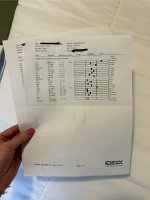
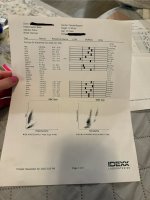
here are her labs
 

Attachments

  • IMG_9087 2.jpg
    IMG_9087 2.jpg
    386.5 KB · Views: 15
  • IMG_9089 2.jpg
    IMG_9089 2.jpg
    456.2 KB · Views: 11
Great thanks, I will update my signature, do you know what it means by the "date" Im supposed to put in the signature? Is it the date she was diagnosed? Also what is Dosing mean? I don't know what TR or SLGS means so not sure what to put
Yes, the date is the date of your cat's diagnosis. We use the shorthand "dx" for "diagnosis" a lot. You can see this in Suzanne's signature, for example, after her cat's name and age. (Mine's a little more complicated on this point because my cat was in remission for awhile, so I have two dx dates, and included the date of remission as well.)

"Dosing" refers to the two methods that most people on the board follow for determining increases and decreases in their cat's insulin dose. TR stands for "Tight Regulation," and SLGS for "Start Low, Go Slow." They're described in this post, which Wendy linked you to above: Sticky - PROZINC DOSING METHODS

If you're not sure about them yet, you don't need to include that in your signature for now. I didn't right away, when I started posting here. But it becomes important later, if you wind up using the board regularly and are looking for advice.
 
here are her labs
That’s good bloodwork. I don’t see anything concerning in there, particularly not his kidney values except maybe you can try to feed the lower phosphorus foods — although the renal food he is already eating is very low phosphorus but the other food may not be. But his bloodwork is looking good!
 
Look at my signature. You don’t put the cat’s actual dose in the signature, you would just put SLGS in the signature meaning that you are following the Start Low Go Slow method. With dry food in the picture you will need to stick with SLGS.
 
The main information I am looking for in a signature is your first name unless you don’t want to share it, cat’s name, age/date of birth. Date of diagnosis. Any history of DKA if applicable. Name of insulin. Name of meter. Food type being fed. Any medical conditions other than diabetes, any medications being given. I also find the time zone to be very helpful when I am advising members.
 
I wake up, test her, then feed her some of her wet food and dry food, then shoot while she eats. I leave out her wet food through the day for her to snack on, shes a huge grazer and honestly does not eat much. Then 4 hours before I do her inulin shot at night, I take up her food. Then after I test at night I put her food back down, give the shot, and let her have food for 2 hours before I take it up again overnight
Okay. That will probably be fine if she’s a big time grazer. If it becomes a problem where she’s dropping too quickly early in the cycle then you may need to “help her graze” at a few key points in time. But this is good. Great job with the test, feed, shoot timing and taking the food up, etc. Having the cat eat much after nadir (maybe +6 for a lot of cats) can make the numbers rise more quickly, but let’s just see how it goes and make changes only as needed.
 
Ok, do you think I should wait to increase to 1.25 until I have had a solid week of 1 unit so i have more data to back it up? I feel bad about only giving the 1/2 dose those times but I didn't know and I wanted to be on the safe side. Now I now that those numbers aren't that low and it will be ok. Thank you for your response
No. You have plenty of data already and she’s been on the 1 unit long enough. Nice blues yesterday too! She’s clearing the bounces quickly so I am extremely op. I don’t anticipate her needing a very large dose of insulin.
 
We need to get your spreadsheet attached to your signature so we don’t have to keep scrolling up to the top of this thread to find it. 🙂 At first I was looking for it and saying to myself…. “Oh no, her spreadsheet is gone!” Then I scrolled up.

Any Libre scans from last night after the 208 PMPS and the 1 unit dose?

Speaking of Libre scans, we need to be able to differentiate between the glucometer readings and the Libre scans. Some members will put an asterisk after the glucometer readings, some people put an R for ReliOn after the number. One person tried to put the glucometer readings in bold text but it was too hard to tell the difference for a lot of us, depending upon what type of screen we were looking at.
It’s important to put both sets of numbers in a single cell for those times you are actually comparing the Libre and the ReliOn (which you will want to do in the lower numbers.). The downside is that you will have to manually color code the cell when you do that, but once you get good at doing that it’s pretty fast.
 
That’s good bloodwork. I don’t see anything concerning in there, particularly not his kidney values except maybe you can try to feed the lower phosphorus foods — although the renal food he is already eating is very low phosphorus but the other food may not be. But his bloodwork is looking good!
I already feed a very low phosphorus diet, that's why her kidney values are good, I have worked really hard on getting them down. They were high once and she had early kidney disease but I've gotten her values back down
 
We need to get your spreadsheet attached to your signature so we don’t have to keep scrolling up to the top of this thread to find it. 🙂 At first I was looking for it and saying to myself…. “Oh no, her spreadsheet is gone!” Then I scrolled up.

Any Libre scans from last night after the 208 PMPS and the 1 unit dose?

Speaking of Libre scans, we need to be able to differentiate between the glucometer readings and the Libre scans. Some members will put an asterisk after the glucometer readings, some people put an R for ReliOn after the number. One person tried to put the glucometer readings in bold text but it was too hard to tell the difference for a lot of us, depending upon what type of screen we were looking at.
It’s important to put both sets of numbers in a single cell for those times you are actually comparing the Libre and the ReliOn (which you will want to do in the lower numbers.). The downside is that you will have to manually color code the cell when you do that, but once you get good at doing that it’s pretty fast.
Ok I just updated my signature to include it. I do have readings from last night and have updated numbers in to the spreadsheet. I will go back in and differentiate the numbers from the meter by using * for relion meter. All of her late evening numbers are from libre sensor unless its a pre shot, I always test those using a glucometer.
 
Last edited:
Okay. That will probably be fine if she’s a big time grazer. If it becomes a problem where she’s dropping too quickly early in the cycle then you may need to “help her graze” at a few key points in time. But this is good. Great job with the test, feed, shoot timing and taking the food up, etc. Having the cat eat much after nadir (maybe +6 for a lot of cats) can make the numbers rise more quickly, but let’s just see how it goes and make changes only as needed.
Ok sounds good, if anything I feel like lately her numbers haven't been dropping fast enough, I feel like it's been taking her a while to drop after I give her her insulin, I thought it was supposed to start dropping at hour 2 or 3 and I feel like it hasn't been happening until hour 4 or 5
 
That’s good bloodwork. I don’t see anything concerning in there, particularly not his kidney values except maybe you can try to feed the lower phosphorus foods — although the renal food he is already eating is very low phosphorus but the other food may not be. But his bloodwork is looking good!
I would still try to get the Phosphorus level down closer to 4 so that her kidneys don’t have to do as much work. 5.5 is a little high for an older cat that previously had higher kidney values. What was elevated before? Do you remember? If it was BUN then that’s not necessarily a good indicator because it’s so influenced by hydration status at the time the blood is drawn. Creatinine is a better indicator, but it can be influenced by muscle/weight loss or gain. It has to be taken into account with the Urine Specific Gravity also. So maybe her bloodwork was just transiently elevated and you switching foods helped her a lot.
 
Ok sounds good, if anything I feel like lately her numbers haven't been dropping fast enough, I feel like it's been taking her a while to drop after I give her her insulin, I thought it was supposed to start dropping at hour 2 or 3 and I feel like it hasn't been happening until hour 4 or 5
It’s hard to say if that’s happening because she’s been spending time bouncing —and that keeps her numbers high when we typically would expect them to go down — then the numbers start coming down later than expected as the she is clearing the bounce. Look at last night though—she started dropping at a more typical time of +2 and +3. Everything is in a state of flux right now as her body is adjusting to the insulin. She’s not doing badly at all — and neither are you! Keep up the good work!
 
Back
Top