New Member Question: Clinical signs with normal BG?

Status
Not open for further replies.

Becky C.

Member Since 2020
If this topic has been covered, please direct me to the thread. I haven't been able to find anything (scroll down for the main question if you want to skip the background).

Background:
I have two cats: Iggy and Piper. Iggy was my daughter's cat for many years and lived with me years ago with his "brother", Rex. My daughter moved out about five years ago and took the cats with her. In recent months, Iggy started showing strong clinical signs of diabetes, but my daughter passed them off as him being a pain in the neck. She finally decided she couldn't take it anymore and we made an exchange. I had two girls who didn't get along. Chili is a very affectionate cat who needs more attention than I can give, and my daughter and her boyfriend are more than happy to have her.

I took Iggy in back in February. Immediately, I knew that he was urinating far too much. Then I remembered that the boxes were always sticky back when the boys lived with me. I assume that Iggy has had diabetes for at least five years before he was diagnosed.

The diagnosis came at the end of March. He started on 2 units 2x daily at meals. The vet wants his BG to stay between 80 and 120. Right from the start, he has tested mostly in the normal range, but his clinical signs haven't lessened. She upped the dosage in mid-May to 3 units 2x daily based on clinicals.

A couple of days ago, Iggy got to be just a big lump on the kitchen floor: he didn't move a whole lot. He started urinating wherever he was standing (on the stairs, in the living room) and defecating in the room where his favorite box is, but not near the box.

I gave him his last dose of 3 units at 7:30pm on 6/4. His numbers remain fine, his BG was 105 this morning before breakfast. He's still urinating and defecating anywhere except a box (I have four) or even near a box. He's wandering around the house the way a cat should, though, so I know he's feeling better.

My main question is: how long after regulation of BG levels can I expect to see the clinical signs starting to clear up? Is it normal for it to take months for polydipsia and polyuria to subside?

I'm not having much luck getting answers from the vet. She's young and I suspect that she hasn't had many, if any, diabetic cats to care for.
 
I am a new member too.

But did the vet check for other possible causes, such as kidney values, and UTI, ect.?

My another cat, Kitty, urinated a lot and outside of litter box, turned out her blood glucose is normal, but has kidney disease and UTI.
Yes, he was tested for a number of things. His BG was close to 300 at the vet's office and the fructosamine was very high, although I forget the number right now. He was negative for kidney and UTI issues.
 
Also new here and i agree with @Liang & Nathan . He might associate the litter box with pain. Does the vet know about the litter problem? What about Ketones?
She knows about the litter box issue, which is why she upped the dosage to 3 units. We haven't tested ketones yet. It's not a UTI, I think it's mostly an issue with diabetic neuropathy and not being able to get his hind legs over the lip of the box.

For a couple of days, he didn't move much at all. I don't strongly suspect hypoglycemia, but that was a possibility. If that was the case, that could explain why he didn't make it to any box in the house during that time. It doesn't explain why his neuropathy got worse after his diagnosis and initial treatment in March and why he's still drinking so much.
 
Iggy sounds like he feels awful, poor baby. I'm NOT an expert but wanted to welcome you the the best place to FIND answers.
There is a wealth of info here and people to help you decipher it.

IF Iggy has had untreated diabetes for 5 years he'd most likely be VERY skinny and eating you out of house and home. I dont know how much damage can be done to his organs. Lets see what others say ok?
Again I'm glad you found us! :bighug:
jeanne
 
Hi Becky and welcome!

I’m sorry if I missed this, but what insulin is he on? 105 for a preshot number is low and I’d recommend with a number like that to only give a token dose or skip altogether. But again, the type of insulin makes a difference. Was the 105 before or after eating? Because numbers are even lower without food and if you tested after he ate, you may have gotten an inaccurate 105 since it was influenced by food, meaning he could have been even lower before that. To give you an idea, Minnie is on Lantus and her preshot test last night was 101 so I skipped her dose because she could go much lower overnight and into hypo. Can you do us a favor and also set up your signature? It helps having all the info about your cat visible like the type of insulin and food so we don’t have to keep asking the same questions. Please take a look at this link:

http://www.felinediabetes.com/FDMB/threads/new-how-you-can-help-us-help-you.216696/

is he showing signs of neuropathy? When Minnie had severe neuropathy she would pee laying down wherever she was because she lacked the strength to walk to and get in the litter box

again welcome and we’re here to help! :bighug:
 
Last edited:
She knows about the litter box issue, which is why she upped the dosage to 3 units. We haven't tested ketones yet. It's not a UTI, I think it's mostly an issue with diabetic neuropathy and not being able to get his hind legs over the lip of the box.

For a couple of days, he didn't move much at all. I don't strongly suspect hypoglycemia, but that was a possibility. If that was the case, that could explain why he didn't make it to any box in the house during that time. It doesn't explain why his neuropathy got worse after his diagnosis and initial treatment in March and why he's still drinking so much.
Sorry I just read this part. Yes, neuropathy causes urinating at odd spots as I said above and you’ll not see any signs of improvement until the diabetes is regulated. A lot of us, me including, have our cats on b12 methyl or Zobaline and it helps them recover from the neuropathy tremendously but you won’t see any progress until the diabetes is under control
 
Last edited:
Hi again Becky!

I want to add a few more things. You said your vet wants him to be between 80-120 but that’s very hard for a diabetic cat and you’ll only see a number like that at his nadir, lowest BG point of a cycle which is 12 hours. So I think you’re shooting those lower numbers because of the vet’s recommendation, right? I have to say I strongly disagree with your vet. A regulated diabetic cat should be around 200’s at both pre shots and as I said go down to a nadir of that range but not maintain that range 24/7. So, it sounds like you’re home testing which is awesome!! Good of you :bighug: when you reply, can you please also tell us what meter you’re using? Number ranges are different on human meters, which is what most of us use here, and pet meters like alphatrack :)

here’s a link to the b12 methyl I give Minnie. It took about 3 months for her to recover about 95% from it after being regulated. All cats are different and the time and speed of recovery from neuropathy will vary from cat to cat:

https://www.vitacost.com/vitacost-vitamin-b-12-methylcobalamin-500-mcg-300-capsules

lastly, tagging a few people more experienced than me here to see if they agree with everything I said so hang on! @Nan & Amber (GA) @JanetNJ
 
Last edited:
Alot of members use this , I use it myself you can buy it on line from Vitacost
Vitacost Vitamin B-12 Methylcobalamin -- 5000 mcg - 100 Capsules
It's 17.99 just be sure this is the one you buy
The only difference is the Zobaline has 200 mcgs of folic acid
So I buy the folic acid at the supermarket and crush it up and add it to the B-12
If you can't find the 200 mcg get the 400 mcg and cut it in half
The Vitacost brand is a capsule so just open it and pour the powder on the wet food
Has no taste, no need to crush it up
The Zobaline is 33.99 for 60 pills, too expensive
I saw a big improvement I'd say 3 months, could be sooner

Vitacost Vitamin B-12 Methylcobalamin -- 5000 mcg - 100 Capsules

  • SKU #: 835003001804
  • Shipping Weight: 0.23 lb
  • Servings: 100
 
Hi again Becky!

I want to add a few more things. You said your vet wants him to be between 80-120 but that’s very hard for a diabetic cat and you’ll only see a number like that at his nadir, lowest BG point of a cycle which is 12 hours. So I think you’re shooting those lower numbers because of the vet’s recommendation, right? I have to say I strongly disagree with your vet. A regulated diabetic cat should be around 200’s at both pre shots and as I said go down to a nadir of that range but not maintain that range 24/7. So, it sounds like you’re home testing which is awesome!! Good of you :bighug: when you reply, can you please also tell us what meter you’re using? Number ranges are different on human meters, which is what most of us use here, and pet meters like alphatrack :)

here’s a link to the b12 methyl I give Minnie. It took about 3 months for her to recover about 95% from it after being regulated. All cats are different and the time and speed of recovery from neuropathy will vary from cat to cat:

https://www.vitacost.com/vitacost-vitamin-b-12-methylcobalamin-500-mcg-300-capsules

lastly, tagging a few people more experienced than me here to see if they agree with everything I said so hang on! @Nan & Amber (GA) @JanetNJ
Hi Ale I just posted this she would want to get the 5000 mcg's instead of the 500 mcg
That Zobaline is so expensive isn't it?
Thanks Ale:cat:
 
B12 is found in animal products such as meat, liver, fish, and eggs. And cats are carnivores. So you’d think a cat’s diet would contain plenty of B12.

But sick cats may not be able to absorb enough of the B12 that’s in their food. The absorption of this vitamin is a complex process that involves the stomach, pancreas, small intestine, and liver, so if any one of those organs isn’t functioning well, less B12 gets absorbed.

In addition, vitamin B12 only stays in the body for a limited time. In a healthy cat, the tissues retain B12 for an average of 13 days, but in a cat with gastrointestinal disease or other health problems, B12 may stay in the body for only about 5 days. So reserves of this vitamin get depleted quickly in cats and this causes low B12 levels.

Disorders that interfere with the absorption of nutrients, such as inflammatory bowel disease (IBD), can lead to B12 deficiency in cats. Studies have shown that cats with IBD, intestinal lymphoma, and pancreatitis tend to have much lower levels of B12 in their bodies than healthy cats.

Edit: Sorry, didn't want to post all of it but only the Link https://www.animalbiome.com/blog/vitamin-b12-deficiency-in-cats-the-role-of-the-gut

PS: I am New here :x
 
Last edited:
Hi Ale I just posted this she would want to get the 5000 mcg's instead of the 500 mcg
That Zobaline is so expensive isn't it?
Thanks Ale:cat:
you’re right, good catch thanks!

I agree especially because I was giving Minnie 2 a day to get her recovery going faster :nailbiting: I discovered vitacost here and it’s perfect since it’s tasteless and odorless. I was giving her 6mg at first so I’d mix one and a half capsules with the food and Minnie would eat it all up then I save the gel caps for her gabapentin so win win ha! You add the folic acid huh? I never did that, but I wonder if I should have? :bookworm:
 
Last edited:
B12 is found in animal products such as meat, liver, fish, and eggs. And cats are carnivores. So you’d think a cat’s diet would contain plenty of B12.

But sick cats may not be able to absorb enough of the B12 that’s in their food. The absorption of this vitamin is a complex process that involves the stomach, pancreas, small intestine, and liver, so if any one of those organs isn’t functioning well, less B12 gets absorbed.

In addition, vitamin B12 only stays in the body for a limited time. In a healthy cat, the tissues retain B12 for an average of 13 days, but in a cat with gastrointestinal disease or other health problems, B12 may stay in the body for only about 5 days. So reserves of this vitamin get depleted quickly in cats and this causes low B12 levels.

Disorders that interfere with the absorption of nutrients, such as inflammatory bowel disease (IBD), can lead to B12 deficiency in cats. Studies have shown that cats with IBD, intestinal lymphoma, and pancreatitis tend to have much lower levels of B12 in their bodies than healthy cats.

Edit: Sorry, didn't want to post all of it but only the Link https://www.animalbiome.com/blog/vitamin-b12-deficiency-in-cats-the-role-of-the-gut

PS: I am New here :x
You’re neither silly :p

you’re absolutely right in all of it, but we’re talking about b12 methyl or Methylcobalamin which is a form of b12. Minnie’s IBD causes all the issues you highlighted above and she gets b12 injections twice a month. B12 methyl however is a different type of b12 that promotes nerve regrowth by working directly in the spinal fluid :)

“Methylcobalamin is a form of vitamin B12 that contains the mineral cobalt. Deficiency of B12 leads to nerve damage, anemia and gastrointestinal problems. The supplement is given in a dosage of one 3 mg tablet, once a day. Methylcobalamin tablets successfully treat the symptoms of feline diabetic neuropathy in a short period of time. Although neuropathy is usually cured once the diabetes is regulated, administration of methylcobalamin supplements aid in faster recovery. The reason for tissue repair due to methyl-B12 supplements or methylcobalamin is not well established. Research indicates a link between specific nerves deficient in methyl-B12 and neuropathy or nerve damage.”
 
“Methylcobalamin is a form of vitamin B12 that contains the mineral cobalt. Deficiency of B12 leads to nerve damage, anemia and gastrointestinal problems. The supplement is given in a dosage of one 3 mg tablet, once a day. Methylcobalamin tablets successfully treat the symptoms of feline diabetic neuropathy in a short period of time. Although neuropathy is usually cured once the diabetes is regulated, administration of methylcobalamin supplements aid in faster recovery. The reason for tissue repair due to methyl-B12 supplements or methylcobalamin is not well established. Research indicates a link between specific nerves deficient in methyl-B12 and neuropathy or nerve damage.
;)
 
If this topic has been covered, please direct me to the thread. I haven't been able to find anything (scroll down for the main question if you want to skip the background).

Background:
I have two cats: Iggy and Piper. Iggy was my daughter's cat for many years and lived with me years ago with his "brother", Rex. My daughter moved out about five years ago and took the cats with her. In recent months, Iggy started showing strong clinical signs of diabetes, but my daughter passed them off as him being a pain in the neck. She finally decided she couldn't take it anymore and we made an exchange. I had two girls who didn't get along. Chili is a very affectionate cat who needs more attention than I can give, and my daughter and her boyfriend are more than happy to have her.

I took Iggy in back in February. Immediately, I knew that he was urinating far too much. Then I remembered that the boxes were always sticky back when the boys lived with me. I assume that Iggy has had diabetes for at least five years before he was diagnosed.

The diagnosis came at the end of March. He started on 2 units 2x daily at meals. The vet wants his BG to stay between 80 and 120. Right from the start, he has tested mostly in the normal range, but his clinical signs haven't lessened. She upped the dosage in mid-May to 3 units 2x daily based on clinicals.

A couple of days ago, Iggy got to be just a big lump on the kitchen floor: he didn't move a whole lot. He started urinating wherever he was standing (on the stairs, in the living room) and defecating in the room where his favorite box is, but not near the box.

I gave him his last dose of 3 units at 7:30pm on 6/4. His numbers remain fine, his BG was 105 this morning before breakfast. He's still urinating and defecating anywhere except a box (I have four) or even near a box. He's wandering around the house the way a cat should, though, so I know he's feeling better.

My main question is: how long after regulation of BG levels can I expect to see the clinical signs starting to clear up? Is it normal for it to take months for polydipsia and polyuria to subside?

I'm not having much luck getting answers from the vet. She's young and I suspect that she hasn't had many, if any, diabetic cats to care for.
For me, the PU/PD cleared almost as soon as I started seeing sub-300 numbers.

Like others said, could be infection or other health issues ..or the dreaded "behavioral" problem (stray cats outside, something changed at home, who knows). I also wonder about residual smell left wherever the cat went outside the box
 
I am sure someone more experienced will jump in to help you...but while waiting you could start a Spreadsheet if you don't have one :) http://www.felinediabetes.com/FDMB/threads/fdmb-spreadsheet-instructions.130337/

Edit: What kind of food is she eating? and insulin?
He's eating a 5.5oz can of Blue Buffalo twice a day, and kinda grazing on Purina True Instinct grain free. I don't put it down often, just when the two cats are begging for something between meals.

He's getting 3 units of Vetsulin 2x daily with his meals, except that he hasn't had any insulin in two days.
 
Iggy sounds like he feels awful, poor baby. I'm NOT an expert but wanted to welcome you the the best place to FIND answers.
There is a wealth of info here and people to help you decipher it.

IF Iggy has had untreated diabetes for 5 years he'd most likely be VERY skinny and eating you out of house and home. I dont know how much damage can be done to his organs. Lets see what others say ok?
Again I'm glad you found us! :bighug:
jeanne
Thanks, Jeanne!

Iggy eats a LOT. When he lived with me years ago, he used to knock over the trash can. Not even my Lab did that, although he took advantage of the kitchen garbage strewn across the floor. Right now, he's getting two 5.5oz cans a day. He's never been skinny, but he's never been more than slightly overweight (up to 21lbs, should be about 18lbs).
 
Hi Becky and welcome!

I’m sorry if I missed this, but what insulin is he on? 105 for a preshot number is low and I’d recommend with a number like that to only give a token dose or skip altogether. But again, the type of insulin makes a difference. Was the 105 before or after eating? Because numbers are even lower without food and if you tested after he ate, you may have gotten an inaccurate 105 since it was influenced by food, meaning he could have been even lower before that. To give you an idea, Minnie is on Lantus and her preshot test last night was 101 so I skipped her dose because she could go much lower overnight and into hypo. Can you do us a favor and also set up your signature? It helps having all the info about your cat visible like the type of insulin and food so we don’t have to keep asking the same questions. Please take a look at this link:

http://www.felinediabetes.com/FDMB/threads/new-how-you-can-help-us-help-you.216696/

is he showing signs of neuropathy? When Minnie had severe neuropathy she would pee laying down wherever she was because she lacked the strength to walk to and get in the litter box

again welcome and we’re here to help! :bighug:
Thanks :)

He's on Vetsulin. All of his tests have been preshot or on a curve. In the beginning, when I was getting the hang of things, I also tested a couple of times after feeding and injecting him. I know it's the preshot number that really matters, though.

He does have neuropathy. He stopped jumping up onto furniture regularly a couple of years ago. He'll pull himself up onto the couch occasionally, but normally he'll sit at my feet until I bring him up onto the couch with me. I don't usually catch him when he's relieving himself, but I have twice in the last few days. Both times, he got his front half into the box and urinated on the floor behind him. The first time, I happened to be cleaning out the boxes, so I had a bag of used litter that I put down to catch the stream. The second time, I had a puppy pad under him.

I filled out the spreadsheet. I don't completely understand what all of it means, so I hope it makes sense. The vet just said to inject him with each meal and to test sometimes. She didn't get any more specific than that, which is why I'm here.
 
Sorry I just read this part. Yes, neuropathy causes urinating at odd spots as I said above and you’ll not see any signs of improvement until the diabetes is regulated. A lot of us, me including, have our cats on b12 methyl or Zobaline and it helps them recover from the neuropathy tremendously but you won’t see any progress until the diabetes is under control
What does "under control" actually mean? His numbers look pretty good, but his clinicals are still there. Does it take a while for the symptoms to fade away? I'm not expecting anything overnight, but I don't have a very good feel for this.
 
Hi again Becky!

I want to add a few more things. You said your vet wants him to be between 80-120 but that’s very hard for a diabetic cat and you’ll only see a number like that at his nadir, lowest BG point of a cycle which is 12 hours. So I think you’re shooting those lower numbers because of the vet’s recommendation, right? I have to say I strongly disagree with your vet. A regulated diabetic cat should be around 200’s at both pre shots and as I said go down to a nadir of that range but not maintain that range 24/7. So, it sounds like you’re home testing which is awesome!! Good of you :bighug: when you reply, can you please also tell us what meter you’re using? Number ranges are different on human meters, which is what most of us use here, and pet meters like alphatrack :)

here’s a link to the b12 methyl I give Minnie. It took about 3 months for her to recover about 95% from it after being regulated. All cats are different and the time and speed of recovery from neuropathy will vary from cat to cat:

https://www.vitacost.com/vitacost-vitamin-b-12-methylcobalamin-500-mcg-300-capsules

lastly, tagging a few people more experienced than me here to see if they agree with everything I said so hang on! @Nan & Amber (GA) @JanetNJ
The vet is young and I suspect that she hasn't seen very many diabetic cats. She told me to give him one injection twice a day with meals and to test every other day or so, and to do a curve once a month or so. I've added my spreadsheet to my signature.

I'm currently using an AlphaTrak 2 with AlphaTrak test strips. I have a vial of Pet Sure strips and am trying to get my head around the difference in numbers between the two. I also have a ReliOn meter and used it one day in conjunction with the AlphaTrak to compare them. I'm really not sure if a difference of 25 points (AlphaTrak over ReliOn) is a big deal or normal. And the difference wasn't consistent (earlier in the day it was off by 11 points).
 
B12 is found in animal products such as meat, liver, fish, and eggs. And cats are carnivores. So you’d think a cat’s diet would contain plenty of B12.

But sick cats may not be able to absorb enough of the B12 that’s in their food. The absorption of this vitamin is a complex process that involves the stomach, pancreas, small intestine, and liver, so if any one of those organs isn’t functioning well, less B12 gets absorbed.

In addition, vitamin B12 only stays in the body for a limited time. In a healthy cat, the tissues retain B12 for an average of 13 days, but in a cat with gastrointestinal disease or other health problems, B12 may stay in the body for only about 5 days. So reserves of this vitamin get depleted quickly in cats and this causes low B12 levels.

Disorders that interfere with the absorption of nutrients, such as inflammatory bowel disease (IBD), can lead to B12 deficiency in cats. Studies have shown that cats with IBD, intestinal lymphoma, and pancreatitis tend to have much lower levels of B12 in their bodies than healthy cats.

Edit: Sorry, didn't want to post all of it but only the Link https://www.animalbiome.com/blog/vitamin-b12-deficiency-in-cats-the-role-of-the-gut

PS: I am New here :x
Thanks for the link! I have my own leaky gut issues, so I understand absorption problems. I'd do some reading up.
 
It could very well be that something else, possibly an infection, is going on. Have you had blood and urine tests done recently?
His last lab tests were a couple of weeks ago. He came back negative for a UTI.

I stopped giving him his injections yesterday morning, so he's been two days without insulin. He's been acting more "energetic", although I use that term loosely. At least he's wandering around the house and will perk up if I walk into the room. He wasn't doing that two days ago. I witnessed him sorta using the litter box earlier today. His front half was in the box, the bottom half was on the puppy pad I put down.
 
For me, the PU/PD cleared almost as soon as I started seeing sub-300 numbers.

Like others said, could be infection or other health issues ..or the dreaded "behavioral" problem (stray cats outside, something changed at home, who knows). I also wonder about residual smell left wherever the cat went outside the box
His numbers were never over 300. Even at the vet's office, he topped off at 298, and that was due to stress (car rides make him very ill). I've created a spreadsheet for him, so you can see his numbers are fairly low (within the range that the vet wants to see: 80-120). His litter box got a little cleaner when I started him on insulin, but he still has a long way to go.
 
The vet is young and I suspect that she hasn't seen very many diabetic cats. She told me to give him one injection twice a day with meals and to test every other day or so, and to do a curve once a month or so. I've added my spreadsheet to my signature.

I'm currently using an AlphaTrak 2 with AlphaTrak test strips. I have a vial of Pet Sure strips and am trying to get my head around the difference in numbers between the two. I also have a ReliOn meter and used it one day in conjunction with the AlphaTrak to compare them. I'm really not sure if a difference of 25 points (AlphaTrak over ReliOn) is a big deal or normal. And the difference wasn't consistent (earlier in the day it was off by 11 points).
A difference of 15/20% between meters is normal and expected.
 
I’ll say this, I’m not a fan of Vetsulin for cats. It’s also called caninsulin from canine because it was made for dogs hence why I don’t feel it’s particularly good for cats. I like Lantus and prozync better. Having said that, with vetsulin you’re suppose to feed and wait 30 minutes to shoot. Are you doing that? I feel vets not as experienced with feline diabetes like you said you suspect yours isn’t, tend to prescribe vetsulin because that’s what they prescribe to dogs. That’s my take on it anyway
 
Thanks :)

He's on Vetsulin. All of his tests have been preshot or on a curve. In the beginning, when I was getting the hang of things, I also tested a couple of times after feeding and injecting him. I know it's the preshot number that really matters, though.

He does have neuropathy. He stopped jumping up onto furniture regularly a couple of years ago. He'll pull himself up onto the couch occasionally, but normally he'll sit at my feet until I bring him up onto the couch with me. I don't usually catch him when he's relieving himself, but I have twice in the last few days. Both times, he got his front half into the box and urinated on the floor behind him. The first time, I happened to be cleaning out the boxes, so I had a bag of used litter that I put down to catch the stream. The second time, I had a puppy pad under him.

I filled out the spreadsheet. I don't completely understand what all of it means, so I hope it makes sense. The vet just said to inject him with each meal and to test sometimes. She didn't get any more specific than that, which is why I'm here.
Testing before each shot and before food it’s super important yes so you know if it’s safe to shoot. It’s also good to test during the day like at +4 maybe since vetsulin hits hard and fast. I’d also try to get a +2 in the evening if you can so you can see if he’s going up or down for the night. Finding the lowest point for him in the day is important because that’s how we recommend dosage here. Based on the lowest point or nadir not the pre shot numbers. I have to say though that looking at his ss, he looks like a regulated cat. Let’s see what others who know Vetsulin way better than me think :)
Poor baby, I had pee pads for Minnie everywhere too and “disposable” beds. I was doing laundry everyday because she’d pee on them overnight. The b12 methyl will help him so much I promise you!
Good instincts knowing your vet is not well versed and coming here!! :bighug::bighug::bighug:
Also kudos for home testing!!!
 
I’ll say this, I’m not a fan of Vetsulin for cats. It’s also called caninsulin from canine because it was made for dogs hence why I don’t feel it’s particularly good for cats. I like Lantus and prozync better. Having said that, with vetsulin you’re suppose to feed and wait 30 minutes to shoot. Are you doing that? I feel vets not as experienced with feline diabetes like you said you suspect yours isn’t, tend to prescribe vetsulin because that’s what they prescribe to dogs. That’s my take on it anyway
The vet who owns the practice is a very good dog vet, I brought my Mousse to her and liked her very much. She said she had been to the factory where they make Vetsulin and sat in a seminar and was satisfied that it's a good insulin for Iggy, but I'll talk to her again. I don't remember either vet saying that I should wait 30 minutes after feeding to shoot; I've been shooting him while he eats.

So, do I test, feed, wait and then shoot? Or feed, wait, test and shoot?
 
The vet who owns the practice is a very good dog vet, I brought my Mousse to her and liked her very much. She said she had been to the factory where they make Vetsulin and sat in a seminar and was satisfied that it's a good insulin for Iggy, but I'll talk to her again. I don't remember either vet saying that I should wait 30 minutes after feeding to shoot; I've been shooting him while he eats.

So, do I test, feed, wait and then shoot? Or feed, wait, test and shoot?
Vetsulin works different than Lantus which is what my cat is on but regardless of the insulin you test, feed then shoot. The point being that you want to make sure kitty has food in them before injecting. I think waiting 30 minutes is recommended with Vetsulin because it acts so fast. Isn’t that right
@Diane Tyler's Mom ? With Lantus I have more leeway since it takes about 2 hours to hit.
 
Vetsulin works different than Lantus which is what my cat is on but regardless of the insulin you test, feed then shoot. The point being that you want to make sure kitty has food in them before injecting. I think waiting 30 minutes is recommended with Vetsulin because it acts so fast. Isn’t that right
@Diane Tyler's Mom ? With Lantus I have more leeway since it takes about 2 hours to hit.
Hey Ale you are absolutely right :cat:
 
Hi Becky,
It does sound to me as if Iggy did have a hypo episode. If you are using an alphatrak meter I would not be giving 3 units of vetsulin with such low preshots. And it is very important to test during the first half of the cycle to see how low the vetsulin is taking Iggy.
As far as I am aware, most vetsulin users say to reduce the dose if the BG drops down to 90, so there are several places where the dose should have been reduced.

Vetsulin is not a suitable insulin for a cat. It is a dogs insulin. Cats have a faster metabolism than a dog and the insulin hits hard and fast.
Lantus insulin is a much more gentle and longer lasting insulin and very suitable for cats.
At the moment Iggy is staying in normal numbers.
I am not a vetsulin user but I would not give him any more insulin unless his numbers rise above 150 and even then I would not give any vetsulin unless the BG was 200.
In my opinion the vet should not have raised the dose to 3 units with the numbers he was getting.
I think he has been getting too much insulin and you are lucky he hasn’t had more hypos. It is possible he has had a hypo overnight at some
point and you are seeing the residual effects on his coordination and mobility at the moment.

Have you been feeding him and waiting for 30 minutes before giving the shot?

Has he had his thyroid levels tested recently. It is possible he may have hyperthyroidism with the excessive drinking and peeing.
With numbers like he has, he shouldn’t be still having those symptoms.

I would go back to the vet and ask for his thyroid levels to be tested.
I would also test his BG morning and night before food and not give any insulin unless the BG rises up over 150. Even then I would not give any insulin unless the BG was over 200 and you got advice from a vetsulin user as to how much to give.
At the moment Iggy is on normal numbers.
 
you’re right, good catch thanks!

I agree especially because I was giving Minnie 2 a day to get her recovery going faster :nailbiting: I discovered vitacost here and it’s perfect since it’s tasteless and odorless. I was giving her 6mg at first so I’d mix one and a half capsules with the food and Minnie would eat it all up then I save the gel caps for her gabapentin so win win ha! You add the folic acid huh? I never did that, but I wonder if I should have? :bookworm:
No problem Ale, I added the folic acid because it was in the Zobaline:cat:
 
Hi Becky,
It does sound to me as if Iggy did have a hypo episode. If you are using an alphatrak meter I would not be giving 3 units of vetsulin with such low preshots. And it is very important to test during the first half of the cycle to see how low the vetsulin is taking Iggy.
As far as I am aware, most vetsulin users say to reduce the dose if the BG drops down to 90, so there are several places where the dose should have been reduced.

Vetsulin is not a suitable insulin for a cat. It is a dogs insulin. Cats have a faster metabolism than a dog and the insulin hits hard and fast.
Lantus insulin is a much more gentle and longer lasting insulin and very suitable for cats.
At the moment Iggy is staying in normal numbers.
I am not a vetsulin user but I would not give him any more insulin unless his numbers rise above 150 and even then I would not give any vetsulin unless the BG was 200.
In my opinion the vet should not have raised the dose to 3 units with the numbers he was getting.
I think he has been getting too much insulin and you are lucky he hasn’t had more hypos. It is possible he has had a hypo overnight at some
point and you are seeing the residual effects on his coordination and mobility at the moment.

Have you been feeding him and waiting for 30 minutes before giving the shot?

Has he had his thyroid levels tested recently. It is possible he may have hyperthyroidism with the excessive drinking and peeing.
With numbers like he has, he shouldn’t be still having those symptoms.

I would go back to the vet and ask for his thyroid levels to be tested.
I would also test his BG morning and night before food and not give any insulin unless the BG rises up over 150. Even then I would not give any insulin unless the BG was over 200 and you got advice from a vetsulin user as to how much to give.
At the moment Iggy is on normal numbers.
Hey Bron did you see that 66 @+2 on 5-31-20 the night cycle?
I wonder if she fed him any food to bring it up
 
The vet who owns the practice is a very good dog vet, I brought my Mousse to her and liked her very much. She said she had been to the factory where they make Vetsulin and sat in a seminar and was satisfied that it's a good insulin for Iggy, but I'll talk to her again. I don't remember either vet saying that I should wait 30 minutes after feeding to shoot; I've been shooting him while he eats.

So, do I test, feed, wait and then shoot? Or feed, wait, test and shoot?
  • There are particular considerations when using faster-acting insulins such as Caninsulin (Vetsulin), - especially for newcomers or for those with little or no data about how their cat responds. This is because the insulin can sometimes drop the BG fast in the first few hours of the cycle.
  • It can be a good idea to feed your cat 20 - 30 minutes before giving insulin. This ensures there is food on board for when the insulin starts to work. So, the sequence would be: 1. Test BG. 2. Feed. 3. Wait 20 - 30 mins. 4. Give the insulin shot. (If you are not yet home testing it is still advisable to feed and then wait before giving the shot).
Have you read the section on vetsulin yet, Looking at your spreadsheet I see you really don't have many tests after giving vetsulin
That 66 reading on 5-31-20 was really low, I would have fed him something to bring it up and then test again. Cats will usually run lower during the night cycle
Also if you can add Alpha Trak to your signature that would be good, I see its on your spreadsheet which is good also
I think 3 units ate way to much to shoot with such low pre shots.
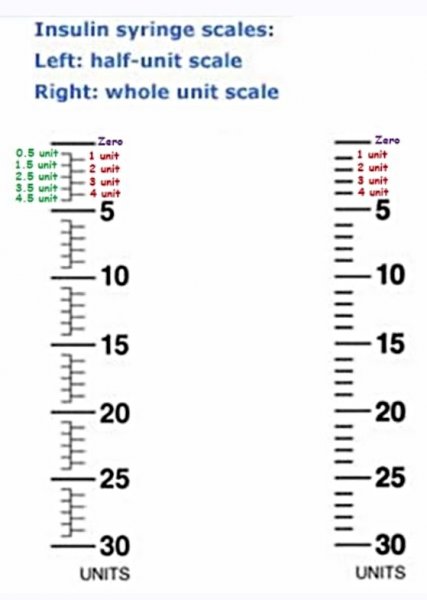
Are you using the U-40 syringes with half unit markings, its much easier to increase or decrease using these syringes . We increase or decrease by 0.25 incremen

49823063143_3437e9e997_o.jpg
 
Last edited:
Hi Becky,
It does sound to me as if Iggy did have a hypo episode. If you are using an alphatrak meter I would not be giving 3 units of vetsulin with such low preshots. And it is very important to test during the first half of the cycle to see how low the vetsulin is taking Iggy.
As far as I am aware, most vetsulin users say to reduce the dose if the BG drops down to 90, so there are several places where the dose should have been reduced.

Vetsulin is not a suitable insulin for a cat. It is a dogs insulin. Cats have a faster metabolism than a dog and the insulin hits hard and fast.
Lantus insulin is a much more gentle and longer lasting insulin and very suitable for cats.
At the moment Iggy is staying in normal numbers.
I am not a vetsulin user but I would not give him any more insulin unless his numbers rise above 150 and even then I would not give any vetsulin unless the BG was 200.
In my opinion the vet should not have raised the dose to 3 units with the numbers he was getting.
I think he has been getting too much insulin and you are lucky he hasn’t had more hypos. It is possible he has had a hypo overnight at some
point and you are seeing the residual effects on his coordination and mobility at the moment.

Have you been feeding him and waiting for 30 minutes before giving the shot?

Has he had his thyroid levels tested recently. It is possible he may have hyperthyroidism with the excessive drinking and peeing.
With numbers like he has, he shouldn’t be still having those symptoms.

I would go back to the vet and ask for his thyroid levels to be tested.
I would also test his BG morning and night before food and not give any insulin unless the BG rises up over 150. Even then I would not give any insulin unless the BG was over 200 and you got advice from a vetsulin user as to how much to give.
At the moment Iggy is on normal numbers.
I agree with you Bron his dose should have been reduced
 
Last edited:
@Aleluia Grugru & Minnie @Bron and Sheba (GA) and @Diane Tyler's Mom thanks so much for all the input. The vet only said to shoot him when I feed him, and has not suggested that I test before each shot. That latter bit makes no sense to me, so everything else sounds suspect, too.

I will ask about his thyroid. I'm really wondering about the dx now because the insulin has not really had much of an effect on his symptoms. He did have a fructosamine test that was high, but I don't know the numbers (EDIT: I got them to send the results of that test. His fructosamine was 302 with a normal range of 143-373. Not high). The vet only said that it looked like he could already be in remission (after only two weeks on insulin) but didn't explain how remission wouldn't take away the symptoms. That's when she told me to go from 2 units to 3.

The only time his BG was above 150 at home was when I used a Pet Sure strip in the AlphaTrak monitor, even then it was 154. The vet gave me a range of 80-120, but the Vetsulin website states 120-300. The only time he was close to 300 was at the vet's office. Iggy stresses in the car more than any other animal I've had.

Based on his numbers and his symptoms, I'm worried that it's a misdiagnosis and that I shouldn't be giving him any insulin at all. As it is, I haven't given him anything since 6/4 based solely on his numbers.
 
Last edited:
All the numbers on your SS are within normal range with the Pet meter.
And the fructosamine test which is the test that should make the FD diagnosis is normal.

I would just keep testing him twice a day like you are and if the BG is 150 or less that is within normal limits
And don’t give any insulin.
With vetsulin you would not give any insulin with a BG of under 200 or possibly 250 on the pet meter.

Just to be on the safe side I would also test for ketones while you are not giving any insulin. Buy a bottle of Ketostix from Walmart or a pharmacy and test the urine as per the instructions. If there are any ketones tell the vet. I doubt there would be but it’s a good insurance policy while you are figuring it all out.

I think Iggy needs to have the thyroid tests done.
Are you happy with your vet? That is quite a mistake to make and could have been deadly.

I would continue with a low carb diet as it is far better for all cats regardless if they are diabetic or not.
If you are unsure about the BG levels come and ask us before giving any insulin.......but I don’t think he is a diabetic either.
Please keep up updated.
 
I got a second opinion today. The second vet agrees that he was likely diabetic when he was first tested, but he went into remission quickly. She looked over his thyroid tests but ruled out hyper and hypothyroidism. She noticed that his potassium was a bit low in April and retested him. His potassium has gone down, and all his symptoms can be a result of low potassium. I've started him on a supplement and should see some results in about five days if we're on track with this dx.

I'll only be testing his BG twice a week and giving him insulin if it gets to be 200 or more.

@Aleluia Grugru & Minnie, I'll be ordering the B12 soon, but I need to see if the potassium supplement does anything before adding another supplement.

Thank you all so very, very much for your support so far!
 
Status
Not open for further replies.
Back
Top