

You are using an out of date browser. It may not display this or other websites correctly.
You should upgrade or use an alternative browser.
You should upgrade or use an alternative browser.
New here! Need help please...
- Thread starter Tritt3180
- Start date
- Status
- Not open for further replies.


Critter Mom
Member Since 2014
Yep. Human urine ketone test strips are fine.
Last edited:

Tritt3180
Member Since 2017
I brought Ringo home today. I gave him his zofran at 7p and wanted to give him time for it to dissolve in his body. Forgot I didn't buy glucose strips, so I had to go out and get some making his accucheck a bit later than normal. I ended up checking him at 8p instead of 7p. His glucose on my glucometer was 422 on the left ear, 366 on the right, and 402 on the left again. I gave him the 1 unit of pzi and 12cc of a recovery foods from the very. I'll be getting up in 6 hours to check him again.
I was concerned because he hasn't been that high ever, I don't think, so I called the ER again. They suggested to just do the 1 unit, recheck him, and call the vet in the morning. Thing is, I'll have to give him more insulin at 5:30 because I have to leave for work at 6. It took me a half hour to do all this and feed him. Makes me nervous...
I was concerned because he hasn't been that high ever, I don't think, so I called the ER again. They suggested to just do the 1 unit, recheck him, and call the vet in the morning. Thing is, I'll have to give him more insulin at 5:30 because I have to leave for work at 6. It took me a half hour to do all this and feed him. Makes me nervous...

Tritt3180
Member Since 2017
Morning update:
0200: 294L ear glucose
Poop nuggets in litter box!
0530a: 282L ear glucose
2 units insulin
10cc recovery, couple bites of kibble
He has also been stopping at the water bowel here and there, but not a significant amount of thirst each time.
I'm thinking it may be safe to cancel the other vet appointment for now?
0200: 294L ear glucose
Poop nuggets in litter box!
0530a: 282L ear glucose
2 units insulin
10cc recovery, couple bites of kibble
He has also been stopping at the water bowel here and there, but not a significant amount of thirst each time.
I'm thinking it may be safe to cancel the other vet appointment for now?

Nan & Amber (GA)
Member Since 2016
Have you been able to test for ketones?
Good news on the improved eating! Hopefully that will continue-- often, once they get started, they start feeling better and want to eat more!
Good news on the improved eating! Hopefully that will continue-- often, once they get started, they start feeling better and want to eat more!
Tritt3180
Member Since 2017
I have not been able to test, yet. He has been urinating, but I just bought strips to test him. I'm hoping to get a sample today at some point.Have you been able to test for ketones?
Good news on the improved eating! Hopefully that will continue-- often, once they get started, they start feeling better and want to eat more!
Tritt3180
Member Since 2017
Good news on the improved eating! Hopefully that will continue-- often, once they get started, they start feeling better and want to eat more!
I sure hope so. He's only showing interest in the recovery diet food, and some to the kibble. None to anything else we've given him yet. In hopeful, though!

Last edited:
Critter Mom
Member Since 2014
For the recovery, he wouldn't take the syringe from me. But, once he tasted it, he would east it after I squirted it onto a napkin/plate.
It's great that you're able to trigger eating in this fashion. Another tip: sometimes you can help a queasy kitty to eat if you let them eat from your hand at a height where the kitty doesn't have to bend down to eat. Elevating food and water bowls a few inches from the ground can help, too.
Glad to hear that poops are happening, too.
As you get more practice in and Ringo starts eating better you'll find a routine that works for you both and it will become second nature. It might not feel like it right now, but you're doing really well.It took me a half hour to do all this and feed him. Makes me nervous...
Ringo has a great mom.

Mogs
.
Critter Mom
Member Since 2014
It's wonderful that he's showing interest in any food! Especially at times like this, the 'right' food is the one that a kitty can eat.He's only showing interest in the recovery diet food, and some to the kibble.
Mogs
.
Critter Mom
Member Since 2014
PS: It may take a day or so for the Zofran to build up to full therapeutic effect. What dose has been prescribed?
ETA: What's Ringo's approximate weight?
Mogs
.
ETA: What's Ringo's approximate weight?
Mogs
.
Last edited:
Tritt3180
Member Since 2017
I'll have to look at the dose again to be sure, but he's only 10lbs now. And it's oral zofran... I waited an hour to let it dissolve, but if it has to build up in cats, then I'll give him another dose tonight.PS: It may take a day or so for the Zofran to build up to full therapeutic effect. What dose has been prescribed?
ETA: What's Ringo's approximate weight?
Mogs
.
Tritt3180
Member Since 2017
Thank you.It's great that you're able to trigger eating in this fashion. Another tip: sometimes you can help a queasy kitty to eat if you let them eat from your hand at a height where the kitty doesn't have to bend down to eat. Elevating food and water bowls a few inches from the ground can help, too.
Glad to hear that poops are happening, too.
As you get more practice in and Ringo starts eating better you'll find a routine that works for you both and it will become second nature. It might not feel like it right now, but you're doing really well.
Ringo has a great mom.
Mogs
.
Tritt3180
Member Since 2017
His zofran dose is 2mg every 12 hours.PS: It may take a day or so for the Zofran to build up to full therapeutic effect. What dose has been prescribed?
Mogs
.
Critter Mom
Member Since 2014
I was hoping it would be 2mg q12. I found that 1mg BID was OK for maintenance but for times when Saoirse's nausea was more severe the 2mg BID dose made a huge difference. As recovery progresses and Ringo's eating becomes more steady and reliable you'll be able to titrate the dose downwards.His zofran dose is 2mg every 12 hours.
If Ringo's still needing a lot of assistance with food after 36-48 hours from the time you gave the first dose I'd suggest addition of an appy stimulant. With the weekend coming up it might be an idea to ask the vet on Friday for an appy stimulant Rx so that you will have it available over the weekend should it be needed. If Ringo doesn't need it, well and good but I've found it's better to have the option available (especially for weekend/holiday periods when it's not as easy to contact/visit the vet). Note: if you're not able to assist feed regularly (e.g. working/sleeping) the bit of appetite stimulation may be of particular benefit in your situation to help Ringo eat more steadily in your absence. Assuming that it's not contraindicated, cyproheptadine might give you finer control over the level of appetite stimulation given. Assuming nausea's not a problem, cypro usually kicks in about 30-60 minutes after administration. Note: it's better to start at a very small dose administered more frequently; some cats get lethargic (and sometimes a bit depressed) on more 'generous' vet-prescribed doses of cypro and this can be counterproductive as they may become too apathetic/mopey to want to eat.
It might also be worth looking at a timed feeder, too, so that you can make sure Ringo will have food dispensed to him later in the cycle. Many people here rate the Petsafe 5 (myself included - I have two of them). The downside of the Petsafe 5 for a cat with unpredictable eating is that it rotates any uneaten food under the cover when the next feed is due so the cat might end up missing out on the full amount of food it should be eating. If the cat needs longer grazing access to food, an alternative to consider is the Cat Mate C20. This is the autofeeder I use when appetite is poor and eating time/amount is unpredictable. After the compartment pops open, it allows full and free access to the dispensed food without the kitty being under any time pressure to finish it before the next feed is due. Importantly, by enabling you to stagger the time when more food becomes available for grazing it means that the cat can't scoff all of the food allowance all at once in the early part of the cycle and then be left having to fast too long before its next meal (and therefore be at risk of a bout of vomiting). Hope I've explained this OK.
 )
)Mogs
.
Last edited:
Tritt3180
Member Since 2017
Took Ringo to my dogs vet to get established and have them monitor his care. At the end of the visit the tech brought in a small bag of DM kibble. Eventually we will want to get him on all wet food, but for now he needs to eat whatever we can get him to. When she brought the bag in, he jumped up and turned around quickly with a look on his face as of to say, "is that for me??" He ran to the bag and was acting like his old self again. The tech opened the bag to see how he'd like it and he went to town on TWO HANDFULLS of food!! This is the most excited I've seen him about eating in quite a while. Looks like we found a winner for now. Makes this mama proud! (Especially since he lost another pound since Saturday.) 
Last edited:
Critter Mom
Member Since 2014
Way to go, Ringo!!!!!!The tech opened the bag to see how her like it and he went to town on TWO HANDFULLS of food!!

Having had to deal with protracted/recurrent feline inappetence and GI issues, I can't put into words how thrilled I am for you both to read this news. Long may this improved appetite continue!
Make your mama happy, Ringo: keep eating your new fudz - comfortably and happily!!!
Mogs
.
Critter Mom
Member Since 2014
Don't give them together. IIRC famotidine can interfere with absorption of other meds. I'll see if I can find a link for you about this ...
Mogs
.
Mogs
.
Tritt3180
Member Since 2017
Good to know! He still is making the gagging face after eating sometimes, but he's eating... And not a ton of assistance tonight - just put it right in front of him and my finger with food once until I scraped the bowl at the end. However, I have had to space it out to q16 hours because I missed a dose and didn't want him to get nothing until the next day. Hoping tomorrow is a better schedule day.I was hoping it would be 2mg q12. I found that 1mg BID was OK for maintenance but for times when Saoirse's nausea was more severe the 2mg BID dose made a huge difference. As recovery progresses and Ringo's eating becomes more steady and reliable you'll be able to titrate the dose downwards.
Mogs
.
Tritt3180
Member Since 2017
That's OK. I did give it tonight with his antibiotic. Mostly because of the gagging face. I'll know not to in the future. Thanks!Don't give them together. IIRC famotidine can interfere with absorption of other meds. I'll see if I can find a link for you about this ...
Mogs
.
Tritt3180
Member Since 2017
He got Mirt yesterday and I have more for the 30th if needed. I'm thinking I may keep giving it to him until he is eating well on his own, and had put on some more weight.If Ringo's still needing a lot of assistance with food after 36-48 hours from the time you gave the first dose I'd suggest addition of an appy stimulant. With the weekend coming up it might be an idea to ask the vet on Friday for an appy stimulant Rx so that you will have it available over the weekend should it be needed. If Ringo doesn't need it, well and good but I've found it's better to have the option available (especially for weekend/holiday periods when it's not as easy to contact/visit the vet). Note: if you're not able to assist feed regularly (e.g. working/sleeping) the bit of appetite stimulation may be of particular benefit in your situation to help Ringo eat more steadily in your absence. Assuming that it's not contraindicated, cyproheptadine might give you finer control over the level of appetite stimulation given. Assuming nausea's not a problem, cypro usually kicks in about 30-60 minutes after administration. Note: it's better to start at a very small dose administered more frequently; some cats get lethargic (and sometimes a bit depressed on more 'generous' vet-prescribed doses of cypro and this can be counterproductive as they may become too mopey to want to eat.
Mogs
.
Critter Mom
Member Since 2014
Can't find an online info source, but for a fact I can tell you that my bestest vet made a point of telling me to leave a few hours gap between giving famotidine and any other meds.
BTW, famotidine is normally dosed only once every 24 hours. (Ranitidine, aka Zantac, is normally dosed q12.)
Mogs
.
BTW, famotidine is normally dosed only once every 24 hours. (Ranitidine, aka Zantac, is normally dosed q12.)
Mogs
.
Tritt3180
Member Since 2017
Sounds good. I may have to look into that in the near future. My mom like he's with me and has been very attentive to the Ringo during the day. She spent a lot of time with him and he rays well for her. I may try mixing in the famotidine with his food she gives him in the morning.It might also be worth looking at a timed feeder, too, so that you can make sure Ringo will have food dispensed to him later in the cycle. Many people here rate the Petsafe 5 (myself included - I have two of them). The downside of the Petsafe 5 for a cat with unpredictable eating is that it rotates any uneaten food under the cover when the next feed is due so the cat might end up missing out on the full amount of food it should be eating. If the cat needs longer grazing access to food, an alternative to consider is the Cat Mate C20. This is the autofeeder I use when appetite is poor and eating time/amount is unpredictable. After the compartment pops open, it allows full and free access to the dispensed food without the kitty being under any time pressure to finish it before the next feed is due. Importantly, by enabling you to stagger the time when more food becomes available for grazing it means that the cat can't scoff all of the food allowance all at once and then be left having to fast too long before its next meal (and therefore at risk of a bout of vomiting). Hope I've explained this OK.
Mogs
.
Critter Mom
Member Since 2014
Fingers crossed. It takes a while to get into a rhythm, especially when juggling so many different treatments AND doing the food coaxing bit, too!Hoping tomorrow is a better schedule day.

Mogs
.
Tritt3180
Member Since 2017
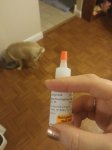
This is my famotidine I was given for Ringo.Can't find an online info source, but for a fact I can tell you that my bestest vet made a point of telling me to leave a few hours gap between giving famotidine and any other meds.
BTW, famotidine is normally dosed only once every 24 hours. (Ranitidine, aka Zantac, is normally dosed q12.)
Mogs
.
Attachments
Critter Mom
Member Since 2014
A liquid prep. Handy.
I've always had the joy of trying to split a 20mg tablet into 1/8th tablet doses. (A lot of each tablet ends up binned. )
)
Mogs
.
I've always had the joy of trying to split a 20mg tablet into 1/8th tablet doses. (A lot of each tablet ends up binned.
)Mogs
.
Tritt3180
Member Since 2017
Sounds delightful!A liquid prep. Handy.
I've always had the joy of trying to split a 20mg tablet into 1/8th tablet doses. (A lot of each tablet ends up binned.
Mogs
.
Critter Mom
Member Since 2014
I lead a thrilling life ...

Fiona & Ruby
Member Since 2017
This is an awesomely supportive post, so much valuable info here!I'm sorry to hear that your little one has been in the wars.
If the vets didn't run a ketone test at the same time that was remiss of them. Ketones can build up really quickly and major clinical signs of ketosis include lethargy, nausea, inappetence and dehydration. It's true that pancreatitis has a very similar symptom profile but ideally you'll need to ask your vet to make a differential diagnosis as pain management and possibly antibiotic treatment may be needed if pancreatitis is present. If your vet offers it, an in-house SNAP fPL blood test will give an immediate Yes/No result to indicate whether or not the pancreas is inflamed. To assess the severity of inflammation a Spec fPL blood test should be run (needs to be sent to an external lab - results usually take a few days to come through). If required an ultrasound of the pancreas can be performed. Here is a very helpful link about pancreatitis diagnosis and treatment:
IDEXX Labs - Pancreatitis Treatment Guidelines
Famotidine isn't ideal as an anti-nausea treatment: it reduces stomach acid production (as you probably already know) but ondansetron and Cerenia are much more effective treatments for nausea in felines. Here is helpful information on a variety of anti-nausea and appetite stimulant treatments:
Nausea, inappetence, vomiting - symptoms and treatments
When DKA and/or pancreatitis symptoms are at their most acute then the cat may require both anti-nausea and appetite stimulant medications. Based on my own experience of managing a cat with chronic pancreatitis and also reading about many cases of cats with DKA here on this board I cannot recommend strongly enough that when you go to collect your kitty to bring him home that the vet provides you with the following meds for continued home treatment at minimum:
- a 'proper' anti-nausea medication (cypro, Cerenia), not a mere acid blocker.
- an appetite stimulant. (For cyproheptadine, check that liver function is OK. NB: if buprenorphine is prescribed for pain note then co-administration of mirtazapine can produce a highly adverse reaction in some cats due to effect of combo on serotonin levels.)
Needless to say, in addition to inappetence being a major issue for an otherwise healthy cat, inappetence in a diabetic cat who needs insulin makes for a massive treatment complication. It's critical to keep a kitty eating when recovering from DKA. We've seen many, many cases here where kitty's get stabilised at the vets only to quickly relapse upon return home because the treating vet fails to prescribe supportive meds for the caregiver to administer in the home setting. Some vets prescribe only an appetite stimulant but that's not enough: effective nausea management is key to a successful treatment outcome. Your cat may start eating without supportive medication BUT it is far better to have an on-hand supply of meds available so that one can respond immediately to signs of nausea/inappetence than being forced to wait for another vet visit before starting treatment.
If pancreatitis is also a factor then pain management may be necessary. Pain levels may vary (cat may show some signs of discomfort after eating or, in more severe cases, more marked abdominal pain may be present - and pain may radiate to the back). Buprenorphine is commonly prescribed for management of pain associated with pancreatitis flares. A course of B12 injections can help resolve a pancreatitis flare and improve appetite. Please refer to the IDEXX document for comprehensive coverage of meds that may be used to treat pancreatitis.
With DKA in the mix then, in addition to home testing blood glucose levels, it is very important to check daily for ketones in the urine (using Keto-diastix or other urinalysis strips featuring a ketone test). More helpful links here:
Are you testing for ketones?
Urine testing tips
If your cat is underweight then extra caution is needed when choosing a suitable food. Underweight cats may need a somewhat higher carb load than the usually recommended <10% to reduce the risk of their going too low when they start insulin treatment (even on a tiny dose). This is even more important in cats who are ketone-prone. Once they regain the necessary weight to restore ideal body condition and stabilise on insulin one can then revisit and optimise dietary choices for long-term diabetic control.
Mogs
.
Fiona & Ruby
Member Since 2017
Hooly dooly, what a trip you've been on...and still going. I really hope you're coming out the other side of it and well done for holding it together. Sending lots of healing prayers to Ringo, who must be feeling it's been a trip to hell and back!
Tritt3180
Member Since 2017
Everyone has been incredible on this forum!! I would've been lost without all the help, info, encouragement and direction given by people on this site.
This is how Ringo's been doing with glucose, insulin and eating so far... I have been instructed to give only 1 unit insulin at night, but his numbers have continued to climb at night. Plus, I will be checking him again at 0100 tomorrow morning. So, he got 2 units last night by mistake and I liked the results so I gave him another 2 tonight. Would appreciate your thoughts.
12/27: 8p: 422L 366R 407L
1 unit insulin
12cc recovery
12/28 2a: 294L ear
Poop nuggets!
530a: 282L ear
2 units insulin
10cc recovery, couple bites
kibble
1230: 157L ear
1823: 373
2 units insulin
12cc recovery; grazing on DM
kibble
2100: 1ml Famotidine; antibiotic
12/29
0105: 171
0528: 289
2 units insulin
10cc recovery
0800-1330: 1tsp recovery + 1tsp DM pate
+ 1ml famotidine + DM kibble graze
1850: 497L ear (after alcohol pad)
1904: 470R paw (after alcohol pad)
2 units insulin
11cc recovery
Urine (-) for ketones
2mg Zofran
**only 1/3 cup kibble has been eaten w/in 28 hours.**
This is how Ringo's been doing with glucose, insulin and eating so far... I have been instructed to give only 1 unit insulin at night, but his numbers have continued to climb at night. Plus, I will be checking him again at 0100 tomorrow morning. So, he got 2 units last night by mistake and I liked the results so I gave him another 2 tonight. Would appreciate your thoughts.
12/27: 8p: 422L 366R 407L
1 unit insulin
12cc recovery
12/28 2a: 294L ear
Poop nuggets!
530a: 282L ear
2 units insulin
10cc recovery, couple bites
kibble
1230: 157L ear
1823: 373
2 units insulin
12cc recovery; grazing on DM
kibble
2100: 1ml Famotidine; antibiotic
12/29
0105: 171
0528: 289
2 units insulin
10cc recovery
0800-1330: 1tsp recovery + 1tsp DM pate
+ 1ml famotidine + DM kibble graze
1850: 497L ear (after alcohol pad)
1904: 470R paw (after alcohol pad)
2 units insulin
11cc recovery
Urine (-) for ketones
2mg Zofran
**only 1/3 cup kibble has been eaten w/in 28 hours.**
Last edited:
Tritt3180
Member Since 2017
Basically... Am I doing things right? Should I not have increased his night dose? The increasing number at night has me most concerned. The vet did not seem to be too worried about it and told me to keep him on 1 unit at night. But tonight was almost 500 on a ReliOn meter. Just scary to me. I can do more of an around the clock check this weekend for 3 days since its a holiday weekend.
I have posted on the pzi forum, too, but I have noticed it does not seem as active as this one.
Thanks in advance!!
I have posted on the pzi forum, too, but I have noticed it does not seem as active as this one.
Thanks in advance!!

- Status
- Not open for further replies.