Glad the skip tip helped, CC.

WRT switching insulins I think one really needs to have a vet on board for all treatments a cat is receiving, especially if a cat has a chronic condition like diabetes. That said, when working with a vet who has not in the first instance prescribed a longer-acting insulin a little bit of negotiation may be required and having a bit of 'ammo' can help with that.
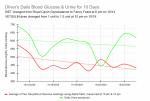
The first - and most important - evidence you can present is Oliver's response to Vetsulin as demonstrated in his spreadsheet:
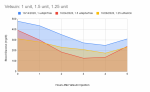
* Vetsulin is dropping his BG too hard and too fast at the beginning of the cycle, triggering bounces and driving BG up really high again and this is keeping numbers up in subsequent cycles.
* Oliver is getting very poor duration - even by Vetsulin standards. Numbers are on the rise by +5 and the dose seems to be conveying little or no BG-lowering effect past +7. Between this and the bouncing, Oliver is spending too long each day in high diabetic numbers.
* Increasing the dose is not an option. On the contrary, the current dose should be immediately reduced for safety because for Vetsulin a BG level of 104mg/dL (Alphatrak) doesn't leave a wide enough safety buffer between nadir and the hypo threshold (feline BG reference range is 70-150mg/dL on Alphatrak, according to my vet).
Below I have attached a copy of a peer-reviewed study of cats treated with Lantus, Levemir and Prozinc. It covers the improved duration and chance of remission in cats offered by these insulins and also has details of the proven dosing protocol used.
Here is a link to the current
AAHA 2018 guidelines for management of diabetic cats and dogs. According to the guidelines, Vetsulin is now only recommended for use in dogs, not cats.
Perhaps you could use Oliver's spreadsheet data plus the professionally authored references I've given you here as a foundation for negotiations with your vet?
Mogs
.








 I’m Serryn, I’m going to keep an eye out for you and Oliver. Is +5 in around 30-40 mins?