How much insulin to give?

Status
Not open for further replies.

Isabelamcgahee

Member Since 2015
Hello from GA.

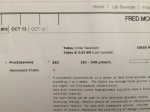
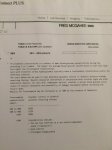
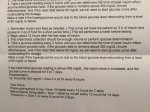
I am Isabela and Fred is a 13 years old cat.

Please we need your help.

He was diagnosed this week with diabetes.
Lost lots of weight. Is now taking 2 antibiotics due to a ear, urine and intestine infection.
He had catheter for 24 hours this week as they discovered he had crystals.
He is now at home, eating only wet food ( FF, M/D and C/D).
He is poiping and peeing.
He is also drinking some water.
He walks too.

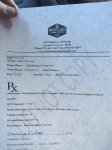
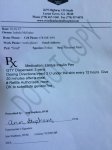
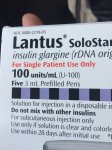
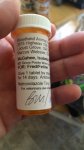
Doctor prescribed Lantus - pen.
He is about 11 lb and 1/2.
They want me do give him 3 units twice a day.
On Facebook some feline owners friends told me to come here since they believe it's too much of insulin to start.
Fred used to eat dry food. Until July this year hills science mature cat and in August Grain free Rachel Ray and Nutro.

Will starry the insulin tonigh.

Thank ou for your help.
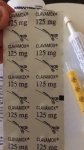
 
1 antibiotic
 

Attachments

  • image.jpeg
    image.jpeg
    42.7 KB · Views: 182
Welcome to FDMB, Isabela and Fred! This is definitely the place to be when you have a diabetic kitty. :cat:

Thank you for sharing so much information, that makes it much easier for people here to give advice and answer your questions.

I can not offer dosing advice about Lantus, as I use a different insulin, but there are many here who can; @Chris & China, @Brashworks, any other Lantus users, could you please assist?

I can help you with a few other bits of information. :)

Most diabetic kitties should eat a low carb, canned/wet food diet; carbs should remain under 10%. There is a great article written by a veterinarian at www.catinfo.org, which also has a helpful list of some of the most commonly used cat foods and their carb counts. Sometimes if kitty has other medical issues a low carb diet is not possible, and Fred may fall into that group; is Fred's current diet due to urinary problems?

Has your vet discussed home testing Fred's blood glucose with you ? It really is important to learn to home test. It can be very dangerous to give insulin without first knowing your kitty's BG level. Think of it this way; do you know any diabetics who use insulin, or someone with a diabetic child? They would never dream of giving themselves, or their child, insulin without knowing their BG level, or whether or not they even needed it.

Here is a link to some information about home testing, along with some "how-to" instructions. Don't be daunted by it, it's not anywhere near as difficult as it may sound! You can test with either a pet-specific meter sold by most vets or a human meter you can get at almost any pharmacy or discount department store (like Walmart). The human meters read a little lower than the pet meters, but are significantly less expensive to purchase, as are the test strips. A lot of people here, myself included, use Walmart's Relion meter, usually either the Prime, Confirm or Micro. I also have a pet meter (Alphatrak) but don't use it often as test strips for it are very expensive.

Frequently when a cat has urinary issues, infections, etc, his BG will be higher. Once the other conditions are no longer present his BG may drop, possibly enough to warrant a dose reduction - another good reason to home test!

We have a very handy spreadsheet that we use here to chart BG, insulin doses, all sorts of information can be added to it. It's great for helping you to see patterns in your cat's progress that you might otherwise miss, and it's extremely helpful for others to view when offering advice or answering questions. Below this post you will see my "signature" with the link to my kitty's spreadsheet, feel free to click on this to see his SS as an example (many members' SS's are much more extensive and detailed than mine).

I hope I haven't overwhelmed you with information. It all may seem intimidating right now but, believe me, it will get easier. And hang tight, I've tagged a couple of Lantus users I know, and hopefully they or other Lantus users will answer you dosing questions soon.

Lucy:):):)
 
Welcome to FDMB.

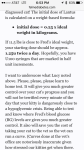
I'm a denizen of the Lantus/Lev board and I've been at this for some time. That's a huge amount of insulin to give a newly diagnosed cat! The initial dose of Lantus is calculated on a weight-based formula:
  • initial dose = 0.25 x ideal weight in kilograms.
If 11.5 lbs is close to Fred's ideal weight, your starting dose should be approx. 1.25u twice a day. Hopefully, you have U100 syringes that are marked in half unit increments.

I want to underscore what Lucy noted above. Please, please, please learn to home test. It will give you much greater control over your cat's progress and you will not be terrified every minute of the day that your kitty is dangerously close to a hypoglycemic crisis. Being able to test and know where Fred's blood glucose (BG) levels are gives you much greater control. It also will save you the cost of taking your cat to the vet so the vet can run a curve. (Curves done at the vet's office are notoriously inaccurate given how stressed our kitties get when there. Stress drives up the BG numbers and the result is that the vet tells you to increase the dose. Chances are the dose doesn't need to be increased and you have a situation that's ripe for hypoglycemia.) Everyone here strongly supports home testing to keep their kitty safe.

It will also be very helpful to start a spreadsheet. We all use this template to keep track of our cat's progress and, if we are trying to help someone with regard to dose, it's very important to know how the cat is responding to insulin. This is the link to the spreadsheet template.

You may want to visit the Lantus/Levemir board. There are several "sticky notes" at the top of the board that will provide you with an overwhelming amount of information regarding Lantus and it's use.

Please let us know if you have questions. Everyone is here to help.
 
Welcome to FDMB, Isabela and Fred! This is definitely the place to be when you have a diabetic kitty. :cat:

Thank you for sharing so much information, that makes it much easier for people here to give advice and answer your questions.

I can not offer dosing advice about Lantus, as I use a different insulin, but there are many here who can; @Chris & China, @Brashworks, any other Lantus users, could you please assist?

I can help you with a few other bits of information. :)

Most diabetic kitties should eat a low carb, canned/wet food diet; carbs should remain under 10%. There is a great article written by a veterinarian at www.catinfo.org, which also has a helpful list of some of the most commonly used cat foods and their carb counts. Sometimes if kitty has other medical issues a low carb diet is not possible, and Fred may fall into that group; is Fred's current diet due to urinary problems?

Has your vet discussed home testing Fred's blood glucose with you ? It really is important to learn to home test. It can be very dangerous to give insulin without first knowing your kitty's BG level. Think of it this way; do you know any diabetics who use insulin, or someone with a diabetic child? They would never dream of giving themselves, or their child, insulin without knowing their BG level, or whether or not they even needed it.

Here is a link to some information about home testing, along with some "how-to" instructions. Don't be daunted by it, it's not anywhere near as difficult as it may sound! You can test with either a pet-specific meter sold by most vets or a human meter you can get at almost any pharmacy or discount department store (like Walmart). The human meters read a little lower than the pet meters, but are significantly less expensive to purchase, as are the test strips. A lot of people here, myself included, use Walmart's Relion meter, usually either the Prime, Confirm or Micro. I also have a pet meter (Alphatrak) but don't use it often as test strips for it are very expensive.

Frequently when a cat has urinary issues, infections, etc, his BG will be higher. Once the other conditions are no longer present his BG may drop, possibly enough to warrant a dose reduction - another good reason to home test!

We have a very handy spreadsheet that we use here to chart BG, insulin doses, all sorts of information can be added to it. It's great for helping you to see patterns in your cat's progress that you might otherwise miss, and it's extremely helpful for others to view when offering advice or answering questions. Below this post you will see my "signature" with the link to my kitty's spreadsheet, feel free to click on this to see his SS as an example (many members' SS's are much more extensive and detailed than mine).

I hope I haven't overwhelmed you with information. It all may seem intimidating right now but, believe me, it will get easier. And hang tight, I've tagged a couple of Lantus users I know, and hopefully they or other Lantus users will answer you dosing questions soon.

Lucy:):):)
Lucy,

Thank you very much.
I will return the C/D and m/d food and get FF Classic.

Will also print the sheet to get his numbers down.

I just got confused about when to start and how often to check his BG.

I have the machine as I had GD last year.
 
Welcome to FDMB.

I'm a denizen of the Lantus/Lev board and I've been at this for some time. That's a huge amount of insulin to give a newly diagnosed cat! The initial dose of Lantus is calculated on a weight-based formula:
  • initial dose = 0.25 x ideal weight in kilograms.
If 11.5 lbs is close to Fred's ideal weight, your starting dose should be approx. 1.25u twice a day. Hopefully, you have U100 syringes that are marked in half unit increments.

I want to underscore what Lucy noted above. Please, please, please learn to home test. It will give you much greater control over your cat's progress and you will not be terrified every minute of the day that your kitty is dangerously close to a hypoglycemic crisis. Being able to test and know where Fred's blood glucose (BG) levels are gives you much greater control. It also will save you the cost of taking your cat to the vet so the vet can run a curve. (Curves done at the vet's office are notoriously inaccurate given how stressed our kitties get when there. Stress drives up the BG numbers and the result is that the vet tells you to increase the dose. Chances are the dose doesn't need to be increased and you have a situation that's ripe for hypoglycemia.) Everyone here strongly supports home testing to keep their kitty safe.

It will also be very helpful to start a spreadsheet. We all use this template to keep track of our cat's progress and, if we are trying to help someone with regard to dose, it's very important to know how the cat is responding to insulin. This is the link to the spreadsheet template.

You may want to visit the Lantus/Levemir board. There are several "sticky notes" at the top of the board that will provide you with an overwhelming amount of information regarding Lantus and it's use.

Please let us know if you have questions. Everyone is here to help.
Sienne,
Thank you so much.
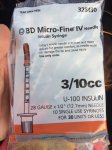
Here is the package of syringes I got.
 

Attachments

  • image.jpeg
    image.jpeg
    53.7 KB · Views: 149
Last edited:
@Isabelamcgahee welcome to FDMB - you are definitely in the right place. I'm sorry I can't offer you any dosing advice at all - I'm much too new at this and don't feel confident suggesting anything about that. You are in excellent hands with Sienne - she has so much experience, I've no doubt she's probably seen more cats through on Lantus than even your vet!

The syringes you posted will work but I may suggest again the BD Ultrafine 3/10 mL/cc that have the half unit markings - those ones don't look like they have them. We tend to give such small doses that the ½ unit markings help a lot. Some folks re-use syringes (not here!!!) but do use a fresh one every time. As you probably already know, Lantus is much too expensive to risk contaminating.

I will also say that if you are drastically changing Fred's food from any dry food to FF Classics, this could impact his Blood Glucose numbers drastically. Depending on how "carbohydrate sensitive" Fred is, you dose may need to be adjusted down to accommodate for that. You will need to monitor him carefully (another great reason to home test) to keep him safe.

I know it is SO MUCH information to digest right now - it hasn't been long for me and I still remember just how overwhelming it felt. You are so wonderful to come here to do the very best possible for Fred. I hope he is feeling better very soon.
 
Did you only buy 1 bag of syringes Isabela? I hope so because I don't know if those have half unit markings. They're also 29 gauge....most of us use 30 or 31 gauge (the higher the number, the smaller the needle)

You can buy syringes at WalMart for $12.58 for 100, or you can order syringes from American Diabetes Wholesale that have half unit markings. They have Sure Comfort, Ulticare, B/D and a new one called Care Point....all have half unit markings
 
When you have a moment, could you add a few tidbits to your signature? It will help us give you feedback.

Editing your Signature

In the upper right corner of the screen, within the dark blue bar, you will see ID, Inbox, and Alerts

Click on your ID.

On the left, under Settings, Click on Signature.
This is where you will put information that helps us give you feedback. You are limited to 2 hard returns, so separate pieces by | or -.
This is where you paste the link for your spreadsheet, once it is set up.
Add any other text, such as
your name | cat's name | date of Dx (diagnosis) | insulin | meter
general location (city and state/province)
any other pertinent issues like if there are any food issues, history of DKA, hepatic lipidosis, pancreatitis, allergies, IBD, etc.
Click the Save Changes button at the bottom.

Always click the Save Changes button at the bottom when you have changed anything.
 
Did you only buy 1 bag of syringes Isabela? I hope so because I don't know if those have half unit markings. They're also 29 gauge....most of us use 30 or 31 gauge (the higher the number, the smaller the needle)

You can buy syringes at WalMart for $12.58 for 100, or you can order syringes from American Diabetes Wholesale that have half unit markings. They have Sure Comfort, Ulticare, B/D and a new one called Care Point....all have half unit markings

I got 2 packs. Will return one since I already open one. Ty Chis.
 
When you have a moment, could you add a few tidbits to your signature? It will help us give you feedback.

Editing your Signature

In the upper right corner of the screen, within the dark blue bar, you will see ID, Inbox, and Alerts

Click on your ID.

On the left, under Settings, Click on Signature.
This is where you will put information that helps us give you feedback. You are limited to 2 hard returns, so separate pieces by | or -.
This is where you paste the link for your spreadsheet, once it is set up.
Add any other text, such as
your name | cat's name | date of Dx (diagnosis) | insulin | meter
general location (city and state/province)
any other pertinent issues like if there are any food issues, history of DKA, hepatic lipidosis, pancreatitis, allergies, IBD, etc.
Click the Save Changes button at the bottom.

Always click the Save Changes button at the bottom when you have changed anything.

He's ma'am/sir,

Will do. Ty.
 
@Isabelamcgahee welcome to FDMB - you are definitely in the right place. I'm sorry I can't offer you any dosing advice at all - I'm much too new at this and don't feel confident suggesting anything about that. You are in excellent hands with Sienne - she has so much experience, I've no doubt she's probably seen more cats through on Lantus than even your vet!

The syringes you posted will work but I may suggest again the BD Ultrafine 3/10 mL/cc that have the half unit markings - those ones don't look like they have them. We tend to give such small doses that the ½ unit markings help a lot. Some folks re-use syringes (not here!!!) but do use a fresh one every time. As you probably already know, Lantus is much too expensive to risk contaminating.

I will also say that if you are drastically changing Fred's food from any dry food to FF Classics, this could impact his Blood Glucose numbers drastically. Depending on how "carbohydrate sensitive" Fred is, you dose may need to be adjusted down to accommodate for that. You will need to monitor him carefully (another great reason to home test) to keep him safe.

I know it is SO MUCH information to digest right now - it hasn't been long for me and I still remember just how overwhelming it felt. You are so wonderful to come here to do the very best possible for Fred. I hope he is feeling better very soon.


My dear please how often should I get his numbers and when should I start? The vet said to do one time only after a week on insulin.
Also another member helped me to figure a different dosage to Fred.
 

Attachments

  • image.png
    image.png
    227.8 KB · Views: 158
My dear please how often should I get his numbers and when should I start? The vet said to do one time only after a week on insulin.
Also another member helped me to figure a different dosage to Fred.

I will get the syringe you sugested as well.
Thank you so much.
 
Last edited:
Did you only buy 1 bag of syringes Isabela? I hope so because I don't know if those have half unit markings. They're also 29 gauge....most of us use 30 or 31 gauge (the higher the number, the smaller the needle)

You can buy syringes at WalMart for $12.58 for 100, or you can order syringes from American Diabetes Wholesale that have half unit markings. They have Sure Comfort, Ulticare, B/D and a new one called Care Point....all have half unit markings

I got 2.
 
Testing:
1) Always test before giving insulin to make sure it is safe.
For now, your no shot level is 200 mg/dL on a human glucometer (230 for pet-specific); this will lower as you collect data around the middle of the cycle to know how low he is going.

2) Mid-cycle tests between shots - whenever possible, test around the nadir (lowest glucose level between shots) for your insulin, to see how low he's going. For Lantus, this often falls between +5 to +7 hours after the shot. Some folks do this on weekends or set a clock for the middle of the night to get this test done as it helps determine dose adjustments. This number should be at or above 50 mg/dL for Tight Regulation depot insulin protocols, 90 mg/dL for Start Low, Go Slow depot insulin protocol, and 100 mg/dL for Vetsulin/Caninsulin insulin protocol on a human glucometer (68 mg/dL for pet-specific meters on Tight Regulation).

3) A before bed test is helpful in determining if you need to break out some higher carb food and steer the glucose level or go to bed with some peace of mind. Steering means giving 1-2 teaspoons of high carb gravy, waiting 30 minutes, and re-testing (repeating as needed) to make sure the glucose stays above 50 mg/dL for Tight Regulation depot insulin protocols, 90 mg/dL for Start Low, Go Slow depot insulin protocol, and 100 mg/dL for Vetsulin/Caninsulin insulin protocol.
 
@Isabelamcgahee Your vet is just one of many who either just don't have the time to keep up to date on the latest treatments or choose to remain uneducated about the latest treatments for diabetes. Most of them just don't have the time to stay up to date on every treatment for every disease in every type of animal they see (but there are those who just want to keep you coming back and spending money too)

The strength of this message board is that we have nothing more important to do than learn what works best in our sugarcats and constantly try to learn more about it

By learning to home test, you're not only going to learn how FRED responds to treatment, but you're going to save the money and hassle of trudging off to the vet once a week for a "curve" test which will be inaccurate anyway. Most cats respond to the stress of a vet visit by having their blood glucose go higher...up to 200 points! Your vet see's these high numbers, convinces you to increase the insulin and you go home. When your cat relaxes again, if you shoot that "new dose", you could end up with a hypoglycemic crisis.

I know at this point you're thinking "OMG...how can I do all this?"....We've all been in your shoes, and know how it feels, but we're also all here to help you along!

By home testing, you're going to know what's going on inside Fred's body and be able to make better decisions for him and his health...and the people here who have lots of experience with Lantus will be here to help you learn when to increase, when to decrease and anything else you could need to learn

If you need help, please ask!
 
There's a lot of great information in the "New to the Group" Sticky in the Lantus Forum

Towards the bottom are some pictures of microdoses like .1, .25 and .75 ....now these pictures are with syringes WITH half unit markings so if you're comparing, remember that

Once you have your signature done and have your spreadsheet started, we'll be inviting you over to the Lantus Forum where you'll get the best advice from people who use Lantus
 
@Isabelamcgahee Your vet is just one of many who either just don't have the time to keep up to date on the latest treatments or choose to remain uneducated about the latest treatments for diabetes. Most of them just don't have the time to stay up to date on every treatment for every disease in every type of animal they see (but there are those who just want to keep you coming back and spending money too)

The strength of this message board is that we have nothing more important to do than learn what works best in our sugarcats and constantly try to learn more about it

By learning to home test, you're not only going to learn how FRED responds to treatment, but you're going to save the money and hassle of trudging off to the vet once a week for a "curve" test which will be inaccurate anyway. Most cats respond to the stress of a vet visit by having their blood glucose go higher...up to 200 points! Your vet see's these high numbers, convinces you to increase the insulin and you go home. When your cat relaxes again, if you shoot that "new dose", you could end up with a hypoglycemic crisis.

I know at this point you're thinking "OMG...how can I do all this?"....We've all been in your shoes, and know how it feels, but we're also all here to help you along!

By home testing, you're going to know what's going on inside Fred's body and be able to make better decisions for him and his health...and the people here who have lots of experience with Lantus will be here to help you learn when to increase, when to decrease and anything else you could need to learn

If you need help, please ask!


When should I start to take his numbers and how often? Please and thank you.
 
Testing:
1) Always test before giving insulin to make sure it is safe.
For now, your "no shot" level is 200 mg/dL on a human glucometer (230 for pet-specific); this will lower as you collect data around the middle of the cycle to know how low he is going.....this doesn't really mean "No shot" though...it means if you get a test under 200, stall, DON'T feed and post for help. Make sure your subject line says something that will get the attention of people here and let them know you're stalling and need help. Something like "STALLING..NEED HELP!!" works...LOL

2) Mid-cycle tests between shots - whenever possible, test around the nadir (lowest glucose level between shots) for your insulin, to see how low he's going. For Lantus, this often falls between +5 to +7 hours after the shot.

3) A "before bed" test on the PM cycle will help determine if it's really important to get more tests in later in the cycle (which may mean setting an alarm) or if it's probably safe to go to bed and sleep peacefully
 
I would consider using the start low go slow protocol which starts at 0.5 units. Your Cat's fructosamine is only 362 which suggests his 400 blood sugar may be higher than what he normally runs because of stress, infection or both. So I would really worry about bottoming him out especially since you are switching from a relatively high carb food to the low carb fancy feast classics.
Even though I don't increase the dose for at least 5 days so that the depot is filled (which just refers to the fact that it takes time for Lantus levels to build up to a steady state), I do a curve the first day to check for his nadir and to watch him for low sugars. I then always test with each dose and also test the nadir whenever possible. The nadir is the lowest sugar on the curve. If it occurs 7 hours after his dose for instance, I would try to check for a low sugar 7 hours after each dose.

Your numbers may be a little crazy as the antibiotic kicks in for his infection so please share them with us on a spreadsheet.

Have you purchased a glucose meter? Do you know how to prick his ear?

I am on my 5th Lantus Kitty now. It seems a little overwhelming at first but we will help you through this. Our diabetic kitty Blackie lived to be 21 years old!

Jenny
http://www.felinediabetes.com/FDMB/threads/lantus-levemir-start-low-go-slow-method-slgs.129446/
 
Here's a Getting Started Shopping List

1. Blood glucose meter. The Walmart Relion Confirm or Micro. (about $15) These are the best choice until the ears "learn to bleed"...then the Relion Prime is the cheapest one for replacement strips. The Confirm and Micro take the smallest sample size...the Prime take a little bigger sample.

If you are in Canada, and can get to a WalMart regularly (or have friends/family that can ship you supplies if you need them), the Relion meters are great. I think the Bayer Contour or One Touch are other favorites of the Canadians in the group

2. Matching strips (about $19 for 50, $36 for 100) Prime strips are $9 for 50. Will vary depending on what meter you end up using. Using the Contour or One Touch, check Amazon/Ebay for better prices

3. Lancets - little sticks to poke the ear to get blood . new members usually start with a larger gauge lancet such as 25g to 28g until the ear learns to bleed. Optional - lancing tool. (about $8 for lancets, $5 for lancing tool ...not required if you can freehand poke)

4. Cotton balls/cosmetic pads to stem the blood

5. Neosporin or Polysporin ointment with pain relief to heal the wound (ointment ONLY...no cream)

6. Mini flashlight (optional) - useful to help see the ear veins in dark cats, and to press against

7. Ketone urine test strips..ketostix (urine only) or ketodiastix (test urine and blood but more expensive and unnecessary if you're already testing BG) - Important to check ketones when blood is high

8. Sharps container - to dispose of wasted syringes and lancets. (you can make one of these yourself...don't have to buy one)

9. Low carb treats for the cat - like freeze dried chicken

10. Karo syrup/corn syrup or honey if you dont have it at home - for hypo emergencies to bring blood sugar up fast

11. A couple of cans of fancy feast gravy lovers or other high carb gravy food- for hypo emergencies to bring blood sugar up fast

12. Syringes (If using a U100 insulin like Lantus or Levemir or willing to use a conversion chart with U40 insulin like ProZinc)

IMPORTANT that you get syringes with half unit markings! 30 or 31 gauge, 3/10cc insulin syringes....All the WalMart Relion 3/10cc syringes have half unit markings
 
Last edited:
Chris and Jen,

Good morning.
I am not home today. Due to my job (flight attendant) I will be back home only Monday afternoon.
I left instructions with my husband.
- feed wet food (3 oz) at 11 am
- give antibiotics
- 30 min later insulin 1 U


- feed wet food ( 3 oz) at 11 pm
- give antibiotics
- 30 min later insulin 1 U

I also asked him to leave accessible a bowl with his dry food. Something like 1/4 of cup.

I will be home Monday at 5 pm.

When exactly should I start to take his numbers? Monday?
Tuesday?
His next insulin will be at 11:30 p .
Since I won't be able to take his BG until Monday should we stop the insulin?
 
My first thoughts are since you are feeding high carb kibble (but are going to transition to low carb canned only), there's an infection being treated and the fructosamine was in the "good control" range to begin with, I think I'd hold off on giving insulin for a little while

Work on getting the dry out of the picture, get the infection taken care off and spend a few days learning how to home test BEFORE starting insulin
 
Chris and Jen,

Good morning.
I am not home today. Due to my job (flight attendant) I will be back home only Monday afternoon.
I left instructions with my husband.
- feed wet food (3 oz) at 11 am
- give antibiotics
- 30 min later insulin 1 U


- feed wet food ( 3 oz) at 11 pm
- give antibiotics
- 30 min later insulin 1 U

I also asked him to leave accessible a bowl with his dry food. Something like 1/4 of cup.

I will be home Monday at 5 pm.

When exactly should I start to take his numbers? Monday?
Tuesday?
His next insulin will be at 11:30 p .
Since I won't be able to take his BG until Monday should we stop the insulin?

Yes. You really shouldn't be giving insulin without checking sugars since his fructosamine is only 363.
 
Please I need help.
I got home about one hour ago.
My husband was feeding Fred every 3 hours 1 can (3oz) FF Classic.
I just did his first blood tests.
 

Attachments

  • image.jpeg
    image.jpeg
    41.9 KB · Views: 135
That's quite a bit of food, but since he hasn't been on insulin, he may have needed it...hopefully as we get him onto insulin, his appetite will come down too. Is he completely off all dry now? How's his infection?

If you're ready to start this great adventure now, I'd say start at 1U ...at his weight, the starting dose if you're doing Tight Regulation would be about 1.25, but we usually start them a little lower for safety

Shots need to be 12 hours apart, so decide on a time when you're most likely going to be able to be consistent with giving his insulin.

Don't forget to get that spreadsheet going and record your test results as you get them. You're going to want to hold the starting dose for at least 5-7 days (unless he happens to go below 50 on a human meter) to let the depot build
 
@Isabelamcgahee when was the last time Fred had food & when was his last dose of insulin? Is Fred still eating dry food or has he transitioned to strictly wet food now?

ETA: Chris&China have some excellent advice & Chris posted the same time I did. Listen to what Chris says.
 
@Isabelamcgahee when was the last time Fred had food & when was his last dose of insulin? Is Fred still eating dry food or has he transitioned to strictly wet food now?

ETA: Chris&China have some excellent advice & Chris posted the same time I did. Listen to what Chris says.


Stopped dry food a week ago.
No insulin per suggestion of friends here.
Last time food was at 4 pm eastern time.
 
I think she decided to wait on starting insulin @Vegetable since his fructosamine was so low, he had the UTI and was still eating dry.

We were hoping that once he was on wet only and the UTI cleared up, maybe he wouldn't need it....his fructosamine was only 363 which is "good control"...and she hadn't even started insulin at that point!
 
08:30 pm test
9:00 pm fed him
9:20 pm 1/U Lantus
11:20 pm will test again

tomorrow will do all over again at 8:30 am and so on.
Thank you very much for your help.
 
What most of us do is Test/Feed/Shoot...all within about 5-10 minutes

You always test to make sure they're high enough to give insulin...then Feed to make sure they're eating fairly "normally" and shoot...You want those Pre-shot tests without the influence of food too, so for the 2 hours before shot times, no food (unless they're running low of course!)

I think most of us just shoot while they have their head in the bowl...as soon as we see they're eating pretty normally

So tomorrow (if it works for you) I'd test at 9am....as long as he's over 200, I'd go ahead and immediately feed him and shoot...so it's all done within 5-10 minutes

If he's NOT above 200, you'd want to stall, DON'T FEED and post for help...as you get more data on Fred, that "no shot" limit will come down
 
What most of us do is Test/Feed/Shoot...all within about 5-10 minutes

You always test to make sure they're high enough to give insulin...then Feed to make sure they're eating fairly "normally" and shoot...You want those Pre-shot tests without the influence of food too, so for the 2 hours before shot times, no food (unless they're running low of course!)

I think most of us just shoot while they have their head in the bowl...as soon as we see they're eating pretty normally

So tomorrow (if it works for you) I'd test at 9am....as long as he's over 200, I'd go ahead and immediately feed him and shoot...so it's all done within 5-10 minutes

If he's NOT above 200, you'd want to stall, DON'T FEED and post for help...as you get more data on Fred, that "no shot" limit will come down

Chris,

Thank you so much.
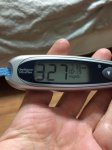
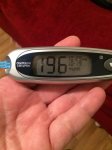
So I just tested him 2 hours after eating (3oz FF Classic) and 1/U Lantus.
From 327 went down to 196.
 

Attachments

  • image.jpeg
    image.jpeg
    37.7 KB · Views: 132
For now, yes, but that's a BIG drop for so early in the cycle

I'd plan on getting a +3

Do you need the link to the spreadsheet again? It'll be really important for you to keep track of your numbers on so others can see it too
 
Thank you Chris. I have the sheet. I was able to also put on my phone.
Now the +3. Does that mean test him again in 1 hour?
 
Yes...the "+ numbers" are always however many hours since the last shot...so +3 is 3 hours after the last shot..+5 is 5 hours...+8 is 8 hours..etc....until you get to +11....then the cycle starts over again at the next shot
 
If you have the spreadsheet, you need to put the link to it into your signature so everyone can look when they need to.

Do you have high carb food in the house? Like Fancy Feast Gravy Lovers? Karo syrup/honey/maple syrup? Just want to make sure you have everything you might need....not saying you need it right this minute
 
Hello from GA.

I am Isabela and Fred is a 13 years old cat.

Please we need your help.

He was diagnosed this week with diabetes.
Lost lots of weight. Is now taking 2 antibiotics due to a ear, urine and intestine infection.
He had catheter for 24 hours this week as they discovered he had crystals.
He is now at home, eating only wet food ( FF, M/D and C/D).
He is poiping and peeing.
He is also drinking some water.
He walks too.

Doctor prescribed Lantus - pen.
He is about 11 lb and 1/2.
They want me do give him 3 units twice a day.
On Facebook some feline owners friends told me to come here since they believe it's too much of insulin to start.
Fred used to eat dry food. Until July this year hills science mature cat and in August Grain free Rachel Ray and Nutro.

Will starry the insulin tonigh.

Thank ou for your help.
3 units seems kind of high for a start off dose to me.my vet started mine out on lantus pen 0.5 units to be safe and for me to raise her dose if she needed it raised.been slowly raising it and now I have her on 1.5 units and still adjusting it.i rather start my cat on a low dose so I don't give too much and cause low blood sugar which is dangerous and can kill quickly.i just started lantus 10/7/15 so I might not be much help but wanted to say something hoping I might be of some help.this site has been very helpful to me and have met some very nice people who all love their fur babies like I do.:D
 
Isabella, did you get another test last night? Did he stay above 50 mg/dL on a human glucometer? That is our lower limit and we start giving high carb gravy, or Karo/syrup if they go lower than that to keep the cat safe.
 
Status
Not open for further replies.
Back
Top