Hello, from Carol and Priss

Status
Not open for further replies.

Snowshoes

Member Since 2020
Hi,
I re-adopted Priss just over a year ago from my mother in AZ. She had adopted her three cats over 10 years ago from a rescue. Priss was picked on/literally thrashed by the other two continually and lived under the bed or was the only cat mom would let outside for a getaway. Three cats were getting to be too much for her to care for as well as Priss’s sad lifestyle, so I took her with me back home to AK.
She has a history, diagnosed about a year ago, of possible inflammatory bowel disease, she struggled with chronic loose stools sometimes with blood or mucus in it. She was uncomfortable and I could tell she was occasionally in pain. After full work up including ultrasound, and repeat vet visits and treatment with antibiotics, steroids and several diet changes (different diets recommended by different vets in the same clinic) she improved on the one I eventually settled on - Royal Canin Digestive, canned and dry. (Most of her life her diet was inexpensive dry only cat food).
Priss was diagnosed with diabetes July 1. I had taken her in a month prior to see her regular vet because something was “wrong“. Her fur was getting oily and dandruffy, drinking more water than normal, and I could tell she was losing weight. (Also by this time both of her siblings had been diagnosed and are insulin-dependent diabetic. One for the last three years and then other for one year). At that time we got full blood panel and another complete work up including a “quick” ultrasound, that she didn’t charge me for. The diagnosis was that I had a perfectly healthy cat. No thyroid problems, not diabetic, and her belly seemed better. Priss got a pat on the head and we went home.
It became worse quickly, much more water consumption - the cat box turned into a mud box. She developed a voracious appetite. I made another appointment which took an extra couple of weeks to see the internal medicine specialist in the same clinic. When I took her in the vet was alarmed at the weight loss. It took him a few hours to determine that she was diabetic even though her BG was high. There were no keytones in her urine. He said diabetes typically comes on gradually not a fast onset like hers, although it was not unheard of. He was also considering lymphoma or complication from inflammatory bowel disease. Her ultrasound showed pancreas, spleen, and liver concerns. New blood panel, as well as the previous one showed inflammatory markers elevated also. Ultimately he declared her diabetic and off we went.
This vet was uncomfortable at my request to monitor her blood glucose. His concern was that I would over check and be chasing her blood sugars. He wanted to stay within certain parameters once they learned the curve. Which I understood and did not want to make it any harder on myself either. I did buy the meter however. He also knows that I am an LPN, I am comfortable with checking vital signs and I work with human diabetics. I’ve also had pets in kidney failure so I’m comfortable with fluid administration and symptom checks. Not afraid of jumping in.
She gets Lantus. He started me off giving her one unit twice a day. He didn’t say much about the food choice but wanted not to change her diet at this time. She eats mostly canned, and at that time I was giving her a tiny amount of dry, same type. I started weighing and measuring so that her food would be exactly the same twice a day. No free feeding any longer. And when I would take her in for curves checks she would be too low, and we would readjust.
The test meter turned out to be a very valuable tool because Priss’s blood sugar has been all over the place. I am down to 1/4 of a unit at times (or as close as I can get with 1/2 unit marker above it!). Her vet has set parameters on amounts to give and when to hold. He says he’s hopeful that we may be able to go with a once a day injection considering her drop in need.
Yesterday morning she was 363, even though I should’ve given her a half I gave her 1/4 unit trying to stay consistent. Last night she was 184 and 1/4 unit. I dropped her dry food last night and bumped up the wet by weight a little bit. This morning BG was 112.
I learned, through a very helpful link on this website that her current food is 25% carbohydrate! That’s the canned, I don’t want to look up the dry! I think her little body would be willing to not be on insulin any longer with a tweaked diet...?
 
Welcome. Sorry no one got to this post sooner. It's a bit crazy on the Health Forum at the moment.

It is so smart of you to grab a glucometer and start testing.

I think her little body would be willing to not be on insulin any longer with a tweaked diet...?
I dropped her dry food last night and bumped up the wet by weight a little bit. This morning BG was 112.

Possibly, if Snowshoes is a steroid-induced diabetic. HOWEVER, do not make a sudden diet change as it can drop a cat's numbers by up to 100 points overall, leading to a potential overdose.


The test meter turned out to be a very valuable tool because Priss’s blood sugar has been all over the place. I am down to 1/4 of a unit at times (or as close as I can get with 1/2 unit marker above it!). Her vet has set parameters on amounts to give and when to hold. He says he’s hopeful that we may be able to go with a once a day injection considering her drop in need.
Yesterday morning she was 363, even though I should’ve given her a half I gave her 1/4 unit trying to stay consistent. Last night she was 184 and 1/4 unit.

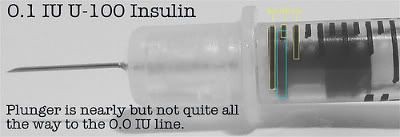
Lantus is a depot insulin and it craves consistency in dosing. Lantus (and possible remission) will not work properly with once a day dosing. It is best to find a dose that you can give twice a day. There are two levels of dosing below 0.25 units (0.10 units and "a drop". The more gradual dosing levels help to shore up a strong remission.

It would be extremely helpful if you could set up a spreadsheet. We are data driven and the first place anyone will look is your spreadsheet. If you have problems setting one up, just ask. There are a couple of people who can set it up for you.

And yes, you stay consistent when you see a higher number like the 363 at shot time. Dosing is based on how a cat goes (the nadir). With the high numbers, what you are seeing is a "bounce." The cat's body, sensing too low numbers or lower numbers that it is used to, and reacts.

From: https://www.felinediabetes.com/FDMB/threads/the-basics-new-to-the-group-start-here.18139/

  • Bouncing - Bouncing is simply a natural reaction to what the cat's system perceives as a BG value that is "too low". "Too low" is relative. If a cat is used to BGs in the 200's, 300's, or higher for a long time, then even a BG that drops to 150 can trigger a "bounce". Bouncing can also be triggered if the blood glucose drops too low and/or too fast.The pancreas, then the liver, release glucogon, glycogen and counter-regulatory hormones. The end result is a dumping of "sugar" into the bloodstream to save the cat from going hypoglycemic from a perceived low. The action is often referred to as "liver panic" or "panicky liver". *Usually*, a bounce will clear kitty's system within 3 days (6 cycles).
I have to run out for a bit. Others should be by shortly.
 
Welcome Carol and Priss!

Red already gave you great info and advice I just want to address the food amount. Has she lost more weight or gained? You may already know this, but diabetic cats cannot process the nutrients in their food well so they’re constantly hungry even though they’re eating and do lose weight as she has. Also they burn calories just by peeing since there’s sugar in their urine. Finally, most cat’s are grazers and don’t do well on 2 meals a day only. Most of us here feed the bulk of their food around shot times and then a few smaller meals and low carb treats, like freeze dried, throughout the day. You may want to consider that for Priss. If you know her ideal weight, a good rule of thumb is multiplying that by 20 to get the daily calorie intake she should be getting. As long as it’s 10% or less in carbs, the calories are fine. As Red did suggest, do any food transition slowly and monitor it closely as you’re doing since it could drop her BG much lower than you’re already seeing.

Welcome again!!!! She’s an absolutely gorgeous kitty! :bighug::bighug::bighug:
 
Welcome. Sorry no one got to this post sooner. It's a bit crazy on the Health Forum at the moment.

It is so smart of you to grab a glucometer and start testing.


Possibly, if Snowshoes is a steroid-induced diabetic. HOWEVER, do not make a sudden diet change as it can drop a cat's numbers by up to 100 points overall, leading to a potential overdose.


Lantus is a depot insulin and it craves consistency in dosing. Lantus (and possible remission) will not work properly with once a day dosing. It is best to find a dose that you can give twice a day. There are two levels of dosing below 0.25 units (0.10 units and "a drop". The more gradual dosing levels help to shore up a strong remission.

It would be extremely helpful if you could set up a spreadsheet. We are data driven and the first place anyone will look is your spreadsheet. If you have problems setting one up, just ask. There are a couple of people who can set it up for you.

And yes, you stay consistent when you see a higher number like the 363 at shot time. Dosing is based on how a cat goes (the nadir). With the high numbers, what you are seeing is a "bounce." The cat's body, sensing too low numbers or lower numbers that it is used to, and reacts.

From: https://www.felinediabetes.com/FDMB/threads/the-basics-new-to-the-group-start-here.18139/

  • Bouncing - Bouncing is simply a natural reaction to what the cat's system perceives as a BG value that is "too low". "Too low" is relative. If a cat is used to BGs in the 200's, 300's, or higher for a long time, then even a BG that drops to 150 can trigger a "bounce". Bouncing can also be triggered if the blood glucose drops too low and/or too fast.The pancreas, then the liver, release glucogon, glycogen and counter-regulatory hormones. The end result is a dumping of "sugar" into the bloodstream to save the cat from going hypoglycemic from a perceived low. The action is often referred to as "liver panic" or "panicky liver". *Usually*, a bounce will clear kitty's system within 3 days (6 cycles).
I have to run out for a bit. Others should be by shortly.
Welcome. Sorry no one got to this post sooner. It's a bit crazy on the Health Forum at the moment.

It is so smart of you to grab a glucometer and start testing.


Possibly, if Snowshoes is a steroid-induced diabetic. HOWEVER, do not make a sudden diet change as it can drop a cat's numbers by up to 100 points overall, leading to a potential overdose.


Lantus is a depot insulin and it craves consistency in dosing. Lantus (and possible remission) will not work properly with once a day dosing. It is best to find a dose that you can give twice a day. There are two levels of dosing below 0.25 units (0.10 units and "a drop". The more gradual dosing levels help to shore up a strong remission.

It would be extremely helpful if you could set up a spreadsheet. We are data driven and the first place anyone will look is your spreadsheet. If you have problems setting one up, just ask. There are a couple of people who can set it up for you.

And yes, you stay consistent when you see a higher number like the 363 at shot time. Dosing is based on how a cat goes (the nadir). With the high numbers, what you are seeing is a "bounce." The cat's body, sensing too low numbers or lower numbers that it is used to, and reacts.

From: https://www.felinediabetes.com/FDMB/threads/the-basics-new-to-the-group-start-here.18139/

  • Bouncing - Bouncing is simply a natural reaction to what the cat's system perceives as a BG value that is "too low". "Too low" is relative. If a cat is used to BGs in the 200's, 300's, or higher for a long time, then even a BG that drops to 150 can trigger a "bounce". Bouncing can also be triggered if the blood glucose drops too low and/or too fast.The pancreas, then the liver, release glucogon, glycogen and counter-regulatory hormones. The end result
Welcome. Sorry no one got to this post sooner. It's a bit crazy on the Health Forum at the moment.

It is so smart of you to grab a glucometer and start testing.


Possibly, if Snowshoes is a steroid-induced diabetic. HOWEVER, do not make a sudden diet change as it can drop a cat's numbers by up to 100 points overall, leading to a potential overdose.


Lantus is a depot insulin and it craves consistency in dosing. Lantus (and possible remission) will not work properly with once a day dosing. It is best to find a dose that you can give twice a day. There are two levels of dosing below 0.25 units (0.10 units and "a drop". The more gradual dosing levels help to shore up a strong remission.

It would be extremely helpful if you could set up a spreadsheet. We are data driven and the first place anyone will look is your spreadsheet. If you have problems setting one up, just ask. There are a couple of people who can set it up for you.

And yes, you stay consistent when you see a higher number like the 363 at shot time. Dosing is based on how a cat goes (the nadir). With the high numbers, what you are seeing is a "bounce." The cat's body, sensing too low numbers or lower numbers that it is used to, and reacts.

From: https://www.felinediabetes.com/FDMB/threads/the-basics-new-to-the-group-start-here.18139/

  • Bouncing - Bouncing is simply a natural reaction to what the cat's system perceives as a BG value that is "too low". "Too low" is relative. If a cat is used to BGs in the 200's, 300's, or higher for a long time, then even a BG that drops to 150 can trigger a "bounce". Bouncing can also be triggered if the blood glucose drops too low and/or too fast.The pancreas, then the liver, release glucogon, glycogen and counter-regulatory hormones. The end result is a dumping of "sugar" into the bloodstream to save the cat from going hypoglycemic from a perceived low. The action is often referred to as "liver panic" or "panicky liver". *Usually*, a bounce will clear kitty's system within 3 days (6 cycles).
I have to run out for a bit. Others should be by shortly.

Thank you! Thank you for explanations and new information to ponder. I will fill out a spreadsheet with the data I do keep track of in a notebook. I will also be careful about making any new changes yet, as tempting as it may be.
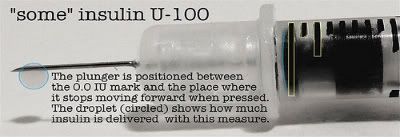
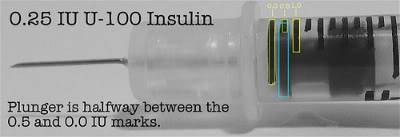
I just guess at a quarter unit dose on the syringe that I’m using. Since her insulin as U-100, I can find the 30s easily enough with half unit markings but I can’t find anything smaller - any advice?
 
Welcome Carol and Priss!

Red already gave you great info and advice I just want to address the food amount. Has she lost more weight or gained? You may already know this, but diabetic cats cannot process the nutrients in their food well so they’re constantly hungry even though they’re eating and do lose weight as she has. Also they burn calories just by peeing since there’s sugar in their urine. Finally, most cat’s are grazers and don’t do well on 2 meals a day only. Most of us here feed the bulk of their food around shot times and then a few smaller meals and low carb treats, like freeze dried, throughout the day. You may want to consider that for Priss. If you know her ideal weight, a good rule of thumb is multiplying that by 20 to get the daily calorie intake she should be getting. As long as it’s 10% or less in carbs, the calories are fine. As Red did suggest, do any food transition slowly and monitor it closely as you’re doing since it could drop her BG much lower than you’re already seeing.

Welcome again!!!! She’s an absolutely gorgeous kitty! :bighug::bighug::bighug:
Welcome Carol and Priss!

Red already gave you great info and advice I just want to address the food amount. Has she lost more weight or gained? You may already know this, but diabetic cats cannot process the nutrients in their food well so they’re constantly hungry even though they’re eating and do lose weight as she has. Also they burn calories just by peeing since there’s sugar in their urine. Finally, most cat’s are grazers and don’t do well on 2 meals a day only. Most of us here feed the bulk of their food around shot times and then a few smaller meals and low carb treats, like freeze dried, throughout the day. You may want to consider that for Priss. If you know her ideal weight, a good rule of thumb is multiplying that by 20 to get the daily calorie intake she should be getting. As long as it’s 10% or less in carbs, the calories are fine. As Red did suggest, do any food transition slowly and monitor it closely as you’re doing since it could drop her BG much lower than you’re already seeing.

Welcome again!!!! She’s an absolutely gorgeous kitty! :bighug::bighug::bighug:

Thank you! I will try to determine her proper calorie intake - that is certainly helpful. I’ve just been guessing. Yes, she has gained weight since she was diagnosed a month ago. She had little dinosaur ridge bones on her back that are almost gone. She still has a strong appetite, not ravenous anymore though. I did allow her to free feed prior to the diagnosis and per vets recommendation went to strict two times a day. Her general health has drastically improved as well ... she is more alert, engaging, interactive, initiates play again with Embers (my tamed stray x 1 year who treats her better than her siblings did, thankfully). More snuggly than aloof. Getting my old kitty back. Even though the water dish volume doesn’t seem to drastically decrease, there still seems to be more urine volume in the cat box.
It makes sense to allow her to eat a little more before the next meal. But my occupation/lifestyle is complicates matters unfortunately.
I work one week on one week off, no one else lives in the house. I work 11 1/2 hour shifts and it’s about a 45 minute commute each way, so I am not home to give a 12 hour injection. I give her first injection after a BG check at 11 AM, leave to work a swing shift by noon get off at 11:30 PM and back home by about 12:15 to 12:30 AM to a late check/ dose.
Then repeat (Thursday through Wednesday). My week off I’m here all the time and can closely monitor what’s going on, that’s when I get most of my progress made. And I have to err on the side of being cautious during my work week. Which is clearly not good for consistency. I just have to tell myself I do the best I can. I have someone who can come over and check her occasionally, I have a bottle of Karo syrup sitting out. But there’s not much else they can do if they can’t tell if she’s obviously symptomatic.
 
A belated welcome! Hi my name is Jeanne and as you see we are a dedicated community of cat lovers that will help any and all that come here seeking answers. WELCOME TO FDMB!
Jeanne
 
Welcome Carol and Priss!

Red already gave you great info and advice I just want to address the food amount. Has she lost more weight or gained? You may already know this, but diabetic cats cannot process the nutrients in their food well so they’re constantly hungry even though they’re eating and do lose weight as she has. Also they burn calories just by peeing since there’s sugar in their urine. Finally, most cat’s are grazers and don’t do well on 2 meals a day only. Most of us here feed the bulk of their food around shot times and then a few smaller meals and low carb treats, like freeze dried, throughout the day. You may want to consider that for Priss. If you know her ideal weight, a good rule of thumb is multiplying that by 20 to get the daily calorie intake she should be getting. As long as it’s 10% or less in carbs, the calories are fine. As Red did suggest, do any food transition slowly and monitor it closely as you’re doing since it could drop her BG much lower than you’re already seeing.

Welcome again!!!! She’s an absolutely gorgeous kitty! :bighug::bighug::bighug:
I see why you think Priss is gorgeous. She looks just like Minnie!
 
Some people eyeball the dose. For consistency, it helps to keep a coloured water filled syringe to check against.

Some people use digital calipers.

From: https://www.felinediabetes.com/FDMB...info-proper-handling-drawing-fine-dosing.151/

A drop
49823504036_be8b19dcbc_o.jpg


0.1 units
49822973598_f0540f7a37_w.jpg


0.25 units
49822973683_0559ae843a_o.jpg
 
Welcome. One things others haven't mentioned yet is there is no need to restrict your cat to two meals a day. Even for human diabetics, more frequent smaller meals is better. For the older style insulins, two meals a day was more important, but not so much Lantus. It's a much gentler insulin. Grazing or multiple small meals, primarily in the first half of the cycle when the insulin is strongest, is best. Also try to remove food two hours before shot time, so that any test you do before the shot is clear of extra carbs.

Priss is lucky to have you in her corner again.
 
Welcome. One things others haven't mentioned yet is there is no need to restrict your cat to two meals a day. Even for human diabetics, more frequent smaller meals is better. For the older style insulins, two meals a day was more important, but not so much Lantus. It's a much gentler insulin. Grazing or multiple small meals, primarily in the first half of the cycle when the insulin is strongest, is best. Also try to remove food two hours before shot time, so that any test you do before the shot is clear of extra carbs.

Priss is lucky to have you in her corner again.
I did in my comment but thanks for reinforcing it!
 
Thank you! I will try to determine her proper calorie intake - that is certainly helpful. I’ve just been guessing. Yes, she has gained weight since she was diagnosed a month ago. She had little dinosaur ridge bones on her back that are almost gone. She still has a strong appetite, not ravenous anymore though. I did allow her to free feed prior to the diagnosis and per vets recommendation went to strict two times a day. Her general health has drastically improved as well ... she is more alert, engaging, interactive, initiates play again with Embers (my tamed stray x 1 year who treats her better than her siblings did, thankfully). More snuggly than aloof. Getting my old kitty back. Even though the water dish volume doesn’t seem to drastically decrease, there still seems to be more urine volume in the cat box.
It makes sense to allow her to eat a little more before the next meal. But my occupation/lifestyle is complicates matters unfortunately.
I work one week on one week off, no one else lives in the house. I work 11 1/2 hour shifts and it’s about a 45 minute commute each way, so I am not home to give a 12 hour injection. I give her first injection after a BG check at 11 AM, leave to work a swing shift by noon get off at 11:30 PM and back home by about 12:15 to 12:30 AM to a late check/ dose.
Then repeat (Thursday through Wednesday). My week off I’m here all the time and can closely monitor what’s going on, that’s when I get most of my progress made. And I have to err on the side of being cautious during my work week. Which is clearly not good for consistency. I just have to tell myself I do the best I can. I have someone who can come over and check her occasionally, I have a bottle of Karo syrup sitting out. But there’s not much else they can do if they can’t tell if she’s obviously symptomatic.
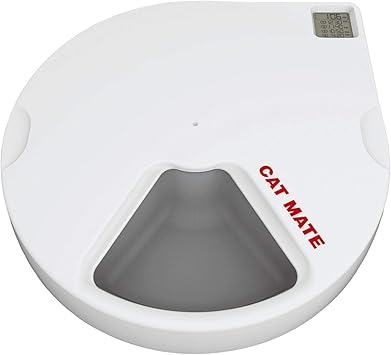
You can get an automatic feeder @Diane Tyler's Mom knows a good one you can get on Amazon it keeps food fresh with ice packs
 
Thanks Red, I have played with the syringe while wondering about how to measure .25. This helps. I can see the two lower doses now. Likely inadvertently gave them as .25. Worth taking extra time drawing up doses now. Thanks.

Red's suggestion above about using calipers to measure doses is a good one. When only a tiny dose is needed the actual position of the printed graduations on the syringe really become an issue. I used to use BD U100 0.3ml demis and it was somewhat alarming how much variation there was, even between the syringes in a single box. I used to keep a reference syringe and check all the syringes in each new box against it and group them into subsets based on how far off the markings were. It helped me to compensate somewhat for the offset variances when measuring doses.


Mogs
.
 
  • 51xSxIioyVL._AC_SY355_.jpg
Roll over image to zoom in
  • 31WRl-P3ijL._AC_US40_.jpg
  • 419gLCBenaL._AC_US40_.jpg
  • 41pfQ-WJPsL._AC_US40_.jpg


Cat Mate C500 Automatic Pet Feeder with Digital Timer for Cats and Small Dogs
by Cat Mate
1,432 ratings


List Price: $89.96
Price: $49.95 & FREE Shipping. Details
You Save: $40.01 (44%)
Coupon
30% Subscribe & Save coupon
Coupon available for Subscribe & Save purchase option only. Details


Pay $49.95 $39.95 when you add a new payment method to your Amazon wallet. Click here to add a debit card and save. Terms Apply


  • Material-Plastic. Five food compartments will serve up to five meals, one initial feed and four further timed feeds while you are away. Each holds 11. 5 ounces wet food.
  • removable, easy-to-clean cover and bowl (also dishwasher-safe)
  • battery status indicator. Two cooling ice packs and one close-fitting cover keep the feed fresh
  • uses 3 x AA batteries (not included)
  • 3 year

I would add some water to the wet food just so it doesn't get crusty
 
Last edited:
  • 61kywO30qDL._AC_SX450_.jpg
Roll over image to zoom in
  • 41wpN4DJXcL._AC_US40_.jpg
  • 41xSTQBEX0L._AC_US40_.jpg
  • 31TtvdUG1LL._AC_US40_.jpg
  • 31gHzGIwjfL._AC_US40_.jpg
  • 41SvK13Q2%2BL._AC_US40_.jpg


ANI Mate Replacement Ice Pack for C500 Feeder
by Cat Mate
42 ratings
Amazon'sChoicefor "cat mate c500 ice pack replacement"


Price: $16.99 & FREE Shipping on orders over $25.00 shipped by Amazon. Pay $16.99 $6.99 when you add a new payment method to your Amazon wallet.Click here to add a debit card and save.Terms Apply


Size: 2 PACK
  • 2 PACK
  • Single


  • Replacement Ice Pack for Cat Mate C500 Auto Feeder
  • Helps keep food fresh in your feeder
  • Easy to Install/Replace inside your feeder
  • Buy a bunch so you always have a cold one ready!
  • Ice pack helps keep both wet and dry foods fresh!
Here are extra ice packs for it
 
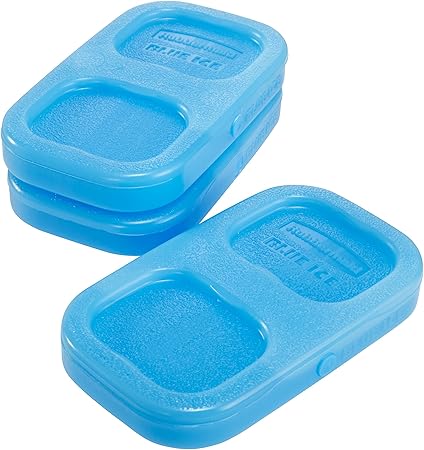
Or you can buy these ice packs, I read people use these they are much cheaper, so you always have another set in the freezer ready to use


Other Sellers on Amazon
Add to Cart
$6.99
& FREE Shipping on eligible orders.Details
Sold by: Tblakely23
Add to Cart
$7.00
& FREE Shipping on eligible orders.Details
Sold by: Amazon.com
Add to Cart
$8.72
& FREE Shipping on eligible orders.Details
Sold by: Azi Products
Have one to sell?
Sell on Amazon


  • 81YvirjnHTL._AC_SY450_.jpg
Roll over image to zoom in
  • 413be9QX49L._AC_US40_.jpg
  • 41S-66XDVrL._AC_US40_.jpg
  • 41unLh0NXuL._AC_US40_.jpg
  • 418ScyWIuhL._AC_US40_.jpg
  • 41eBPaE4qVL._AC_US40_.jpg
  • 41ezheqHsRL._AC_US40_.jpg


Rubbermaid
308 ratings
Amazon'sChoicefor "rubbermaid blue ice"


Price: $6.99 & FREE Shipping on orders over $25.00 shipped by Amazon. Pay $6.99 $0.00 when you add a new payment method to your Amazon wallet.Click here to add a debit card and save.Terms Apply

Much cheaper ice packs
 
I agree with Diane and others here: Priss is a pretty, pretty girl, and I too am glad she has you to love and care for her. :cat:

WRT your scheduling issues, there are members who have tricky schedules who should be able to help you work out a dosing pattern to fit your routine. I think the Lantus support group board might be the best place to ask for help on this.


Mogs
.
 
@Diane Tyler's Mom -

Hi Diane,

I see Catmate have got their act together on the larger timed feeders. I bought a C50 years ago but returned it and bought a couple of Petsafe 5 feeders (which I lurve!). The issues I had with the C50 were as follows:-

* The mechanical timer was very clunky and it was impossible to set precise feeding times (a big issue when FD and pancreatitis are in the mix).

* You needed a HUGE amount of space for it because, unlike the Petsafe 5 which rotated the feed tray toward the cat, the C50 used to require the cat to rotate around the feeder because the cover was what rotated. (I assume the Catmate C500 works the same way as the Petsafe.)

I've got a few Catmate C10s and C20s which are very handy. I've used them when food needs to be made accessible at a particular time but where it needs to be left available for the cat to eat at it's own pace without any time constraint.


Mogs
.
 
Last edited:
@Diane Tyler's Mom -

Hi Diane,

I see Catmate have got their act together on the larger timed feeders. I bought a C50 years ago but returned and bought a couple of Petsafe 5 feeders (which I lurve!). The issues I had with the C50 were as follows:-

* The mechanical timer was very clunky and it was impossible to set precise feeding times (a big issue when FD and pancreatitis are in the mix).

* You needed a HUGE amount of space for it because, unlike the Petsafe 5 which rotated the feed tray toward the cat, the C50 used to require the cat to rotate around the feeder because the cover was what rotated. (I assume the Catmate C500 works the same way as the Petsafe.)

I've got a few Catmate C10s and C20s which are very handy. I've used them when food needs to be made accessible at a particular time but where it needs to be left available for the cat to eat at it's own pace without any time constraint.


Mogs
.
@Critter Mom
Hey Mogs to tell you the truth I have never used any feeders, someone else was asking for one to use with wet food, so I just googled and saw this one which got pretty good reviews

Can you put wet food in the Petsafe 5
 
Oh my gosh, you guys are so awesome. I have so much support!
Wendy and Aleluia ...Thanks for the advice and information about feeding. It does make sense using Lantus not to restrict her meals so much. She is so hungry all the time... she begs. Dianne, thanks for the link for the automatic feeders. That’s likely my solution. I have two cats, one hungry younger one as well so will have to troubleshoot that.
Critter mom: Variance in syringes?! Oh no. Yes, I think reds advice about using calipers will be what I need to do. And using colored water filled dosed syringes for comparison.
So much information, I need to read and reread. But I am grateful for every little tip and education! Right now I am trying to put together the spreadsheet and the basic information at the bottom of my post.
We appreciate you guys so much!
 
Yep, you can put wet food into the Petsafe, Diane.

IIRC, there's space for an icepack but they don't come supplied with one. Even without an icepack, you can keep wet food fresh and moist by popping ice cubes into the medium stage feeds and put frozen portions of food into the compartments that are offered last.

With Saoirse's chronic pancreatitis she needed to eat mini-meals throughout the day and night (and it was an ideal feeding schedule for a Lantus kitty). Also, if she didn't eat every three hours or so she'd get a bit of acid build-up in her tum and it would make her vomit up clear liquid. The timed feeders were a very necessary godsend for both of us (meant I could get some bit of rest during the night).


Mogs
.
 
Oh my gosh, you guys are so awesome. I have so much support!
Wendy and Aleluia ...Thanks for the advice and information about feeding. It does make sense using Lantus not to restrict her meals so much. She is so hungry all the time... she begs. Dianne, thanks for the link for the automatic feeders. That’s likely my solution. I have two cats, one hungry younger one as well so will have to troubleshoot that.
Critter mom: Variance in syringes?! Oh no. Yes, I think reds advice about using calipers will be what I need to do. And using colored water filled dosed syringes for comparison.
So much information, I need to read and reread. But I am grateful for every little tip and education! Right now I am trying to put together the spreadsheet and the basic information at the bottom of my post.
We appreciate you guys so much!
If you really want to get fancy, there are timed feeders that have chip sensors so they only open for the right cat using the chip. It’s pricey but it’s also an option :rolleyes:
 
Status
Not open for further replies.
Back
Top