Matthijs
Member Since 2019
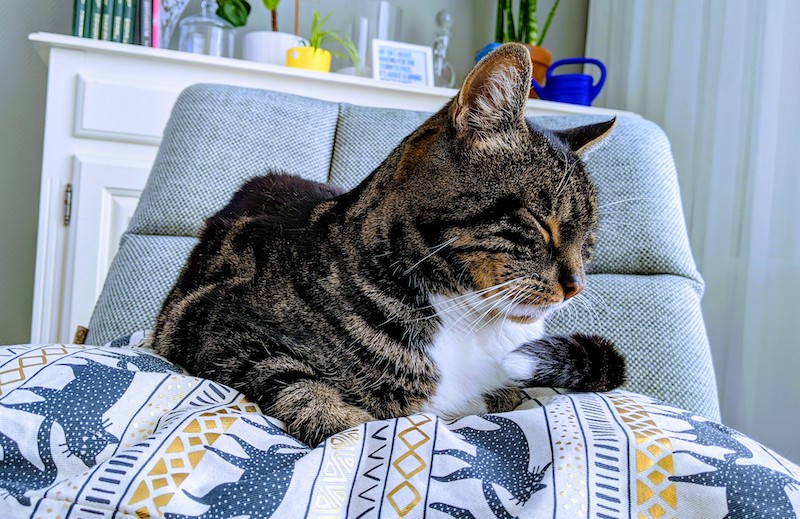
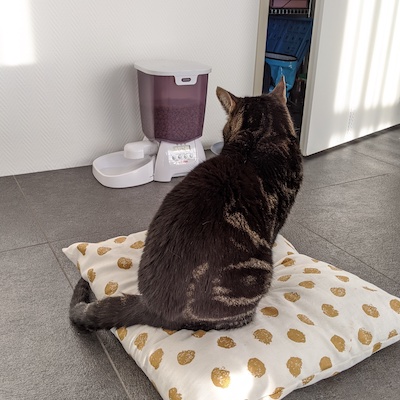
Hello! Please meet Cedric. He is a 11,5 year old European Shorthair and a real gentleman!
He never begs for food, does not jump on tables and although not a cuddler cat, he always seeks company and likes to be present in the same room as his owners.
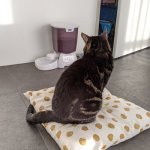
Unfortunately for the last months his appetite is increased in such a way that he spends hours waiting in front of his automatic feeder. When he started to get aggressive towards us at moments when we tried to prevent him stealing food from the fridge, we knew we had to visit the veterinarian.
He was drinking a lot and eating every scrap of food he could find. Every time we opened the dishwasher to put in a dirty plate, Cedric was jumping in the dishwasher and frantically began licking from dirty dishes to still his hunger.
Although the vet first suspected a thyroid problem, blood tests soon revealed that the blood glucose level was too high (I believe 22 mmol/l) and a glucosamine test confirmed the diagnose of diabetic. With the exception of his glucose levels, he is a very healthy cat weighing 5KG.
We went home with a Caninsulin starter kit and instructions to give Cedric a dose of 1,5 IU Insuline, twice a day with 12 hours in between.
After a week we had to return to the vet to measure his blood glucose 4 hours after his last injection. We were very happy to see the blood glucose already as low as 5,6 mmol/l! The vet even took a second measurement as she didn't believe the result to be this good with only 1,5 IU.
We did a second measurement about a week later, confirming the results were consistent. The only problem is that Cedric's behavior is not changing! He stays hungry!
The veterinarian could not find any other cause and asked us to lower to dose to 1 IU Caninsulin, twice a day.
We have been administering the lowered dose for two weeks now. The results are not great. Even though Cedric stays to be a very active cat, he is restless and too much focused on food. Only a few hours a day, often between 11h and 13h, he is relaxed and seeks for a quiet place to sleep.
The veterinarian talked about an alternative insuline, Prozinc that might yield better results.
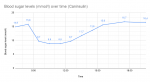
As we say in Dutch: "meten is weten" (to measure is to know), so we learned how to do home glucose testing. Here is the result of our first day curve that we measured yesterday.
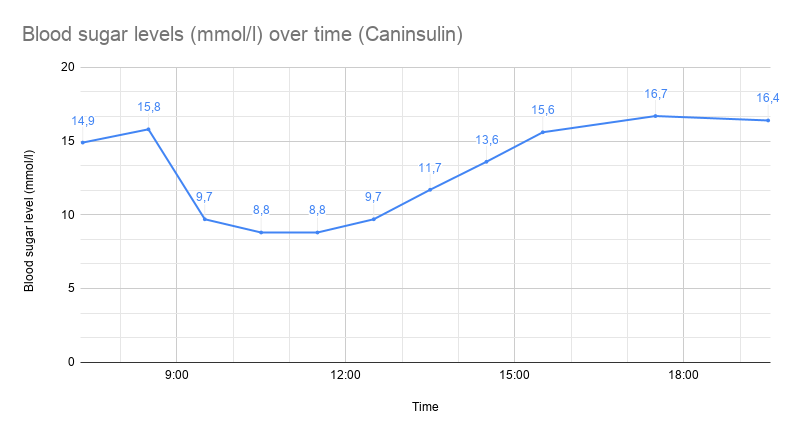
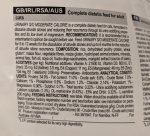
(Cedric eats 24g of Royal Canin Veterinary Diet - Urinary S/O Moderate Calorie at 7:30h and 16g at 15:00h)
What can we tell about this day curve? Can I already rule out Acromegaly as possible cause?
I am looking forward to exchange experiences to make the lives of diabetic cats (and their owners) as good as possible. Pardon me for using KG / mmol/l, the Dutch forums do no seems to be so active and I do not think diabetic treatment should differ across borders.
He never begs for food, does not jump on tables and although not a cuddler cat, he always seeks company and likes to be present in the same room as his owners.
Unfortunately for the last months his appetite is increased in such a way that he spends hours waiting in front of his automatic feeder. When he started to get aggressive towards us at moments when we tried to prevent him stealing food from the fridge, we knew we had to visit the veterinarian.
He was drinking a lot and eating every scrap of food he could find. Every time we opened the dishwasher to put in a dirty plate, Cedric was jumping in the dishwasher and frantically began licking from dirty dishes to still his hunger.
Although the vet first suspected a thyroid problem, blood tests soon revealed that the blood glucose level was too high (I believe 22 mmol/l) and a glucosamine test confirmed the diagnose of diabetic. With the exception of his glucose levels, he is a very healthy cat weighing 5KG.
We went home with a Caninsulin starter kit and instructions to give Cedric a dose of 1,5 IU Insuline, twice a day with 12 hours in between.
After a week we had to return to the vet to measure his blood glucose 4 hours after his last injection. We were very happy to see the blood glucose already as low as 5,6 mmol/l! The vet even took a second measurement as she didn't believe the result to be this good with only 1,5 IU.
We did a second measurement about a week later, confirming the results were consistent. The only problem is that Cedric's behavior is not changing! He stays hungry!
The veterinarian could not find any other cause and asked us to lower to dose to 1 IU Caninsulin, twice a day.
We have been administering the lowered dose for two weeks now. The results are not great. Even though Cedric stays to be a very active cat, he is restless and too much focused on food. Only a few hours a day, often between 11h and 13h, he is relaxed and seeks for a quiet place to sleep.
The veterinarian talked about an alternative insuline, Prozinc that might yield better results.
As we say in Dutch: "meten is weten" (to measure is to know), so we learned how to do home glucose testing. Here is the result of our first day curve that we measured yesterday.
(Cedric eats 24g of Royal Canin Veterinary Diet - Urinary S/O Moderate Calorie at 7:30h and 16g at 15:00h)
What can we tell about this day curve? Can I already rule out Acromegaly as possible cause?
I am looking forward to exchange experiences to make the lives of diabetic cats (and their owners) as good as possible. Pardon me for using KG / mmol/l, the Dutch forums do no seems to be so active and I do not think diabetic treatment should differ across borders.