? Accuracy of Relion Premier Compact Meter?

Status
Not open for further replies.

Mac88

Member Since 2020
Hi everyone! I picked up a Relion Premier Compact Meter for Butters this last weekend after he was diagnosed with diabetes last week for the third time when bloodwork showed it was 587mg/dl. After struggling to get a enough of a sample from the ear, I followed the tips here and got a good sample tonight. To my surprise, despite being on insulin for 5 days now (3 unit/twice a day) the reading was 581mg/dl! I had my father, who is diabetic as well, test his blood sugar with the meter and it was about 34 points higher than his Libre sensor. Does anyone know if the Premier Compact is generally accurate or if it's consistently higher than what the BG actually is? Trying to figure this out as the vet wants me to take his BG twice daily for a week, then report the numbers and he'll adjust the dose accordingly. Thanks!
 
That's totally normal.….the FDA allows a 20% variance in all meters....that means the "real" number can be 20% less or more than what you'd get on professional lab equipment.

34 points is really nothing.

Did you start at 3U of Novolin N? That's a very high starting dose, especially with Novolin which isn't really a very good insulin for cats. It tends to hit hard and fast and then wear off long before the next shot is due.
 
That is a high beginning dose. The good folks here will see you through to better management I have to agree with Chris. Theres a wealth of info here to help you help your kitty. Butters is a very lucky to have you as his care giver!
 
From 2016 article by Diatribe:
"For glucose meters used by people with diabetes at home (“over-the-counter”), the FDA guidance specifies the following accuracy standards:
  • 95% of all measured blood glucose meter values must be within 15% of the true value (a lab measurement); and

  • 99% of meter values must be within 20% of the true value.
As diaTribe noted two years ago, this means that people with diabetes can feel confident that a blood glucose meter measurement is accurate (within 15%) at least 19 times out of 20, and within 20% of the true value 99 out of 100 times. If the true (lab-measured) glucose value is 100 mg/dl, that means the meter has to be within 15 mg/dl (85-115 mg/dl) in 95% of cases, and within 20 mg/dl (80-120 mg/dl) in 99% of cases. Studies of new meters must also include at least 350 people with diabetes, larger than previously required.

Notably, these new standards require greater hypoglycemia (low blood sugar) accuracy than the 2013 ISO standard, which is used outside the US.

Technically, a “guidance” document is a recommendation from the FDA, but in practice, it means new blood glucose meters will need to achieve this level of accuracy to be cleared (otherwise, there may be labeling that limits their use). That said, the new guidance will not impact meters that are already on the market. FDA’s Dr. Courtney Lias told diaTribe that inaccurate meters in current use are definitely of concern to the FDA, though other efforts will be needed to address them.

For healthcare providers using glucose meters in facilities (“point-of-care testing”), a separate guidance has been issued:

  • 95% of meter values should be within 12% of the reference value for blood sugars over 75 mg/dl, and within 12 mg/dl for blood sugars below 75 mg/dl; and

  • 98% of meter values should be within 15% of the reference value for blood sugars over 75 mg/dl, and within 15 mg/dl for blood sugars below 75 mg/dl.
These criteria are similar to other published standards, and are a bit looser than the FDA originally proposed in 2014. Most experts at the time felt the original proposal stretched beyond the limits of current technology.

It is good to see the FDA incorporate patient feedback from the 2014 guidance; it’s clear the Agency is taking meter accuracy seriously. Interestingly, the glucose meter field has seen a decline in new FDA clearances over the past few years: from a high of 61 clearances in 2012, only 35 were cleared in 2015, and only 17 have been cleared in 2016 so far. These guidances will raise the bar to get a new meter to market, and we’ll be watching closely to see what impact they have on new product innovation."
 
https://www.diabetesdaily.com/blog/...on-the-market-meet-accuracy-standards-581567/ From 2018. Relion Premier line was not included in this study, since it was released too late in the year to be included in the study. But, several of Walmarts other meters flunked the independent accuracy study. Including the Relion Prime and the Relion Ultima. Unfortunately, the one Relion meter that passed the study is no longer available, the Relion Confirm (aka the Relion Micro)
 
https://www.fda.gov/news-events/fda...uracy-blood-glucose-monitors-empower-patients

FDA has still not finalized the proposed accuracy standards they had done back in 2018.
Here is the draft proposal, still awaiting approval 2 years later.
https://www.fda.gov/media/119828/download

Here is the kicker. Companies do NOT have to meet these new standards for any products they already have on the market. Once FDA approval has been given for a medical device, manufacturers do not have to retest those devices to meet the new standards. Nor do manufacturers need to retest their devices for accuracy after the initial approval,unless they have made substantial changes to the device.
 
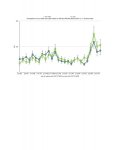
Here is a comparison I did of a human meter (OneTouch Mini)and the Libre sensor I used on my cat Badger. Not that when read higher switch as the sensor was on longer.
BG comparison Libre JPG.jpg
 

Attachments

  • BG comparison Libre JPG.jpg
    BG comparison Libre JPG.jpg
    18.4 KB · Views: 2,642
Thank you everyone for the replies! It is wonderful to join a community of people who are so knowledgeable and helpful with this subject. I feel it might be important to share a bit more about Butters and his diabetes story.

To answer the questions, 3U is the starting dose our vet said based on Butters weight loss (2lbs in about a month), excessive thirst and urination plus the bloodwork they did. I see from reading on here that 3 is said to be a high dose, which is concerning to me.

Butters was first diagnosed with diabetes in early 2014, this was a couple months after a steroid injection for a skin issue he had. Novolin N was prescribed, though for the life of me I cannot remember the initial dose. Anyway, at the time we were just told to bring him in every few weeks for a blood test to check his blood glucose and to use Karo syrup if it ever seemed like he was lethargic. I had no idea that testing at home was possible. Fast forward to Memorial Day 2014. Butters was in the backseat of my car as I was travelling back from our place up north, he had started coming with me as I wanted to keep a close eye on him even when out of town as he had his twice daily insulin injections. I noticed he was acting strange, very sleepy, then meowing in pain, then shaking uncontrollably (seizure), then lost all control of his bowels. He stopped and was awake, but very lethargic. It was scary and we were between towns and didn't have Karo syrup with me in the car, so I sped and rushed to the closest Walmart, got him canned food and Karo syrup, applied it to the roof of his mouth and encouraged him to eat the food, all while frantically searching for the closest open emergency vet (remember, between towns and a holiday). Found one an hour away and drove to it. His blood glucose was 47 when tested there and that was after the food and Karo syrup. I'm confident I came extremely close to losing him that day and without the Karo syrup, he would have died. Needless to say, he was declared in remission the next day at regular vet.

The remission lasted 22 months and in early 2016, he was exhibiting the same symptoms of weight loss and thirst a month after a steroid injection. It was determined that the steroid injection had likely caused his diabetes both times. He was put back on Novolin N and closely monitored for any changes. I saw he was acting funny one day a couple months later and immediately took him to the vet, who tested his blood sugar and it was 58. Remission again.

Butters stayed in remission for nearly 4 years and we avoided the steroid injections completely. Butters has always been a fairly big boy (13lbs) and has always had a bit of a urination outside the box issue, despite the many things we've tried, but I noticed a couple weeks ago he was acting different. I chalked it up to a visiting dog that I cared for several days, as Butters isn't a huge fan of dogs, but when he didn't get better I took him into the vet and was pretty confident from the symptoms that he was diabetic again. I did a lot more research than I've ever done this time and came across this forum and realized that I could actually test him at home and hopefully prevent what happened in 2014 from ever happening again if he was actually diabetic again.

We returned to the vet last week and they did the full bloodwork panel, though from his symptoms and age, the vet wanted to rule out kidney disease and actually thought kidney disease was probably the cause of his symptoms. His kidneys ended up being fine, but the blood sugar was 587. I really like our vet as he's been spot on about all our other pets (let's just say I'm a crazy cat lady who can't say no to cats who've shown up on my doorstep), but I do get the feeling he isn't an expert when it comes to diabetes. He did tell me how to do the testing at home and is having me report the readings to him weekly so that the dose can be adjusted, but he doesn't seem to be as knowledgeable on the types of insulin. He mentioned Lantus and Prozinc to me as options, but said usually people don't want to spend that amount of money on them so Novolin N is usually the one of choice. He especially thought Novolin was worth trying this time because of Butters' history of going into remission on it.

I'm terrified of Butters going hypoglycemic on me again, so I'm trying to do everything I can to keep that from ever happening again.

What would be a good starting dose of Novolin for a cat with BG over 500 and weighing 11.6lbs?

Thanks again, everyone!
 
Personally I would swap to Lantus. It is a longer lasting more gentle insulin and is far better for cats than Novolin N. I would definitely reconsider the type of insulin you are going to use this time.

You have had a hair raising experience with hypo events. Are you going to home test and set up a spreadsheet?
 
Last edited:
Personally I would swap to Lantus. It is a longer lasting more gentle insulin and is far better for cats than Novolin N. I would definitely reconsider the type of insulin you are going to use this time.

You have had a hair raising experience with hypo events. Are you going to home test and set up a spreadsheet?

What about Levemir FlexTouch? My father has a bunch of it left over, all unexpired, from when he used it before swapping over to Lantus. So would be easy to switch Butters to Levemir. I'm not opposed to Lantus if I can get a good price on it since funds are limited, luckily I am about an hour from the Canada border and hear insulin is much cheaper there and I'd certainly make the trip if it's better for my fur baby.

Absolutely, the previous experience has made me really scared of it happening again. I have an app and a spreadsheet. Vet wants me to test twice a day and keep track, so far that has proved challenging as I can't always get a good sample.
 
What would be a good starting dose of Novolin for a cat with BG over 500 and weighing 11.6lbs?
No more than 1U of Novolin to start. A smaller 0.5U dose may be better. There is a "Sticky" for that.
Sticky Beginner's Guide To Novolin/Humulin/NPH

He mentioned Lantus and Prozinc to me as options, but said usually people don't want to spend that amount of money on them so Novolin N is usually the one of choice. He especially thought Novolin was worth trying this time because of Butters' history of going into remission on it.
NPH insulins like the Novolin N your vet has Butters' on drops a cat's blood glucose very fast and sharply.

The recommendation is to feed a cat on a NPH insulin at least 45 to 60 minutes before the insulin dose is given. That is so that the food has time to be digested, and get into the blood stream before the Novolin insulin starts to work, or onset. That can slow down the extremely steep drops with Novolin insulin.

What about Levemir FlexTouch?

YES! or even some of your dads' Lantus. Does he use the 10 ml vial or a insulin pen?
 
Levemir is a great insulin for cats. I liked it better than Lantus. You will still need to get syringes to get the insulin from the pen, we don’t use the pen needles. A five pack of Levemir was around $120-130 Canadian a few years ago in my part of Canada. I cross border shopped for meters and strips. :)
 
She has unexpired Levimir Flextouch pens, from her dad. Also, her dad recently switched to using Lantus. There may be enough left in a vial for her to use with her cat Butters. If her dad uses the vials.

Have you discovered any of our home testing tips? To help you get a big enough blood drop to test with?

Warming the ear first is key. An old sock filled with rice or another grain, then heated in the microwave can be helpful.
 
Last edited:
She has unexpired Levimir Flextouch pens, from her dad. Also, her dad recently switched to using Lantus. There may be enough left in a vial for her to use with her cat Butters. If her dad uses the vials.

Have you discovered any of our home testing tips? To help you get a big enough blood drop to test with?

Warming the ear first is key. An old sock filled with rice or another grain, then heated in the microwave can be helpful.

My dad uses the Lantus insulin pen. The Levemir ones are pens, too, but I assume I'd be able to use a regular syringe to get that out?

Yep, I used the warm rice sock one earlier tonight and I did get a sample, but the stupid meter had turned off in the time that took. :/ So guess I need to work on that, but the good news is the samples seem to be coming easier now. :)
 
  • So, for your meter, put the test strip halfway in, but not enough to start your meter.
  • Heat the ear, push the test strip all the way in the meter, poke the ear, let the test strip "wick" up the blood droplet.
  • You are barely putting the end of the test strip against the blood drop. The strip uses capillary action to sip the blood up into the test strip.
  • I've seen pictures where people dipped the test strip in the blood and smeared it all over the test strip. You don't need to do that. Let the test strip do the work of sipping up the blood, like a miniature straw, to get the blood.
 
My dad uses the Lantus insulin pen. The Levemir ones are pens, too, but I assume I'd be able to use a regular syringe to get that out?
Yes, you need a regular insulin syringe to withdraw the insulin from the pen. We do tiny dose adjustments, 0.25U increments. So the dial-a-dose feature will not work for those 1/4 and 1/2 doses.

Once you start using the syringe to withdraw the insulin from the pen, you can not use the dial-a-dose feature again. That is because there is a rubber stopper that slides down and it no longer slides without the dial-a-dose knob being twisted.

We recommend keeping all insulin refrigerated, even the pens. We have members that have used the insulin pens "to the last drop". No need to discard them after 42 days. There is a slight risk of bacterial contamination, so the manufacturers literature has that 42 day limit stated within the paperwork.

You want to look for U100, 3/10cc (max volume is 30 units), 1/2 unit markings on the barrel, needle length is your choice. Try to find 30 or 31 gauge needles, as those are finer and don't hurt as much with the insulin injection.

You may need a prescription in your state, to purchase insulin syringes. Opoid drug crisis.
 
Once you start using the syringe to withdraw the insulin from the pen, you can not use the dial-a-dose feature again. That is because there is a rubber stopper that slides down and it no longer slides without the dial-a-dose knob being twisted.
That is not the reason. For that problem all one has to do iis to keep dialing the dose and depressing the button until all the slack is taken out. The real problem is that when using a suringe one does get a little air into the pen vial. The air is compressible so when use the dia a dose the air will compress resulting in a reduced dose.
 
Status
Not open for further replies.
Back
Top