
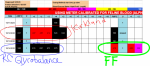
3 different foods = 3 different BG Curves

Status
Not open for further replies.

Cat Caregiver

Member Since 2020
These three curves are VERY DIFFERENT. See Spreadsheet link in signature (ignore attached file).
10/12 AM Curve = Kirkland dry food (which he's been on for years).
10/13 AM Curve = Royal Canin Glycobalance dry food (vet prescribed)
10/13 PM Curve = Fancy Feast Classic Pate
 

Attachments
  • upload_2020-10-15_0-19-38.png
    upload_2020-10-15_0-19-38.png
    170.6 KB · Views: 113
Last edited:
Wow, you're definitely starting to see the effect of switching to the FF!!!!

It can take a couple days for the carbs to work their way out of his system after the switch, so he may very well drop even more. Make sure to always get at least one test in the early part of the cycle as well as the pre-shot test so you can catch those lows and manage them.

Post here, too. With an AT2 and Vetsulin, I'd throw up the caution flag any time you get a pre-shot less than 250, or start to see numbers in the low 100's during the cycle. The "take action" number (where we start to really pile on the high carb food to bring them up) on an AT2 is 68, but with Vetsulin you don't want to wait until that point to start trying to bump numbers back up with at least a LC snack.

Hope the food transition is a smooth one! Seems like it's no problem getting him to eat the new food, you do want to watch out for digestive issues with a rapid change, though. Some cats have no problem and take to the new food immediately, others do better with a slow transition.
 
Amber's SS,

Thank you so much for watching this! I would never know what to watch for. I wish I could have finished the curve last night but since I usually get up at 4 am I was so exhausted at 3 am that I went to bed. I did get almost 4 hours sleep and had a nice surprise at 7 am.

This morning I discovered that Oliver's morning poop, a nice medium sized brown pile, did NOT STICK to the Breeze litter pellets. That has never happened before. Oddly, although Oliver's poops are always well-formed--not runny--they are covered in the pellets that won't shake loose when shaken in the special poop scooper, so I always am throwing away lots of pellets with his poop. I think the FF left his poop less sticky. That makes sense since his other food is full of carbs and FF is not.

I gave him 1/4 can FF for breakfast and he is acting like his old self for the first time in months! I have no idea how much to feed him. He is skin and bones at 7 lbs right now. Same time a year ago he weighed 10 lbs. but have may been over-weight. I have no idea. I'm guessing he should have between 150 to 200 kcal/day. The FF are about 100 kcal/can so 2 cans/day fed in 5 or 6 small snacks throughout the day.

Does that feeding strategy sound good?
 
Last edited:
I found this in the vetsulin sticky I hope it helps
Do not be tempted to reduce the amount of your cat’s food in hope that this will reduce her overall BG levels. Decreasing calories could be detrimental to your cat’s health. Your cat needs to eat an appropriate amount of food for her size and weight. There are certain circumstances, however, when it is helpful to temporarily withhold food (or rather, to delay feeding): these circumstances are explained further down this section.
  • There are particular considerations when using faster-acting insulins such as Caninsulin (Vetsulin) especially for newcomers or for those with little or no BG test data about how their cat responds. This is because Caninsulin/Vetsulin can sometimes drop the BG fast in the first few hours of the cycle.
  • Because this insulin can drop BG quickly, it is important to feed your cat 20 - 30 minutes before giving insulin. This ensures there is food on board for when the insulin starts to work. So, the sequence would be: (1) Test BG. (2) Feed. (3) Wait 20 - 30 mins. (4) Give the insulin shot. (If you are not yet home testing it is still advisable to feed and then wait before giving the shot).
  • Some caregivers feed a snack (or part of the main meal) an hour and a half to two hours after the shot. This strategy can slow down the rate at which the BG is dropping.
  • If you can determine when your cat's nadir (lowest BG) typically occurs during a 12-hour cycle, you can make food available prior to that time. Again, several small meals spread out before nadir can help to soften fast drops in numbers. Timed feeders can be helpful for caregivers who can’t be there in person to feed their cat.
  • Some caregivers using Caninsulin (Vetsulin) withhold food for the second half of the cycle in order to slow down the rate at which the BG rises as the effect of the insulin wears off. If your cat’s BG rises fast after the peak of the cycle you may find this technique useful.
  • In any case, it can be helpful to withhold food for the two hours prior to a pre-shot BG test. This is just to ensure that the test result is a ‘true’ reading and isn’t influenced by food.
 
If he's hungry (and currently skin and bones), you can feed him a bit more than the calculators say. Until his diabetes is under control, he won't be using the food as efficiently.

I think feeding the small snacks throughout the day is an excellent plan. As Jeanne says, though, you want to try to take the food away in the two hours pre-shot. That's so your pre-shot BG reading is free of food influence-- you'll be making a safety decision about shooting based on that number, so you don't want it to be artificially high. And then it's really important to make sure he has his meal "on board" by the time you give the shot, giving him that 30mins post-meal before shooting.

Some of the other stuff in that sticky is a little more in the "fine-tuning" category, but it's excellent info to keep in mind. Many people use the "notes" on the spreadsheet to keep track of when they give snacks, etc. so that, over time, they can look back over the BG data and develop a feeding strategy that fits their cat.
 
I just had a good laugh at myself. I have never participated in an internet FORUM and have probably made a lot of mistakes without knowing it. I just realized that I thought Nan's name was "Amber's SS" because it was the first thing listed under her text, like where you sign your name on a letter. So, I addressed my text to "Amber's SS". I now "get" that "Amber's SS" is a link to the cat's spreadsheet ...and I'm laughing again! Sorry Nan.
 
Again, thank y'all so much! Oliver is back to acting and looking like his old self. His nose is no longer covered in sticky food crumbs. The FF wet food doesn't stick to his nose like the dry food crumbs did. It's good to see his little pink nose shining again! For the first time in months, I didn't have to clean it with a soft baby tooth brush. He's even started grooming again!
 
@Cat Caregiver Welcome to the board. :)

You’ve already received a lot good info so I won’t repeat it. I’ll just add that I remember well my early days dealing with FD many years ago and how absolutely stunned I was to see how significant the reduction in BG was after changing to low-carb canned food. Chip became diet controlled very, very quickly with the food change, though he would be forever sensitive to carbs and his BG would spike if he got even a few kibbles of contraband higher-carb food (we joked that even waving a bowl of dry food under his nose would spike his BG). So just keep in mind that if your kitty is the same re carb sensitivity, it’s important to never get complacent about food choices.

Dr. Lisa, who used to post on this board and is the author of the current food lists, once boiled down the “amount of food needed” question to a simple “if too skinny, feed more, if too fat, feed less.” It’s easy to get tangled up in the calories and so forth, so I like to keep in mind her simple, common sense answer. Not everything has to be complicated, right?

As for the poop discussion ... well, that happens a lot around here. Who knew one could spend so much time focusing on what goes in the front end and out the back end of a cat, lol.
 
Status
Not open for further replies.
Back
Top