

You are using an out of date browser. It may not display this or other websites correctly.
You should upgrade or use an alternative browser.
You should upgrade or use an alternative browser.
10./12 Herman amps 95 +3 88 +5 72 pmps 76 PFS :( +4 94
- Thread starter Amy & Herman
- Start date

Amy & Herman
Member Since 2022
+5 was a nice "clean" test and I got 49 (I say "clean" because it was a nice drop of blood (not too big not too small) and a result on first try - I have learned that with a Contour Next meter anytime I need to "apply more blood" I just throw the strip out and start over as 90% of those tests read wrong). I routinely try to retest anything under 65ish so I retest 10 minutes later as he was getting grumpy and got 72. A few questions:
1. In those cases is the general consensus to take the higher number? He would not have tolerated a third test.
2. Is anyone else having issues with a contour next meter? PS I have 2 (one upstairs one downstairs), one is brand new as I threw out the oldest one but I get just as many bad tests with the brand new meter). As we get into tighter/flatter numbers it becomes more noticeable so maybe I have always had these crazy variances it just mattered less before.
1. In those cases is the general consensus to take the higher number? He would not have tolerated a third test.
2. Is anyone else having issues with a contour next meter? PS I have 2 (one upstairs one downstairs), one is brand new as I threw out the oldest one but I get just as many bad tests with the brand new meter). As we get into tighter/flatter numbers it becomes more noticeable so maybe I have always had these crazy variances it just mattered less before.

Diane Tyler's Mom GA
Member Since 2018
Hi Amy I hope Herman surfs safely today,sorry I can't help you out with your questions hopefully someone will come along 
Amy & Herman
Member Since 2022
Thanks, Diane. There may be no answer - I guess it just is what it is...however I wonder if I should have really tried to get a third test at +5 where he initially tested at 49 then 72 because just over an hour later he is still at 72 which is not much of a food bump...(i had fed him too big a snack at +5 right after I got the 49 as i was worried I wouldn't be able to get a second test and better safe than sorry - I did end up getting the second test 10 minutes after food but I can't imagine he would bump up from 52 to 72 in 10 minutes after eating 3%lc even though it was a lot - didn't mean to give him alot - he just ate quicker than expected)....anyway - I digress. But can I just say: what a relief it would be if we could actually trust the numbers on meters without all the back up tests!Hi Amy I hope Herman surfs safely today,sorry I can't help you out with your questions hopefully someone will come along

stannarp
Member Since 2021
Not a Contour Next, but I used a Contour Plus which was ultra reliable. Mine regularly allowed additional blood to be added and there were few wasted strips. But then bought one to sync results via Bluetooth, next gen up and it was AWFUL. Wasted so many test strips. Returned it.+5 was a nice "clean" test and I got 49 (I say "clean" because it was a nice drop of blood (not too big not too small) and a result on first try - I have learned that with a Contour Next meter anytime I need to "apply more blood" I just throw the strip out and start over as 90% of those tests read wrong). I routinely try to retest anything under 65ish so I retest 10 minutes later as he was getting grumpy and got 72. A few questions:
1. In those cases is the general consensus to take the higher number? He would not have tolerated a third test.
2. Is anyone else having issues with a contour next meter? PS I have 2 (one upstairs one downstairs), one is brand new as I threw out the oldest one but I get just as many bad tests with the brand new meter). As we get into tighter/flatter numbers it becomes more noticeable so maybe I have always had these crazy variances it just mattered less before.
Amy & Herman
Member Since 2022
\Not a Contour Next, but I used a Contour Plus which was ultra reliable. Mine regularly allowed additional blood to be added and there were few wasted strips. But then bought one to sync results via Bluetooth, next gen up and it was AWFUL. Wasted so many test strips. Returned it.
Thank you - you saved me some frustration - I have one of those "plus" ones new in box - I won't waste my time on it!
stannarp
Member Since 2021
I'd say try the standard Contour Plus with nothing fancy added to it, the one I had worked like a bomb. Ultra reliable, small sample and saved me so many test strips which are hellishly expensive in South Africa.\
Thank you - you saved me some frustration - I have one of those "plus" ones new in box - I won't waste my time on it!

Elaine Lai
Member Since 2022
In the cases I had to retest, I usually picked the first one if the two numbers were not too far apart. My logic is the re-test likely elevates his stress level a little. But I will put a commend on the cell to note the retest number.
We have a Contour Next EZ although I rarely used it on Oreo since it requires more blood to test. But sometimes when I got a big blood drop (from Oreo or from human ), I used two or three meters (ReliOn Classic, Alpha Trek2/FreeStyle lite, Contour Next) to test on the same blood sample and compare the numbers. I found the Contour Next is mostly consistent with numbers, has least fluctuation. Personally I think it is the most accurate one and its numbers always fall in between ReliOn's and FreeStyle's. I guess it's the bigger blood sample that helps the test outcome more accurate.
We have a Contour Next EZ although I rarely used it on Oreo since it requires more blood to test. But sometimes when I got a big blood drop (from Oreo or from human
), I used two or three meters (ReliOn Classic, Alpha Trek2/FreeStyle lite, Contour Next) to test on the same blood sample and compare the numbers. I found the Contour Next is mostly consistent with numbers, has least fluctuation. Personally I think it is the most accurate one and its numbers always fall in between ReliOn's and FreeStyle's. I guess it's the bigger blood sample that helps the test outcome more accurate.
carfurby (GA)
Member Since 2012
I've gotten different readings testing twice from the same drop of blood. It can happen with any meter. Sometimes the amount of blood makes a difference (i.e too little or too much blood). Meter manufacturers are also allowed a 20% variance. Whenever I get different tests like that, I just take an average. I only worry if one is really low. Then I'd get another test soon just to be safe.
Amy & Herman
Member Since 2022
I can imagine. Many thanks - will look into it - last time I got a meter the only option in the contour brand was the bluetooth one - but I am sure they offer others it was probably just out of stock.I'd say try the standard Contour Plus with nothing fancy added to it, the one I had worked like a bomb. Ultra reliable, small sample and saved me so many test strips which are hellishly expensive in South Africa.
Amy & Herman
Member Since 2022
In the cases I had to retest, I usually picked the first one if the two numbers were not too far apart. My logic is the re-test likely elevates his stress level a little. But I will put a commend on the cell to note the retest number.
We have a Contour Next EZ although I rarely used it on Oreo since it requires more blood to test. But sometimes when I got a big blood drop (from Oreo or from human
Very interesting about stress - I wasn't sure how quickly stress affects BG but often on a retest (esp when retesting because he is low as a opposed to retesting because i had to add more blood) he is much more stressed for the second reading - and it is ALWAYS higher, sometimes by a little usually by ALOT (which I take to be becuase the first test was bad)- today took me ten minutes to retest and he was quite miffed...I guess it's possible he was quite low. I would say the low would be confirmed if he bounced to blue tonight but since as I managed to do a possible fur shot
 I cant really count on that theory
I have read that the Next rates high on accuracy so it could just be an issue when too little blood - or maybe I'm into a less than great batch of strips. I will persevere! Thanks!
Amy & Herman
Member Since 2022
The variance I get is far beyond meter variance. Taking the average of multiple tests makes sense - I will start doing that!I've gotten different readings testing twice from the same drop of blood. It can happen with any meter. Sometimes the amount of blood makes a difference (i.e too little or too much blood). Meter manufacturers are also allowed a 20% variance. Whenever I get different tests like that, I just take an average. I only worry if one is really low. Then I'd get another test soon just to be safe.

chuckstables
Member Since 2022
Something I've always wanted to do if I had, say, 50,000 dollars to do a study, would be to take a blood sample from multiple cats, say you take like 1,000 samples from 1,000 diabetic cats. Then you buy say like 50 commercial human meters, test each sample on each meter, then run a lab test on each sample to get the true blood sugar. Then you can create some type of adjusting formula (T = C0+C1*M+C2*M^2 + C3*M^3), where T is the true blood sugar, and M is the measured blood sugar, and C0,C1,C2... are all numbers you can determine using regression. The goal being to be able to take a measured blood sugar reading from a particular meter, and plug it into a formula which accurately estimates the true blood sugar.
Just my musings. If I ever win the lottery (at least 2 million) then I'd totally do this. For 1000 samples you could probably get 10 bucks a test from a lab, so that's 10k. Maybe you pay each cats owner 20 bucks, so there's 20k. Then you just need to buy the meters and test strips. Say you buy 100 meters with 100 test strips, so another 10k in total or so at most. Plus you could retest with different strips over and over again with each sample, so you could estimate the meter variance.
Nerd out over.
Just my musings. If I ever win the lottery (at least 2 million) then I'd totally do this. For 1000 samples you could probably get 10 bucks a test from a lab, so that's 10k. Maybe you pay each cats owner 20 bucks, so there's 20k. Then you just need to buy the meters and test strips. Say you buy 100 meters with 100 test strips, so another 10k in total or so at most. Plus you could retest with different strips over and over again with each sample, so you could estimate the meter variance.
Nerd out over.
chuckstables
Member Since 2022
The variance I get is far beyond meter variance. Taking the average of multiple tests makes sense - I will start doing that!
If you have concerns about the performance of the meter; maybe try using a control solution on a test strip? You can buy em at a pharmacy. They are solutions with a certain amount of glucose in them that's listed on the bottle. So it can give you a decent idea of whether your meter is just screwed up. If the bottle says 100, and your meter says 60, then get a new meter.
Keep in mind that the FDA says a meter is accurate if it gives you values that are within 15% of the true blood sugar 95% of the time. So an "accurate" meter could give you anywhere from 85 to 115 if the true blood sugar is 100 (and it'll give you something in that range 95% of the time). That means an 'accurate' glucometer will give you a distribution like this
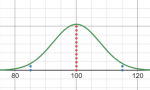
So not super unexpected tbh. But you'd probably know the meter variance of your meter more than I would! I'm just nerding out a bit today. Blue lines are the 95% confidence interval lines (2.5% of the time you'll have a reading below the left blue line, 2.5% of the time you'll have one above the right blue line), red line is where the true blood sugar is (100%)
Attachments

Last edited:
Amy & Herman
Member Since 2022
“Nerd out” ….love it lolIf you have concerns about the performance of the meter; maybe try using a control solution on a test strip? You can buy em at a pharmacy. They are solutions with a certain amount of glucose in them that's listed on the bottle. So it can give you a decent idea of whether your meter is just screwed up. If the bottle says 100, and your meter says 60, then get a new meter.
Keep in mind that the FDA says a meter is accurate if it gives you values that are within 15% of the true blood sugar 95% of the time. So an "accurate" meter could give you anywhere from 85 to 115 if the true blood sugar is 100 (and it'll give you something in that range 95% of the time). That means an 'accurate' glucometer will give you a distribution like this
View attachment 65850
So not super unexpected tbh. But you'd probably know the meter variance of your meter more than I would! I'm just nerding out a bit today.
It’s pretty interesting. The inaccurate readings I get when it asks for more blood (like I said, I never add more blood anymore, I just start over, I’ve found those tests to frequently be way way off) and when his BG is low (for instance today, which now I am wondering if it wasn’t that far off after all now learning how quickly stress can affect BG and the retest took 10 minutes with cat getting angrier by the second, and he ate). I need to do the math but I think they are very significantly more than acceptable meter variance.
I also read a study that pushing more blood out (as in milking the ear) can also result in inaccurate results, hmmm
chuckstables
Member Since 2022
“Nerd out” ….love it lol
It’s pretty interesting. The inaccurate readings I get when it asks for more blood (like I said, I never add more blood anymore, I just start over, I’ve found those tests to frequently be way way off) and when his BG is low (for instance today, which now I am wondering if it wasn’t that far off after all now learning how quickly stress can affect BG and the retest took 10 minutes with cat getting angrier by the second, and he ate). I need to do the math but I think they are very significantly more than acceptable meter variance.
I also read a study that pushing more blood out (as in milking the ear) can also result in inaccurate results, hmmm
Yeah; also keep in mind accuracy tends to vary with blood sugar. My meter claims to be very accurate below 5.5 mmols, but only within 10% above that
Diane Tyler's Mom GA
Member Since 2018
Sorry about the possible fur shot I managed to do a possible fur shot
chuckstables
Member Since 2022
“Nerd out” ….love it lol
It’s pretty interesting. The inaccurate readings I get when it asks for more blood (like I said, I never add more blood anymore, I just start over, I’ve found those tests to frequently be way way off) and when his BG is low (for instance today, which now I am wondering if it wasn’t that far off after all now learning how quickly stress can affect BG and the retest took 10 minutes with cat getting angrier by the second, and he ate). I need to do the math but I think they are very significantly more than acceptable meter variance.
I also read a study that pushing more blood out (as in milking the ear) can also result in inaccurate results, hmmm
Hmmm, yes pushing more blood out could cause that. I don't have a problem with getting enough blood with sam. I've found the sweet spot on his one ear where I can do a gentle poke and get waaay more blood than I need. It'll pool up and I'll just barely touch it and the contact strip will turn red (idk if this is standard in all meters, but mine has a little window which turns red when you have enough blood). Took me forever to find the right spot though. Even then 10% of the time I miss slightly and very little blood comes out and I have to poke again.
I would seriously try a control solution; see what the meter says. If you really want to test it, then try it maybe 5-10 times and post the results? With 10 tests you could probably estimate the true meter variance to within 30-40% or so. I don't know if you want to waste 10 test strips though.

Carole & Indigo
Member Since 2021
i use a Contour Next one and really like it except a couple of things, I don't trust the second chance feature that lets you add more blood it is not very accurate for whatever reason so I also just toss the strip and go again. Secondly a few times I have had it accept a test on what seems like not quite enough blood or barely enough and I get a weird low number, test again and it is completely different. I don't love that that happens but I know what to look for and when to double check.

Jackie and Biggie
Member Since 2022
I also have the Contour Next One and agree- I always throw out the strip if I don’t get enough blood on the first try, b/c it gives low numbers if I don’t have enough blood. If it doesn’t immediately start counting down after it sucks up the blood from the ear, I just toss the strip.i use a Contour Next one and really like it except a couple of things, I don't trust the second chance feature that lets you add more blood it is not very accurate for whatever reason so I also just toss the strip and go again. Secondly a few times I have had it accept a test on what seems like not quite enough blood or barely enough and I get a weird low number, test again and it is completely different. I don't love that that happens but I know what to look for and when to double check.
I’ve also had some really bad streaks of E20 and E8 errors, and it was usually when his numbers were on the low side, like between 50 and 65 or so. It was really frustrating b/c that is exactly when I want to know what his numbers are…I started wearing a nitrile glove and using my gloved hand to touch the strips, and have had hardly any errors since. I think if I had any lotion or any kinds of oils on my hand it was interfering with the test, especially confusing it when numbers were low. I don’t know why, but this seems to be working…(fingers crossed!)
I also think this meter is the most accurate based on what I’ve read…and I tried some others but they read much higher and had a lot larger variations so went back to this. Just hope it doesn’t act up again…I threw out like ten strips in a row one time…ugh!!
Carole & Indigo
Member Since 2021
I used to have a ton of E20/E8 errors in low numbers as well, same as what you describe sometimes up to 8 strips. I haven’t been doing anything differently but I have not had one in a while now I’m thinking about it…knock on wood!
Amy & Herman
Member Since 2022
i use a Contour Next one and really like it except a couple of things, I don't trust the second chance feature that lets you add more blood it is not very accurate for whatever reason so I also just toss the strip and go again. Secondly a few times I have had it accept a test on what seems like not quite enough blood or barely enough and I get a weird low number, test again and it is completely different. I don't love that that happens but I know what to look for and when to double check.
Exactly! So it’s It not just me, phew. I will continue to do as I’m doing. I wonder if this is common with all meters? I know we are told to retest low numbers from the get go when we start on this forum but I wonder if it should also be noted not to trust strips that you applied more blood to (“second chance”) or readings where the meter read but there didn’t seem to be enough blood … in my experience, similar to yours, those strips will be completely off and read way too low.I also have the Contour Next One and agree- I always throw out the strip if I don’t get enough blood on the first try, b/c it gives low numbers if I don’t have enough blood. If it doesn’t immediately start counting down after it sucks up the blood from the ear, I just toss the strip.