That is actually T's brother Kramer! T is a ragdoll & Kramer's little sister, Eve, is T's cat spouse essentially! Never seen anything like it--too sweet.
Amanda,
I am not sure if any of this info will help you, but my hope is it helps with understanding what else could be going on/in play sort of speak with respect to food/BG/insulin.
I know everyone knows what happens with BG & carbs is all dependent on the cat & largely it depends on how well a cat metabolizes or does not metabolize them. This includes the effects of any possible underlying issues which may or may not be currently or ever clinically symptomatic, yet effect cells & hormones in the cats body. For example, in a cat with IBD, due to IBD, the cat may not have any rise or little rise in BG due to carbs secondary to the tract not absorbing them like a healthy tract would.
There is what is called the Incretin Effect. It is less robust than in humans, but it still occurs in felines. Incretin hormones (GLP-1-secreted by L cells &
GIP-secreted from K cells) play a a major role in glucose homeostasis via their effect on pancreatic beta cells & also by effecting other tissues. They also regulate glycogen secretion. Both hormones are secreted from the intestinal tract in response to the presence of food & their role is to sense the type & quantity of digested nutrients in the gut. GLP-1 delays gastric emptying & increases the feeling of being full (satiety). In the pancreas, GLP-1 augments insulin secretion and suppresses glucagon secretion during hyperglycemia. It protects beta cells. So, in cats, about 70% of the rise in insulin secretion is caused by rise in glucose concentration while 30% is a result of the incretin effect. It's the opposite in humans. This is important because beyond the pancreas, you have K cells, even throughout the cats colon (unlike other mammals), so you have all of this at play along with the L cells, or I should say not at play very well with some cats, which will effect what food, as well as what the ratio of protein, fats & carbs will do in one cat vs. another. Very complex, yet, all of this information helps to explain why this is often not as easy as dosing insulin exactly right or feeding a certain amount of a certain type of food. There are some basic strategies to follow & things you can control with this disease for sure, but then there is quite a bit that is beyond the scope of a can of food or insulin given. There can also be erratic absorption of insulin that can occur & is another complex subject with respect to managing feline diabetes.
I hope this isn't confusing! I actually see it as sanity saving. At times it can become very frustrating when we are doing all the right things, yet there is still confusion, a feeling of or an actual lack of control, as well as lack of information or specific explanation as to why what we are doing is not working as well as we think it should OR it works one day or a few days & then doesn't work anymore. Sometimes, more often, many times, there are additional factors at play & those factors vs what we have done or not done with food or insulin produces the results. There can be what is a strong positive correlation, yet it ends up it is coincidence vs cause & effect.


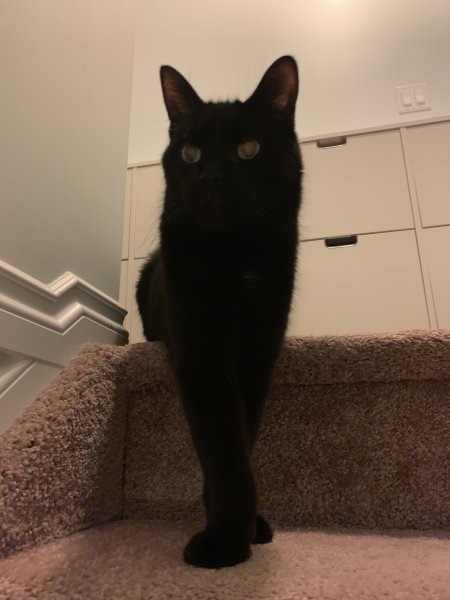
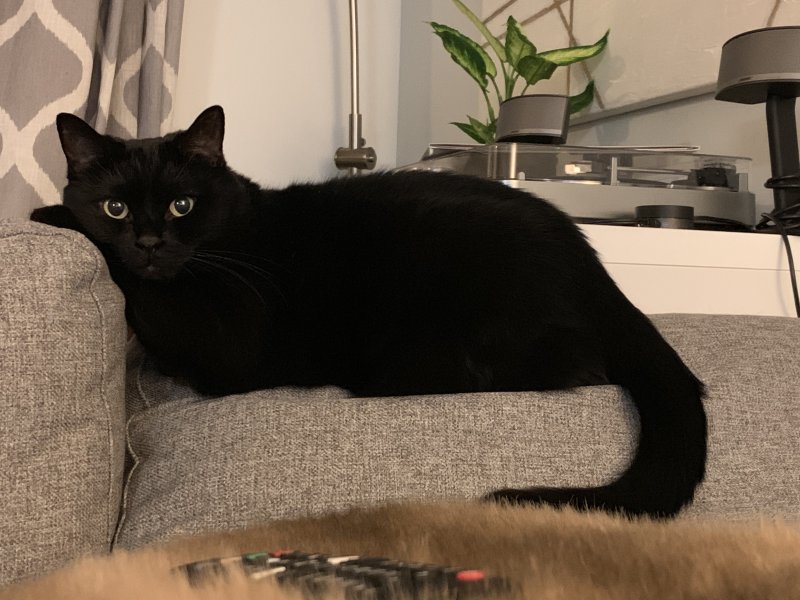


 because they look like they are related to your cats. The eyes are so similar. George, the only short haired one, looks just like Mowgs....ears and all. Kramer, has the same eyes as Nyx.
 )to his longer fur. One is a bulky, long haired meatball, the other is a skinny, panther looking noodle man with short hair & big ears & their little sister is long haired. She looks tiny (length/height) but she feels like a brick & can eat more than either one of her brothers.
 .
.
 It may not be so with M but easy to try. Small 1.5 - 2 teaspoons high-ish 6%-8% range around AMPS +9.


 ! Hope is always essential
  ) depending on the cat. The science has just advanced quite a bit from the initial small studies from many years ago. Just one example, recent studies have shown that many diabetic cats actually suffer from hyersomatotropism, in which insulin resistance is the dominant component of the disease and not cell dysfunction (


