


-
Need help getting started? Check out our Feline Diabetes Starter Kit.
You are using an out of date browser. It may not display this or other websites correctly.
You should upgrade or use an alternative browser.
You should upgrade or use an alternative browser.
5/28 Copernicus AMPS 398
- OP Krista & Copernicus
- Start date

Staci & Ivy
Member Since 2022
I hope Copernicus comes down on this dose today. Good luck with the new Libre and hope he keeps up his appetite.
Are ketones staying ok?
Hope you both have a good day
Are ketones staying ok?
Hope you both have a good day
Krista & Copernicus
Member Since 2026
I just did his BG twice since shot so I will check ketones later...
Staci & Ivy
Member Since 2022
Any chance you can do them with the same drop of blood if both meters are ready when doing a test?I just did his BG twice since shot so I will check ketones later...
Krista & Copernicus
Member Since 2026
Sometimes but he doesn't stick around that long or bleed that much.

One trick is to scrape the blood drop onto your fingernail, and test from there.
Good luck with the new dose.
Good luck with the new dose.

Hope he starts feeling better. Do you still have any buprenorphine if you think he’s in pain?
Krista & Copernicus
Member Since 2026
Wendy,
I just got a message that his IGF-1 is "elevated enough" for a diagnosis. Of course I am working to try and get the actual report. I am still concerned they tested him so early on just 3 weeks on insulin. I'll post when I get...
I just got a message that his IGF-1 is "elevated enough" for a diagnosis. Of course I am working to try and get the actual report. I am still concerned they tested him so early on just 3 weeks on insulin. I'll post when I get...
Krista & Copernicus
Member Since 2026
I do. Thank you!Hope he starts feeling better. Do you still have any buprenorphine if you think he’s in pain?
There are no false positives, just false negatives if tested too early on the IGF-1 test. The report might just show >1200, not an actual number. That's what we see quite commonly. There is also a gray zone, but over 916 is positive.
Krista & Copernicus
Member Since 2026
Do you always confirm with a MRI before starting radiation?
Krista & Copernicus
Member Since 2026
There are some reports on PubMed that uncontrolled diabetes and underlying kidney disease may cause false positives. Which he has both of those.There are no false positives, just false negatives if tested too early on the IGF-1 test. The report might just show >1200, not an actual number. That's what we see quite commonly. There is m
Pretty much never. If you are going to do radiation therapy (one of three options for treatment), then a CT scan has to be done in order to plan the radiation therapy. Stereotactic radiation therapy or Cyberknife is the only kind of radiation worth considering. The typical schedule is one day of CT scans, followed by 1-3 days of radiation therapy, depending on clinic and radiation oncologist. An MRI is only done if the tumour cannot be seen on CT. MRI is a longer anesthesia and harder on them. Let's see the IGF-1 test results first. I had asked CSU if I needed a CT first, and they said no, based on IGF-1 number and insulin dose they were sure Neko needed treatment.Do you always confirm with a MRI before starting radiation?
Could you send me links to those papers. I like to collect papers and learn.some reports on PubMed that uncontrolled diabetes and underlying kidney disease may cause false positives
Krista & Copernicus
Member Since 2026
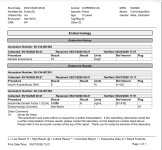
That result is not even in the gray zone. Thanks goodness the IAA is negative, that's one complication you don't have to deal with too.
Krista & Copernicus
Member Since 2026
0.4 ketonesI just did his BG twice since shot so I will check ketones later...
Krista & Copernicus
Member Since 2026
Pretty much never. If you are going to do radiation therapy (one of three options for treatment), then a CT scan has to be done in order to plan the radiation therapy. Stereotactic radiation therapy or Cyberknife is the only kind of radiation worth considering. The typical schedule is one day of CT scans, followed by 1-3 days of radiation therapy, depending on clinic and radiation oncologist. An MRI is only done if the tumour cannot be seen on CT. MRI is a longer anesthesia and harder on them. Let's see the IGF-1 test results first. I had asked CSU if I needed a CT first, and they said no, based on IGF-1 number and insulin dose they were sure Neko needed treatment.
Could you send me links to those papers. I like to collect papers and learn.
Feline Acromegaly: An Essential Differential Diagnosis for the Difficult Diabetic - PMC
Under the IGF-1 sections, author puts additional references.
Whew, that was a lot of work!
The first reference was dated 2016, but a lot of really old thinking. By that time radiation therapy was common, hypophysectomy was starting and cabergoline trials were also underway in 2016. Yet this article called acromegaly a rare condition with no treatments. Just read this paper, and nothing in there says that in the study of 5 cats there was no case of false positive. Rather, a false negative that became positive over time.
The next paper is even older, published in 2000. IGF-1 measurement were done using a human assay for IGF-1. 8 cats were studied and IGF-1 results compared to human and rat IGF-1. It's a rather technical paper but ends with "Further carefully controlled studies are required to address these issues." One of those issues is the lack of correlation between IGF-1 and growth hormone, which is the first paper identified as a problem because growth hormone amounts fluctuate throughout the day.
The third reference, from 2004 studied a good number of cats. It did have one flaw, it used physical features to screen for acromegaly, which 65% do not have on diagnosis. However, it did conclude "Our findings suggest that such caution is most warranted when a diagnosis of acromegaly is sought based on IGF-I levels in long-term insulin treated diabetic cats", where long term insulin treated cats was over 14 months. Apparently long term insulin treated diabetic cats can have higher levels of IGF-1. Copernicus is not a long term diabetic.
A more recent and relevant note is that the way IGF-1 is measured has been changed from a radioimmunoassay (the above 3 references) to a chemical one, as of 2023. MSU reference range changed for IGF-1 (and paper). The results from MSU reflect these change. A quote from the paper in the post I linked is "Therefore, measurement of IGF-1 has become a standard screening test for HS in cats [1,2,7]." The paper studied results from 50 cats.
So my summary to me, testing IGF-1 too early can show false negatives. Testing after a year-ish, can lead to some false positives.
The first reference was dated 2016, but a lot of really old thinking. By that time radiation therapy was common, hypophysectomy was starting and cabergoline trials were also underway in 2016. Yet this article called acromegaly a rare condition with no treatments. Just read this paper, and nothing in there says that in the study of 5 cats there was no case of false positive. Rather, a false negative that became positive over time.
The next paper is even older, published in 2000. IGF-1 measurement were done using a human assay for IGF-1. 8 cats were studied and IGF-1 results compared to human and rat IGF-1. It's a rather technical paper but ends with "Further carefully controlled studies are required to address these issues." One of those issues is the lack of correlation between IGF-1 and growth hormone, which is the first paper identified as a problem because growth hormone amounts fluctuate throughout the day.
The third reference, from 2004 studied a good number of cats. It did have one flaw, it used physical features to screen for acromegaly, which 65% do not have on diagnosis. However, it did conclude "Our findings suggest that such caution is most warranted when a diagnosis of acromegaly is sought based on IGF-I levels in long-term insulin treated diabetic cats", where long term insulin treated cats was over 14 months. Apparently long term insulin treated diabetic cats can have higher levels of IGF-1. Copernicus is not a long term diabetic.
A more recent and relevant note is that the way IGF-1 is measured has been changed from a radioimmunoassay (the above 3 references) to a chemical one, as of 2023. MSU reference range changed for IGF-1 (and paper). The results from MSU reflect these change. A quote from the paper in the post I linked is "Therefore, measurement of IGF-1 has become a standard screening test for HS in cats [1,2,7]." The paper studied results from 50 cats.
So my summary to me, testing IGF-1 too early can show false negatives. Testing after a year-ish, can lead to some false positives.
Krista & Copernicus
Member Since 2026
Oh my gosh thank you so much for combing through that data in such detail. That would have taken me days! 


JL and Chip
Member Since 2009
That is interesting…I hadn’t heard that before.Testing after a year-ish, can lead to some false positives.
Krista, welcome to the acro club. I’m sorry about the diagnosis, but now at least the world makes a bit more sense and you can proceed accordingly. I, too, am glad you’re not also dealing with IAA.
I wonder if the hard swallowing has anything to do with acro. I’ve not heard of that as a symptom, but it would be interesting to rule in or out. Tubby had loud breathing sounds and other physical traits of acro, but I don’t recall swallowing issues. We’re always learning something new.
If you haven’t looked into phosphorus binders, I encourage you to put that on your list. Phosphorus can have a sneaky way of trending upward in kidney cats and you really want to keep it under 5 mg/dl if possible. Tubby developed kidney issues and the binders helped keep him on a food that worked best for his other issues even though it wasn’t ideal for the kidneys.
I’m sorry to hear about the acro diagnosis but I’m not surprised. Knowledge is power and you are very lucky to have Wendy in your corner. She has a vast knowledge of acro.
@JL and Chip Starkey SR, Tan K, Church DB. Investigation of serum IGF-I levels amongst diabetic and non-diabetic cats. J Feline Med Surg 2004; 6: 149–55. In this paper, they called long term diabetics >14 months on insulin, but I consider that a bit arbritrary. It was based on the logic at the time that diabetics only live an average of 17 months. I expect with home testing and use of better insulins now, that average survival time is longer. In the section on subjects, they said that none presented with clinical signs of acromegaly. But since more recent research has shown that only 35% of acrocats present with clinical signs on diagnosis, it is possible that some of the cats in the study were undiagnosed acros. Especially since the 2015 RVC study showed that there were acros on as small as 1 unit, and average on 7 units of insulin. And that one in four diabetics have acromegaly. So, it is very likely that the measurement of higher IGF-1 in "long term" diabetics in the study included several acros. There was no discussion on what percent were false positives. Not sure of the implications on the results. My brain hurt after reading those three articles. 
Krista & Copernicus
Member Since 2026
It's on my list! But without an official diagnosis the CKD folks warned me about knowing his calcium levels in order to know which phos. binder to choose as to not make something else worse. Thoughts?That is interesting…I hadn’t heard that before.
Krista, welcome to the acro club. I’m sorry about the diagnosis, but now at least the world makes a bit more sense and you can proceed accordingly. I, too, am glad you’re not also dealing with IAA.
I wonder if the hard swallowing has anything to do with acro. I’ve not heard of that as a symptom, but it would be interesting to rule in or out. Tubby had loud breathing sounds and other physical traits of acro, but I don’t recall swallowing issues. We’re always learning something new.
If you haven’t looked into phosphorus binders, I encourage you to put that on your list. Phosphorus can have a sneaky way of trending upward in kidney cats and you really want to keep it under 5 mg/dl if possible. Tubby developed kidney issues and the binders helped keep him on a food that worked best for his other issues even though it wasn’t ideal for the kidneys.