New member intro

Status
Not open for further replies.

Miss Kitty Berry

Member Since 2024
Hi all! My name is Amy and my cat is named Kitty! You call her kitty or Miss Kitty, whichever you find more fun :). We just got a diagnosis a few days ago and we are absolutely swimming in questions that our vet is not able to answer for us. Kitty has been prescribed lantus twice a day and we are planning to start administering tonight. She has no other health issues and is otherwise a very healthy and happy 11 year old!

As far as the symptoms leading up to diagnosis, we noticed about two weeks ago that she was peeing a large amount in her litter box and was thirsty all the time. She did not have ketones in the urine as of the preliminary results coming in so that is good.

I have so many questions but my first one is this: how variable can I be with administration times of the lantus? For instance, if I give a dose tonight at 6:30 pm on the dot, do I have to give it at 6:30 am on the dot in the morning? Or would I be safe to give it at 6:15 or 6:45?

Also, how often would you recommend to test glucose levels for the first few days? She was at 500 on Friday at the vet and 710 this morning. The vet is starting at 1 unit for now. Should I test a few times a day to get an idea of how her body is responding to the new medication?

Thanks so much! Looking forward to hearing from all you more seasoned diabetes fighters!
 
Hi all! My name is Amy and my cat is named Kitty! You call her kitty or Miss Kitty, whichever you find more fun :). We just got a diagnosis a few days ago and we are absolutely swimming in questions that our vet is not able to answer for us. Kitty has been prescribed lantus twice a day and we are planning to start administering tonight. She has no other health issues and is otherwise a very healthy and happy 11 year old!

As far as the symptoms leading up to diagnosis, we noticed about two weeks ago that she was peeing a large amount in her litter box and was thirsty all the time. She did not have ketones in the urine as of the preliminary results coming in so that is good.

I have so many questions but my first one is this: how variable can I be with administration times of the lantus? For instance, if I give a dose tonight at 6:30 pm on the dot, do I have to give it at 6:30 am on the dot in the morning? Or would I be safe to give it at 6:15 or 6:45?

Also, how often would you recommend to test glucose levels for the first few days? She was at 500 on Friday at the vet and 710 this morning. The vet is starting at 1 unit for now. Should I test a few times a day to get an idea of how her body is responding to the new medication?

Thanks so much! Looking forward to hearing from all you more seasoned diabetes fighters!

You are in the right place, I am sure one of the expert will reach put to you soon, to help you get started in this fabulous journey. My Corky will be 11 in October, like your Miss Kitty She is in great health except being diagnosed last June 2nd, it was devastating, he also had the same symptoms, though I had no idea why, and just one day I picked him up and he felt like a feather, he was not one to be handled much, very shy since I adopted him at 6 months old, I was terrified, he was hospitalized for
8 days he had lost 8 1/2 lbs in less than 1 month, he's doing great, thanks to this forum, they help with increase/reduction on insulin, they really know what they are doing and because Corky is so healthy, I have not visited the Vet since I brought him back from the hospital. Financially and emotionally, I do not what I would have done with these amazing members.
best to you and Miss Kitty:bighug::bighug::cat::cat:
 
Hello and welcome to you and sweet Miss Kitty.

Your vet has started you on a great insulin for cat. Before I comment on dose, there's a couple more things I'd like to know. First is what food she is eating now - is that the same as before diagnosis? What BG (blood glucose) meter will you be using? There is a bunch of information we like to know about kitties, and we put that information in the signature so people don't need to keep asking. Information on what we like to see, and other info, in this post: New? How You Can Help Us Help You!

As far as timing goes, you can vary it by 15 minutes per shot, or 1/2 hour once per day without worry.

For testing to start, we recommend you test before you give the insulin. Typical order is test, feed, shoot, all within about 10-15 minutes. Giving insulin while kitty is eating is common. When you first start Lantus, we recommend testing every 3 hours to start. Not all the time, but for the first cycle. At night you can test before the shot and a test before you go to bed. If you see a big drop by that second test, post here and we can help you decide if you need to do anything else that night. Over time you'll learn when Miss Kitty likes to nadir, or typically has her lowest blood sugar numbers. We change doses based on how low the cat goes on a dose. That time frame will give you a better idea when to test.
 
Welcome Amy and Miss Kitty ,you couldn't have found a better group to join. Tyler has been in remission for 3 years and 3 months now . If it wasn't for me taking the advice from the experienced members here I know he wouldn't be in remission today.
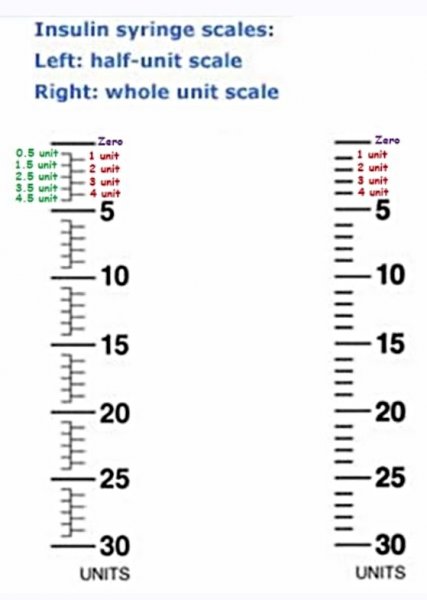
Do you have the U-100 syringes with the half unit markings since we adjust the doses by 0.25 units at a time , the half unit syringes make it easier to do this :cat:
 
Hello and welcome to you and sweet Miss Kitty.

Your vet has started you on a great insulin for cat. Before I comment on dose, there's a couple more things I'd like to know. First is what food she is eating now - is that the same as before diagnosis? What BG (blood glucose) meter will you be using? There is a bunch of information we like to know about kitties, and we put that information in the signature so people don't need to keep asking. Information on what we like to see, and other info, in this post: New? How You Can Help Us Help You!

As far as timing goes, you can vary it by 15 minutes per shot, or 1/2 hour once per day without worry.

For testing to start, we recommend you test before you give the insulin. Typical order is test, feed, shoot, all within about 10-15 minutes. Giving insulin while kitty is eating is common. When you first start Lantus, we recommend testing every 3 hours to start. Not all the time, but for the first cycle. At night you can test before the shot and a test before you go to bed. If you see a big drop by that second test, post here and we can help you decide if you need to do anything else that night. Over time you'll learn when Miss Kitty likes to nadir, or typically has her lowest blood sugar numbers. We change doses based on how low the cat goes on a dose. That time frame will give you a better idea when to test.

She was eating a combo of Rachel Ray dry food (in an auto-feeder for portion control, only feeds about 4 tbsp a day) and Sheba Perfect portions Signature Seafood morning and night. We are starting to transition her off the Rachel Ray since it is so carb heavy and are seeing whether she likes the Tiki Cat Born Carnivore or the Dr. Elseys clean protein. We have not changed the dry food yet but have purchased the tiki cat wet food to see if she likes. The vet prescribed some Rx foods but I honestly do not know how the "diabetic" prescription foods can claim that they help diabetes with the ingredients and carbs they have!

As far as the meter, we are trying to use the alpha trak 3 but having a horrible time getting a blood sample large enough. I have wasted so many lancets trying to get a BG reading on her.

Thanks so much!

Also, thanks for the hint on the signature. I will do add that from here on!
 
Welcome Amy and Miss Kitty ,you couldn't have found a better group to join. Tyler has been in remission for 3 years and 3 months now . If it wasn't for me taking the advice from the experienced members here I know he wouldn't be in remission today.
Do you have the U-100 syringes with the half unit markings since we adjust the doses by 0.25 units at a time , the half unit syringes make it easier to do this :cat:
It appears that they do have a half mark on them. They go up to 30 units so it's hard to see. Do they sell smaller ones anywhere are those pretty much the standard?
 
Half unit marks are as good as it gets. We eyeball the difference. Some syringes have thinner barrels with more space between the marks, making it easier to eyeball.

You are right that dry food is typically too high in carbs for a diabetic cat. Cats on dry food we do start at 1 units per shot. You are also right about the so called "diabetic" Rx foods. One manufacturer was forced to change it to "dietetic management" instead of diabetic management food. A number of the so called diabetic Rx foods are also too high in carbs for a diabetic cat.

Make sure you are getting comfy with testing before removing the high carb dry food, as her insulin needs can change quickly.

Most of us use human meters - mostly because the test strips are so much cheaper, and you'll go through a lot of them. Some tips that might help your testing here: Hometesting Links and Tips, including videos.
 
Half unit marks are as good as it gets. We eyeball the difference. Some syringes have thinner barrels with more space between the marks, making it easier to eyeball.

You are right that dry food is typically too high in carbs for a diabetic cat. Cats on dry food we do start at 1 units per shot. You are also right about the so called "diabetic" Rx foods. One manufacturer was forced to change it to "dietetic management" instead of diabetic management food. A number of the so called diabetic Rx foods are also too high in carbs for a diabetic cat.

Make sure you are getting comfy with testing before removing the high carb dry food, as her insulin needs can change quickly.

Most of us use human meters - mostly because the test strips are so much cheaper, and you'll go through a lot of them. Some tips that might help your testing here: Hometesting Links and Tips, including videos.
OMG, this is amazing info! I can't thank you enough. I will try the warm rice method tonight and we will see if it works better.
 
Always aim for the sweet spot warm the ears up first, you can put rice in a sock and put it in the microwave, test it on the inside of your wrist to be sure it's not to hot, like you would test a babies bottle. You can fill a pill bottle with warm water and roll it on the ears also.Just keep rubbing the ears with your fingers to warm them up
c2b8079a-b471-4fa6-ac36-9ac1c8d6dcca-jpeg.57072
fec17d29-5ab4-44a8-912b-3a91944c3954-jpeg.57073

6. As the ears get used to bleeding and grow more capilares, it gets easier to get the amount of blood you need on the first try. If he won’t stand still, you can get the blood onto a clean finger nail and test from there.
When you do get some blood you can try milking the ear.
Get you finger and gently push up toward the blood , more will appear
You will put the cotton round behind his ear in case you poke your finger, after you are done testing you will fold the cotton round over his ear to stop the bleeding , press gently for about 10 or 20 seconds until it stops
Get 26 or 28 gauge lancets
A lot of us use the lancets to test freehand not thelancing device
I find it better to see where I'm aiming
Look at the lancet under a light and you will see one side is curved upward, that's the side you want to poke with
Here is a video one of our members made testing her kitty


I have always used a human meter
VIDEO: How to test your cat's blood sugar

49823063143_3437e9e997_o.jpg


On your signature can you add the date Miss Kitty was diagnosed :cat:
You can read all the yellow stickys here about Lantus
https://felinediabetes.com/FDMB/forums/lantus-levemir-biosimilars.9/

@Miss Kitty Berry
 
Always aim for the sweet spot warm the ears up first, you can put rice in a sock and put it in the microwave, test it on the inside of your wrist to be sure it's not to hot, like you would test a babies bottle. You can fill a pill bottle with warm water and roll it on the ears also.Just keep rubbing the ears with your fingers to warm them up
c2b8079a-b471-4fa6-ac36-9ac1c8d6dcca-jpeg.57072
fec17d29-5ab4-44a8-912b-3a91944c3954-jpeg.57073

6. As the ears get used to bleeding and grow more capilares, it gets easier to get the amount of blood you need on the first try. If he won’t stand still, you can get the blood onto a clean finger nail and test from there.
When you do get some blood you can try milking the ear.
Get you finger and gently push up toward the blood , more will appear
You will put the cotton round behind his ear in case you poke your finger, after you are done testing you will fold the cotton round over his ear to stop the bleeding , press gently for about 10 or 20 seconds until it stops
Get 26 or 28 gauge lancets
A lot of us use the lancets to test freehand not thelancing device
I find it better to see where I'm aiming
Look at the lancet under a light and you will see one side is curved upward, that's the side you want to poke with
Here is a video one of our members made testing her kitty


I have always used a human meter
VIDEO: How to test your cat's blood sugar

49823063143_3437e9e997_o.jpg


On your signature can you add the date Miss Kitty was diagnosed :cat:
You can read all the yellow stickys here about Lantus
https://felinediabetes.com/FDMB/forums/lantus-levemir-biosimilars.9/

@Miss Kitty Berry


Oh my, I have been pricking the "try not to aim for" spot.....sorry kitty cat:( Thank you for sharing this ear picture. This is so helpful~
 
Hi & welcome! Just wanted to add after warming your kitty's ear put a dab of Vaseline on her ear where your going to poke, it helps bead the blood up on the ear.
 
Status
Not open for further replies.
Back
Top