Hello, From Stache

Status
Not open for further replies.

Stache

Member Since 2023
Hello, All! I'm Pete, Stache's roommate and we're new, here. During the first days of my new life with Stache, I entered a pretty specific query into duckduckgo and up popped this site. I was immediately impressed by how informed & down-to-earth you all seem to be. Now that he & I have entered our seventh week, I am surprised at how many basic questions I still have.

It's hard to know where to start, but all these are on pretty much the same topic. For example, I am still wondering if upping his food volume intake implies upping insulin. As I understand it, diabetes in cats usually means insulin resistance. So, if he's eating more, wouldn't he require more insulin to be able to assimilate it? I'm assuming blood sugar can be kept in the zone by matching a food volume with an insulin volume.

However, a more essential question for me is: If he's insulin resistant, how is a bigger quantity of insulin going to help? If say, he can only assimilate 40% of what he eats, are we trying to load him up so that the 40% he gets is enough to match his needs? (I made those numbers up because I have no idea what evidence based numbers look like.)

Of course, this brings up the question: Am I going to have to feed him twice as much as a normal cat, because half of his food gets wasted? As well, does a food/insulin situation even exist wherein he's not insatiable? Lastly, it seems that even if I am able to get his glucose level to between 70 and the 200's for a time, there is still a period of high readings enveloping his feeding/insulin time; is this as good as it gets?

Thanks for reading,
Pete, Stache's roommate


Blood Glucose Level, (at appointment of first diagnosis): over 600 mg/dl.
Insulin Type: Vetsulin, (Started at 2 IU, now at 4.5-5 IU, every twelve hours.)
Food: wet Fancy Feast, (Meat only, but I only approve five flavors, so far. Started at 3 oz, given with the juice, now at 4.5-6 oz.) At this time, even with insulin, he seems insatiable. I believe he would eat intermittently continuously all day, if allowed.
Glucose Testing using a "freestyle libre 2": This setup proved unreliable on a first trial. That said, on successful days the curve was between 70 and ~200 mg/dl for a time.
Drinking: His drinking/urination remain high in spite of insulin intake/attempted treatment.
Veterinary Care: Banfield The third time must be the charm. I believe I've found a capable doctor & clinic. Our second appointment two weeks in, is coming up this Sunday.
 
Last edited:
Hi and welcome!

diabetes does not mean a cat has insulin resistance, it means their body can’t produce the insulin hormone. Diabetes happens when the pancreas can’t produce insulin or can’t produce enough insulin, which is why you need to supplement by administering the shots. I’m confused about your food questions so I’ll let others talk about that maybe @Wendy&Neko ? I’ll say this, unregulated diabetic cats can’t process the nutrients in food well so they eat but are still hungry and will still lose weight so you do need to offset that by feeding a bit more than usual.

I also want to point out that Vetsulin is not the best insulin for cats. It’s also called caninsulin because it was created for canines who have a much slower metabolism than cats. It’s a harsh and short lasting insulin so your cat isn’t protect for the entire 12 hours. You also need to make sure he has food onboard at least 30 minutes before the shots because it does hit fast. If you bet a vet appt coming up, you might want to ask about switching him over to a gentler longer lasting insulin like prozync or Lantus.

If you have the libre, do you think you could set up a spreadsheet and plug in the numbers you’re getting? Here is a link helping us to help you link. If you noticed, our members have some basic information about their cat's in their signature. This helps us to not pester you by asking the same questions (your cat's name, insulin type, date of diagnosis, etc.) repeatedly. We also have a link to our spreadsheet in our signature. We are very numbers driven. The spreadsheet is a record of your cat's progress. By linking it in your signature, we can follow along and provide feedback should you need the help.
 
Hi Stache and Pete and welcome to the forum.
With Vetsulin, are you feeding 1/2 hour before giving the dose?
Also I agree, there are much better insulins than vetsulin, which is really a dog insulin. I would ask the vet to swap you to glargine (lantus).
If you could get the spreadsheet set up and add some of the data from the last few weeks, we could have a look at what is happening and try and work out how to help you.
Until he is in better numbers, he will be very hungry.
 
Well thanks, Ale, Bron, & families! I can see that learning "How You Can Help Us Help You!" and the spreadsheet process will take some extra attention. For now though, I just want to say thanks for your thoughts & direction.

Regarding my statement on insulin resistance, I had to think back to where I might have gotten that idea. It came from Cornell University and apparently, I had bookmarked the link:
https://www.vet.cornell.edu/departm...ormation/feline-health-topics/feline-diabetes


"In Type I diabetes, blood glucose concentrations are high because of a decrease in insulin production. In Type II diabetes, glucose levels are high because cells in the body do not respond appropriately to insulin. In both Type I and Type II diabetes, cells cannot access the nutrients they need even though there is plenty of sugar in the blood, because insulin can’t transport the sugar from the bloodstream into the cells that need it.

Cats with diabetes most commonly suffer from the Type II form of the disease. It is estimated that between 0.2 % and 1 % of cats will be diagnosed with diabetes during their lifetime."


Thanks for the info on Vetsulin and insulin in general; it already explains a lot. Let me guess, you search for a compatible insulin, slowly, by trial & error until one works for your cat.

Are there favorites in the forum, Prozync or Lantus, for example? I believe too, this forum talks elsewhere about the price of some of these. As I recall, they have literally multiplied in cost. Sounds like Big Pharma has found the cat world, too.

On this topic, that new vet doctor we're scheduled with implied at our first visit that switching insulins is a serious affair. It needs to be done gradually with consistency that includes food and of course, monitored. I'm planning to check in with them today anyway so I'll probably hit this then.
 
I’ve only used Lantus and I know one big difference is that prozinc allows for a bit more flexibility if you can’t do the shots exactly every 12 hours. It also seems that Lantus can sting at higher doses as opposed to prozinc. Minnie was up to 5.5-6 units of Lantus and it didn’t seem to hurt her at all. Lantus does require more consistency with dose and timing. Most folks will start with one of the two and stick with it. Most of the switching happens with going from Vetsulin to one of the two. And then cats who require higher doses may switch from Lantus to prozinc.

I just caught that you’re at 4.5-5 units and that you started at 2 units. We recommend starting at a low dose like 1 or even .5 units and increasing gradually by 1/4 unit. You mentioned he’s been between 70-200 on the libre, which tends to register lower on the low numbers. According to our dosing protocol here, you’d decrease the dose by 1/4 unit every time he goes under 90 so he would have earned a few reductions by now. It would be a good idea to invest on a human meter so you have that as a back up for the libre and also to double check some of those lower readings.

when it comes to switching insulins, especially going from a harsh one like Vetsulin to a gentler one like Lantus or prozinc, we recommend you continue with the same dose and so from there. Not quite as much of a serious affair as your vet seems to think lol
 
Last edited:
Do you live in the US if so
I prefer glargine and Lantus is the major brand name glargine the USA you can get generic/biosimilar glargine at very reasonable prices using GoodRx coupon.
https://www.goodrx.com/lantus?label...d-pens-of-100-units-ml&quantity=1&slug=lantus
Make sure that the Match your prescription pull down menue says generic glargine 1carton of 5 3ml pens.
There is no wait time test, feed, give insulin
Lantus usually doesn't kick in until 2 hours after the shot
Let us know if the vet writes the script for you because you will need U-100 syringes with half unit markings , I can tell you which ones you can use
We buy the pens but use the syringes to draw out the insulin because if you use the pen you can only adjust by full units


Also
The 5 pens will last about a year, we use the pens just like a vial, you would just insert the syringe it the gray rubber stopper on the pen and draw out your insulin
Its generic lantus


Or this one also

I see some members will call CVS, Rite Aid, Costco, Walgreen's, to get the price for 5 pens
Posted by another member
One members posted this
. I paid $175 for a box of 5 pens at Walmart pharmacy, but GoodRX coupon says you can get it for around $90 if you have a Rite Aid pharmacy near you.

Just call around for the best price

A member just posted this
Allie was using the Lantus and I just switched to the generic and using the GoodRX I got 5 pens for $81.30 at Walgreens. GoodRX has a 1-800 number to assist you in using their services to get your pets prescriptions filled if the pharmacy gives you any issues.

I think I found it for you
GoodRx / Customer service

1 (855) 268-2822

If you do switch to generic lantus let us know, Lantus is expensive in the US , that's why members get the generic

Here is a link helping us to help you link. If you noticed, our members have some basic information about their cat's in their signature. This helps us to not pester you by asking the same questions (your cat's name, insulin type, date of diagnosis, etc.) repeatedly. We also have a link to our spreadsheet in our signature. We are very numbers driven. The spreadsheet is a record of your cat's progress. By linking it in your signature, we can follow along and provide feedback should you need the help

I can ask someone to set up the spreadsheet for you if you want just ask
:cat:
Tap on your name up top then tap on signature and add the information that is asked in the blue link
 
Last edited:
Most of us use a human meter,if you don't want replacing the libre meter we can suggest getting a human meter depending where you live and we can tell you how to your kitty
 
I’ve only used Lantus and I know one big difference is that prozinc allows for a bit more flexibility if you can’t do the shots exactly every 12 hours. It also seems that Lantus can sting at higher doses as opposed to prozinc. Minnie was up to 5.5-6 units of Lantus and it didn’t seem to hurt her at all. Lantus does require more consistency with dose and timing. Most folks will start with one of the two and stick with it. Most of the switching happens with going from Vetsulin to one of the two. And then cats who require higher doses may switch from Lantus to prozinc.

I just caught that you’re at 4.5-5 units and that you started at 2 units. We recommend starting at a low dose like 1 or even .5 units and increasing gradually by 1/4 unit. You mentioned he’s been between 70-200 on the libre, which tends to register lower on the low numbers. According to our dosing protocol here, you’d decrease the dose by 1/4 unit every time he goes under 90 so he would have earned a few reductions by now. It would be a good idea to invest on a human meter so you have that as a back up for the libre and also to double check some of those lower readings.

when it comes to switching insulins, especially going from a harsh one like Vetsulin to a gentler one like Lantus or prozinc, we recommend you continue with the same dose and so from there. Not quite as much of a serious affair as your vet seems to think lol


Hi Ale,
Thank you for writing. When you said "It also seems that Lantus can sting at higher doses as opposed to prozinc", how did you mean? What can "sting"? Thanks
 
I need to look into switching to one of these insulins. Prozinc "is the only FDA-approved veterinary insulin made with recombinant technology." As I understand it, this means it's genetically synthesized. I'm trying to decide how I feel about this.

That said, I hear good things about its effectiveness. Is it made specifically for pets? I've read it's more forgiving for dose timing. Is it more expensive than Lantus? Side effects?

So far, I see a lot of folks using Lantus. It seems to be more available. Does it come in 10ml U-40 vials?

I would appreciate pros & cons of either or both. Thank you!
 
I guess the title says it all. I'm new to this. So far, I've used a vial & syringe, but Stache was easier going with it at first. I'm making it work ok. I think my biggest problem is the insulin itself, Vetsulin.

It seems a lot of people here use a pen. Don't you still have to pinch up the cat's skin? That's where Stache wants to bolt, lately. Maybe I just need more time, bedside manner. Anyway, I don't see how the pen could make it any easier to get literally stabbed in the back twice a day.

I've also read the directions for the pen, pretty involved. More ways to screw up? Is there wasted insulin with the pen?

Finally, how do these options compare cost wise?
 
Hi Ale,
Thank you for writing. When you said "It also seems that Lantus can sting at higher doses as opposed to prozinc", how did you mean? What can "sting"? Thanks
The insulin sting as it goes in. Again, Minnie’s never reacted like it did but I’ve heard from others here that their cats do
 
Lantus comes in a vial or as pens. I think the issue there is how long the vial will last and if you can use it all up before it expires. The pens don’t last quite as long so no worries about the expiration date. I always got 5 pens from Mark’s Pharmacy because it was cheaper that way. I think I was paying $35 a pen plus shipping. It ended up being almost $190 total but the five pens can last over a year or more.

tagging @Suzanne & Darcy for her thoughts on prozinc
 
hey Pete

almost everyone using a pen draws the dose out of the pen with a syringe and then uses a syringe to inject the insulin. It is super-easy to do and that's how me and my wife administered insulin to Hendrick.

There are some who use the pen to inject but for the most part that is not the best way to do it because the dosing methods we use here have dose adjustments in .25u increments, and the pen does not allow for that. Also some pens need primed first which wastes insulin.

check out this video of someone drawing up a dose using a pen and a U-100 3/10cc syringe with half-unit increments


here is more about dosing:

https://felinediabetes.com/FDMB/thr...info-proper-handling-drawing-fine-dosing.151/
 
The main reason we use the pen is for the shelf life of the insulin. Once the rubber tip of either a vial or pen is punctured, the insulin will start losing potency. It still will take a few months before you will start notice your cats glucose numbers creeping higher because the insulin is not as effective when the pen or vial is first used. Because of this you will need to start using a new vial and end up throwing away a lot of insulin. So you are wasting money. Because pens contain a smaller amount in them, you usually are able to use almost every drop before you switch to a new pen. So one package of pens can provide enough effective insulin for 9-12 months depending on your dose. But we do use the syringes with them because you can more accurately dose. When you use the pen needle it is only in whole units and I think the needle has to be primed. So you also end up wasting insulin. With the price of insulin, every drop counts
 
Do you live in the US if so
I prefer glargine and Lantus is the major brand name glargine the USA you can get generic/biosimilar glargine at very reasonable prices using GoodRx coupon.
https://www.goodrx.com/lantus?label...d-pens-of-100-units-ml&quantity=1&slug=lantus
Make sure that the Match your prescription pull down menue says generic glargine 1carton of 5 3ml pens.
There is no wait time test, feed, give insulin
Lantus usually doesn't kick in until 2 hours after the shot
Let us know if the vet writes the script for you because you will need U-100 syringes with half unit markings , I can tell you which ones you can use
We buy the pens but use the syringes to draw out the insulin because if you use the pen you can only adjust by full units


Also
The 5 pens will last about a year, we use the pens just like a vial, you would just insert the syringe it the gray rubber stopper on the pen and draw out your insulin
Its generic lantus


Or this one also

I see some members will call CVS, Rite Aid, Costco, Walgreen's, to get the price for 5 pens
Posted by another member
One members posted this
. I paid $175 for a box of 5 pens at Walmart pharmacy, but GoodRX coupon says you can get it for around $90 if you have a Rite Aid pharmacy near you.

Just call around for the best price

A member just posted this
Allie was using the Lantus and I just switched to the generic and using the GoodRX I got 5 pens for $81.30 at Walgreens. GoodRX has a 1-800 number to assist you in using their services to get your pets prescriptions filled if the pharmacy gives you any issues.

I think I found it for you
GoodRx / Customer service

1 (855) 268-2822

If you do switch to generic lantus let us know, Lantus is expensive in the US , that's why members get the generic

Here is a link helping us to help you link. If you noticed, our members have some basic information about their cat's in their signature. This helps us to not pester you by asking the same questions (your cat's name, insulin type, date of diagnosis, etc.) repeatedly. We also have a link to our spreadsheet in our signature. We are very numbers driven. The spreadsheet is a record of your cat's progress. By linking it in your signature, we can follow along and provide feedback should you need the help

I can ask someone to set up the spreadsheet for you if you want just ask
:cat:
Tap on your name up top then tap on signature and add the information that is asked in the blue link


Thanks for all the leads! I tried the goodrx site for the first time. Your link goes to a glargine U-100 package. Do vets prescribe in 100IU/ml, as well as 40IU/ml? I'm curious why you get the pens. The vials seem to get the better price break.

I found Brandzig U-40 syringes with half ml marks. They're tiny little things. They work great. They have U-100 as well but I don't think they have the half unit marks.

So, do folks around here test pretty much daily at least once? Assuming I get the right insulin and a good working protocol, is it possible for blood testing to become a little less frequent? I know that things can change over time even after stabilizing.
 
Oh, never mind on why you get the pens. Better shelf life, right? Do we know what the shelf life is after opening, I wonder?
 
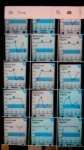
By the way, a spreadsheet from me at this point would be useless. My first trial with the Freestyle Libre 2 was a disappointment. I show photos of the intermittent graphs below. Dosing was consistent but the results as you can see, were not. The thing's sensor is meant to go on the skin over a person's tricep. Therefore, using it on an animal is "off label".

The setup is meant to last for fourteen days. The clinic ended up trying a new sensor four times in all. Those each lasted anywhere from eight days to about a half day. Adding insult to injury, the place offered no concession for the failed devices, not even prorated. Boy, did I feel stupid.

Ironically, the latest doctor talked about trying this again. So, does he know something the other place doesn't? Hmmm, perhaps I could get a feel for this by asking what their policy would be, should the sensor fail...


upload_2023-7-1_1-7-22.png
upload_2023-7-1_1-7-51.png
 

Attachments

  • upload_2023-7-1_1-7-22.png
    upload_2023-7-1_1-7-22.png
    267.9 KB · Views: 247
  • upload_2023-7-1_1-7-51.png
    upload_2023-7-1_1-7-51.png
    306.9 KB · Views: 442
Last edited:
Have you thought about hometesting the blood glucose yourself?
It is not hard, you just need patience while you both learn a new skill.
I prefer lantus over prozinc myself. There is also another similar insulin to glargine called levemir and is excellent for cats who need a larger dose...it does not sting. I used glargine for a couple of years and Sheba was on 6 units of it and it did not sting. She was however happier on levemir.
 
Lantus is a U100 insulin. it can come in a 10 ml bottle or you can get the box of 5 pens which are really cartridges of 3ml each.
Another thing to think about is, we have a lot more people here who use lantus than prozinc and therefore we have a lot more helpers with lantus. There are only a few people who can advise on prozinc dosing.
 
Thanks for all the leads! I tried the goodrx site for the first time. Your link goes to a glargine U-100 package. Do vets prescribe in 100IU/ml, as well as 40IU/ml? I'm curious why you get the pens. The vials seem to get the better price break.

I found Brandzig U-40 syringes with half ml marks. They're tiny little things. They work great. They have U-100 as well but I don't think they have the half unit marks.

So, do folks around here test pretty much daily at least once? Assuming I get the right insulin and a good working protocol, is it possible for blood testing to become a little less frequent? I know that things can change over time even after stabilizing.


if you do indeed switch to Lantus, and this is SUPER IMPORTANT -- you must get u-100 3/10cc syringes, ideally with half-unit markings. U-40 Syringes are not for Lantus and using the wrong type of syringe can lead to giving the wrong amount of insulin.

We tried several different brands, lengths and gauges but eventually we settled on Sure Comfort 31g 5/16th inch 3/10cc U-100 with half-unit markings.


@Stache regarding testing frequency. Testing the blood glucose (BG) at least four times a day is highly recommended and here is the logic behind that: You need to test before you shoot the insulin, an AM pre-shot test and a PM pre-shot test. We call those AMPS and PMPS. You'll get used to that terminology.

So two pre-shot tests. And then at minimum, at least one test during each 12-hour insulin cycle. Usually at around 2-3 hours after the shot to see how the insulin is acting on kitty because it can change at the drop of a hat. And then if you can, it is also good to get one other test during the cycle at somewhat random times on different days so that you fill in a picture on the spreadsheet of how the insulin is working.


Quick story time: Last Spring I was giving Hendrick insulin, day in and day out, for weeks and his numbers were not changing much. The gurus here had me slowly upping the dose by .25u and it got quite routine, and actually a little depressing because I was seeing no progress.

Then one night, I gave him his PM dose, checked him 2 hours later and then for some weird reason I told my wife "you know what I'm going to stay up and do a midnight check tonight." After all, experts like @Bron and Sheba (GA) are always saying how a late night evening cycle test can be really important as the BG sometimes goes lower at night.


Well that night Hendrick's BG was under 100 for the first time ever, it was in the range of a normal non-diabetic feline. I think it was 78 iirc.


I hugged him and bawled. Tears streaming down my face. "I knew you could do it buddy," I wept.


dammit where's that tissue box....
 
The American Animal Hospital Association recommends either Lantus (glargine -- as it's now available as a generic/biosimilar) or Prozinc for the treatment of feline diabetes. They are the only insulin that is recommended. Prozinc is formulated for animals. Lantus is a human insulin and as a result, is more widely available -- you can walk in to almost any pharmacy and get a prescription filled. Prozinc is available either on line (e.g., through Chewy's) or from a vet.

Early on, when Lantus was being marketed, a vet from University of Queensland began doing research on its use in cats. She found very strong results supporting its use for getting newly diagnosed cats into remission. That research, along with the dosing method that is called Tight Regulation (TR), was published in a leading veterinary journal. There have been other vets who have attempted to adapt the TR protocol to Prozinc with less success. However, that is not to say that Prozinc "isn't as good" as Lantus. There are many cats here who do very well on Prozinc.

As you noted, Lantus likes consistency and as such, there is less flexibility with respect to dosing schedule. Most cats do best when they get a shot every 12-hours. Lantus is also unique in that it is a "depot-type" of insulin. The depot is why doses need to be held for at least 3 days in order for any change in dose to stabilize the depot.

The bottom line is that each insulin has its own unique properties. There is information about Lantus in the sticky notes in this link and about Prozinc in the sticky notes in this link. Given that a leading veterinary association supports the use of either insulin, you can't really make a bad choice. What makes one "better" than the other is how if best fits your needs and how your cat does on the insulin. Providing you give your cat enough time for a fair trial, you can always switch.
 
I was going to point that out too. Different syringes for different insulins. Since I got all my testing supplies from Walmart, I started using their syringes. I liked the short the needles

upload_2023-7-1_8-57-33.jpeg


4 tests a day at least like Kyle said. The reason is you want to try to figure out when your cat’s nadir happens and catch those number since we dose by the nadir or how lowest your cat goes during a 12-hour cycle. With Lantus, it’s usually around +6 so we tell members to rotate between +4,+5,+6 till they figure it out.
 

Attachments

  • upload_2023-7-1_8-57-33.jpeg
    upload_2023-7-1_8-57-33.jpeg
    98.8 KB · Views: 335
One of the moderators posted this in another thread and I thought it’s be good info for you:

The American Animal Hospital Association recommends either Lantus (glargine -- as it's now available as a generic/biosimilar) or Prozinc for the treatment of feline diabetes. They are the only insulin that is recommended. Prozinc is formulated for animals. Lantus is a human insulin and as a result, is more widely available -- you can walk in to almost any pharmacy and get a prescription filled. Prozinc is available either on line (e.g., through Chewy's) or from a vet.

Early on, when Lantus was being marketed, a vet from University of Queensland began doing research on its use in cats. She found very strong results supporting its use for getting newly diagnosed cats into remission. That research, along with the dosing method that is called Tight Regulation (TR), was published in a leading veterinary journal. There have been other vets who have attempted to adapt the TR protocol to Prozinc with less success. However, that is not to say that Prozinc "isn't as good" as Lantus. There are many cats here who do very well on Prozinc.

Lantus likes consistency and as such, there is less flexibility with respect to dosing schedule. Most cats do best when they get a shot every 12-hours. Lantus is also unique in that it is a "depot-type" of insulin. The depot is why doses need to be held for at least 3 days in order for any change in dose to stabilize the depot.

The bottom line is that each insulin has its own unique properties. There is information about Lantus in the sticky notes in this link and about Prozinc in the sticky notes in this link. Given that a leading veterinary association supports the use of either insulin, you can't really make a bad choice. What makes one "better" than the other is how if best fits your needs and how your cat does on the insulin. Providing you give your cat enough time for a fair trial, you can always switch.
 
Yes Bron, I have been looking into blood testing, thank you; I assume you mean in the traditional sense, sampling the blood, itself. All the sensor stuff was at home, but obviously the at-home part was irrelevant, in this case. I have a lot to sift through here, going forward.

And Kyle, thanks for the syringe link, testing protocol, & story!
 
I was going to point that out too. Different syringes for different insulins. Since I got all my testing supplies from Walmart, I started using their syringes. I liked the short the needles

View attachment 67129

4 tests a day at least like Kyle said. The reason is you want to try to figure out when your cat’s nadir happens and catch those number since we dose by the nadir or how lowest your cat goes during a 12-hour cycle. With Lantus, it’s usually around +6 so we tell members to rotate between +4,+5,+6 till they figure it out.


Thanks for this, Ale! And yes, I too saw that nice post on the other thread.
 
The main reason we use the pen is for the shelf life of the insulin. Once the rubber tip of either a vial or pen is punctured, the insulin will start losing potency. It still will take a few months before you will start notice your cats glucose numbers creeping higher because the insulin is not as effective when the pen or vial is first used. Because of this you will need to start using a new vial and end up throwing away a lot of insulin. So you are wasting money. Because pens contain a smaller amount in them, you usually are able to use almost every drop before you switch to a new pen. So one package of pens can provide enough effective insulin for 9-12 months depending on your dose. But we do use the syringes with them because you can more accurately dose. When you use the pen needle it is only in whole units and I think the needle has to be primed. So you also end up wasting insulin. With the price of insulin, every drop counts


This helps a lot thanks, Lisa. I just finished a vial after a month and a half. So, is that within the shelf life of "a few months"?
 
I’m still offering to set up the SS for you. Any data is helpful for us and it’s easy to transfer data from your FS Libre to the SS. Many members do. Please respond to my PM if you’d like me to set it up for you.

Lantus likes consistency and as such, there is less flexibility with respect to dosing schedule. Most cats do best when they get a shot every 12-hours. Lantus is also unique in that it is a "depot-type" of insulin. The depot is why doses need to be held for at least 3 days in order for any change in dose to stabilize the depot.

I’d just like to address this as I see it keep popping up. We give the depot insulins every 12 hours, in general, due to cat metabolism (humans only take them once a day if they take injections) and also due to ease on the caregiver human but there is variability and they still work great. Remember these insulins have a depot and each shot is cumulative to the previous. That gives some latitude without affecting the curve. As an example, Jill, who mentored several of us and was a moderator and mainstay on this board, got her cat, Alex, into remission by shooting early whenever Alex’s BG started to rise above a certain point. Quite often, this was around +9 or +10 but she also would shoot way past +12 if the numbers warranted it. Alex’s SS is here and be sure to click on the “2006 Lantus Pre-TR” tab.

I am not suggesting anyone do this and certainly never anyone new to FD or the depot insulins.
As you can imagine, this can be quite a grueling schedule and it’s one of the main reasons we shoot every 12 hours. It makes it much easier on us as humans but is still quite beneficial to the cat based on remission rates in those cats on depot insulins. But….my point is “Lantus likes consistency” is an old trope that we should avoid as well as references to less flexibility. I found with my Gracie, I could easily shoot a couple hours early or late, if need be, with no impact to the BG but that was something I learned only after gathering data.

The one area where it’s best to be consistent is with the dose by following the dosing method you have chosen and not changing doses too often or too infrequently.

I guess it varies ECID. Above 5 or 6 I think?
ECID is correct. Gracie would feel the sting at 1.25u. I switched her to Levemir but I had the flexibility to work with Levemir’s later onset, nadir, and duration.
 
Last edited:
that is interesting...Lantus like consistency was pretty much pounded into my head over on the LLB last year. I heard it frequently and in Hendrick's case it really seemed to be true, I have to say.
For some cats, it is very beneficial and that’s how we use the insulin here but the statement “Lantus loves/likes” consistency should be avoided. It gets pounded into heads so much that if a CG needs to vary the schedule, they get worried about how it will affect the cat. There is a lot of forgiveness if a life event means you need to shoot early or late.

Having said that, once we’ve gradually taught a member how to shoot lower and lower to the safe limit (depending on meter and method of regulation), stalling or skipping “just because” doesn’t benefit the kitty. If the CG or cat is sick or other extenuating circumstances, then stalling and skipping can help that.

Insofar as dose, it’s best to be consistent with the dose by following the dosing method you have chosen and not changing doses too often or too infrequently.
 
Last edited:
Same here. Never more than 15 minutes variance with Lantus is what I always heard from day 1
And the same when we were new here. It was so pounded in that we timed her shot to the minute. But Jill, may she be having a glorious life in Heaven for all she sacrificed for all of us, was the voice of reason. It’s a lot to put on a brand new member. Ideally, one can test, feed shoot, in 15 minutes but that just means the process. It doesn’t mean it has to be at the exact hour 12 hours from when you last shot. I have seen the BG vary widely in 30 mins and that’s why it’s good to T, F,S within 15.

Conversely, we don’t want to just be lackadaisically stalling or skipping shots once we know how to do it. There’s a reasonable line and things to consider, such as, is the CG new or experienced? And there’s also know thy cat. If you’ve been around awhile but you have no clue when your cat nadirs, that’s an issue.
 
Last edited:
This helps a lot thanks, Lisa. I just finished a vial after a month and a half. So, is that within the shelf life of "a few months"?
I don't think Vetsulin comes in pens. It also has a different shelf life than long acting insulin such as Lantus, Levemir, Semglee and Basaglar. These insulins and Prozinc we recommend for cats instead of Vetsulin. Vetsulin is a short acting insulin and can cause a quick and steep drop in glucose levels. While some cats can tolerate it, most cats cannot.
 
Hello and welcome from another person whose cat got up to 5 units of Caninsulin. It's just branded as Vetsulin in the US, known as Caninsulin (ie. dog insulin) in the rest of the world. Vetsulin doesn't last a full 12 hours in most cats, so you tend to have higher blood sugar values at shot time as the insulin effect has long worn off by 12 hours. I switched my girl to Lantus at 5 units of Caninsulin. Later on I switched again to Levemir, she was feeling the Lantus sting on around 3 units of Lantus. Not all cats do feel the sting, I've seen cats on quite a bit higher doses who do not. ECID = every cat is different.

Just to show another side of things, not all cats have Type 2 (or type 1) insulin. My girl had two secondary endocrine conditions that cause insulin resistance. One of those conditions - acromegaly (hypersomatotropism), that actually caused her diabetes. About a quarter of diabetic cats has this condition. The second one IAA (or insulin auto antibodies) meant she had antibodies that trapped the injected insulin so it was harder to get insulin into her cells. That's the birds eye view of it anyway.

As for feeding, it's a good idea to periodically weigh your cat. Is Stache under, over, or at the weight he should be? The vet can help you determine an ideal weight. Then you feed to either maintain the weight or move it in the direction is should be, up or down, according to the scale. This post tells you more about a cat and food requirements at this point: Feed Kitty As Much As They Want?

Another good post, just to understand feline diabetes, is here: What is Feline Diabetes?
 
I've seen this mentioned a lot. How would one know? (This was a reference to Lantus "stinging" in its original post.)
 
Last edited:
I am not sure, but I can tell that my cat does not look like it is hurting at all. She does not even react when I inject it.
 
Lantus can sting majority of cats at higher doses. I experienced this with my Ti-Mousse who was only on 3u but I guess some cats may be more sensitive than others.

My Ti-Mousse was a very gentle cat and he was hiding, biting and growling at every shot time. After two weeks on Lantus, I decided to try Levemir. As soon as I switched no more problems; he was a little scared at the beginning but when he realized it was not hurting anymore, he was my happy kitty again and he never complained after at shot time!!
 
There are a couple of points I want to add. All insulin tends to do best if a shot is given every 12 hours. However, this isn't an absolute. There is a window for shot time. A great deal depends on the maxim, "Know thy cat." You may often run into people here saying, "Every cat is different." (ECID). While with some cats, you can have greater flexibility with shot time, with some you can't. For example, my cat had an early nadir (lowest point in the cycle which is typically at mid-cycle with Lantus) and was notorious for early, BIG drops in numbers. I did not have a great deal of flexibility with shot time as a result. Likewise, some cats are very carb sensitive and you really can't feed them in the 2 hours prior to shot time. Other cats will only get a bump in numbers if you give them higher carb food. The challenge is finding out what is typical for Stache.

What we encourage members to do is to learn the basics: when insulin onset begins, where nadir falls, and how much duration you typically get in relation to your cat. It can take time to learn how your cat responds to insulin and as such, it's best to adhere to the basics before you try to sort out how much flexibility you have.
 
Does kitty jerk or flinch when you inject?

I take insulin out of the fridge 15 minutes before I shoot. Cold Lantus will sting, especially if the dose is larger.
 
Prozinc "is the only FDA-approved veterinary insulin made with recombinant technology." As I understand it, this means it's genetically synthesized. I'm trying to decide how I feel about this.
Lantus/glargine is similarly made:
"LANTUS is produced by recombinant DNA technology utilizing a non-pathogenic laboratory strain of Escherichia coli (K12) as the production organism. Insulin glargine differs from human insulin in that the amino acid asparagine at position A21 is replaced by glycine and two arginines are added to the C-terminus of the B-chain. Chemically, insulin glargine is 21A-Gly-30Ba-L-Arg-30Bb-L-Arg-human insulin and has the empirical formula C267H404N72O78S6 and a molecular weight of 6063."
 
Neko would sometimes walk away in the middle of a shot = more fur shots. :banghead: At first I thought it was just me. She stayed still, and often purred, through Levemir shots. Besides behaviour changes the Lyanne describes above, I've seen people refer to skin twitches, biting or growling at shot time, tensing up at shot time.
 
Status
Not open for further replies.
Back
Top