

You are using an out of date browser. It may not display this or other websites correctly.
You should upgrade or use an alternative browser.
You should upgrade or use an alternative browser.
9/19 Chewie AMPS 460/ +2.5 333/ +4 298/ +6 303/ +8 317/ +10 333/ PMPS 411/ +2.5 450
- Thread starter Virginie & Chewie (GA)
- Start date
Virginie & Chewie (GA)
Member Since 2022
333 at +2.5

Bandit's Mom
Member Since 2019
Nice drop. Feed some LC and get a test later in the cycle? +4 or +5?
Virginie & Chewie (GA)
Member Since 2022
Will feed couple teaspoons of LC and test at +4Nice drop. Feed some LC and get a test later in the cycle? +4 or +5?
Virginie & Chewie (GA)
Member Since 2022
She is so happy about extra snacks
Virginie & Chewie (GA)
Member Since 2022
298 at +4!
Her normal midday meal is at +5, should I get a +6 or a +7?
Her normal midday meal is at +5, should I get a +6 or a +7?

Virginie & Chewie (GA)
Member Since 2022
Thank you! I’m so happy to finally see her go down 
Virginie & Chewie (GA)
Member Since 2022
303 at +6, not bad given that she had a full meal at +5
Virginie & Chewie (GA)
Member Since 2022
Annoying, the vet sent prescription for 1 pen only, and wants an exam or a glucose curve before allowing another refill.
I'll get that single pen for now, and hopefully Chewie's numbers improve soon so I can send her a nice glucose curve justifying the fact that my cat is getting 6x the dose she initially prescribed
A pen would last forever if she was getting 2 units a day!
I'll get that single pen for now, and hopefully Chewie's numbers improve soon so I can send her a nice glucose curve justifying the fact that my cat is getting 6x the dose she initially prescribed
A pen would last forever if she was getting 2 units a day!
Last edited:
Virginie & Chewie (GA)
Member Since 2022
317 at +8

I think getting the one pen for now is a good plan.
Now that Chewie has gotten to six units total dose, I think you need to have a talk with the vet about it. Something - TBD what - is causing insulin resistance in Chewie. We suggest to people whose cats are on low carb food and the cat gets to 6 units, that they get a couple tests done to see what is causing that insulin resistance. Specifically, the tests are for acromegaly (test is the IGF-1 test) and insulin auto antibodies (IAA). My girl had both conditions. In North America, the blood for these tests is sent to Michigan State University. About 1/4 of all diabetic cats has acromegaly (full name is hypersomatotropism), which is a benign pituitary tumour that sends out excess growth hormone. There may or may not be other symptoms caused by the excess growth hormone, but diabetes is one of the more common symptoms. We do also see the occasional cat that has just IAA. Oberon here is one such cat.
If Chewie should prove positive for one and/or other of the conditions, then you may wish to consider a switch to Levemir. At higher doses, the acid base of Lantus can sting some cats, plus Lev can have longer duration.
There are a couple other conditions that can cause the needs for higher amounts of insulin, such as Cushings, but less common and cheaper to start with testing IGF-1 and IAA first.
Questions? I know had a ton at this point. Please ask.
Now that Chewie has gotten to six units total dose, I think you need to have a talk with the vet about it. Something - TBD what - is causing insulin resistance in Chewie. We suggest to people whose cats are on low carb food and the cat gets to 6 units, that they get a couple tests done to see what is causing that insulin resistance. Specifically, the tests are for acromegaly (test is the IGF-1 test) and insulin auto antibodies (IAA). My girl had both conditions. In North America, the blood for these tests is sent to Michigan State University. About 1/4 of all diabetic cats has acromegaly (full name is hypersomatotropism), which is a benign pituitary tumour that sends out excess growth hormone. There may or may not be other symptoms caused by the excess growth hormone, but diabetes is one of the more common symptoms. We do also see the occasional cat that has just IAA. Oberon here is one such cat.
If Chewie should prove positive for one and/or other of the conditions, then you may wish to consider a switch to Levemir. At higher doses, the acid base of Lantus can sting some cats, plus Lev can have longer duration.
There are a couple other conditions that can cause the needs for higher amounts of insulin, such as Cushings, but less common and cheaper to start with testing IGF-1 and IAA first.
Questions? I know had a ton at this point. Please ask.
Virginie & Chewie (GA)
Member Since 2022
I was wondering about that to be honest... the timing of all this is extra stressful since we are moving in 3 weeks. I was really hoping she would be stable in lower numbers by now 
I don't think her teeth could be causing a lot of inflammation since she had a dental in January (two FORLs extractions) and no signs of gingivitis, but she does have several large sebaceous cysts that are inflamed and that she licks a lot. They are benign, and the vet didn't want to remove them since she would have to be sedated and she has had a grade 2 stress-related heart murmur in 2 of the past 4 exams (vets can't agree between themselves if it's a "real" murmur or just stress-related), and now diabetes... Should I start there and insist they take them out, or is that unlikely to be causing the amount of inflammation that could cause 6 units of insulin to not be enough?
I'm going to keep testing every 2 hours today, and get another glucose curve done this week, and will call the vet tomorrow to make an appointment. I'll bring the TR protocol, her spreadsheet and a printout of your message above, and get both tests done. I did read quite a bit about acromegaly already, but will have to read about the insulin auto-antibodies. I'm guessing that with either or both of these conditions, our best bet would be to keep her regulated, and remission is out of the window?
Once again, just want to thank you all so much. This forum has been such a wealth of knowledge and support so far, and I can't imagine what I would have done without it... Chewie would be in such a bad place if she was still getting 1 unit twice a day!
I don't think her teeth could be causing a lot of inflammation since she had a dental in January (two FORLs extractions) and no signs of gingivitis, but she does have several large sebaceous cysts that are inflamed and that she licks a lot. They are benign, and the vet didn't want to remove them since she would have to be sedated and she has had a grade 2 stress-related heart murmur in 2 of the past 4 exams (vets can't agree between themselves if it's a "real" murmur or just stress-related), and now diabetes... Should I start there and insist they take them out, or is that unlikely to be causing the amount of inflammation that could cause 6 units of insulin to not be enough?
I'm going to keep testing every 2 hours today, and get another glucose curve done this week, and will call the vet tomorrow to make an appointment. I'll bring the TR protocol, her spreadsheet and a printout of your message above, and get both tests done. I did read quite a bit about acromegaly already, but will have to read about the insulin auto-antibodies. I'm guessing that with either or both of these conditions, our best bet would be to keep her regulated, and remission is out of the window?
Once again, just want to thank you all so much. This forum has been such a wealth of knowledge and support so far, and I can't imagine what I would have done without it... Chewie would be in such a bad place if she was still getting 1 unit twice a day!
Virginie & Chewie (GA)
Member Since 2022
I'm so sad, and so worried about quality of life down the line... since her symptoms came on so suddenly and she has always been healthy and always ate raw, I expected that she would start showing improvement fast, and we would have an "easy go" of it.
Virginie & Chewie (GA)
Member Since 2022
Another question: if she is truly insulin-resistant, why would she have had that spattering of yellows a couple of weeks ago? Is there a chance too much insulin is now acting as not enough?
How big are the cysts? I had a civvie have cysts removed just with a local anaesthetic, cause they were small enough. If there is concern about the heart (as there was in my civvie's case), you might want to think about getting an echocardiogram (heart ultrasound) done by a cardiology vet. Neko had an initial echo because of a murmur, but the echo showed it was just age related. The echo also showed very slight enlargement of the heart, but she was part Maine Coon so larger overall. And later on, the earlier echo gave us a baseline when her heart got worse. Heart issues are not uncommon with acros.
There are treatments for acromegaly that do help. My Neko had stereotactic radiation therapy, as that's all that was available then. Now there are a couple additional options. One is surgery (hypophysectomy) or removal of the pituitary gland, the other is a medication called cabergoline. The first can be curative, the second doesn't cure but can really help slow things down, and potentially lower the dose required. We've had about 4 cats got OTJ on it. As for IAA, there is no cure but time. It is said that the antibodies can go away after about a year. And we have seen cats with just IAA go down to much lower doses, or even OTJ. The key should be, for whatever you choose to do, is what is best for her quality of life. Back in my day, which wasn't that long ago, the only options were just treat with insulin or SRT, which involved travel unless you were very lucky and money - not options everyone can do. We have also had the odd cat live 5-6 years with just as much insulin as they needed. ECID.
There are treatments for acromegaly that do help. My Neko had stereotactic radiation therapy, as that's all that was available then. Now there are a couple additional options. One is surgery (hypophysectomy) or removal of the pituitary gland, the other is a medication called cabergoline. The first can be curative, the second doesn't cure but can really help slow things down, and potentially lower the dose required. We've had about 4 cats got OTJ on it. As for IAA, there is no cure but time. It is said that the antibodies can go away after about a year. And we have seen cats with just IAA go down to much lower doses, or even OTJ. The key should be, for whatever you choose to do, is what is best for her quality of life. Back in my day, which wasn't that long ago, the only options were just treat with insulin or SRT, which involved travel unless you were very lucky and money - not options everyone can do. We have also had the odd cat live 5-6 years with just as much insulin as they needed. ECID.
That pattern is very characteristic of some types of insulin resistance, both IAA and acromegaly. With acromegaly, the tumour can wax and wane, and if you are seeing a growth spurt, the amount of insulin needed can ratchet up. With IAA, the effect of the antibodies can do the same. IAA seems to be more under control when a cat is regulated. With Neko, I called the phenomenon you describe as "the dose going stale". In her case, it was blues then greens that were fleeting, until the stretches of greens became longer. If the dose had been too much, you would have seen her dive down into lower numbers at some point, given how much you test. You increased by safe amounts and tested enough to know how low the dose was taking her before increasing.if she is truly insulin-resistant, why would she have had that spattering of yellows a couple of weeks ago? Is there a chance too much insulin is now acting as not enough?
Virginie & Chewie (GA)
Member Since 2022
They are about the size of a big corn kernel each. One is quiet, two are pretty inflamed and tend to ooze/crust on one side, and she licks them quite a bit. I can’t afford an echo at this point, but I will make her an appt with my favorite vet tomorrow. Chewie is the only one of my cats who has been having emergency issues this year where she had to see the first vet available at the practice instead of our go-to, and I just want to bring all this documentation and info to my beloved vet that I trust. I really hope she agrees to do it under local, we could even give her a high dose of gabapentin to help.How big are the cysts? I had a civvie have cysts removed just with a local anaesthetic, cause they were small enough. If there is concern about the heart (as there was in my civvie's case), you might want to think about getting an echocardiogram (heart ultrasound) done by a cardiology vet. Neko had an initial echo because of a murmur, but the echo showed it was just age related. The echo also showed very slight enlargement of the heart, but she was part Maine Coon so larger overall. And later on, the earlier echo gave us a baseline when her heart got worse. Heart issues are not uncommon with acros.
It’s good to know there are options, but here again, as a freelancer with 4 elderly cats with health issues who just threw whatever life savings I had into a downpayment for a house, my budget is really tight. Realistically, if she does turn out to have acromegaly, I would probably focus on a level of regulation that ensures her physical comfort and a minimum amount of messing with her in terms of tests etc. And stays affordable for me. I am definitely asking for both of these tests to be run ASAP. I want this info before the move so I don’t have to a song and dance to a new vet who may or may not be understanding.The key should be, for whatever you choose to do, is what is best for her quality of life. Back in my day, which wasn't that long ago, the only options were just treat with insulin or SRT, which involved travel unless you were very lucky and money - not options everyone can do. We have also had the odd cat live 5-6 years with just as much insulin as they needed. ECID.
I really, really hope she has neither… but it’s a relief to have the explanation of why it can’t just be too much instead of not enough. It’s the nature of my brain to round up all the “what ifs”…That pattern is very characteristic of some types of insulin resistance, both IAA and acromegaly. With acromegaly, the tumour can wax and wane, and if you are seeing a growth spurt, the amount of insulin needed can ratchet up. With IAA, the effect of the antibodies can do the same. IAA seems to be more under control when a cat is regulated. With Neko, I called the phenomenon you describe as "the dose going stale". In her case, it was blues then greens that were fleeting, until the stretches of greens became longer. If the dose had been too much, you would have seen her dive down into lower numbers at some point, given how much you test. You increased by safe amounts and tested enough to know how low the dose was taking her before increasing.
Virginie & Chewie (GA)
Member Since 2022
Her PMPS is 411, seems like she is bouncing, but hoping to see a decent number at +3.
Bhooma reminded me (@Bandit's Mom ), you might not want to be in a rush for testing. There is some research in the UK that shows that up to 1/3 of cats tested before 73 days on insulin can test negative for acromegaly, when they are in fact positive. Can't remember the details now, but something to do with starting insulin and how it affects IGF-1. We did have one cat here, Howie, who tested negative for acro but positive for IAA when tested too early. A retest showed positive. So, to save money on a possible retest, you might want to start the conversation with the vet, but schedule it for later. I think today is just day 37 on insulin? Though I guess you'll be on the other coast by day 73?
Virginie & Chewie (GA)
Member Since 2022
Ah, well that’s 1) good to know and 2) a bit of a pain in the neck given that we will definitely be in VA and looking to establish care with another vet by day 73. That being said, I’m not losing hope that she might start responding better to treatment in the interval, and who knows, maybe in the end those tests won’t be needed?Bhooma reminded me (@Bandit's Mom ), you might not want to be in a rush for testing. There is some research in the UK that shows that up to 1/3 of cats tested before 73 days on insulin can test negative for acromegaly, when they are in fact positive. Can't remember the details now, but something to do with starting insulin and how it affects IGF-1. We did have one cat here, Howie, who tested negative for acro but positive for IAA when tested too early. A retest showed positive. So, to save money on a possible retest, you might want to start the conversation with the vet, but schedule it for later. I think today is just day 37 on insulin? Though I guess you'll be on the other coast by day 73?
So I guess I should focus on getting her cysts out if possible, and explaining what we are doing to my current vet?
Yes, I would focus on healing what is causing inflammation first, that may indeed help.
Virginie & Chewie (GA)
Member Since 2022
450 at +2.5, ouch 
Bandit's Mom
Member Since 2019
Enjoy your night off.
Virginie & Chewie (GA)
Member Since 2022
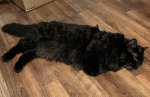
Virginie & Chewie (GA)
Member Since 2022
(Also what’s a civvie? A cat without diabetes?)
Bandit's Mom
Member Since 2019
Yes(Also what’s a civvie? A cat without diabetes?)

The Official Lantus, Levemir & Biosimilars Slang Dictionary
FDMB Glossary

Hendrick Cuddleclaw
Member Since 2022
yup, civvie, aka civilian, as in a normal non-FD kittah
@Virginie I've been absent for a few days and sorry to see this update, but when you got to over 5 units and she still didn't seem to be responding much I had my suspicions as well that there might be something else going on. I hope you find the answer and make some progress soon, you deserve it with how well you've been caring for Chewie.
you and Chewie are in my thoughts, sending good vibes your way and asking the universe to cut you a break already.
@Virginie I've been absent for a few days and sorry to see this update, but when you got to over 5 units and she still didn't seem to be responding much I had my suspicions as well that there might be something else going on. I hope you find the answer and make some progress soon, you deserve it with how well you've been caring for Chewie.
you and Chewie are in my thoughts, sending good vibes your way and asking the universe to cut you a break already.
Virginie & Chewie (GA)
Member Since 2022
Thank you, Kyle, may this go straight to the Universe's proverbial ear!yup, civvie, aka civilian, as in a normal non-FD kittah
@Virginieyou and Chewie are in my thoughts, sending good vibes your way and asking the universe to cut you a break already.
It was pretty heavy news to digest, and I felt very defeated last night, but back and at 'em this morning. Having to wait for the 73-day mark to test for acromegaly/IAA gives us a window of hope, so to speak. Come on, Chewiepants!