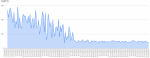
Just remember you're not going to stop a bounce. About the only way to stop a bounce is to feed the curve in a way that prevents fast, hard drops. Strategically feeding food to help "ride the brakes" as it were. But (1) in my opinion that just isn't worth the time/effort at the moment, partly because (2) his bounces tend to be caused by lower numbers than he's used to, not necessarily fast drops.
Our goal is just to help tamp it down a bit, as it's a little easier to recover from say 300s vs 400s and probably feels a little better. But as I said last night, sometimes it's a risk because you don't always know if they're going to bounce. Full dose can help tamp it down, but could also result in some lower numbers and extra testing if he doesn't bounce.
I think to people outside looking in, it does seem crazy. But a lot of us here are of the mindset that we took these cats in, with the responsibility and accountability to give them the best life we can - and that looks a little different for everyone. It just becomes part of the routine, part of the day. It's quick once you've got the hang of it. Diabetes, if left untreated or poorly treated, is honestly like long-term torture. They slowly waste away, it wears away on everything. So I'd much rather take the total 30 minutes out of my day to give insulin and test. I'm actually more annoyed by his current meds schedule than I was with shots and testing

(current meds require gloves when medicating, handling any bodily fluids/things that have touched bodily fluids, thorough cleaning, etc).



 Retest in 20 mins, if he's higher than about 325 (whether or not he ate) that's pretty solid bounce indicator and I would give full dose. If not much rise, do something more conservative that you're more comfortable with, like 0.5U.