01/05/21, New Member, Minino, Intro, Question

Status
Not open for further replies.

Adri

Member Since 2020
Hi!

I hope everyone is having an ok start to the year!

My name is Adri, and my 20 yr old cat, Minino (located in Spain), was diagnosed with diabetes in April 2020.

He was getting treated for intestinal SCL and IBD with chlorambucil and prednisolone. One day, he became rigid and fell over, it looked like he was unconscious. We rushed him to his vet and they told us the prednisolone had caused him to become diabetic and that he had just had a diabetic neuropathy.

We were given the Lantus Solostar 100u/ml pen and instructed to give him 1 unit every 12 hours. The dosages have been adjusted several times since, and we would test him with Urispec urine glucose strips. The strips would usually read between normal and 150 mg/dL. If they were ever negative we were instructed to lower the insulin dose by 1 unit.

Last week, his vets decided to put the FreeStyle Libre glucose monitor on him so that we could check his blood glucose instead of urine glucose.

They told us to only inject 1 unit of insulin when the monitor reads higher than 400 mg/dL, and always space out doses by 12 hours. Before they put the Freestyle Libre, we were injecting 2 units every 12 hours, and monitoring with the urine strips. However, now that we're monitoring his blood glucose, it seems to me that only injecting when it goes above 400 is too high?

I was wondering if anyone else has approached diabetes in this way, and what others suggest an ideal blood glucose should be for a diabetic cat (I know normal is 50-130 or so?).

The vet is worried about hypoglycemia, but isn't 300 mg/dL still too high? Won't elevated blood glucose for long periods of time hurt him? In 6 days, his glucose level has only gone below 200 mg/dL twice.

Here are his glucose readings from the last 6 days (I didn't fill out the spreadsheet because we aren't measuring based on a fixed insulin shot time so wasn't sure how to explain it):

Dec 31st Jan 01 Jan 02 Jan 03 Jan 04 Jan 05
8-8:30 am: 270 300 335 332 407 (1 u) 249
9 am: 246 302 338 301 362 264
12 pm: 366 316 317 337 305 275
1-1:30: 406 (1 u) 354 294 296 335 276
2:40 pm: 312
3:30 pm: 258 422 (1 u) 373 410 381
4-4:45 pm: 228 336 417 (1 u) 417 397
5:00 pm: 368
6:00 pm: 384
7:00 pm: 245
8-8:25 pm: 242 217 236 292 275
9-9:30 pm: 232 194 270 309 232 277
12-12:30 am 222 291 329 142 328
1-1:15 am: 236 218 348 275 216 314

Minino eats small amounts of food 4 times a day, he's always asked for food constantly throughout the day. Since his diabetes diagnosis, our vets have recommended we just give him some food whenever he asks (which is pretty often), to make sure he doesn't get hypoglycemia.

I had to find a food that would also be ok for his CKD IRIS stage III, which was hard to find in Spain, I settled for:
Aniforte PureNature Fish and Turkey.
It has: 97.4% turkey & salmon, (60% from turkey hearts, turkey meat, turkey liver, turkey necks, 10% salmon, 27.4% stock), 2% cucumber.
Protein 10.2%, fat content 6%, crude ash 2.3%, crude fibre 0.5%, moisture 80%, calcium 0.19%, phosphor 0.13%, 150mg taurine per 100g
On a DMA the phosphorus is 0.65%

If anyone knows of another low carb, low phosphorus food I can get in Europe (most of the lists / tables are for US foods), I'll take any recommendations! Thanks!

Thanks in advance! Looking forward to your thoughts!

Best,

Adri
 
Welcome, waving from Canada.
I'll leave it to more experienced members to look at the way your vet is dosing (hint: Lantus does not work well that way). Some reading for you in the meantime. Feline diabetes is a steep learning curve but quickly becomes second nature.


Sticky The Basics: New to the Group? Start here!

Sticky What is the Insulin Depot?

Sticky Dosing Methods: Start Low, Go Slow (SLGS) & Tight Regulation (TR)

If anyone knows of another low carb, low phosphorus food I can get in Europe (most of the lists / tables are for US foods), I'll take any recommendations! Thanks!

@Gill & George lives in Spain. She may know.
Also, if you scroll down this UK list, you will find some EU-specific foods. A lot of people in EU order through zooplus. You may be able to get some of the UK foods that way.
UK Cat Food List

Tagging @Critter Mom for low phosphorus UK food choices.
 
Hello Adri!!!
Waving from Granada.

The UK food list above is the one I use for food choices, I mostly buy from zooplus. But have used some other online pet supply companies, I don't know what it is like where you are, but we have very limited choices of food at the shops here.

My guy also has ckd, and he is an old boy too, 21 yrs young.

Trying to get a food that is suitable for kidneys ie a therapeutic kidney diet, is going to be high in carbs. And that is bad for his blood sugar.

When a cat has both diabetes and CKD the diabetes takes priority. If his blood sugars are high then this is bad for the kidneys, it puts more stress on them.

I think the advice you are getting regarding the insulin dosing is not going to help you get Minino diabetes under control, or more importantly under the renal threshold, which is where you want him to be spending most of the time to avoid stress on his kidneys.

Trying to dose using the urine strips is not really easy and doesn't let you be aggressive enough to be able to get his blood sugar under control.

I was interested to hear that there were times that his urine was normal, that tells us that with the higher dose you were using there were times that he was below that renal threshold.
The numbers from the Libre above, are mostly all above 200, for George, in the beginning when I checked his BG (blood test) and glucose in urine, I found that he tested normal in urine glucose levels when his BG was regularly below 200 (this is a number that can vary a bit from cat to cat), 200 was his renal threshold, the point below which glucose stopped spilling out into his urine.

In your position I would do the following

1) set up a spreadsheet, put the last week of libre numbers in it
2) get a human glucometer (I use the freestyle freedom light/ my local pharmacy gave me one for free, but strips are more expensive, and also the SD code free/, I bought this but strips are cheaper),
3)learn to home test by pricking his ear, sounds like he likes his food so maybe use some LC treats to get him used to it.
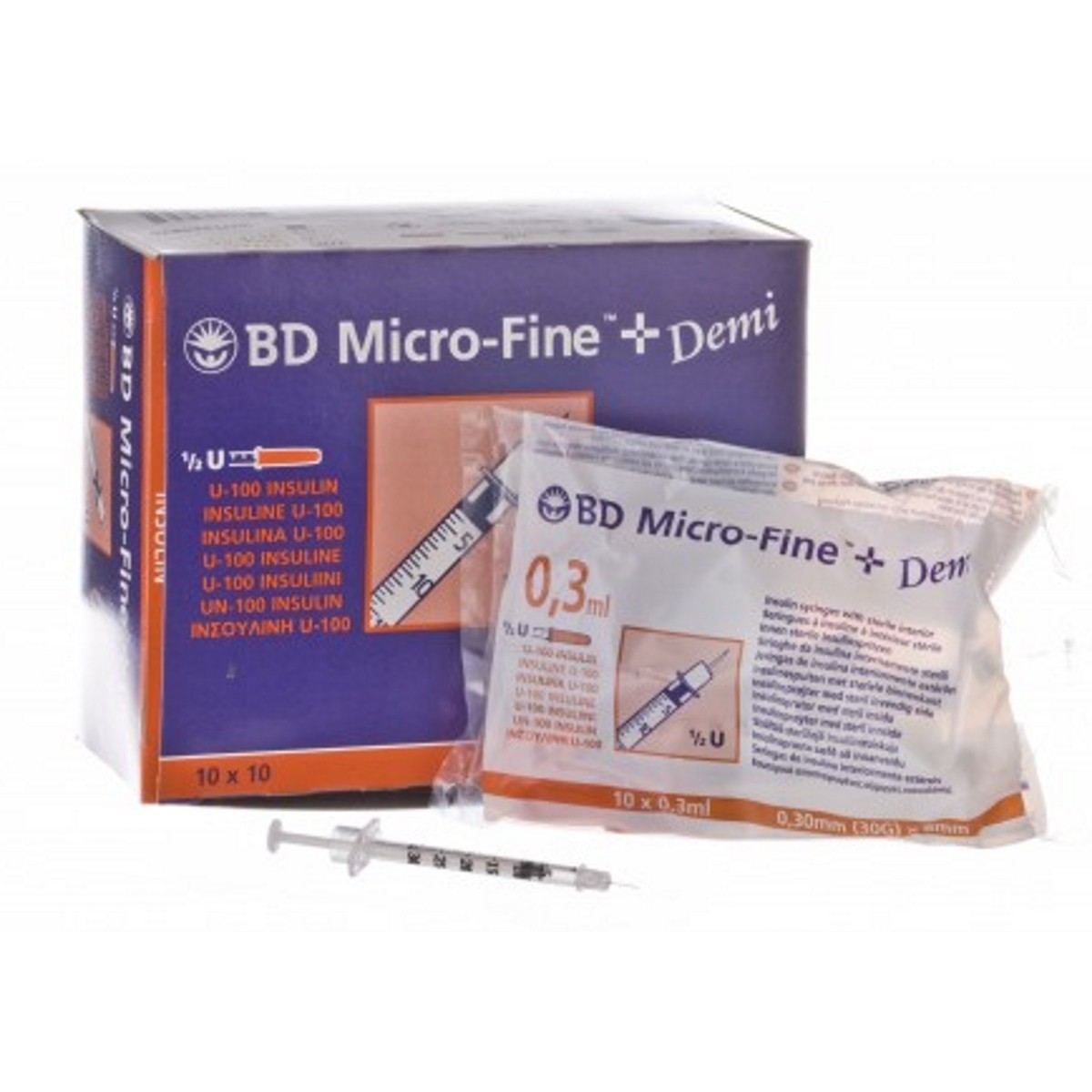
4) Get some BD microfine+ demi needles(see picture below), my local pharmacy ordered them for me, to use with the pen so you can change doses by small amounts, the 1u dose changes with the pen are too big a change for a cat on the dose amounts that minino has.
ee301458344cb05b2e8d8a8543077a0e.jpg

5) Once you've got yourself set up with the above/ or before, come and post on the Lantus forum and we can help you with the dosing, on the forum there are some information posts that will give you some idea of the strategies we follow. I followed Tight Regulation, the aim with that is to get your cat quickly and safely to a dose where they are spending most of the time in BG levels of a normal cat (50-100/ measured with a human meter). It was with this method that I was able to get George regulated and finally into remission. If you feel that the Tight Regulation method is something you can follow, I would recommend that since it will get your guy regulated more quickly and that in turn will be good for the kidneys.

CKD/Diabetes food choices
The list I gave you has a number of food choices that are low carb and phosphorous below 1% these are the ones that I use.
The other thing to do with CKD cats is to feed regularly (which you already do) since they can suffer with acid tummy and if they go too long between meals they can vomit, usually foamy clear vomit. I also add a little water to his food every time I give him a snack as both CKD and diabetes can often see them get a bit dehydrated since they tend to urinate excessively, and don't concentrate their urine.

I hope everyone is having an ok start to the year!

Feliz dia de Reyes.:kiss:
 
Hi Red!

Awesome, thanks so much for all of these links and connections! I agree, I hadn't read anything that had information on the new dosing method our vet told us.

Best,

Adriana

Welcome, waving from Canada.
I'll leave it to more experienced members to look at the way your vet is dosing (hint: Lantus does not work well that way). Some reading for you in the meantime. Feline diabetes is a steep learning curve but quickly becomes second nature.
 
Thanks Mogs!! Happy to be in this group!

Hi Adri,

Welcome to yourself and Minino.


Unfortunately I can't help on that score. I could do with such a list myself. (The only ones I know of are the therapeutic renal diets from the big pet food companies, and they're all too high in carbs for a diabetic.)
 
Hi Gill!

Thank you so much for all of this information, this is so useful!

That's amazing that George is 21!! Congratulations! I hope Minino makes it to that age!

I'm from Madrid, and I've ordered on Zooplus, MascotaPlanet, HuellaCanina, and Bitiba. Same here on food at shops, not as much available for an old cat with multiple conditions :(. From that list, I've ordered Granatapet Symphonie, Feringa (although there were egg shells in the can), and Thrive tuna.

Is there a specific food that you would recommend from that list that you think has worked best for both George's diabetes and CKD? I'm a little more worried about how the high protein diet will affect Minino's kidneys now that he's in a more advanced IRIS stage (3). Have you noticed any relation with the high protein and George's kidneys?

Thanks for all of the information on dosing. The explanation on the renal threshold is very useful. I started using the urine strips to compare with the blood glucose readings, and they were at around 150, so definitely past the renal threshold (which makes sense with what you said.) I spoke to my vets today though, and they still don't want to increase the insulin dosage to what we used to give him :(, they said they want to keep his blood glucose at an average of 300 mg/dL.

Unfortunately, the Freestyle Libre sensor stopped working last night. Our vets never gave us the option of home testing with ear pricks, but I'll buy a sensor and learn how to do it.

I'll do everything you recommended, and then post on the Lantus forum, thanks! Excited to finally have some answers / direction.

This might be a dumb question but - the only thing that I'm not sure about is how to transfer the Lantus Solostar pen insulin into the new syringes you recommend? (We usually just put a needle directly on the pen and inject from there).

Thanks again for all of this! Espero que hayas tenido un buen dia de Reyes! <3,

Adri


Hello Adri!!!
Waving from Granada.
 
This might be a dumb question but - the only thing that I'm not sure about is how to transfer the Lantus Solostar pen insulin into the new syringes you recommend? (We usually just put a needle directly on the pen and inject from there).


Hi you would take your syringe, and insert it into the small gray rubber stopper , when you take the top off of the pen you will see it.

So just insert your syringe into the rubber stopper and draw your dose.
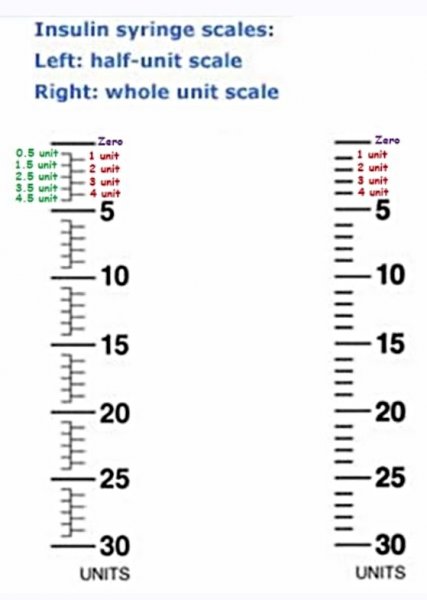
The pen itself will only allow you to increase or decrease by 1 full units,

With the syringe you can now increase or decrease by 0.25 units
The syringes have half unit markings, so if you ever got down to giving 0.5 units
the marking line for that is there.
When it comes to giving 0.25 units or 0.75 units we eye ball them
Hope this explains it for you :cat:
 
Last edited:
Hi Diane!

Ok awesome thanks so much! This makes perfect sense!

Best,

Adri

Hi you would take your syringe, and insert it into the small gray rubber stopper , when you take the too off of the pen you will see it.

So just insert your syringe into the rubber stopper and draw your dose.
The pen itself will only allow you to increase or decrease by 1 full units,

With the syringe you can now increase or decrease by 0.25 units
The syringes half half unit markings, so if you ever got down to giving 0.5 units
the marking line for that is there.
When it comes to giving 0.25 units or 0.75 units we eye ball them
Hope this explains it for you :cat:
 
Hello,

I hope everyone is well! It's been a while since I last posted, so I wasn't sure if to post on this same thread.

I have a question regarding my glucometers. We were injecting Minino with 3 units of lantus every 12 hours and his glucometer (exactive EQ impulse) was showing ranges between 100-300 mg/dL for the most part. However, in the last couple weeks, even when the glucometer showed readings of above 200 mg/dL, his urine test strips (I tried 4 different brands) would come back negative, which before, when he was above 200 mg/dL in blood it would usually show up in the urine. Then, on April 21st, around 3 hours after his evening shot, his glucose went down to 83 mg/dL. I was scared it might keep going down so I gave him high carb food and it went back up to 176 mg/dL in the next 40 minutes.

That incident and the urine strips coming back negative scared me a little so I lowered his dose to 2 units (we've also recently started lowering his steroid medication which was what caused the diabetes in the first place). On April 22nd he went back to 100-300 mg/dL but today he's been in the 300-400 mg/dL range in our usual glucometer.

I decided to buy another glucometer (aposan brand) to compare readings and the new glucometer gives readings that are around 40-65 mg/dL lower than the glucometer we were previously using. I'm not sure what to do at this point, because I was considering increasing his insulin dosage again but I think a 40-65 mg/dL margin of error is too high. Should I buy a third glucometer? Has anyone had this problem?

Thanks so much!

Best,

Adriana
 
I decided to buy another glucometer (aposan brand) to compare readings and the new glucometer gives readings that are around 40-65 mg/dL lower than the glucometer we were previously using.

We just retested and the old glucometer shows 413 mg /dL and the new one 308 mg / dL
 
I think a 40-65 mg/dL margin of error is too high. Should I buy a third glucometer? Has anyone had this problem?

All meters are allowed a 20% variance from what you'd get from a professional lab. Even if you used the exact same meter on the exact same drop of blood, you could get a number that's 20% lower or higher than the one you just got.

We just retested and the old glucometer shows 413 mg /dL and the new one 308 mg / dL

Example:
413 +/- 20% = 496 to 330
308 +/- 20%= 470 to 246
There are a lot of numbers common to both meters so you can say that 413 and 308 can basically be the same number.

At higher numbers, there can be what looks like a huge range but at lower numbers (where it's most important for safety) the numbers may be closer together.

The key to all this is to choose 1 meter and go with it. Don't try to compare them or you'll drive yourself crazy. If you have doubts if the meter you're using is wrong, you can always test yourself (or another "willing" volunteer)

It will be very helpful if you'll start keeping track of your test numbers on our spreadsheet. We're very data-driven here and really depend on seeing those numbers before we can give much in the way of helpful advice.

Here are Instructions on setting up the FDMB spreadsheet.
 
Hi Adri.

How often are you testing?
If you're not getting tests every day and at different points in the cycle it is possible that you've missed some lower numbers and Minino is spending more time below the renal threshold (under 200 from what you've noted) that might explain why no glucose in urine even though you have had readings in the 300 range.

I agree with Chris if you can set up the spreadsheet with the last few weeks of numbers, it will help us help you.
 
Hi Chris and Gill!

Thanks so much! I'm testing multiple times a day, I'm working on the spreadsheet right now. I'm sorry I put it off :(.

My vet kept insisting I only inject 1 unit or not even 1 on some days, she told me not to bother with ear prick testing or fine dosing, and to keep his numbers at 300.. I didn't listen and went ahead and listened to what I was recommended in this group. Before this latest incident, I was doing 3 units BID as I mentioned earlier, but I never got a steady cycle, or as consistent results (a nadir 6 hours after dose). However, since I'm doing this without consulting my vet I've been scared to go higher than 3 units and fully commit to TR. Also, I started to wonder if maybe the Somogyi effect was happening, because higher doses of insulin sometimes gave me higher numbers than lower doses. However, I read on the TR source http://www.tillydiabetes.net/en_6_protocol2.htm that it's not really a thing...

For testing times, we've been testing a lot throughout the day / night, but I think I'm going to start doing: AMPS, +3, +6, +9, PMPS, +3

Once in a while the dose has varied because my dad forgets how many units we're giving him / what we're doing (this weekend it happened) ... :/

I am now at 2.5 units BID and will probably go up to 3 again the day after tomorrow because he's going to the vet tomorrow and sometimes he gets nauseous / doesn't eat when he goes and his glucose goes down.

Thanks again! Will have the spreadsheet soon.
 
I've worked on the spreadsheet and entered data from 04/13 on for now. Seems all over the place, it's nice to be able to visualize it. Haven't had time to enter this but, for the last two weeks of March we were getting more numbers in the 100-200 and we had a couple scares of glucose going down to 59 lowest (with 3 units). April has generally been higher with more 200s-300s. These last few days in April have been the messiest after that scare I mentioned on 04/21. Thanks so much for all the help!
 
Also, I've added the numbers from our original glucometer, not the new one I mentioned in my previous post.
 
Status
Not open for further replies.
Back
Top