New Member 21 Apr 2021: UK Maine Coon diagnosed 14 Apr

Status
Not open for further replies.

Mark+Esin and Samson

Member Since 2021
Hi, my name’s Mark. My wife Esin will be dropping by from time to time too...

Firstly, I’m so glad to have found this forum. Thank you for all the useful information here and for the support you offer, it’s going to take a while to get up to speed.

Samson had to go to the vet to get his annual vaccination which had been delayed due to Covid restrictions at the practice. Routine appointments weren’t being done when he was due early February.

He’d been getting very demanding and vocal for more and more food over the last month or more and as a precaution the vet did some blood tests when I took him in. Unfortunately he’s now been diagnosed as diabetic. I wish I’d understood the signs earlier. I responded with the demands for food with dry food supplement which I now know was the wrong thing to do.

He’s been on insulin for a week but I’m unhappy with the diet that the vet has told me to give him. I’ve written the details below.

Within 24 hours of being on insulin his constant demands for food had stopped and his drinking has decreased, though he is playing with his water bowl a lot still. So I’m taking this as a first positive sign.

General Info

Name: Samson
Breed: Maine Coon
Age: 12.5 years
Weight: 8.8kg / 19.3 lbs (we and the vet have tracked weight for many years, vet says not overweight)
Home Turf: Surbiton, UK
Diagnosed: 14th April 2021
Insulin: Caninsulin - thanks to posts here I now know to inject 20 mins after food rather than immediately after food.
Units: started at 2U twice a day on 14th, reviewed on 19th vet increased to 2.5U twice a day.
  • On morning of 19th he was tested at the vet given a result of 31 (but the vet didn’t say the units, is this mmol/L ?) within about 15 mins of food, prior to injecting.
Next vet visit: Tuesday 27th

Food Prior to Diagnosis

2 x 85g Gourmet Gold Pate Senior, twice a day (4 tins per day)
This has been supplemented by Royal Canin Maine Coon Dry Food and increased as he got hungrier over the last month. Sometimes Purina One dry food was given instead of royal canin.

Food Advised by Vet

The vet has told me to give Sam dry food: Hills Prescription Diabetic m/d, but after reading the website I’m really not happy him having this. It may well be low in simple sugars but it has 16% energy from starch which is just as bad I think, it’s also dry food and Sam has always been fed primarily wet food.

The vet wanted me to give him 110g Hills per day, split into AM and PM meals. The Hills packet says an alternative is 1 wet food tin plus 70g dry per day. This is what I have been giving him the last few days.

Today, I’ve now gone through the UK food page in great detail and have concluded that to get the 360 to 380 calories per day Sam could be satisfied with these foods:

Catz Finefood - those with carb % <= 3% (200g x 2 per day)
OR Rosie’s Farm Two Bird Casserole or Farmer’s Hash - carbs < 3% (100g x 4 per day)

I’m going for the lowest carb on the list with a reasonable energy density given I want to give whole tins at each meal if possible.

Is it really necessary to go this low on the carb % ? I’m being cautious but am I over worrying? The gourmet gold isn’t a bad carb % but it does have the ’simple sugars added’ on the label and there is a warning on the UK food list so I thought it best to avoid it.

I'm worried about messing with his diet whilst he's in this first stage of stabilisation... I don't know what's for the best. I'd rather he not be on this dry food at all.

Testing

I haven’t started testing. He’s due for his first glucose curve staying at the vet during the day on Tuesday 27th.

I mentioned testing to the vet, both blood-prick testing and urine testing as he is peeing in the shower at the moment which would make it easy to test but I was told not to worry with it at present. I am concerned though and I can see that the advice here is to get testing asap.

Can someone help out with the best way to get started with home blood testing please? I’ll need to get a tester and bits and pieces from here in the UK and not sure where to start. Thank you!

Thank you for reading I feel reassured that there are kind people here who are happy to help.

Mark
 
Last edited:
Hi Mark, Esin and Samson, welcome to FDMB! There are only a few of us in the UK and we try to keep an eye open for new members so we can help out (I’m very near you, in Cheam - small world!)

You’ve certainly done your homework, well done...I’ve just skimmed through to the end of your post so far but I’ll answer your specific question about meters... the one favoured by most UKers at present is the Gluco Navii - it’s a reliable meter and the cost of strips is not excessive (unlike the pet AlphaTrak meter which you could also consider, but you would find it much higher in cost to run). There are other human meters, but the Gluco Navii is as good as any and is usually available from Amazon or Home Health as a starter pack including lancets (used to prick the ear to get blood) and a pot of strips - ideally get the kit with 50 strips, not ten, which will last you only a day or two! Going forward, you’ll need a good supply of strips so it’s a good idea to always have a spare pot or two (given current postal delays etc you don’t want to find yourself running short).

Briefly, ref food - you’re right to avoid dry food and you’re right not to mess about too much with diet at this point. 2.5u of Caninsulin is quite a hefty dose (we would usually start at 1u and increase in small increments if necesssary as dictated by blood testing data. As you’re feeding partly dry at present and not testing, it wouldn't be advisable to introduce a higher proportion of wet without also reducing the insulin dose - as you probably know, too much insulin can be very dangerous and that’s why we home test - to ensure bg is high enough to warrant giving insulin.

My suggestion is to get yourself a meter, familiarise yourselves with the testing process, and then reduce the proportion of dry food gradually when you can see that it’s safe to do so.

I could say more but will leave it here for now and tag our fellow UKer, @Elizabeth and Bertie , who has the most experience of fd amongst us (and put together the UK food list) - she may well have some other thoughts for you.

Good luck! Keep asking questions!

Diana
 
Hello and welcome, Mark and Esin and Samson!

It sounds like you're being very proactive and have done a lot of 'homework'. That's great! :bighug:

I totally second what Diana said in the post above, and particularly this: "My suggestion is to get yourself a meter, familiarise yourselves with the testing process, and then reduce the proportion of dry food gradually when you can see that it’s safe to do so."

I mentioned testing to the vet, both blood-prick testing and urine testing as he is peeing in the shower at the moment which would make it easy to test but I was told not to worry with it at present. I am concerned though and I can see that the advice here is to get testing asap.

Hmmm.... The international (ISFM) guidelines on managing feline diabetes and the RVC's own guidelines recommend hometesting of blood glucose where that is possible. 'Most' people can learn to test, and 'most' cats can be tested. ...But quite a few vets are just not up to speed with the current guidelines, unfortunately... The evidence clearly shows that hometesting makes it easier and more effective to manage diabetes. It also reduces the risk of hypo, and increases the chance of a cat going into remission and becoming a diet-controlled diabetic.

Do have a read of the UK info in my signature, which may be helpful. And if you have any other questions just ask, ask, ask... We are here to help.

Waving to you from Cobham in Surrey!

Eliz
 
Always aim for the sweet spot warm the ears up first, you can put rice in a sock and put it in the microwave, test it on the inside of your wrist to be sure it's not to hot, like you would test a babies bottle. You can fill a pill bottle with warm water and roll it on the ears also.Just keep rubbing the ears with your fingers to warm them up
c2b8079a-b471-4fa6-ac36-9ac1c8d6dcca-jpeg.57072
fec17d29-5ab4-44a8-912b-3a91944c3954-jpeg.57073

6. As the ears get used to bleeding and grow more capilares, it gets easier to get the amount of blood you need on the first try. If he won’t stand still, you can get the blood onto a clean finger nail and test from there.
When you do get some blood you can try milking the ear.
Get you finger and gently push up toward the blood , more will appear
 
@Diana&Tom Hi Diana, thank you for your reply and your suggestions. I’ve now ordered the Gluco Navii and 50 strips, hopefully will receive by Saturday as it’s being sent 1st class. Cheam really is very close! I was in Worcester Park only last weekend.


@Elizabeth and Bertie Hi Eliz, thank you for your info regarding the guidelines it’s good to know that the regulatory body is recommending testing. I get the feeling that my vet was trying to not overwhelm us with what’s going to be needed all in one hit.


The injecting seems to not be troubling Sam at the moment and I recently trained as a volunteer covid vaccinator so dealing with needles hasn’t been a problem. It is a different technique though - for insulin the injection is in the fatty tissue the skin which I’ve learnt needs the tent method to administer - rather than into muscle which is where covid vaccinations go. I’ve now injected Sam more times than people as there are insufficient vaccination shifts to go round at the moment! Still waiting for my first one to be confirmed.


I found the UK food list very useful. It’s rather involved finding out the sugar contents of these foods isn’t it?! I looked up the calculation so I could see how much the Hills dry food had and it was shocking, though not a surprise. I really do not understand why this food is being recommended by vets or how it can be marketed as a prescription diet for diabetes. OK, compared to Purina One which we’d been using it’s a lot less but it gets nowhere close to a reasonable wet food in carb content.


Your second link mentions neuropathy. I am unsure whether Sam is being affected by this. He seems to be making more of a plodding sound as he walks around the house, as though he’s being heavy footed though his legs don’t appear to be weak and he can jump up onto the bed and chairs ok. I’ll have a good look through this 2nd page tomorrow.


@Diane Tyler's Mom - wow, so much help this evening thank you! So do we always use the ear as the test site or are there alternatives? Just wondering about the impact of so many pinpricks over time on thin skin there. It’s something which is going to take some getting used to for us as well as him - it’s actually concerning me more than the injecting though once I get started and he hopefully doesn’t feel pain then I’ll ease into it.
 
I pricked Sheba’s ears for years sometimes 4 or 5 times a day, sometimes many more times if she was dropping low. Her ears looked exactly like my other cats ears.
If you hold the ear firmly after getting the blood sample, inbetween two fingers it will stop any bruise.
Expect a few tiny bruises or scabs in the beginning while you all have your L plates on.
It is surprising how quickly cats get used to being tested, especially when they know they will get a treat.
Sheba would always come running when she heard me at the testing equipment. She would just sit there and let me do it.
Always give a treat even if you are unsuccessful. Start by rubbing his ears to get him used to having them touched. Give him a small test.
Find a spot where you can test him and always use that spot. He will get used to that and associate it with treats.
Expect to fail a few times in the beginning...that’s normal. It happened to us all.
You will find this disease will bring you both closer to Samson and the bond is lovely.
 
@Diane Tyler's Mom - wow, so much help this evening thank you! So do we always use the ear as the test site or are there alternatives? Just wondering about the impact of so many pinpricks over time on thin skin there. It’s something which is going to take some getting used to for us as well as him - it’s actually concerning me more than the injecting though once I get started and he hopefully doesn’t feel pain then I’ll ease into it.


You are very welcome, forgot to mention get 26 or 28 gauge lancets to prick his ear with. They will make the ear start to bleed better.
Then get cotton rounds and put it behind his ear just in case you prick your finger. Then fold the cotton round over his ear and press gently for about 20 seconds or so to stop the bleeding.
It sounds worse than it is really.
I keep the cotton round there , poke then test with the meter.
I'm going to post a video of one of our members testing her cat.
By the way Samson is a gorgeous kitty :cat:
 
You asked about alternative to test
I have never tested on the paw pads but here is a video
Believe me once you get used to testing on the ears it's easy
Tyler's ears looked the same as his brothers ears who was not diabetic
Me personally I wouldn't want to test my cat on the paw pads, I would be afraid when they use the litter box and maybe getting an infection or something, that's just me.

If you go up to the upper right hand corner where it says search, just type in paw pads and then hit search you will find many posts about members testing on the paw pads


Last edited:
@Bron and Sheba GA - Thank you for your guidance and reassurance.

@Diane Tyler’s Mom - Thanks for the tips and the vids, Samson says thank you for your kind words!

The testing kit has now arrived so first go has been to test me today, which all went ok - i feel a bit less sad about making him bleed now as i really didn't feel much at all. He's going in for a curve to be taken tomorrow at the vet so once he's had that I'm going to start testing him.

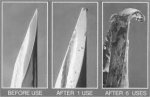
I didn't realise the needles were the lancets - there's only 10 in the pack. It would be best to use a new lancet every time but is it acceptable to sterilise the needle and re-use, eg with isopropyl alchol?

Esin also gets trained up for injecting and testing this week :-)

I've had a bent needle this morning :-( which I guess means a fur shot though it did feel as if the needle had gone in. As I've read elsewhere on the forum I know not to try again due to the hypo risk, not knowing what dose he got the first time.

It's to be expected when starting, but I still feel guilty for the fact he is likely to be feeling extra hungry throughout today until his feed this evening when hopefully I'll score a better hit.
 
Welcome to FDMB!

In response to your question, you want to use a new Lancet every time you test. The same with the insulin syringe. It's surprising how quickly the metal on the lancet or the needle on the syringe begins to degrade.
upload_2021-4-25_9-15-37.jpeg


I'd also suggest getting more strips as well as lancets. You need to be testing at least 4 times daily -- you're pre-shot tests and at minimum, at least once during both the AM and PM cycles. Dosing is based on the lowest number (the nadir) in the cycle. You want to figure out approximately when the nadir occurs. If you look at the spreadsheets that are attached to our signatures, you will have an idea of how frequently people test. I was a testaholic -- not everyone tests the way I did. However, with Caninsulin, because it can onset early and it can drop numbers fast, it's helpful to get information so you know how your cat is responding. There is information on using Caninsulin on the insulin support group page that I linked.

One other observation, if you are testing at home, you do not need to go to your vet for a curve. You can do this at home and it saves you the cost of paying the vet for a curve!
 

Attachments

  • upload_2021-4-25_9-15-37.jpeg
    upload_2021-4-25_9-15-37.jpeg
    6.3 KB · Views: 160
@Sienne and Gabby (GA) Hi and thanks for the welcome. Really interesting photos, thanks - once and only once it is then. I have a good stash of 60 strips just need to get the lancets. Hoping that getting Sam into a testing habit would mean emailing the vet with the graph so not needing him to go in regularly.
 
A lot depends on how much in control your vet likes to be. I speak fluent medlcalese and have access to medical and veterinary libraries. Once my vet saw the spreadsheet and I explained it to her, along with the point that unless she wanted to give me her personal phone number so I could call her at odd hours of the day and night for guidance, I was going to follow a published dosing protocol and rely on the people who were training to use that method for dosing. All of the vets that I worked with let me manage Gabby's diabetes. That said, I was fortunate that they were valued collaborators in Gabby's care and weren't of the "my way or the highway" disposition!
 
@Sienne and Gabby (GA) I talked with my vet about avoiding dry food and he's supportive which is great. He was also really enthusiastic about us testing which was really encouraging. Started testing but had trouble going from no blood on some attempts to going right way through poor Sam's ear :-( he didn't seem too troubled, it's going to take some getting used to though for both of us.
 
@Sienne and Gabby (GA) I talked with my vet about avoiding dry food and he's supportive which is great. He was also really enthusiastic about us testing which was really encouraging. Started testing but had trouble going from no blood on some attempts to going right way through poor Sam's ear :-( he didn't seem too troubled, it's going to take some getting used to though for both of us.
Mark, it’s a knack, you’ll get used to it. Remember to give Sam a little treat after each test to reward him for being a good boy (and it sounds as if you and Esin need a treat too!). I’m glad you’ve got a supportive vet, it makes all the difference. I’m not far from you and have used various vets over the years, some better than others... they do vary.
 
Status
Not open for further replies.
Back
Top