911

Status
Not open for further replies.

Amaris Welch

Member Since 2020
I started Rico on the novolin insulin today per the vets request. I checked his sugar 3 hrs after giving it to him. It went from 400 to 131. Do I have to worry about hypoglycemia
 
Last edited:

Give a low carb snack and check again in 30 minutes.
Novolin hits hard and fast.
Since Rico is new to Vetsulin, you do not want Rico to drop below 90 on a human meter.
 
Last edited:
Is this Novolin? If so, it hits even harder than vetsulin.

I agree, test again in 30mins, and gather all your high-carb supplies now, just in case. If you get a low number, the last thing you want to be doing is running around the house looking for honey!

It looks like you are using a BG meter for humans?
 
OK, great. Just want to keep him at this level, not too much lower.

As Elizabeth said, he'll likely make his turnaround and start shooting upward soon, but just in case it doesn't hurt to add a little insurance.

Not sure you said, but what was the dose you shot?
 
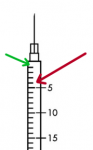
The red arrow or the green arrow?
upload_2020-9-25_22-49-43.png
 

Attachments

  • upload_2020-9-25_22-49-43.png
    upload_2020-9-25_22-49-43.png
    15.2 KB · Views: 360
That's a really small dose. :eek: Why 0.4u and not 0.5u? Trying to figure it out.

Your spreadsheet is blank, have you filled it in any or is it messed up?

How is Rico's BG?
 
Here you go:

Date: Current Date
AMPS: AM pre-shot, the number you get when testing right before giving insulin
U: Units (insulin amount given)
+1: BG 1 hour after insulin
+2: BG 2 hours after insulin
+3, +4, etc.
PMPS: PM pre-shot

Amaris, if you still have good Vetsulin I would go back to that and request an insulin change to either Prozinc or Lantus. NPH and Vetsulin are used in dogs, it's harsh on the body of cats and it's easy to hypo on them.

NPH: Test, feed, wait 60 minutes, then give insulin IF BG is over 250
Vetsulin: Test, feed, wait 30 minutes, then give insulin IF BG is over 200

With both insulin please give a small snack of their regular food every hour for the first 3-4 hours to prevent those sharp drops like you saw tonight.
 
Amaris – if you need to, here is how to change the title of this thread to a 911.

Scroll up to the top. To the righthand corner. There you will see "Thread Tools. Click on it and you will see "Edit Thread."
upload_2019-9-19_11-4-47.png


Click on "Edit Thread" and it will take you to:
upload_2019-9-19_11-5-35.png


Click on the button below "No prefix", then click on the red 911.
 

Attachments

  • upload_2019-9-19_11-4-47.png
    upload_2019-9-19_11-4-47.png
    8.1 KB · Views: 353
  • upload_2019-9-19_11-5-35.png
    upload_2019-9-19_11-5-35.png
    33.3 KB · Views: 372
I started Rico on the novolin insulin today per the vets request.
Switching from Vetsulin to Novolin N is a step backwards. It is an even harder insulin for a cat.

Did the vet say anything at all about Lantus? It is a much better insulin for cats and might even solve the peeing outside the box issue. Cats that are not feeling well (both Vetsulin and Novolin will make them not feel well) sometimes show it by peeing outside the box.

Lantus in the US is quite expensive. A lot of people order Lantus from Mark's in Canada where it is much, much cheaper. It is a reputable pharmacy. It has a storefront which one of our members has visited.

All you need is a written prescription from a vet. The cost for a box of 5 vials is roughly $185US and that will last you for a year at least.
 
Good morning!

His BG this morning was 360.

That is the pre-shot number? Have you shot, then?

My vet doesn't recommend Vetsulin. He prefers the Novolin

Hmmm.... OK, maybe after you have some data collected, you can show it to him and maybe talk him into trying something like Lantus. The thing about Novalin is that (as you saw) it really yanks the numbers down quickly, which a) can be rough on a cat's body, and b) can be difficult to manage with an appropriate safety margin at the bottom. Lantus tends to produce much gentler cycles, and most cats do better with that insulin.

Does your vet seem like he would be open to trying something new?
 
Why 0.4u and not 0.5u? Trying to figure it out.
My guess is the vet has them using the old u-40 syringes. Vetsulin is a u-40 insulin, whereas Novolin N is a u-100 insulin. So doing the conversion, the actual dose is 1 unit of N, or the 0.4 mark on a u-40 syringe.

@Amaris Welch can you confirm you’re still using the U-40 syringes?

Here are links to some important reading about your new insulin, including a beginners guide to using Novolin N and an introduction to N.

https://www.felinediabetes.com/FDMB/threads/beginners-guide-to-humulin-n-novolin-n-nph.231593/

https://www.felinediabetes.com/FDMB/threads/introduction-to-cannisulin-vetsulin-n-nph.231602/

Novolin N is more of an “old school” choice. It used to be very common (I’ve been on the board over 15 years now) but is notoriously harsh and difficult to work with and has fallen out of favor now that there are much better choices on the market for cats. It does work well for some cats, but that’s probably the exception.

Hometesting will be very important with N. I’m glad you’ve already started.

I’m curious — why did the vet switch insulins? Understanding his reasoning might be helpful.
 
As others have been suggesting, please talk to your vet about the choice of insulin. The American Animal Hospital Association's guidelines for the treatment of diabetes recommend using either Prozinc or Lantus for the treatment of feline diabetes. These guidelines have been published since 2018. I've linked the website. (They refer to Vetsulin as Lente and it is primarily used in dogs -- it's name outside of the US is Caninsulin.)
 
Last edited:
My guess is the vet has them using the old u-40 syringes. Vetsulin is a u-40 insulin, whereas Novolin N is a u-100 insulin. So doing the conversion, the actual dose is 1 unit of N, or the 0.4 mark on a u-40 syringe.
Yes, we were trying to figure out if she was still using U-40s. It sounds strange a vet switching insulins would have them convert rather than give U-100s
 
Yes, we were trying to figure out if she was still using U-40s. It sounds strange a vet switching insulins would have them convert rather than give U-100s
Yep, but it might have been a safety precaution on the part of the vet. Not everyone initially grasps the nuances about insulin strength and different syringes, so I can see a vet changing one thing at a time (not saying i agree, just that I can understand the possibility). If he’d given or advised new u-100 syringes and shown how to draw to the “1” mark and then the owner accidentally used one of the old u-40 syringes and drew to the “1” mark, the cat would get 2.5 actual units and be overdosed. That could be deadly.

Or maybe the vet doesn’t have u-100 syringes, or is simply more comfortable having all clients use the same thing. Hard to say. We like to have comprehensive info and understand exactly what we’re doing and why, but I’ve spent enough time behind the scenes at vet clinics to know that some clients just want to keep it simple and just be told where to draw liquid to on a syringe or how many pills to give (and I’m not saying that’s the case here, just that sometimes vets default to simplicity).

There are just so darned many variables in dealing with feline diabetes.
 
You are doing a great job with him! Hypos are so scary, the testing you are doing is helping to keep him safe.

By the way, we keep asking a lot of questions about numbers and insulin and all that, but how is Rico feeling/acting?
 
Status
Not open for further replies.
Back
Top