8/21 Luci AMPS 232

Sue and Luci

Member Since 2017
Thursday's Condo

Good Morning everyone! Luci has settled into her old ways, so after 6 cycles she's going back to her 1 unit dose - let's see if that'll encourage her to get back to the lagoon...in the meantime, I'm not getting much in teh way of feedback regarding my Tresiba question yesterday here - so I think I'll post in the Tresiba forum - I'm leaning toward giving it a try. I'd sure like to get Luci out of that lemon tree - at least for the most part...

Based on my reading and the experiences of the other Tresiba cat owners it does have a longer duration - so perhaps that'll keep her away from the lemons - far too much yellow on that SS of hers.

Today is the last day before our project goes live tomorrow and I have a lot to do...I've been asked for data validation processes - sheesh...here it is at the 11th hour and they want to know how we validate our data?? This should have been done months ago...grrrr...

Enjoy your day everyone - off to work I go - hope to be able to pop in later to see how everyone is doing. Have a great day! Hope your kitties surf safely!
 
images
 
Hi Lucy :),

Another option to ask about or discuss is Toujeo. Some preliminary data from clamp testing in healthy cats comparing Tresiba to Toujeo found that Toujeo actually was longer acting in cats: (https://www.eventscribe.com/2018/AC...ET0kzNDEx&PresentationID=393923&rnd=0.9619532)

Many Universities are studying Toujeo and it was mentioned as one of his newer options for cats by a prominent feline/canine diabetes researcher out of Michigan State U Vet, Dr. Daniel Langlois: (https://www.dvm360.com/view/it-s-complicated-foiling-frustrations-diabetes-management-pets).
This is an informative article with respect to things to consider that may be causing issues with diabetes management besides insulin choice. Diet and weight is a big one that can make a difference.

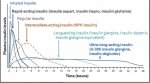
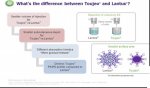
As you probably know from the Tresiba Board, Tresbia and Toujeo are both what are called concentrated insulins. Some confuse the meaning of “concentrated” for “stronger” & that is not accurate. By insulin being concentrated, the pharmacodynamics and pharmacokinetics are impacted. With Toujeo and Tresiba, the change in volume results in a more gradual release and a longer duration. Unfortunately, for some cats, Lantus does not provide the duration of action needed. I am attaching 2 slides with some visuals for additional info.
upload_2020-8-21_11-28-46.jpeg


upload_2020-8-21_11-29-11.jpeg


I will tell you from my personal experience, a thought leader who utilizes the newer insulins may want to use a CGM—even for a few days (if all looks pretty much the same day to day) to get a dynamic picture of exactly what is happening as one part of the information gathering to determine if it makes sense to change the insulin. You will most likely need to find what is referred to as an “early adopter” with respect to an internist vs a “slow adopter” :rolleyes:. They are usually the ones at larger academic settings who focus their research on diabetes. “Early” does not mean experiment. Early adopters are very thorough, knowledgeable and thoughtful about treatment decisions. Safety is important. Some of the slow adopters do not become comfortable within a reasonable period of time, which is unacceptable when treatment is not optimal or worse, failing. Analysis paralysis :banghead:!! You will find slow adopters at U settings as well, so I find it is a bit more challenging within vet medicine vs human medicine to be able to access the early adopters sometimes.

I am currently still using Lantus but I have not ruled out the possibility of changing to a more concentrated insulin if it is recommended. I know one thought process I have heard against the higher concentrated insulins is that you will not be able to make the minor dose adjustments with the higher concentrated insulin that you are able to with Lantus, but if it eliminates the need for them because you achieve a more consistent state and longer duration, it is a non issue. All you can do is weigh the pros and cons for your specific cat, find an excellent & knowledgeable internist to help you make the decision about the need for a change and then try it if it makes sense.

Best :bighug:
 

Attachments

  • upload_2020-8-21_11-28-46.jpeg
    upload_2020-8-21_11-28-46.jpeg
    47.4 KB · Views: 190
  • upload_2020-8-21_11-29-11.jpeg
    upload_2020-8-21_11-29-11.jpeg
    51.6 KB · Views: 181
You should be able to just scroll past them and continue to read the rest of the article.-Amy

Nope boxes stay there and the article moved underneath it. So only get 1 line at a time between the boxes. Maybe it's because I'm in a kindle.
 
Nope boxes stay there and the article moved underneath it. So only get 1 line at a time between the boxes. Maybe it's because I'm in a kindle.

I am guessing it is the Kindle only because when I use the same link I am able to scroll past them. Let me see if there is an alternative way to link it!
 
Hi Lucy :),

Another option to ask about or discuss is Toujeo. Some preliminary data from clamp testing in healthy cats comparing Tresiba to Toujeo found that Toujeo actually was longer acting in cats: (https://www.eventscribe.com/2018/AC...ET0kzNDEx&PresentationID=393923&rnd=0.9619532)

Many Universities are studying Toujeo and it was mentioned as one of his newer options for cats by a prominent feline/canine diabetes researcher out of Michigan State U Vet, Dr. Daniel Langlois: (https://www.dvm360.com/view/it-s-complicated-foiling-frustrations-diabetes-management-pets).
This is an informative article with respect to things to consider that may be causing issues with diabetes management besides insulin choice. Diet and weight is a big one that can make a difference.

As you probably know from the Tresiba Board, Tresbia and Toujeo are both what are called concentrated insulins. Some confuse the meaning of “concentrated” for “stronger” & that is not accurate. By insulin being concentrated, the pharmacodynamics and pharmacokinetics are impacted. With Toujeo and Tresiba, the change in volume results in a more gradual release and a longer duration. Unfortunately, for some cats, Lantus does not provide the duration of action needed. I am attaching 2 slides with some visuals for additional info.
View attachment 55636

View attachment 55637

I will tell you from my personal experience, a thought leader who utilizes the newer insulins may want to use a CGM—even for a few days (if all looks pretty much the same day to day) to get a dynamic picture of exactly what is happening as one part of the information gathering to determine if it makes sense to change the insulin. You will most likely need to find what is referred to as an “early adopter” with respect to an internist vs a “slow adopter” :rolleyes:. They are usually the ones at larger academic settings who focus their research on diabetes. “Early” does not mean experiment. Early adopters are very thorough, knowledgeable and thoughtful about treatment decisions. Safety is important. Some of the slow adopters do not become comfortable within a reasonable period of time, which is unacceptable when treatment is not optimal or worse, failing. Analysis paralysis :banghead:!! You will find slow adopters at U settings as well, so I find it is a bit more challenging within vet medicine vs human medicine to be able to access the early adopters sometimes.
I am currently still using Lantus but I have not ruled out the possibility of changing to a more concentrated insulin if it is recommended. I know one thought process I have heard against the higher concentrated insulins is that you will not be able to make the minor dose adjustments with the higher concentrated insulin that you are able to with Lantus, but if it eliminates the need for them because you achieve a more consistent state and longer duration, it is a non issue. All you can do is weigh the pros and cons for your specific cat, find an excellent & knowledgeable internist to help you make the decision about the need for a change and then try it if it makes sense.

Best :bighug:

Thank you Tomlin for the information - I read thru it and the challenge would be finding a vet to work with us - since we migrate between Michigan and Florida that would mean two vets...not likely going to happen. And I haven't found a vet yet that knew much about FD...at least not within striking distance...

btw, I'm Sue, Luci can't read...but if she could she sure does appreciate the article :)
 
Thank you Tomlin for the information - I read thru it and the challenge would be finding a vet to work with us - since we migrate between Michigan and Florida that would mean two vets...not likely going to happen. And I haven't found a vet yet that knew much about FD...at least not within striking distance...

btw, I'm Sue, Luci can't read...but if she could she sure does appreciate the article :)

Hi Sue! Sorry about that....

Actually, if you could manage to find and see one vet at a University or specialty center, they are typically great about communicating with you by email and working it out after the cat is seen. The key is, if you live a distance from the U setting or expert, also finding a local internist or regular vet who is a team player and willing to work with you and the FD specialist to help manage care being led by the that specialist. I am not sure how far you are from Michigan State U but the one lecture/article linked above was given by Dr Daniel Langlois from their vet center. He would probably be a great option if it is not too far of a distance. Otherwise, you do have UF in Gainesville in Florida as another potential option. The one study mentioned above was done by Dr Gilor and colleagues and he is now at UF. Just some options with respect to lead researchers/internal med specialists moving the ball forward for feline diabetes management.
 
Back
Top