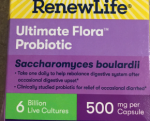
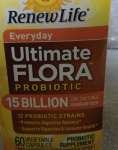
Link from Marje about this:
https://www.foodfurlife.com/my-cat-has-diarrhea---what-do-i-do.html#/
In addition to the bland diet of just poached meat and broth, the next, most important – in fact, critical – aspect of addressing your kitty’s diarrhea is giving your kitty one of the most studied probiotics in the world, Saccharomyces boulardii.
The Probiotic – S boulardii
S boulardii, a yeast (in fact, a close cousin to brewer’s yeast with vastly different properties) is a time-tested and proven probiotic strain with many supporting studies including clinical trials indicating its efficacy in the treatment of intestinal infections, the maintenance of inflammatory bowel disease, and the resolution of diarrhea from just about any cause. It is indicated for use with “Travelers Diarrhea,” where e coli, shigella and salmonella account for about 80% of acute diarrhea. (
Zanello 2009). It is safe for use in children – and pets. Research published in the past decade has explored and discovered its direct anti-inflammatory and immuno-modulatory activities as well. Please see
Saccharomyces Boulardii: Scientific Studies in GI Disease.
The many studies of S boulardii indicate it is a
very effective anti-diarrheal, and its use “decreases significantly the duration and frequency of diarrhea.” (
Zanello 2009). It has been used in the
treatment of antibiotic-resistant clostridium difficile infections in cats at U.C. Davis. Clearly the benefits of S boulardii in humans applies equally to cats. This should come as no surprise, as one of the lead researchers in the cat microbiome,
Dr. Jan Suchodolski of Texas A&M, indicates “pet specific” probiotics are unnecessary – in fact, the use of researched strains is important as probiotics confer benefit across mammalian species.
How does it work? Very simply, S boulardii is not digested or metabolized: it is not absorbed in the gut. It does not act systemically. S boulardii acts locally in the lumen of the intestines. During its passage through the intestines, it mimics the physiological effects of the digestive flora, stimulating healthy immune response, reducing inflammation, and promoting restoration and growth of healthy normal gut flora. “During the intestinal transit, S boulardii interacts with resident microflora and intestinal mucosa. Moreover, experimental studies displayed that S boulardii induces a protection against enteric pathogens, modulates the host immune response, decreases inflammation and hydroelectrolytic secretions, inhibits bacterial toxins, and enhances trophic factors such as brush border membrane enzymes and nutrient transporters.” (
Zanello 2009).
Thus S boulardii, unlike bacterial probiotics, does not colonize the gut. With dosages discussed in published studies, S boulardii takes about three days to achieve “steady-state” concentrations. When administration is stopped, the yeast is cleared from the colon in about 36 hours. Thus the use discussed here for “emergency treatment” of diarrhea is designed to literally flush the system with S boulardii, enabling it to get to work faster than with twice-a-day dosing.
“Emergency Stop Diarrhea” S boulardii Administration for Cats with Severe Diarrhea
Probiotics are typically sold in measures of “CFU.” CFU = colony forming units. S boulardii is the exception, it is often sold in mg. Note that 250mg of S boulardii is the same dose as 5 billion CFU.
Traditional dosing for therapeutic treatment of diarrhea
in adult cats as provided by U.C. Davis is one-half of a 250mg capsule (5 billion CFU) given twice daily. Treatment for kittens is half of the adult dose. It can be given with food; it does not have to be. This is usually sufficient for loose stools of normal frequency. For the “emergency stop diarrhea” approach, we find more frequent dosing of smaller amounts of the probiotic, providing a higher total CFU the first day or two, resolves diarrhea much more quickly.
For adult cats (defined here as 9 months of age and older):
Give one-quarter of the 250mg / 5 billion CFU capsule every two hours or so. Many cats accept it when mixed into finely ground poached chicken breast / turkey breast / pork loin or meat-only baby food. (Beech Nut, Goya, and Gerber list “meat” and broth or gravy as ingredients. These are fine, they are referring to the water used to cook the meat, and they contain no spices). If your cat does not like the taste of the probiotic, you can syringe after mixing with water. If you are not experienced syringing liquids into your cat, you can use empty #3 gel capsules. Simply fill 10 to 20 of these by transferring the S boulardii from the larger capsules into the smaller ones. These are a size easy to pill your cat. Pill your cat with one #3 capsule filled with S boulardii every two hours or so. For pilling instructions, see
How to Pill (Your Cat).
This frequent dosing method usually stops diarrhea within 24 – 48 hours, other than when diarrhea is caused by another disease that requires treatment (low B12, exocrine pancreatic insufficiency, hyperthyroidism, as examples). This “loading dose” can be continued for longer if necessary, up to three to four days – but if you do not see substantial improvement in the diarrhea on day 3, it is best to follow-up with your veterinarian.
It is NOT necessary to use this approach, it can be given at “therapeutic” doses as discussed above twice a day (and doubled if you see improvement in stool but diarrhea or soft cow patty stools have not resolved).
When the diarrhea has substantially resolved with use of the emergency stop treatment protocol, begin use of S. boulardii at the therapeutic dose level (2.5 billion CFU twice daily) and continue for at least one week. If stools soften, resume use of S. boulardii at the therapeutic dose as needed. Given its role in improving performance of bacterial probiotics and its anti-inflammatory properties, the use of S boulardii at maintenance levels (anywhere from 500 million CFU to a total of 2.5 billion CFU daily) can be continued indefinitely along with a bacterial probiotic. It confers many health and GI protective benefits, and we use it along with bacterial strains in all of our cats, all the time.
For kittens under nine months old, follow the same instructions as for adults, just use half the amount.
Please Note: If diarrhea becomes worse with S boulardii administration, stop use immediately. There can be several reasons for this reaction, however. We have seen cats do poorly with a brand of S boulardii that contains lactose, and switching to a brand like Jarrow without it, the product works quite well. This is most common. We have also seen what is most likely bacterial die-off with the S boulardii. Again, stop administration for 24 hours, and reintroduce it (while continuing to feed the bland diet) slowly. Do not follow the "emergency stop diarrhea" instructions. Use it just twice a day, but at 1/4 of the recommended amount the first day, and 1/2 the recommended amount the second day if kitty did not react to the lower dose. If you do not begin to see improvement even with this slower method of introduction, stop the S boulardii, best to see the vet.