Btw, may I ask how can human insulin be applied to cat? I thought human's system is quite different from cats.
The original insulins were harvested from the pancreas of cows (bovine) and pigs (porcine) and they worked OK for humans.
"
Bovine insulin differs chemically from human insulin in three amino acid residues and
porcine insulin in one, but their actions are very similar to those of human insulin."
https://www.sciencedirect.com/topics/neuroscience/bovine-insulin
In the 1980's human insulin was manufactured using bacteria (recombinant DNA technology).
https://www.ncbi.nlm.nih.gov/pubmed/2690608
Bovine insulin is closer to feline insulin than human or porcine insulin and thus in ws thought that the older bovine insulins would be better in cats than either porcine or human insulins.
In the 1980's human insulin was manufactured using bacteria (recombinant DNA technology). One can still get bovine PZI insulin like BCP in Texas.
Regarding Vetsulin:
As a lente insulin, Vetsulin is classified as an intermediate-acting insulin. It is an aqueous suspension of 40 IU/mL of highly purified porcine insulin, consisting of 35% amorphous and 65% crystalline zinc insulin.
Unlike human insulin, porcine insulin has the same amino acid sequence as canine insulin, making it less likely for dogs to develop anti-insulin antibodies.
https://www.merck-animal-health-usa.com/vetsulin/about-vetsulin
Modifiers are added to regular (R) insulin to increase its duration. N insulin
:
HUMULIN N is a suspension of crystals produced from combining human insulin and protamine sulfate under appropriate conditions for crystal formation.
https://www.rxlist.com/humulin-n-drug.htm
ProZinc uses potime zinc, thus the Protamine Zinc
The human recombinant insulin is still used in human R and N insulins and in ProZinc. It was also used in the Human ultralente (U) and lente (L) which were discontinued in the 2000's when the long-duration insulin analogs Lantus and Levemir were available.
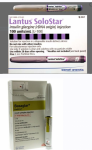
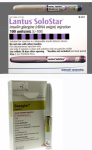
Lantus is human insulin which has been modified
LANTUS is produced by recombinant DNA technology utilizing a nonpathogenic laboratory strain of Escherichia coli (K12) as the production organism. Insulin glargine differs from human insulin in that the amino acid asparagine at position A21 is replaced by glycine and two arginines are added to the C-terminus of the B-chain.
https://www.accessdata.fda.gov/drugsatfda_docs/label/2007/021081s024lbl.pdf