Bouncing / hyper / hypos even with low dose + DKA after discontinuing

Status
Not open for further replies.
Anne, I wish Herr Hu is more easy to take 'an ordinary bg' on and that I could swiftly pop over to Berlin and take his Blood B-ketone level. So we know right direct his inner B-ketone level for sure. I have Abbotts meter for that. In 2008 Abbott Sweden gave it to Simba for free, and the Animal Hospital uses it too. It fluctuates during a day and I allow a 0.0 -0.2 result on it for a non-diabetic, but always does a recheck on a 0.2 to see if it stays there or have gone back down to the 0.0. On diabetics the 0.2 is reason for high alert ER prepardeness, 0.3 the limit and on 0.5 I am heading straight out the door to the ER. That's how the Blood B-ketone works on a diabetic in comparison to a non-diabetic.
I am so grateful of Abbott to give it for free to Simba back then in 2008. 10 years later it still works.

Don't change the post because first I want to medically research those different herbs used in it and the cat food market it is simply sautered with all sorts of things today.
EVO dryfood was a popular brand for diabetics in U.S years ago but was not sold on the EU market so I directly contacted EVO in U.S to ask about it.

Hoping for Hu's recovering.
 
Adding, after reading more posts:

- I started feeding Etosha only around Nov 4. Updated the SS accordingly. Since then, he did not eat it every night but I don’t know the dates as I was going by NFE only.

- A work-around, just to be on the safe side, should not be an issue. If he really doesn’t eat the “old” wet food, I can set a alarm to 4am, serve fresh food, sleep again 1 minute later, fixed.


What is difficult at the moment is —>

-> Keeping track of how much he eats – I usually have ~4 options / mixes ready (all more or less same NFE). To all of these, I add water, and most of the time I’m still adding water while he eats. There are leftovers often… it seems a bit tricky to keep proper track.

-> Switching to 3-4 meals p. day instead of many small portions. I’m not sure if I can make a similar plan for now. He only finishes small portions (if), and I’m still concerned about nutrition / hydration / DKA. I am more and more sure that one main reason of the DKA starting Nov 3 was that he lost weight before and did not eat enough.

Otherwise, would you have suggestions about these 2 points? If it helps to get the BG a bit more under control it might be more important than what I stated.

Linda, ok, noted :-) I didn’t know it can be such a pain. Hu sometimes spits out pieces of this restructured meat, scornful looks, I pick them and when eating from my fingers they're the best part. Cats.
 
Hi Ann, it would be easier if I would have these options, too. Already the decision of giving SubQ vs. waiting and watching is a bit a headache each time - easy to give SubQ (he's not giving me trouble or tries to run away) yet it also means that after we're done, he's quite scared and stressed for the rest of the day. If I only noticed a weak smell and only a minor change of the Ketostix, and no other symptoms, I opted for waiting + watching recently.

During the last DKA, the vets had to ask me to pick him up and continue the treatment at home. First clinic also had to discharge him earlier than planned. We had such a relaxed time the past years, I almost forgot what scared little person he can be :-/
 
Last edited:
Hu was not doing well around 11pm last night and the acetone smell became stronger, I gave SubQ. A Ketostix test around midnight showed a clear change in color, around 3~4. She smell weakened and was gone a while later. He was fine in the morning, Ketostix did not change in color.

This morning a gave a drop shot (instead of waiting) despite the low AMPS, reasons:

- Too concerned that there would be no depot left during the steep rise that would likely happen (and happened) after the greens

- Even more afraid of DKA than of hypo at the moment. At least a hypo has some treatment options, as long as I can check him often during work, compared with DKA (where I can only offer water with food, give SubQ + go to ER when it gets worse, while at ER, they also can not treat him for long)

- Also, there are reminders everywhere to stick with a regular schedule as much as possible, so I'm also not sure how it would work if I postpone shots too often, following the BG's irregular schedule of

I keep on checking charts and SS, but the only outcome to me seems still lowering the dose as fast as reasonable, and while lowering, hoping that there won't be too many continuous high BG periods causing Ketones to rise.

A question -> How about the role of natrium / salty food in DKA?
Asking both in view of prevention and of treatment – he is not drinking enough at the moment, mixing canned tuna with water can be a quick fix, yet the tuna has 0,37 g salt per 100 ml.
Salty food, obviously, is not helpful at all to avoid dehydration. At the same time, I see it even recommended when checking for DKA in humans (what to do when first symptoms occur, some Google results, not studies), I guess the relate to hyponatremia during DKA but understand this is to be fixed with infusions, not with food.
Writing this, I'm already thinking it might not be possible to give a general answer. (I looked at DKA treatment protocols and saw how complex they are, already wondered how they treat it at clinics just based on 1-2 tests p day). But maybe there is a source, or something I missed in the links pasted above?
 
Natrium is called Sodium and Kalium is called Potassium in Medical English.
Both can unfortunately only be known by vet lab blood tests. It is the same problem for humans that no one has yet made a handy little potassium and sodium meter just like our little bg meters.
I myself suffer since 2012 from chronic hypo potassium, with heart failure too, and it is life essential so I have to have potassium tablets every day. It is just as difficult to keep my potassium within it's frame as with diabetic bgs.
I can try explain better another day since it's midnight right now and I have to be away for some hours tomorrow.
 
Hi Ann, sorry for the Denglish – realized just now, too, when filling lab data (still not fixed). I'm sorry to read that, I know Hyponatremia a bit and such things can be ... watching diet and other things in everyday life. Hope you're doing well.

You don't need to explain more, the bottom line for me would be that we cannot check levels -> we should not try to do something about it without knowing levels -> Huche gets his normal diet and NaK via SubQ when needed.

I might have a little good news here that today's peak seems already done, it was short this time, and we might sleep a bit better.

Thanks and have a good night.
 
Ann, have you had Hu's electrolytes checked at the vet's recently? Today's cycle with those lovely dark green was wonderful but he is still bouncing up following those normal BGs. I can't help but wonder if there is something else going on that just hasn't been pinpointed yet.
When did you last give the SubQ fluids in relation to today's day cycle? Giving fluids will usually lower BG.
 
Linda, thanks, good to be more clear about the relation BG <-> fluids. I gave SubQ today in the morning, maybe I should have done during the night already. Been to the vet today (without Hu) to talk about the dental surgery. He also advised to give NaK SubQ 100 ml per day to keep Hu stable (that's vet 3, the one specialized in diabetes, who also did the big check up mid of Oct).

The electrolytes were all within reference range during this check mod of Oct. Also checked during the DKAs and not in range at these times, of course. Another check will be done this week. I will write more, started to feel the lack of sleep a bit the past days, it will be better if I do a clear posting tomorrow.
He was doing fine today, playing pranks to me in the evening. Tired but a bit happy about that.
 
No extreme bounces today. Hu's BG is too high, yet today in yellows most of the time. He was tense again last night (but other than that, no specific symptoms). Today he seemed to feel a bit better, resting most of the day and walking around a bit now. Weak acetone smell and Ketostix traces on/off, as in the last days.
Not planning to increase the dose – if I follow SLGS, we are only in the 11th cycle since decreasing from 0.2 to 0.2 I.U. Just keep on watching and feeding as low carb as possible. If BG is not going down anymore before we sleep, I would give SubQ again (did in the morning already).

It will still take me a while to add all labs to the SS (none of the lab results I have are with the standard abbreviations). Does it make sense maybe if I just put everything that was not within reference ranges first?

For the dental surgery (scheduled Dec 10), I discussed it with vet 3 and he convinced me not to cancel it. Based on checks and my email reports, he still suggests that the most likely cause is the inflammation / Gingivitis / rotten teeth. I follow him with his experience with diabetes. He also mentioned the option of switching to Levemir, but considers the surgery more urgent.
I opted for a dental surgeon (doing both vet and human medicine) who should have the highest number of cases (in Berlin), and it might take long to get a new appointment.

Vet 3 advised about anaesthesia and how to manage a hypo event during surgery – the vets at the surgery place suggested that we do this, and that they would follow. Also discussed what medication Hu should get after the surgery (for this, I would also ask the surgeon for advice).

I will do the blood test one day before - kidney, liver, fructosamine, GLU and electrolytes. Also IGF-1, just in case. So, Monday would also be the last day to postpone the surgery, depending on the results.

(Already had a first talk with the surgeon. He insists that I stay around during surgery, and maybe I can even be in the room. If, I would share the result of their measuring vs. Libre sensor here, of course. I also plan to make a thread to share my experiences later on. I've seen some stories e.g. about skin damage when removing the sensor, maybe I can give some suggestions for such issues.)
 
And another bounce today. I wondered why he suddenly look so dizzy and got a 42 mg/dL.
177 1 hour later, and right now the PMPS was 427. Still gave the 0.1 shot as I don't see anything that I can do about the dose.

I was away for almost 3 hours before the hypo, so he didn't eat during that time. This could be a reason, but it is still crazy. Hope he stays fine until Tuesday.
 
I updated before the posting – is it not displaying correctly maybe? (just tried with a different browser but I see tday's row)
 
Right now it's showing 399. He's relaxed but usually he only starts to get exhausted after 3-4 hrs with a higher BG. I will still give SubQ fluids tonight (advised by the vet to do until the Tue surgery anyway).
 
Got it, I can explain: The sensor gives me a reading whenever I scan, these readings are tracked in the app's protocol.

For the SS, I use the csv file from Libre View, which shows ~4-5 readings per hour (no matter if I scanned or not) – I always use the avg. of these 4~5 readings in the SS (CSV entries are at "random minutes", not like always 9.15am / 10.15am etc.).
 
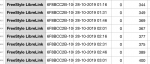
(A screenshot of the *.csv, maybe that's more clear than my description)
 

Attachments

  • Screenshot 2019-12-07 at 00.51.52.png
    Screenshot 2019-12-07 at 00.51.52.png
    71.1 KB · Views: 165
I see. So where are you up to in the cycle now?
I’m just concerned as your readings don’t reflect the 42 you got, which is concerning.
 
Sorry for the confusion – for myself, I'm looking at the visual charts (in these I also see this 42).
For the SS, I usually add a comment for such an event, but I didn't add today's notes yet.

The only idea that I have is that I should keep feeding him more when I note that the curve is going down fast – I always did this during the past days.
The comment about the role of food also for DKA was very helpful for us. While the SS doesn't look good, his overall condition is much better now, compared to the time when I did the first posting.
 
The reason I am concerned with seeing the 42 is that is a number that earns a reduction and it was not in the spreadsheet. But looking at the SS you have lots of pinks and yellows and not many blues or greens.
I don't know your situation but I can see you have DKA in the recent past.
 
2 DKAs (in Sept and Nov), in the past days sometimes weak acetone breath + traces on Ketostix. That's why I'm concerned about lowering the doses.

My vet said that had he had similar (but not that extreme) cases that got suddenly better after to switching to Levemir. Maybe this is also worth a try.
For now, I hope that it gets better a bit after the dental surgery. We don't know how serious the infection in his mouth is, and no one can tell for sure if it is the only reason for the inflammation markers shown in the blood tests.
 
2 DKAs (in Sept and Nov), in the past days sometimes weak acetone breath + traces on Ketostix. That's why I'm concerned about lowering the doses.

My vet said that had he had similar (but not that extreme) cases that got suddenly better after to switching to Levemir. Maybe this is also worth a try.
For now, I hope that it gets better a bit after the dental surgery. We don't know how serious the infection in his mouth is, and no one can tell for sure if it is the only reason for the inflammation markers shown in the blood tests.
Totally understand you not wanting to reduce the dose of insulin....and there is not much further you can go.
Maybe you need to give some higher low carb food ( around 8%) during the drop after onset to keep the numbers up a bit from dropping too low.
Can you add the 42 into the SS so that others can see there was a drop down to 42 please?
I'm going to tag @Wendy&Neko to see what she thinks.
 
Some cats do better with slightly higher carb food, that is still low carb. Bron's suggestion of trying 8-9% food is worth an experiment. I think you want to try to maximize the amount of insulin you can safely give. Upping carbs might be a way to do it.

As an aside, I'm a fan of Levemir too. Your vets sounds like he has some good experience. Another experiment that might be worth trying after the dental is over and settled. I found it takes 7-10 days after an dental, if extractions, for inflammation to settle down. It's possible you may need to raise his dose slightly for a short time if he has many extractions.
 
Ok – I would definitely try Levemir maybe 10 days after the surgery, depending on recovery. The BG is way too high now, it seems impossible to figure a dose that works for him.

I still have some RC Diabetic dry food here. Is it mainly bad because of the carbs, would it be a bad idea to add some to his food when I notice a steep drop?
It would give a good control (I could count exactly how many pieces and if I soak/mix it, he should finish the entire portion – he loved RC and is still picky with other food). If it does make sense, how many pieces during a drop? He's 5,2 kg.

@Bron and Sheba (GA) Might work best for a quick glance if I add a "LO" in addition to the avg. value (and change the cell color back to green) – what's the value to pick, maybe everything equal or lower than 45?

Thanks so much. He's doing fine today. Sensor expired today, fixing the new one now, so there will be a gap in the SS.
 
[QUOTE="Annhu, post: 2489185, member: 28771"
I still have some RC Diabetic dry food here. Is it mainly bad because of the carbs, would it be a bad idea to add some to his food when I notice a steep drop?
It would give a good control (I could count exactly how many pieces and if I soak/mix it, he should finish the entire portion – he loved RC and is still picky with other food). If it does make sense, how many pieces during a drop? He's 5,2 kg.

@Bron and Sheba (GA) Might work best for a quick glance if I add a "LO" in addition to the avg. value (and change the cell color back to green) – what's the value to pick, maybe everything equal or lower than 45?
[/QUOTE]
It is better to use high carb wet food if he will eat it as it stays in the system for a shorter time than the dry.

With the SS BG values, if you get a reading under 50, it should be written into the SS. Write the actual number not LO unless that is what the meter says. Otherwise we have no idea that the BG has dropped below50 if it is not documented on the actual SS.
Does that make sense?

I swapped to levemir too from Lantus and liked it better. I found it had longer duration.
 
LO means below 20 on many meters. Unless you actually saw LO, I wouldn’t put it in the spreadsheet or you will cause alarm.
 
Ok, I will get more sorts of ~8% wet food then.

Updated the SS, added lowest reading per hour to the avg. number. Highlighted, hope it's easy to recognize. He was below 50 almost in each
green phase.

He is doing ok today.
 
Hi have been watching your posts and was wondering about the Libre you are using. We have had that on our DM cat a few times also. Our cat is being seen by an internal medicine vet here and they put it on and take it off and we just get the monitor and are told to check him frequently throughout the day so they can see what he is doing. I read that your meter was taking readings every 15 mins in addition to what you monitored. Is that something that you have to turn on in the app or especially set it to do? The vet has us bring the reader in after 7 days and downloads it to make recommendations from and then she sends us charts that Libre prints out like you have posted. Was just wondering if there was a way we could do that from home here.
Also do you put anything over the Libre to keep Hu from pulling it off? The have been putting Buddies on his neck with a soft material collar that goes around it as that seems to be the only place where it stays on. They have put it on both of his sides with a stretchy cover thing on his body to protect it. He will run or play and the Libre will get knocked loose. Unfortunately his neck tends to break out from it and then he gets sore spots on it. Just wondering if you had any better ideas or what you were using.
Hope Hu is doing well and had his dental surgery and all is well.
 
Hi Sharon,

The surgery is done and Hu is doing ok, thanks for asking.

I didn't have time yet to read through your posts, not sure if I fully understand what your vet advises you to do – are they using a meter maybe?

We are only using sensor + iPhone with LibreLink app. You actually don't need a meter or any additional device.
The sensor automatically takes readings every ~15 minutes, you don't need to do any settings. The sensor can store these readings for 8 hours max. – means you should do a scan with your phone at least every 8 hours otherwise 8 hours of data will be lost.
You can take a reading / scan at any time to check the BG – holding the phone close to the sensor, BG will show in the app – yet this doesn't affect the automatic readings.

You can check out the FAQ -> https://www.freestylelibre.co.uk/libre/help/faqs.html – it's explaining well and in brief how sensor and app work.

The phone app gives you daily visual charts / diagrams (with a few additional options).
Libre View https://www2.libreview.com/ gives you additional data such as csv files with BG values. (The interface is a bit confusing, still indicating that you need to connect devices or USB sticks – you won't need that. If you're using sensor and phone / app, you log in and you have all your data.)

Your vet can get your data through Libre View if they're using it, too, once you grant access from your account. You can also export data or screenshots to share with them.
The app also has a share function. I'm using it to email the day diagrams to my vet as we both prefer looking at the curves.

It's a bit late now so I will get back tomorrow about the second part. We learned a lot and it's working well now. I'm changing the sensors at home. It is very important to avoid skin irritation, it can cause wrong readings. I will try to take some photos, too, to show where we placed it.
 
Here is part 2, based on my experiences – it took a while to figure out how to protect the sensor, but now it's working well. I think most sensors will last for the full 14 days now.

What I'm using now is a short, 1/2 bodysuit that I cut from a leggings. It's not very tight, he can stretch and he can sleep in any position. It covers as little of his body as possible, but always covers the sensor area. If I would start from scratch, I would test this before applying the sensor. Your cat should not feel too stressed (after getting used to it a bit), and it will be annoying and also expensive if you need to replace the sensor often. I also have at least 1 spare sensor here so I need to worry less.

What we tried before, when the first sensor was fixed:
- A patch (fixed with special spray) – I don't recommend this at all. He tried to scratch it off, it caused skin irritations, they also had to shave a much bigger area than necessary.
- A tight post-surgery bodysuit. I replaced it with the DYI bodysuit after one day. I don't think any cat would feel very comfortable with these full-body suits for a longer period of time.
- Tubular bandage – easy to cut but also fraying out, dangerous because cats may chew on the small strings. I guess the same applies if you would use tights.

In addition to the 1/2 bodysuit I'm using tissue adhesive. I apply 3-4 drops to the sensor just before putting it on (not too near to the middle of the sensor where the needle is, of course). If I notice that the sensor gets a bit loose, I add 1-2 drops with a small applicator and push it back to sit tight on the skin. You may have to test a few different adhesive to see which one works best.
Keep in mind that it is not the patch, but only the needle in the center that reads the BG. As long as it's just the outer part of the sensor that gets a bit loose, you can fix it.

Hu's sensor is on the side, behind the shoulder blade. Maybe easier to reach / scratch compared with the neck, but it was the vet's decision in the first place and from what I learned meanwhile, I would avoid placing it over bones (-> sensor moves a bit and might get loose quicker) and also on the fat around the neck – there are findings that for humans, readings are less accurate when the sensor is fixed at the belly instead of the arms or legs.

Reads long but it's really easy now. I'm changing the sensors at home. Was scared a bit when I did it the first time, in the videos it looks like you have to use a quite some force to press the sensor against the skin, but in fact it's just a gentle push. Hu gets :-o because of the click sound for a second, I make sure he holds still for a few more seconds until the glue is dry – done. It doesn't seem as if he feels any pain, the needle is pretty soft and thin (Libre 2 sensor). I've read that sometimes the sensor is still stuck a bit in the applicator, so I always keep a small nail file ready that I could put between applicator and sensor to release it.

What is important is that you take some time to remove the old sensor. I am not using acetone, but Dexpanthenol foam spray or cream, let it soak, and remove it bit by bit. It takes about an hour but this way, it's not damaging the skin. I wait another hour to see if there is skin irritation, and then decide where exactly to place the new sensor.

Hu also had small sore spots in the beginning because he was licking the shaved skin. I used Tyrosur and Dexpanthenol, the healing was fast. Hope it helps and happy to answer questions about how we are handling it. I would be curious to read about the accuracy Libre 2 readings cross-checked with blood testing. The few (now around 6 only, not recommended) that we did so far were accurate, and the vet says it it accurate for his other patients – but I think it's less than 10 cats right now in total.
 
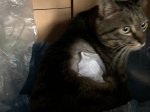
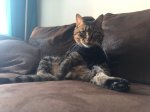
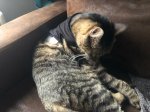
Adding photos – sensor, bodysuit front view :-) and a photo still with the patch – again, I would not cover it with a patch again, but this photo might give a better idea where we fixed the sensor.
 

Attachments

  • IMG_4919.jpg
    IMG_4919.jpg
    242.5 KB · Views: 170
  • IMG_5008.jpg
    IMG_5008.jpg
    66 KB · Views: 179
  • IMG_5163.jpg
    IMG_5163.jpg
    239.5 KB · Views: 165
Thank you so much for all the great detailed information you gave me along with the pictures. Glad to hear Hu’s surgery was successful and he’s recovering well.
I am going to give our vet a call on Monday to ask them about using the app on the
Libra 2. So far our vet has been putting on the sensor. Then they have given us a meter and just told us monitor it frequently and keep a long of the times and levels. They have us bring it back at 7 days and download all the readings and print off the same paperwork you showed with yours. It would seem to me that having the sensor take readings every 15 mins would give you much more accurate readings esp at nighttime when we tend to do it less. At 14 days they have us bring Buddie and the meter back. Download the final reading and remove the sensor.
They have put the sensor on exactly where Hu had it my times in the past and the longest it has lasted there is 4 days. Not sure if they are using any other glue on it or not. Only place it has stayed on well is his neck. They also put a small padded collar over it for protection. He doesn’t seem to mind it there but after about a week starts scratching around where the collar rubs and then gets sores from the scratching. I’ve been trying to keep some Bactria ointment on the area this time and it seems to be a little better.
After the Libre is removed this time I am going to try just checking his BG with a meter before each meal and see how that goes. I tell you nothing is ever easy with a cat. Buddie does really well with most of this but their bodies are just different than ours. If we are going to stick with the libre then I want to get the system so I can set it up at home and save a little bit of money and the stress of Buddy going to the vet. He used to be a cat that the vets could do anything to and he cared less. Over the last few years of him being diabetic he has decided he hates vets and has become the cat from hell with them. Poor guy I can see why.
Hope you have continued success with Hu and get him into a good even routine or better yet remission. Thanks again for all your info it has been very helpful.
 
Happy if it helps a bit – I’m sure you knew some of it but maybe there will be more people looking for Libre info later.

Is he still wearing the sensor at the moment? Did you try to download the app? It’s called LibreLink in the App store. Download, registration, app asking you to scan the sensor, and that’s it. It should work both for Libre and Libre 2, with a Libre 2, it takes only 1 hour to get the first readings. It should not matter that the sensor already connected with a meter.

To be honest, the workflow that your vet suggests reads a bit strange to me. Even with a meter, owners would be able to access the data. Your cat is not doing well and it would be helpful to have continuous readings. And he's afraid of vets (same as mine) while visits at the vet just to take Libre readings are not needed at all. Hum.

If he does not only scratch the area around the sensor, maybe it's really just the collar and worth a try to replace it with something else? I checked a few collars before and they were all very thick (you also write "padded"). What worked best for us was this very light fabric – it's a Uniqlo Airism leggings, to be precise :-)
 
In addition to the 1/2 bodysuit I'm using tissue adhesive. I apply 3-4 drops to the sensor just before putting it on (not too near to the middle of the sensor where the needle is, of course).
Also do not place any tissue glue to close to the outside of the sensor. If you do then you can partially glue the sensor to the inside of removable applicator. Thus, when you try to pull off the applicator you can start pulling away the sensor from the skin.
 
His sensor was scheduled to be removed this coming Friday. So after your post I downloaded the app for my phone. I tried to scan the sensor and got nothing. I did not completely remove the protective collar so not sure if it made a difference or not. It doesn’t with the hand monitor. I was going to take the collar off today and try with just the sensor. I had manually monitored him all morning and the sensor was working just fine and he was not acting like there was any problem with it bothering him. When we came back early this afternoon he was laying sleeping on the footstool, collar still on but I see his sensor laying on the floor next to the footstool! So not sure if he scratched it loose or it just fell off somehow but it is now gone. I noticed when I looked at the spot that there was hair where the middle of the sensor would have been. So I don’t know if it didn’t stick because of that or maybe the hair growing out starts making it itch but I figure there should be no hair under it at all.
With the current monitor that we have I can look at his daily log info but we get the charts from the vet when they download everything onto the computer.
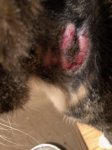
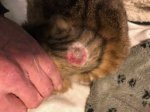
I am going to try and attach a picture her so you can see what the skin looks like under the meter. It was slightly red where he had scratched around the outer edge of the collar but when I first took the collar off it was just light pink where the actual sensor had been. Buddie decided to start scratching it after the collar was off and got it all red like this and bleeding. There was a little glue still on his skin outside the knees hair line and I got that all off for him and put some meds on him and he has left it alone since.
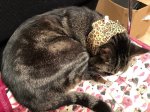
So we will see what his vet has to say about everything tomorrow when I call them. Think I am going to try and start using a human meter and checking his BG by pricking his ear before meals. This whole Libre thing has been handy while it works but is becoming expensive and I worry about it bothering his skin so much plus he’s just not real happy with it all. Will see what the team consensus is. I’m attaching a picture of him with his collar and one of his latest sensor site. Appreciate all your help. I understand the whole Libre system a lot better now.D72C5890-5DDC-44F8-BA03-F8A2050E8DDB.jpeg049519B2-ABAA-4D77-90F7-F66A5A3B8492.jpeg
 

Attachments

  • D72C5890-5DDC-44F8-BA03-F8A2050E8DDB.jpeg
    D72C5890-5DDC-44F8-BA03-F8A2050E8DDB.jpeg
    39.1 KB · Views: 130
  • 049519B2-ABAA-4D77-90F7-F66A5A3B8492.jpeg
    049519B2-ABAA-4D77-90F7-F66A5A3B8492.jpeg
    152 KB · Views: 126
I understand a bit better now, so you get readings yourself... I'm just not familiar with the meter at all.

It looks pretty bad on the pictures, obviously there shouldn't be another sense placed there or even near it (already because the readings would not be reliable at all). Hope it will be healing fast. Maybe you can also ask the vet what glue they used, and how they used it (and share it here?) if you have time. I would also not use the sensor again if I would't know what exactly happened and how to avoid it next time.

With Hu, I observed that he doesn't mind the sensor much, but any patch or thicker bodysuit etc. that we tried before. Also learned that it's not a good a idea to let him enjoy an hour without this small bodysuit when I take off / change the sensor. Did once, he was checking and licking the area and got small sores in no time – really less than a minute – luckily it wasn't at the exact area of the sensor.
The fur was not always clean-shaven (sometimes shaving ~2 weeks ago), but that didn't seem to matter. I'm not a Libre expert but I don't think the hair caused issues; it should be more important that the needle is placed in/under the skin properly?

Not interesting for you right now, but adding: the app tracks errors in the Help menu (sth. named "Event Protocol" – EN wording might be different) with proper error codes, it can be helpful to google these codes to find out details.
 
I will let you know what they say about the glue when I talk to them next time. Buddies neck is healing up pretty fast. I put some Bactria ointment on it to keep it soft and he no longer itches it so it’s healing well.
 
Hu had his first Levemir shot tonight. He was in high 300s at the shot time and doing fine. Just now I checked him and he looked pretty dizzy. Did a scan and he had a really steep drop.
We are still at a 0.1 I.U. dose.

Not an emergency, he's doing ok and not near a hypo at all (while I'm a bit concerned about how high the BG will rise after this, of course), just a straight-forward question:

Does someone remembers a similar case – a cat that shows such reactions even on very low doses? I never have enough time to do enough reading, but I saw a few threads and sheets during the past weeks and nothing was reading similar yet. Any thread a bit related might be helpful for me to get an idea what's going on. Sorry for our great timing when it comes to holiday schedules :facepalm: Pasting the numbers (will update the SS tomorrow) ->

10:01 --- 345
10:16 --- 332
10:32 --- 300
10:47 --- 248
11:02 --- 177
11:17 --- 136
(shot was 8:30, 0.1 I.U.)
 
Quick update – I had started to feed NFE 11 wet food and later also some Etosha dry food (with berries = some sugar) before posting. He was eating all the time, but 2 hours later we were at a BG of 67. I'm still reading but I cannot find anything like this. I'm still new to the topic after ~3 months, but it seems really a bit unusual to me.

It's not so difficult to control it right now (going up fast after each small meal, before it's going down again), but now I am really concerned about the bounce this time.
 
My first thought would be that it’s the Levemir if that is something you just switched him to. I have heard that they can have different reactions from different types of insulin. Not sure but you may need to readjust the dosage when they go to a new insulin.
Also I would take him completely off of the dry food. I have not found any dry food that is low enough in carbs to allow us to control the insulin. The only way we got any control over Buddies was to take him off dry food completely. We do not even give him hard treats. We take fresh cooked turkey or chicken and cut up a small piece of that for a treat for him. I also do not know what NFE11 wet food consists of but is it a pate? Any of the foods that are chunks or flakes have gravy on them and gravy is nothing but carbs making BGs go higher. We had switched to Fancy Feast one time and of course I got our guys the stuff with gravy because it was the favorite and Buddies BGs went sky high again.
Buddie had been on 1unit consistently for about 2 yrs with no problems and then had a couple days where he had extreme drops in BG down into in 2 digits. Once he was 35 by the time we got him to the emergency vet and that was after Karo, honey and food. His dosage was changed to .5 units and on that he also had 2 times he went down into the 80s. The vet explained that sometimes the cats pancreas can start trying to make insulin again and it could be a sign of possible remission. Also she explained that once they have an incident like that it takes 3-4 feeding and insulin cycles before they return back to normal so we shouldn’t make any sudden changes in response to it.
I probably haven’t helped or told you anything you don’t already know but figured I’d share anyways. Hope it settles and gets under control. It’s frustrating to see them not feeling great and not have any recourse. When we took Buddies info in for his Libre sensor I asked them why they weren’t using the app and having it read every 15 mins. The vet tech said they had just recently learned that feature was available and they were learning how to set it up and do it that way. So he said hopefully the next time we bring Buddie in they will have that available!
 
Of course it is helpful. I also found a few threads (but not many) like the one about Ballonee that helped a bit. 35 is scary, though.
I think the same, the initial dose was simply too high. I've seen a recommendation about reducing ~30% when switching from Lantus to Levemir, discussed with the vet but followed him – sticking with the same dose, as the BG was high recently. Obviously for Hu, it still made quite some change. I reduced the dose for the morning shot and will continue with this reduced dose.

NFE relates to carbs, it's explained in the 4th posting here: http://www.felinediabetes.com/FDMB/threads/calculating-food-carb.27876
I know it still depends on whether ingredients are listed accurately or not, so I'm not buying anything with grains, sugar, etc. Mixing a lot with (cooked) meat. Recently I was trying to feed along the curve, very low NFE during high BG, higher NFE when BG is lower. He's a picky little monster at the moment so it would be impossible to stick with 3, 4 or 5 choices only.

This dry food has only 4% carbs and yesterday I thought it's ok as a snack during this very steep drop, but maybe even then a stupid idea when these carbs are staying longer in his body and I don't know how long.

Maybe one good thing about these drops is that it is so easy to make him eat – from my gut feeling, in view of his DKAs and ketones. He was eating ok recently but still not enough to get back at his normal weight. Knowing that he ate a lot also makes it easier to give less food during reds. I hope his schedule will be more regular with Levemir, so we can start to figure a better food plan.

It was good to have the sensor today to observe the BG during drop and feeding to balance the drop. Looking at the numbers, I should have waited more and feed him less today, I was too worried when it started to drop about 150 in less than half an hour (the SS doesn't reflect these details). Still so scared of bounces and DKA.

Just hope that the sensor doesn't switch off again with these steep bounces, but that relates more to money :-)

I hope your vet will have everything ready next time! Let me know if there is anything I can help to check. Btw – I tried a new way of placing the latest sensor and it seems to work better than what we did before. Happy to share a photo and to describe when you want to try a sensor again.
 
I’m attaching a picture of him with his collar and one of his latest sensor site.
Here is photo of Badger's sensor sight after he scratch it off.
Skin aftern sensor removed.jpg

He scratched it off after I took off the cloth collar I had over it since I got the full 14 days o and went to get some soap to try to get the sensor off. I did use tissue clue to help hold on the sensor. From your photo it looks like the shaving was not done close enough. I used a #50 clipper blade, the closest clipper blade made. had no problem reading the sensor through the cloth collar using my iPhone X
 

Attachments

  • Skin aftern sensor removed.jpg
    Skin aftern sensor removed.jpg
    43 KB · Views: 256
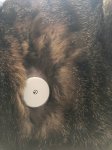
Maybe useful if the sensor is placed on the side, not on the neck:
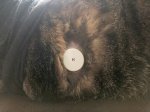
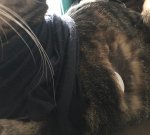
It looks like a part of the sensor is on the fur, but it's not – only placed it as close as possible "toward his head" on the shaved area this time, so this side of the sensor is now covered by fur.

This seems to work well for us:
- Sensor doesn't get loose easily -> less glue needed, less damage if he would scratch it off (Hu still wears his bodysuit, but sometimes licked over the fabric before. Also, the bodysuit got out of place a few times for a while until I noticed it).

- Did not see him checking the area or or doing anything about the sensor, not even once. I don't think that's not only because I shaved less – maybe also because he notices it less since it's "covered".


I don't think I qualify to add comments about shaving, I don't own a clipper so I'm using a Venus razor, ehem.
 

Attachments

  • IMG_5250.jpg
    IMG_5250.jpg
    147.5 KB · Views: 186
  • IMG_5255.jpg
    IMG_5255.jpg
    137 KB · Views: 183
  • IMG_5257.jpg
    IMG_5257.jpg
    135.2 KB · Views: 149
Last edited:
Status
Not open for further replies.
Back
Top