Bouncing / hyper / hypos even with low dose + DKA after discontinuing

Status
Not open for further replies.

ChUs

Member Since 2019
Hello,

asking for help since we were not even getting close to glycemic control. In short, diagnosed with diabetes in September, even after changing to Lantus with minimal dose, the curves are irregular with steep rises and bounces (rebounds? – sorry, I am still not sure which terms actually apply), or with curves "ignoring" injections.
Completely withdrawing Insulin resulted in another DKA and he almost died from it.

We're living in Germany, the first weeks were a mess and it took me way too long to realize how bad it was, to find better resources including this forum, to find a vet willing to try the Libre sensor ... Trying to summarize, sorry that it's still such a long read. Happy to elaborate iff something seems missing or unclear.

//// Current situation:
Monitored with Freestyle Libre 2. I’m doing home office so I'm able to be around most of the time. Control is very poor. Still reporting to and doing phone calls with vet (3), but he seems also not able to make new suggestions.
Overall, we are trying to get him in a steady state for dental surgery at vet 4, scheduled for Dec 10.
Diet has been changed to wet food (NFE 3-8) whenever he's asking for food, dry food (NFE 4) available at night.

//// Previous history
- Spayed male cat, born 2008, 5,2 kg (not overweight)
- Previous health issues: Inflamed and partly bleeding gum (no calculus) diagnosed + treated in 2016/2017/2018 during visits at vet for vaccinations. Cystitis in Dec 2018, treated quickly, FRU was at 290 (increased but still in ref range). Otherwise, always seemed like a very healthy happy cat. No major signs of ageing, still playing a lot and enjoys going mad :)
- Previous diet: RC Indoor (dry) until 2018, changed to RC Urinary (dry + wet) in Dec 2018
- Important in this context: very attached and in general best cat in the world, but very shy with other people, easily scared. Vet visits work but can also go wrong, depending on how he's being handled by vet and assistants. Being left alone at a clinic scares him a lot.


/ / / / Recent history

Sep 16 (morning) Visit to vet 1 after observing diabetes symptoms – polydipsia, polyuria, lethargy – when I returned from a 1 week trip. Vet 1 only tested a urine sample I brought, GLU ~300-400, no ketones. Diagnosed diabetes and gingivitis. Administered LZP, Hexadreson glucocorticoid (! without asking or telling) and Interferon.

Sep 16 (late night) Lethargy impaired, noticed acetone smell, immediately went to night clinic / vet 2. FRUCT 554, Ketone ~5. Blood picture, DKA treated, discharged Sep 18 (aggressive behaviour and refused to eat). Vet 2 prescribed Prozinc 1,5 - 1,5 I.U.

Sep 18 - Oct 10 Vet 1 "treatment" via urine sticks home monitoring and phone calls. Dose increased, Prozinc 2,2 - 2,2 I.U. from Sep 26, 3 - 3 I.U from Oct 3. Condition improved a bit but worsened again around Sep 30. Observed hypoglycaemia symptoms, but wasn't able to collect urine during these phases. Vet 1 questioned hypoglycaemia, suggested to escalate dose etc. while I was already looking for another vet which took quite a bit.

Oct 10-17 Follow-up at vet 3: anamnesis, sensor, ultrasonography, bladder puncture, urinalysis, blood picture.
Oct 21 decreased dose to 2,7 - 2,7 I.U.
Oct 21 decreased dose to 1 - 1 I.U.
Oct 30 changed from Prozinc to Lantus 0,5 - 0,5 I.U.
Nov 2 (evening) Stopped injections
Nov 3 DKA symptoms, treated at vet
Nov 4 DKA symptoms, treated at vet
Nov 5 DKA symptoms, treated at vet but they had to discharge (too stressed, scratching catheter off)
Nov 6-11 DKA treated at home with subcutaneous NaK infusions, Ketosticks at 16 mg colour range (!) for 2 days, very bad condition, improving a bit around Nov 8
Nov 12 Decided to restart Lantus, 1 touch - 1 touch since Ketostix were still at 4~6 m
Nov 12-17 Lantus 1 touch - 1 touch, condition improved
Nov 18-21 Lantus 0,1 - 0,1 I.U.
Nov 21-23 Lantus 0,2 - 0,2 I.U.

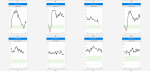
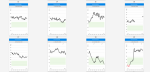
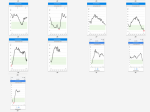
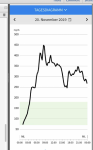
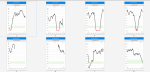
Attaching charts from Freestyle app. Gaps are due to changing sensor. Hypo phases are often asymptomatic or with mild symptoms only, always able to feed him. I could also share the complete blood pictures from Sep 18 and Oct 17 if that's not too much. IGF1 has not been tested yet. I need to avoid vet visits as much as reasonable. He was handled very badly on Nov 3 (same place but different doc) and is now extremely scared. Even hiding each time he notices I'm getting ready to go out.

I would appreciate opinions and advice so much, also links to related threads (found a few but nothing very similar yet). (Search) terms to find more accurate info would be also be very helpful.
Should I try another withdraw, risking another DKA? Trying withdraw and re-starting 0,1 I.U. immediately if I see ketones?
Also started to look at options like -Link- – but there is not much evidence and it might be difficult with the small dose.

Bottom line – really at a loss at the moment. Close monitoring and me being flexible in time should be a good set-up but no idea what to do and nothing really improves.
At the same time, if anyone want to know more about my experience with Libre monitoring, I am very happy to share (I'm not affiliated, of course) anytime.

Thanks so much,
Anne
 

Attachments
  • 1018-28.png
    1018-28.png
    132.1 KB · Views: 228
  • 1029-1105.png
    1029-1105.png
    121.1 KB · Views: 212
  • 1106-13.png
    1106-13.png
    124.9 KB · Views: 231
  • 1114-22.png
    1114-22.png
    186.3 KB · Views: 199
  • 1120 single chart.png
    1120 single chart.png
    85.9 KB · Views: 216
Last edited:
Welcome, Anne.

The board is a little quiet at the moment. Someone with more experience will reply before too long.

I cannot see your charts easily because the images are too small. (Unfortunately, I'm on my work computer and cannot try downloading.) It looks to me like he is bouncing, but he should not be bouncing on such a low dose.

I'm included a photo of what a 0.1 unit dose looks like just to make double sure that that is the dose you are giving.
0.1 units 100-U dose jpeg.jpg


The formula for DKA = not enough insulin + not enough food + an infection/inflammation/something else going on. More information can be found here:
A blood ketone meter is an easier way of checking for ketones than the urine strips. It uses a small drop of blood. Note: if I remember correctly, the glucose readings on a ketone meter are not valid in cats.

Tagging a few people for you:
@Kate & Toby
@MrWorfMen's Mom
@Marje and Gracie
@Bron and Sheba (GA)
 
Thanks a lot for replying and for tagging.

To confirm – yes, I refer to the pictorial guide in the "Insulin Care & Syringe..." / Lantus board. What I called a touch (and what still caused bouncing) equals to "some insuline" in this guide.

The formula for DKA = not enough insulin + not enough food + an infection/inflammation/something else going on. More information can be found here:
A blood ketone meter is an easier way of checking for ketones than the urine strips. It uses a small drop of blood. Note: if I remember correctly, the glucose readings on a ketone meter are not valid in cats.


This is already very helpful and was not pointed out by the vet. He ate very little and lost weight just before this second DKA. He was treated with Amoxicillin _during_ DKA, vomitting and eating even less so I withdrew quickly. (I asked the vet if there's anything that can be done about the gingivitis that's not posing additional risks, so he suggested this antibiotic).
Was focused a lot on treatment when reading about DKA, will do more reading now with focus on development of DKA.

Taking blood samples is a big issue. While injections and infusions are ok, pinching ears seems at the tipping point. Tried before, and tried my best, after a lot of reading / preparation / calming, but he was freaking out and it left him very exhausted for the rest of the day. (Always had cats and fostered a few cats, but never one was as scared as him. Hiding in a corner of the flat for almost 2 weeks as a kitten. It took a lot of time to gain his trust. We're very close but he's already afraid of me sometimes now, it's a bit heartbreaking to see in addition to curves affected by stress).
Maybe someone is able to advice if really unavoidable, or if frequent measuring with Ketosticks is an acceptable option.

Saw the Spreadsheet sticky note only after posting and did not fully figure spreadsheet yet (not using a Google account).
If fine, I would wait for instructions – I have all charts in 1 PDF and could try to upload in different formats, share via WeChat, or transfer all records into a spreadsheet. Same for the signature, I wouldn't be sure how to fill in the current mess :-/
 
I have work today and won’t be able to give a detailed response until much later. But I advise Anne to start a private conversation with @Marje and Gracie to get your spreadsheet sorted. The best we can help is to know the numbers. The photos you gave give a good general idea but numbers are more helpful.
 
Hi Crista, thanks – will get an account and start working on the spreadsheet. If there is anything I cannot figure out, I will PM Marje and Gracie, as suggested. Should have it ready by tomorrow.
 
Hi Anna,
First of all a huge welcome. You have found the right place for help and support so please stick around and let us help you.

I know it seems very overwhelming right now, but from what you have already told us you are doing an amazing job.

From a house keeping perspective please do your signature and spreadsheet asap. It will help us help you.

Starting with the DKA, it's a **** card to be dealt, but I detect ketones every now and again and I deal with it at home now. Unfortunately once you kittie has had them, they have a habit of rocking up consistently. I cannot emphasize enough about testing, if blood is difficult then the ketostix are great, I test Toby daily, they are a few euros (€5) from a pharmacy or amazon. The best way to avoid is keep feeding, little and often, and keep fluids up, toby loves cold fridge water and fresh chicken or fish, he is a diva but it's so important to keep food and fluids going in I just roll with it. The other important factor is insulin. Without a spreadsheet 8 cant see what your dosing is like. But whatever you do, try not to skip a dose, consistently giving insulin with help keep ketones away.

And please dont pit yourself under too much pressure, my goal is now a much more realist approach of being ketone free, less symptoms (excessive drinking, urination and eating) and having OK numbers. I used to aspire to a perfect spreadsheet of green (normal) numbers. But I have come to realise that this is an unobtainable dream and that a happy boy, displaying normal behaviour and not having ketones is a big success.

Keep us posted and please stay, the wonderful people on this forum have helped me keep my furry soul mate alive and well and thriving xx
 
Hello and welcome to FDMB. That's quite the journey you've been on with your kitty and I can only imagine how overwhelmed you must be feeling.

I can't see the graphs very well either but have seen the Libre graphs before so it is very clear that your cat is having very steep ups and downs and frequently going below what is considered normal low BG for a cat. With the blurry nature of the graphs, it's difficult to put the picture together in a meaningful fashion (dates, times are not readable) so if you could plot the readings from the Libre into our spreadsheet it would help immensely. The spreadsheet is very easy to use and the automatic colour coding gives a very clear picture of what's going on.

Marje was away for a few days and I'm not sure if she is back yet. I can set up the spreadsheet for you if you need help.

I checked out the link you provided to the "individual" approach and I think that was a very risky experiment that I wouldn't recommend even if home testing were easily accomplished. You've indicated home testing continues to be a struggle and that "method" would be even more dangerous under those circumstances.

The other thing we should get done is a signature so we have the pertinent info for your kitty quickly at hand. To set up the signature, hover your mouse over your user name in the upper right corner of the screen. A menu drops down. Click on Signature in the left column. This opens a text box where you can add basic information. There is limited space so your kitty's name, date of diagnosis, type of insulin (include both), type of glucometer and any other health concerns (history of DKA) is all you need to include. A link to your spreadsheet will also need to fit in the signature.

One thing that I am questioning is diet. Is your cat still on the RC Urinary wet and dry foods? If so, they are both very high in carbs and that may be playing a role in the regulation problems you are seeing.

Let's get you all set up and have a look at the data on the SS and see what suggestions we can offer.
 
Welcome @Annhu and you kitty,

You have been given some great advice.
Getting your SS up and running will help us a lot.

DEFINITELY DO NOT WITHDRAW THE INSULIN AGAIN. That will result in ketones reforming.

As mentioned by others, ketones and DKA result from not enough food, not enough insulin and an infection or inflammation present. So it is REALLY important that your kitty gets enough food and enough insulin (and fluids) and if there is any infection/inflammation present that it is treated.
You mentioned that you stopped the antibiotics....I am concerned they were stopped.
Were you given an antinausea medication when you were treating the DKA at home?

How is his appetite now?
How often are you feeding?
as @MrWorfMen's Mom mentioned above, the dry food maybe contributing to the problem.
What does he like to eat?

I would change your subject line ( the one at the top of your thread) to include DKA.
We can help you get this sorted out.:)
 
@Annhu

I’m back and can also do your SS if you send me a private message by clicking on “Marje and Gracie” to the left and then “Start a conversation”.

This Post (click on blue bold to the left) will help you get started on some basics and also list what needs to be in your signature line. Just out of curiosity....are you German because there is also an excellent German forum for diabetic cats (the Tight Regulation protocol for Lantus and Levemir were developed there). I’m not trying to chase you off from here but if you are German and are more comfortable posting in German (although your English is outstanding), that is an option as well.

We really need to see a SS to help you with dosing so let me know how I can help. It will take me very little time to do a SS once I hear from you.
 
Thanks so much to all of you, happy to be here and I really appreciate your help so much. This first postings was such a long read but I still skipped some details. Will add add more now, referring to your comments. I'm also adding notes in the spreadsheet so it's easier to have an overview.

@Kate & Toby As for DKA: Started reading to understand better e.g. why it tends to recur, and what I can do regarding diet to prevent another DKA. Diet as a factor is so obvious (even I managed to acetone breath a few times) but this was neither brought up by the vet, nor was it addressed in the readings I did so far. I will also check your threads to read about your experience with DKA.
At the moment, I am using Ketostix (urine analysis) 1 x day, on days with higher curves, more often.

@Bron and Sheba – I agree as DKA is one of my biggest concerns at the moment, and I would need to do much more research before taking such a decision. I would also ask vet 3 for his opinion, too, before trying another withdraw.
Overall it might be something to consider, with great caution, though. Risking another DKA vs. current risks resulting from high GLU and from hypos, and from the steep drops and rises (which must feel very bad, too). It's worth noting that the first DKA was likely caused by Cortison, and the second one in a phase when he was dehydrated. Hopefully I have a better idea about what is going on soon.

The antibiotics were supposed to be mixed into the food, yet after the first vomiting, he refused to eat. He had a very dry mouth during this time and was struggling to even tiny pieces; it was not known and not possible to check if he had a severe infection during this dehydration phase – for this reason, force-feeding a pill in ~4 pieces 2 x day was not an option.

(Not an excuse but a bit an overall explanation: I have been following the vets or cross-checking with them so far. Looking back, maybe too much – I guess this applies to many people who posted. In any way I'm also aware that I should not just do trial and error. Too many things went wrong and starting antibiotics during that phase is just one of many examples)

As for diet: Since mid of October, only wet food (NFE 3-8) during daytime and dry food (NFE 4) during nights. I'm also offering food often now when curves start dropping steeply.
He is still a bit picky and might still be struggling with nausea sometimes (smelling food, shaking paw, walking away) but it always works at the end (adding cooked chicken, canned tuna, fingerfeeding...)
Hydration should not be an issue at the moment - he's using his drinking fountains and he also likes if I add some extra water to wet food.

@MrWorfMen's Mom - I think so, too. Not planning to make such an individual approach experiment, doesn't seem appropriate in our case.


Spreadsheet is set up and it might take a bit to fill in data from FS graphs. (If someone is interested: There is no access to raw data for normal user accounts – might be possible to get raw data in csv or other formats from the Libre web app for professionals but vet 3 is not using it yet. Anyway I did not look into this in detail, maybe I can share findings later on.)

I will give an update note with some comments about injections and sensor when I'm done. A bit afraid that uploading some rollercoaster photos might have the same result at the end :-/ but hopefully someone can figure out more from the data.
@Marje and Gracie, thanks a lot for offering your help, I will get back to you if I have questions. I would also ask you for a quick checked when the sheet is partly filled, if that's fine with you.

Last but not least, thanks for the cheer up! Of course I am concerned, mostly about time running out for remission and the harm caused by this constant and extreme up-and-down. Stress-wise, I think I'm still ok, having flexible work-times really helps with this. So happy that he's a bit better at the moment, purring and biting my hands.

(As the question has been raised a few times: I was living abroad, I'm often using English instead of German when looking for information, especially when it's about medical topics. This forum seemed so helpful, everything is about exchanging information and straight-forward suggestions, I would be happy not to be chased off immediately :-)
Was only reading in German boards yet but a bit discouraged seeing so many 20 pages+ threads with controversies. In addition, 24h monitoring does not change overall treatment but might make a difference sometimes, so it makes sense to me to join a community that's a bit familiar with it.)
 
There is no access to raw data for normal user accounts – might be possible to get raw data in csv or other formats from the Libre web app for professionals

You should definitely be able to access raw data. If you log into the Libreview, go to the glucose history tab and click Download Glucose Data. You should be able to download an excel sheet with both the readings you scan and the readings that are automatically taken every 15 minutes.

Screen Shot 2019-11-24 at 10.58.47 AM.png


Since you're using the phone app, your results should automatically be uploaded.

I agree as DKA is one of my biggest concerns at the moment, and I would need to do much more research before taking such a decision. I would also ask vet 3 for his opinion, too, before trying another withdraw.
When you say "withdraw" do you mean withholding insulin? I strongly echo Bron's words: do not withhold insulin, especially after a DKA event. There are many options other than not giving insulin and with all options, we are happy to help guide you through (for example: giving a half dose, giving insulin later, feeding the curve - which sounds like you know how to do, etc.). If you come across a situation where you are uncomfortable giving insulin, please post here or on the Lantus board and someone will guide you. Unfortunately, not giving insulin after a DKA event puts Hu at risk for another one.

I'm a little confused about your SS however. What is a 0,2 dose? Do you mean 2 units? And what does "T" stand for?
 
Don't lose hope on the remission. My girl had a high dose condition and I never thought I'd get her into remission either. It took us over 3 years but we did it so never give up hope. Remission isn't a guarantee but aiming for it is not a lost cause at any point in time. One member got her kitty into remission after 8 years! I think she may hold the record! :)
 
Crista, thanks – got a nice CSV now, this will save me a lot of time. Never checked in detailed, never noticed the tab, only saw the first page asking me to connect the meter.

Yes, I meant withholding / stopping injections but once more – I just consider it as one of the option to check. Definitely not something to try during the next days. At the moment, I am only looking for opinions and information to understand more, and I'm also trying to clear my mind – I had too much wrong and outdated input during the first weeks. No worries :cat:

Please don't bother to look at the SS yet, it's WIP. I will check it with Marje first, also to confirm how to format doses <1 I.U. or equaling to a 'touch". Will delete it from my signature for now to avoid confusion.
 
Last edited:
Awesome!! Happy to help! It is definitely a confusing website/app in general and I hope FS eventually fixes these issues in the future. And it would be an absolute shame if only the professionals get all the results :joyful:
 
@Marje and Gracie, thanks a lot for offering your help, I will get back to you if I have questions. I would also ask you for a quick checked when the sheet is partly filled, if that's fine with you.
(As the question has been raised a few times: I was living abroad, I'm often using English instead of German when looking for information, especially when it's about medical topics. This forum seemed so helpful, everything is about exchanging information and straight-forward suggestions, I would be happy not to be chased off immediately :)
Was only reading in German boards yet but a bit discouraged seeing so many 20 pages+ threads with controversies. In addition, 24h monitoring does not change overall treatment but might make a difference sometimes, so it makes sense to me to join a community that's a bit familiar with it.)
I’m happy to help any time at all. And, again, we do not want to run you off at all and we are happy you are here. If this is a better forum for you and Hu, that’s all the matters. There’s no reason to use the German board if this is where you are comfortable. I just didn’t know if you were aware of it. We are thrilled you are here and we will absolutely not chase you off!!!
 
Done with work, started reading and wanted to continue spreadsheet, but need advice right now -

Just noticed acetone smell. Except for causing a bit of stress, any reason not to give NaK subfluid immediately?

No changes in food or dose, he seems ok, except for drinking a little more than usual. He was eating properly (more than usual). Was testing urine with Ketostix yesterday and today several times, there’s only a small change in color, definitely under 0,5 mmol. Last test 10 minutes ago.

The smell is very weak and I’m pretty sensitive to it. Don’t want to panic but I guess it’s better to act asap?

Thanks!
 
Last edited:
Adding a quick recap of past days since SS is not done yet:

- Fri 8am (after a steep drop and rise) until midnight around 350-400 mg/dL

- Sat starting with 350-400 mg/dL, at noon a gap in the curve (Freestyle app), was observing a bit since this was new, finally changed sensor in the night

- Sun: chart starting at 500 mg/dL, decreasing to 220 until midnight

- Mon: 2-8am at 120-150 mg/dL, 9am steep rise to 450, going down slowly since noon, around 400-350


Not sure if “details” overall matter right now, the avg. blood sugar was definitely higher than usual since Fri.

Dose is still Lantus 0,2 - 0,2 I.U. always around 8am + 8pm. He got his evening shot already today.
 
I think fluids would be a good idea unless there is anything else contra indicating them (when last given, any heart issues etc.). Keeping Hu well hydrated will help flush the ketones from his system.
 
He's got a nice bubble at his flank now (around 90 ml, if I am reading the scale on the bottle right).
Thanks again. I will keep on checking breath and sticks and would give another smaller one in another 3 hours if there's nothing wrong doing so.

Giving subfluids is fine, just like the injections – doesn't seem to stressful + scratching ears is the greatest thing on earth.
 
Quick update: the smell is a bit stronger, but he seems still fine (sleeping before, now space patrolling and opening cabinets). Luckily the blood sugar was going down (217 right now). It's almost midnight now, I will give subfluids again and check him a few times in the night (he's sleeping next to me).

@Kate & Toby
I'm feeding his normal low carb diet with water added. Do you have additional advice as long as his condition remains like this – not feeding too much, checking natrium, ...? I have read a bit more DKA info but didn't find much about this (what I've seen so far always mostly ends at "to go to a clinic once you notices acetone breath").
 
Maybe I am misunderstanding and Hu's appetite is less than normal but you should feed Hu as much as you can get him to eat. He needs the calories not just fluids. I'd also be careful not to overdo the subQ fluids. While he needs to be well hydrated he also needs a good electrolyte balance which could be disrupted with too much fluid.
 
Hi Ann, I agree with Linda, you need to get him to eat as much as possible, at this stage anything is good, of course low carb is best, but fresh chicken or anything really, it is really important that he eats along with the fluids. I also agree with Linda, don't over do it with the fluids, can you check his wee? How diluted is it? You want him hydrated but not flooded, also if there is any heart issues you need to be careful with fluids, I cant see any from your signature but just something to bear in mind.

How is he today? Ketones?
Ketones in the urine doesn't always mean DKA and a trip to the vet, often they can clear the ketones with fluids and food and DKA doesn't develop, but you need to monitor closely as it can change quickly, keep grabbing every wee sample you can and test for ketones.

Keep us posted.
 
Good news – no acetone smell at all today (it's 8pm now). Not even traces on Ketosticks (tested often). He wasn't feeling well between midnight - 3am, but was much better in in the morning and throughout the day. Had a hypo today but the only symptom was increased appetite.

Feeding worked yesterday and today whenever I offer food – wet food + water + a bit of turkey breast. He's also drinking (normally, from what I observe). Peeing a bit more but the urine smells normal too me (has some smell, when he had serious polyuria, it was like water).

Kate – I got concerned about the acetone breath a lot, even if it was weak (and I hate this smell, he's not my first cat with DKA). Color on Ketostix was only was changing only a little bit yesterday.

Will keep in mind your warning about SubQ fluids – only had vague instructions from the vet. Thanks!


(Sorry I'm writing late – seems as if I'm not receiving all email notifications)
 
Good news – no acetone smell at all today (it's 8pm now). Not even traces on Ketosticks (tested often). He wasn't feeling well between midnight - 3am, but was much better in in the morning and throughout the day. Had a hypo today but the only symptom was increased appetite.

Feeding worked yesterday and today whenever I offer food – wet food + water + a bit of turkey breast. He's also drinking (normally, from what I observe). Peeing a bit more but the urine smells normal too me (has some smell, when he had serious polyuria, it was like water).

Kate – I got concerned about the acetone breath a lot, even if it was weak (and I hate this smell, he's not my first cat with DKA). Color on Ketostix was only was changing only a little bit yesterday.

Will keep in mind your warning about SubQ fluids – only had vague instructions from the vet. Thanks!


(Sorry I'm writing late – seems as if I'm not receiving all email notifications)
Great update. Good work Ann xxx
 
Sounds like things are improving. If the only symptom was appetite, that was likely just lower BG than Hu is used to rather than a hypo event. Did you get a reading off the Libre when it happened?
 
Good work Hu :)

BG was high, steep rise starting around 9am to 400-450, only started to go down around 9pm, after I noticed the smell. BG was higher since Friday.
Working on the SS for a more accurate picture (whenever able to use my hands, what's so great about finger feeding :-/ )

(Which should be ready tomorrow, finally, at least for the past 3 weeks. Comments missing and I guess it makes sense to add the time before the 2nd DKA. Ketostix was fine just now and BG also going down – hope he will be fine tonight.)
 
Last edited:
Sorry, only now I notice that you asked about the hypo event -> during this event, the BG was low, under 50 in the Libre chart. Anyway he seemed ok so I just observed and offered food.
 
Unless there are other physical symptoms other than hunger, we consider it a low BG but not a hypo episode. Non diabetic cats can have normal BGs in the 40s but when giving insulin we don't want them dropping that low so we use 50 as our warning of low BG needing some intervention on our part. While some cats experience physical symptoms of low BG at BGs higher than 50 others don't always manifest any physical symptoms before BG drops critically low so observations are important but BG readings are essential. Feeding Hu was the right thing to do and some higher carb food would be a good idea if he is below 50. It's also important to keep monitoring Hu to make sure that his BG comes up after feeding and doesn't drop again when the food wears off. We recommend getting 2 readings of safe BG without food influence before putting your guard down.
HERE is some info on handling low BGs.
 
Thanks – noted and it's very helpful to know that, so as long as I'm monitoring and he seems alright, I don't have to worry that much during low BG. I wish I could wipe from my mind all this misleading info I saw before, it was such a bad start (but I guess nothing unusual).

He is ok today – "ok" means resting but not very lethargic, with a high BG overall. Noticed acetone smell again in the afternoon but only twice (checked often), I was observing and feeding. Ketostix looked ok, only a very minor change in color, but now the smell is back and a bit stronger, I will give fluids (Na/K) again. Finally done with SS entries, I will write a another posting with a few comments.
 
Filled in the data from Libre and updated the sheet in my signature, too:

https://docs.google.com/spreadsheet...Y9TPxv_TjnbpEG2QxxHEtpLSbK4AiUJ7uA_Xs/pubhtml

I will take another look tomorrow, also still need to add the labs. Please let me know if something looks wrong or confusing, or simply remind me which instruction to read if I missed out something.


A few comments:

- I used a "T" for what I know as "touch" ("some insulin" in the "Insulin Care & Syringe..." pictorial guide) – are you using a specific number for this "some insulin" dose?

- Libre tracks several times in an hour (2-8 entries per hour in the csv file), fields in the SS always show average per hour.

- No data in BG fields => Libre sensor was off and replaced. Nothing entered from the "monitoring" with urine sticks when we were still with vet 1).

- No data in "Ketostix" column => no tracking before Nov 4 / => no proper tracking during the second DKA mid of Nov. – reported to the vet in phone calls but I did not added the data to my file and do not remember clearly, just that it was way too high on each of these days. Testing and taking notes every day now.

- Shots are always in the flanks, not in the neck

- Please have in mind that Libre does not report BG below 40 mg/dL and above 500 mg/dL

- "No appetite" does not mean that he did not eat, just that I have to offer food very often and talk to him a lot

I checked so long for information but could not find any similar "pattern" – most discussions about steep curves seemed related to high doses. I did not even know what keywords to look for after a while. If you have any suggestion / threads I should read / keyword – thanks so much.
 
Last edited:
Thank you for inputting all that data. Very time consuming I'm sure but well worth the effort and helpful.

Hu is going too low on 0.2u of insulin. Looks like his numbers were better on the "T" and the 0.1u dose you were giving without sending him too low. While 40 is safe for a non diabetic cat, you don't want him dropping into the 40s while on insulin so I would drop the dose back to 0.1u and hold it for at least 6 cycles unless you get another reading below 50 if you want to follow Tight Regulation (TR) and Hu is now on an all wet diet. If Hu is still eating any dry food, then you would follow Start Low Go Slow (SLGS) and Hu would earn a dose reduction for readings below 90.

Looks like those higher numbers you are seeing are bounces which is Hu's body's defences going into action to boost up his BG when it perceives his BG dropping quickly, dropping a lot or dropping below levels that his body no longer recognizes as normal. Bounces are normal and can last up to 6 cycles and all you can do is ride them out.
 
I think I should be the one thanking.

Yes, this is what it looked like to us, too – he was overdosed before. I did not lower the dose today, though, and do not dare to do it because at the moment, as long as he has this constant high BG. I am still confused looking at his past weeks, however, now it's holidays so I will do some more reading before I bother with more questions.

Mainly wanted to share that he was doing great today, compared with the past weeks. Playing a lot and making noise, I had to mute my phone during calls all the time :facepalm:. So happy about this! :) If we are a little bit lucky, his condition was also affected simply by stress and weight loss.

Happy Thanksgiving!
 
SO happy to hear Hu is being a noisy playful kitty today. It's so nice to see them acting like the kitty you remember! :joyful:

It's of course up to you whether or when you change the dose of insulin and right now given the history of DKA and occasional traces of ketones or acetone breathe, I can understand your reluctance to lower the dose. You have the Libre to give you updates constantly and alert you to low BG right now. The sensors however do not always stay in place for the full 14 days and then there is a delay before a new sensor can be placed and/or starts producing data. Until you can readily manually test Hu, I would recommend definitely lowering the dose at least temporarily should the sensor stop working or need to be replaced. Hu has come pretty close to the limit of readings on the Libre (40 lowest) and lower than we would recommend, so continuing to give the 0.2u dose without constant monitoring, could at some point, result in Hu's BG dropping to even lower dangerous levels.

I'd work on getting Hu sensitized to the testing process while the sensor is in place so hopefully you won't have to worry about having times when no readings are available and you can monitor him to keep him safe no matter what.
 
Thanks! He is still doing fine now. Today the BG was finally below 300 from ~4pm onwards, so I lowered the 8pm shot to 0.1 I.U.

Comments about sensor and testing –
I hope we are able to avoid longer gaps now. The sensors actually take only 1 hour to start readings and fixing is fast now. (The last gap was because I wanted to see if the sensor will "recover", bad idea, lesson learned. Before, if anyone is interested: The 2 times gaps before were due to skin irritations caused by a patch covering the sensor. It didn't look too serious and affected areas were fine 2 days later, but after removing patch and sensor, I always had to wait a few hours to see where to place the new sensor. Patch was applied by the vet and I saw patches applied in almost all videos, yet I'm not doing it anymore. In our cases, it does nothing to protect the sensor but makes the skin irritated -> itchy -> more likely that cat tries to scratched sensor off).

The app is set to give an alert when BG is below 60. (That's the lowest option in settings menu.)

I do have a kit for manual testing here as a back-up. Still, I would really like to wait until he's in a better state. I'm not afraid of injections etc. - kitty can it, you need this – with any other cat I had or fostered, I wouldn't have tried a sensor instead. But with Mr. Hu, his tipping points and his really strong reactions to stress, I'd really like to wait a bit.


Maybe I need to add about the food: The dry food he gets at night is also low carb with an NFE of only 3,23 (same diet since Oct 11).

Hope that TR will work, fingers crossed! I keep on looking at the numbers beginning to mid of Nov, yet I still don't understand what was going on. Also still not sure what was worse (and would be worse) – either changes in BG from 75 to 350 that he had on some days under touch dose, or the constantly increased avg. 250 BG that he had without Insulin, before and during his second DKA (while his overall state was much worse during that time).
 
Just curious what the brand of dry food is that you are feeding Hu. Having had a very difficult time getting my little girl off dry food, I'm sure there are or will be other members in Europe who would be delighted to know about a dry food with low carbs.
 
Of course I'm happy to share:

WildCat - Premium Cat Food - ETOSHA Adult Chicken

Ingredients:

Dried chicken meat (72%), chicken meat (9%), chicken fat (9%), flaxseed, minerals, chicken jus (2%), fennel, Jerusalem artichokes, blackberries, raspberries, blueberries, black currants, elderberries, aronia berries, salt, Mannan oligosaccharides (prebiotic MOS 525 mg / kg), fructo-oligosaccharides (prebiotic FOS 525 mg / kg), dried cranberry, grape seed extract, parsley, thyme, oregano, marjoram, sage

Guaranteed Analysis:
Crude protein 53%
Crude Fat 24%
Crude fiber 2.0%
Raw ash 11%
Humidity 7.0%

I saw it in DE/ UK / SWE stores, not in a U.S. store in the first ~2 pages in Google. The packs I order have a shelf life until 03/2022.

(Still offering more wet food (adding boiled chicken breast or a bit of tuna, blending with water) – high BG and acetone smell today. Ketostix around 1-2 mg/dL, doing well and eating / drinking – I did not give SubQ yet.)
 
Thank you for the info.

Glad to hear Hu is doing well. Keeping him well hydrated but not overdoing the SubQ fluids will certainly help. Hopefully BG will come back down soon.
 
He started to be lethargic a bit later and the smell got stronger, finally did SubQ (not much). In the evening, he got up and was pretty hungry, now he's a bit better. Lowest BG 77 at 8.30pm, highest was 475 7am.

Did not give the evening shot yet. I was reading SLGS again today to make sure I didn't miss out something before, but I don't really know how to follow it with such random curves. As an example tonight, giving a token dose is difficult when he's already at 0.1 I.U. Also, I cannot even tell what I should define as a normal preshot value for him.

He is on such low doses since weeks now and the BG is only getting worse.

While on Prozinc, I was sometimes afraid that something went wrong with the shot. With Lantus now, it seems almost impossible (one notices fur shots, still checking syringe after shot, ...).
I'm always a bit careful with the first hours' readings after I fixed a new sensor, but except for one day (Nov 23), data was always matching with how he behaved. Even in details, it was much more accurate than what I expected (the spikes at accidents during vet visits, readings during symptomatic hypos vs. symptoms, ...). We also compared at the vet, afar the difference was +/- 5.

Update: Gave shot now, 0.1, ~3 hrs later than usual
 
Last edited:
Also, I cannot even tell what I should define as a normal preshot value for him.
I think Hu is doing a lot of bouncing right now so determining his normal pre-shot is tough. He is a bouncy fella.

There is a drop dose below 0.1 and you may eventually get to the point where you ned to reduce to that. The cycle today actualy loks pretty good . He's broken a bounce and come down nicely. The longer he spends in those blues and greens the better.

I'm sure you know but just a reminder that tomorrow you can't give the morning dose until at least 11.5 hours after the shot tonight.
 
Thanks a lot. Relieved to read that the curve is still making some sense (given his history). I guess I have to be more patient. Hope that we can lower to "touch" / drop dose again soon.

Your reminder was helpful, too – I wasn't fully sure about that. Didn't sleep long, though, a paw was blocking my nose all the time (= he was doing well in the morning :-)
 
Of course I'm happy to share:

WildCat - Premium Cat Food - ETOSHA Adult Chicken

Ingredients:

Dried chicken meat (72%), chicken meat (9%), chicken fat (9%), flaxseed, minerals, chicken jus (2%), fennel, Jerusalem artichokes, blackberries, raspberries, blueberries, black currants, elderberries, aronia berries, salt, Mannan oligosaccharides (prebiotic MOS 525 mg / kg), fructo-oligosaccharides (prebiotic FOS 525 mg / kg), dried cranberry, grape seed extract, parsley, thyme, oregano, marjoram, sage

Guaranteed Analysis:
Crude protein 53%
Crude Fat 24%
Crude fiber 2.0%
Raw ash 11%
Humidity 7.0%

I saw it in DE/ UK / SWE stores, not in a U.S. store in the first ~2 pages in Google. The packs I order have a shelf life until 03/2022.

(Still offering more wet food (adding boiled chicken breast or a bit of tuna, blending with water) – high BG and acetone smell today. Ketostix around 1-2 mg/dL, doing well and eating / drinking – I did not give SubQ yet.)


I hope you take no offence, but in the dryfood I personally react to all the glucose/sugars berries, black berries, raspberries, blueberries, black currants, elderberries, aronia berries, cranberries. All of them is basically pure direct glucose sugars. That amount is bound to elevate the bg. And contribute to 'bounce it up and down'.


And the rest of the herbs, and the flax seeds, have you researched their toxidity for cats?. Flax seeds I know, as well as flax seed oil is one of the most hypoxy toxicidity volatile oils of all even for humans consumption. Please do that. You can read up on cat foods at Veterinary Dr Lisa Piersons www.catinfo.org and see if she has information about such. I can see what I can find too.

I will have to take some time and ponder about his spreadsheet weighing in all contributing factors I can think of. And perhaps talk to Abbott themselves. There is a difference to capillary whole blood and on skin.

Happy 1st Advent!
 
My spreadsheet scrunitising sees this so far:

It is in particular after every night and through all a.m Hu is in the red and pink highs.
He is most likely out snacking on his that dryfood more often during the nights than you even know.

It is really the Blues. Since it is Lantus, who depots, and I have myself gone through all horribilities with Lantus on Simba, and there is truth be told really no steady state with not even Lantus, so I would aim for ending up in the safer blues. Safer there for sudden hypos.

If Hu is tricky and picky with wanting to eat, Simba's own chosed food model would not be so easy to follow then. Simba didn't need to diet but with the food changes I had to recalculate his entire day food intake of how much in grams he needed to eat.
1 can of 156 gram m/d wet food a day. But Simba, the ever Wise One, set up his own food serving schedule for me once we had calculated.

This is what Simba decided on with his 1 can m/d 156 gram a day, after his own inner body clock

1. 10.00 am Insulin shot and 1/4 of the m/d can.
2. 16.00 pm 1/4 of the m/d can
3. 22.00 pm Insulin shot and 1/4 of the m/d can
4. 04.00 am 1/4 of the m/d can

We also did so many initial bg checks for Simba's food and insulin onsets so we had a full picture of how Simba worked. I said Gustav was my eternal co-pilot in flying our Simba plane, because in the beginning to get Simba at all regulated was plain speaking darn hard and oboy was both the initial both 2006 and 2007 totally chaotic, it wasn't until in beginning of 2008 we got some more fixed and calm stability.

It's like a Unit Kit you have to learn how it works together, Cat Person, Inner Cat Person Body Clock, Insulin, Type of food, day food amount, Meter type.


I want to test that Abbott on skin reader myself, on myself to see why it does what it does.
 
@Ann & Scatcats The FS Libre is not a skin reader.....it has a "needle" and is reading glucose from interstitial fluid. While readings may not be exactly the same as capillary blood values, they are essentially a slightly delayed reading of what the circulating glucose is. Abbott recommends capillary blood testing from time to time to see what the difference is or if for example, symptoms of low BG are being experienced but readings do not reflect a low BG situation.

If you do a search here there have been a number of members using them lately. There are obvious advantages to being able to check at any time but in the big scheme of things, they are not meant to totally replace capillary blood testing. That said, when one has a kitty who is difficult to test manually, the Libre is a very useful device.

On the food front, I agree that seeing the selection of berries in the food would give one pause and suggest there might be a lot of "sugary" substance, however calculations suggest the food is slightly under 10% carbs so while on the high side of LC still within acceptable limits. The amount of berries etc. appears to be pretty low. While switching out the dry at night with a wet low carb food might make some difference, I don't think the dry food at night is causing those jumps in BG. In fact BG seems to often be lower at night and then Hu is bouncing come morning.
 
@Ann & Scatcats The FS Libre is not a skin reader.....it has a "needle" and is reading glucose from interstitial fluid. While readings may not be exactly the same as capillary blood values, they are essentially a slightly delayed reading of what the circulating glucose is. Abbott recommends capillary blood testing from time to time to see what the difference is or if for example, symptoms of low BG are being experienced but readings do not reflect a low BG situation.


If you do a search here there have been a number of members using them lately. There are obvious advantages to being able to check at any time but in the big scheme of things, they are not meant to totally replace capillary blood testing. That said, when one has a kitty who is difficult to test manually, the Libre is a very useful device.

On the food front, I agree that seeing the selection of berries in the food would give one pause and suggest there might be a lot of "sugary" substance, however calculations suggest the food is slightly under 10% carbs so while on the high side of LC still within acceptable limits. The amount of berries etc. appears to be pretty low. While switching out the dry at night with a wet low carb food might make some difference, I don't think the dry food at night is causing those jumps in BG. In fact BG seems to often be lower at night and then Hu is bouncing come morning.


Thank you. Not meant to replace whole blood. Thank you. And Phew.
Since at the Animal Hospital we use the 1. Venous Plasma glucose and 2. Whole blood as well as 3. the reference Fructosamine. And of course our 'ordinary' capillary bg meters.
Even in Ambulance Paramedics.
 
No offense at all and I will stop feeding this. I don’t even need to check flax etc. (but what I see on a very quick glance e.g. from Mayo indicates interactions and an impact on blood sugar). Questioning the dried fruits is enough reason to cancel it. I was wondering but thought it’s fine – stupid but not harmful to add superfoods.
Unfortunately a good example – this food is recommended as the only dry food suitable for diabetic cats in a German forum (and I don’t want to question this forum overall because of that), it is sold in a highly recommended animal diabetes store.

Welcome to the homeland of alternative science. Sorry for the rant, but it’s a bit a frustrating sometimes. I tried and I’m trying to focus on what’s seems most urgent – sensor, reasons for bouncing, handling hypos, DKAs, questions regarding the surgery and then it turns that even basics need to be cross-checked. Also shared the ingredients list with vet 3, but probably he didn’t take a look.

Thanks for pointing this out. What do I do with the post above now, should I simply delete it? I don’t want other people to be misled by this “recommendation”.

I was in touch with Abbott a few times to check for an issue with the sensor (Libre 2 sensors have a kind of emergency shutdown when BG is changing too quickly, likely the first one was off after 6 days only because of that). The support was ok so far, able to answer all questions.
For the difference in measuring, I only know about a time delay (mostly stated as 5-10 minutes), and that for humans, sleeping “on the sensor” can affect results (did not observe this effect on my ~5 kg cat).

BG is high again since a few hours, now there is a very weak acetone smell but overall he seems fine.
 
Ann, I wouldn't do anything with your post. There are kitties out there who will not, despite a valiant effort on the part of their caregiver, eat wet food. I know because my transition battle lasted a full 6+ years. My girl refused wet food from the day I adopted her at 10 weeks old. I kept trying to transition her but she was having none of it. Since my reasoning for transitioning early on was simply my preference for a wet diet for my cats, my efforts over time became a little more sporadic. When she was diagnosed at the ripe old age of 4, I kicked myself for not being more consistent and aggressive about the switch and we started full speed again. It still took me another 2+ yrs. before I had her on a strictly wet diet.

I have no doubt I am not the only kitty parent to have this problem and here in Canada there is no low carb kibble. The best I could do was 14% and it contained tapioca. Kitty has to eat so you do what you have to do.

None of us are going to recommend dry food but knowing there is a lower carb option available for anyone in Europe going through the transition struggle is worth keeping note of. :)
 
Status
Not open for further replies.
Back
Top