I know the feeling, truly. It was hell on earth for me back then.
One more tip on how to start testing: do try the
desensitization method by slowly getting Tango used to the new fact of life that you are going to be touching his ears and it is not bad at all. And it brings up yummy treats.
Choose the place in the house where it is convenient to always test your cat. Some use counter-tops in the kitchen for the best light and some – bathroom floor. Sit behind him as if you are going to do the test but instead gently massage his ear (the one you are going to prick) until warmed up – 10-15 sec.
Let him get used to the sensation. Do
not attempt to test just pretend and let him have the bribe (treat) and then let him go. Repeat the same in awhile a few times before actually making the test. Smaller treats works best as you don’t want him to loose interests in it. Finally, when you see him behave ok with all the ears massages, etc., do attempt to take the test.
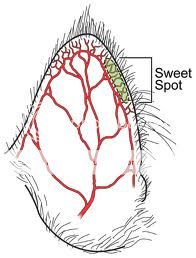
I use Jeweler’s glasses with good magnifying qualities to aim at the small ear area between the edge and vein which is better visible if the source of the light is in front of the patient. Others use just plain readers. You’ll need only small drop to get the reading. If the blood does not come out easily “milk” the ear until you see a drop forming. Dip the strip in, wait for the test result to appear. It is the moment when a lot of cats try to either back/wiggle away or bolt or shake their head. Be prepared.
After the test is done press the cotton ball, gently, against the puncture site to stop bleeding. Apply tiniest dab of Neosporin on the site. Give treats and hugs. Janet’s video is really the best one.
Sorry for the overload.
I just wish you & Tango the very best experience for the weekend that may proof he won't need insulin.
Whatever questions you may have please post. Everyone on here was in your shoes and will be willing to assist.
Very best of luck!
@Sweet Tango



 I know that people say it doesn’t hurt their ears, but I think it may. I do know though, that’s it’s obviously better for him to receive a prick on his ear and know his BG level, then to not know, and leave it in the hands of the vet and pay hundreds of $’s that I don’t have, and stress my cat out - - continuously taking him to the vet.


 (Merrick is one of them). This is the only brand I found that didn't contain chicken or beef of some sort AND was diabetic friendly - it's 6% carbs. There's a venison flavor as well if he might like that more.