
Dx 05/12/18, Lantus up to 5 units, BG still high - acro?

Mary Ann & Baby

Member Since 2018
Hi, I am new here. My 14.5 yo kitty, Baby, was diagnosed with DM on 5/12/18 as well as "chronic pancreatitis, with all normal values". I have attached all of her lab work and her complete medical record in my "signature", along with her BG chart for reference. I recently purchased a ReliOn meter and began testing at home yesterday. Her numbers are lower at home than they have been at the vet. We are all the way up to 5 units, twice daily (used SLGS)! She has never had a reading lower than the 300's - her highest was 594. Urine tests all negative, no UTI, and vet does not suspect IBD. Her fructosamine is very high at 545, her reticulocytes are high at 56 as well as her monocytes at 744. NO ketones. Vet is recommending we go to an internal medicine specialist and advises that it may cost several thousand dollars (abdominal ultrasound and CT). I guess I'm confused why I would need an ultrasound if she doesn't suspect IBD, and if it IS acromegaly (that requires a CT for definitive diagnosis??), what then? Also, her final comment in the medical record is "Spoke with Internal Medicine consultant, Dr. recommended abdominal ultrasound, and potential glucose curve at home. Concerned about Somogyi effect vs acromegaly. Strongly advise referral to internal medicine consultant: less likely to be just IBD or chronic pancreatitis causing insulin resistance. If unable to go to a specialist, advise increasing insulin with clinic signs, does not recommend switching insulin type." So that's where we stand. I'm not sure whether to proceed with internal specialist, or?? Somogyi effect?? What can be done to determine if it is that, rather than acromegaly? I appreciate any and all advice!!!
fyi - Baby eats one can of FF pate twice a day, some Prescription Diet T/D treats or freeze-dried chicken treats occasionally during the day because she's so hungry and ALWAYS begging. She is 9.19lb currently, down from 10.38lb at time of Dx. I don't see her drinking as much lately, but the litterbox still has very large clumps. No vomiting. She is BAR, still running and leaping! :)
Sorry for the lengthy post. Please let me know if I can answer any other questions. I want to do what's best for her, but do not want to put her through unnecessary procedures if less invasive things can be tried first. Thank you so much!!!
~ Mary Ann
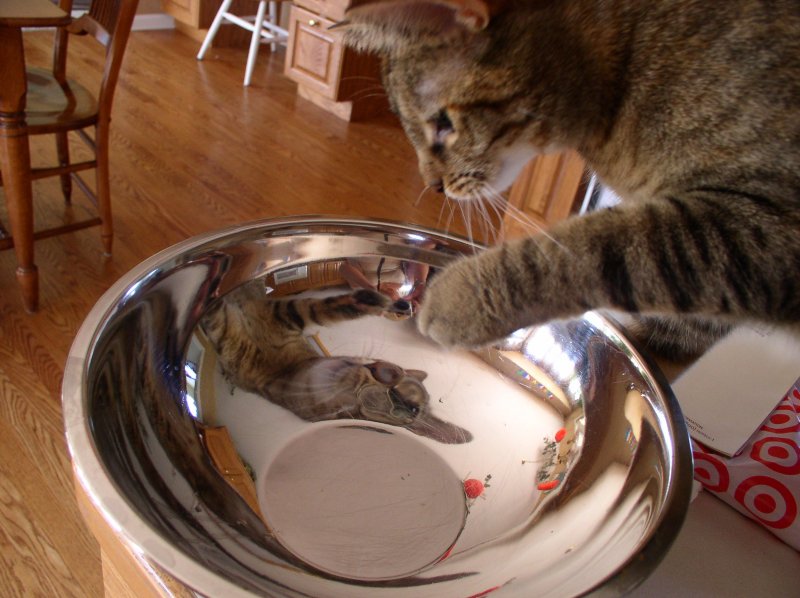
P9061706.JPG
 
Hi Mary Ann - Welcome to you and Baby! The photo is super gorgeous! Sorry to hear about all of the issues. It sounds like there is a lot going on and of course with multiple conditions there is a lot to learn. Great job getting up and running with a spreadsheet and home testing. Just a couple of things on the spreadsheet (SS). You will want to have a line for each day. If no tests were done that day, then it will be blank except for the dose of insulin given. If you are giving shots 2x / day then you will want to put how much was given in both the AM and PM slots as was done for today. For the previous days were you only doing AM shots? To avoid confusion, most here will always have something in the column for "U" because we want to be clear what was given. If nothing was given put NS for no shot.

You have mentioned using SLGS - have you done a curve at home yet? Your decision to purchase and use a human meter was right on. Please continue to get a pre-shot test before each and every shot and also spot checks during the AM/PM cycle. This data will be very helpful to you and Baby.

FF classic pate is a good food choice because it is low carb. However, it looks like the vets have told you to feed only 2x / day. That is not ideal. An unregulated diabetic will want more food more often. You may want to offer more food in "mini meals" through the day. Also, since they are thinking IBD, I believe they are recommending novel proteins which will push you into some more exotic foods than you will find in the standard FF.

Diagnosis of acro and pancreatitis is done via blood test. It looks like you have spec FPL and it is based on that they have DX pancreatitis. First thing I would recommend is that you review Marje's Primer on Pancreatitis.

If you suspect acro you may want to review details regarding basic overview and testing here.

I know I'm throwing a lot at you here, but with this being a Holiday weekend, I wanted to get you started. Some of the more experienced folks may take some time to respond. Meanwhile, let me tag @Wendy&Neko as an expert in FD in general and high dose in particular. Finally, let me say "Hi neighbor" I couldn't help but notice you are just a few miles away. :bighug:
 
Hello, you will find so much help here.

What insulin are you using? Are the treats dry food treats? Dry food and prescription drugs are too high in carbs. Fancy Feast classic late or friskies pate are very popular here.

As far as tests, it depends on what they are looking for. I'm a believer in abdominal ultrasound. If the doctor is good and does a full U/S a lot can be confirmed or denied. The CT scan would be great right off the bat but you can have a blood test for acro then if positive the CT scan.

Diabetes doesn't allow cat to metabolize nutrients properly. Let them eat. More frequent smaller meals tend to work better. Using an automatic feeder is ideal for when your not home or during the night. Just don't feed 2 hrs prior to morning and evening preshot test.
 
Last edited:
So, here's what I see, I'd be cautious of giving any insulin without testing first. Many kitties are diagnosed at a vet's with high BG, and while you may have started off with an appropriate dose, you didn't give the insulin enough time to start working, it is a depot insulin, meaning that it is absorbed slowly in the body among other things, it also needs a few cycles to start seeing some effect...please read this: http://www.felinediabetes.com/FDMB/threads/what-is-the-insulin-depot.150/

Good that you are home testing, you may well have a high dose condition, I don't know, as @Carol in Chicago mentioned, there are tests for that, but I'm concerned for the very quick jumps in insulin, too quickly. And, Lantus does best dosing twice a day, I can't see from your SS if you gave insulin in the evenings, but that is important, once a day doesn't work.

Now that you are testing, let's see how the next few days go, but please try and get a preshot number (before insulin), and many kitties go lower at night, so one test before bed would be helpful. Hard to say if there is some bouncing happening, lots of missing data up until today,
 
Hello and welcome :cool:

A few recommendations:

  • Test before each and every shot, for safety sake
  • Get at least one mid cycle test for both AM and PM cycles
Lantus dose decisions are based on the nadir values so it's super important to find out how low a given dose is taking Baby.
Because of the missing dates on the ss we don't know if you held a dose too long or on the flip side increased too much or too soon possibly passing over a good dose. So, I would hold this dose until you string together a solid weeks worth of data. Try to vary the times of your mid cycle tests from day to day-so that if you step back and look at the ss there are not any wide open blank areas. You will then have a better picture of what is going on. Then you can make adjustments to the dose, up or down based on the numbers. If the numbers indicate increases are in order and Babys dose heads north of 6u you will know if you should pursue testing for high dose conditions, both acro and IAA.

I noticed your notes - now that you switched to a human meter, do yourself a favor and forget about trying to transpose the results into what it may have been on an AT. Best to keep your focus on the results for the meter you are using. ;)
 
Hi Neighbor @Carol in Chicago! :) Thank you so much for your input! The first entries from 5/14/18 until 8/22/18 were all taken at the vet's office on an AlphaTrak2. She did not encourage me to test at home. I decided to anyway. So, just yesterday I took the first BG at home with the ReliOn Micro, but just once. Today, I guess I did my first curve? I took her BG six times today. Her lowest BG was first thing in the morning. I read the Primer on Pancreatitis, and weird, although I know her spec FPL is high, she doesn't exhibit any of the symptoms of pancreatitis listed in the 'Primer' article. After the blood and urine testing, my vet doesn't think the issue is IBD, so the novel proteins were not necessary. What does her comment "Concerned about Somogyi effect vs acromegaly" mean? Currently, I feed her a whole can of FF pate twice a day - you mention breaking that up perhaps into four 1/2 can meals? If so, how is the insulin handled? Right now she is getting the full 5 units with breakfast and another 5 with dinner, 7am and 7pm. I also give her a couple of low-carb treats during the day (during and after the BG check). Thank you![/QUOTE]
 
Last edited:
@Olive & Paula Baby's takes Lantus 5u twice a day. She gets her shot with one can of FF pate, 7am and 7pm. She gets just a few T/D dry treats and freeze dried chicken treats daily (10-15 total....is that a lot?)

What would they be looking for in an abdominal ultrasound? I'm glad to hear there is a blood test for acro. I will ask my vet about that before going to a specialist.[/QUOTE]
 
@Sandy and Black Kitty Hi! Thank you for your advice. All of the readings between Dx on 5/14/18 and 8/22/18 were taken at the vet's office on AlphaTrak2. The doses were slowly increased over the course of weeks. The vet did skip the 1.5u and 3.5u (although she tried 3.25u, but then jumped to 4). I will continue to track Baby for a few more days to see if there is a pattern.
 
@mamagnelli the blood test is called 1-IGF and there is another IAA (for insulin resistance) your vet draws the blood and sends it to MSU its the only place in the States that does it. The acro you will have back quickly, IAA takes about a week. If you can have both done at same time so kitty doesn't have to be stuck twice. It also saves on the shipping since it has to be frozen and expedited.

Dry food carbs stay in the system for a few days. Any freeze dried protein is better. Like PureBites chicken. There is a low carb dry called Young Again, can only be purchased from manufacturer. They will send samples. Another one is Clean Protein, it's about 5% carbs. The company will send samples but you can order from chewy. No dry food is better but these two are acceptable.

The ultrasound will show abnormalities in the organs such as liver, gall bladder, stomach, intestines, pancreatitis, etc. If something did show then it might require, biopsy, CT scan or MRI. So it's not a bad thing to have or a waste of money IMHO, if you can do it. If nothing is found you know things are ok. If something is found you know what your dealing with. It doesn't cover the brain so acro tumor would not show.

Olive was found in a dumpster looking for food. When I got her, her abdomen was hard and distended. I didn't want to wait the few months my vet said to. She was very uncomfortable. I was thinking she might have eaten something that was non food. So I didn't wait and took her to a referral hospital and had it done and a mass was found.
 
Last edited:
Hi Neighbor Carol in Chicago! :) Thank you so much for your input! The first entries from 5/14/18 until 8/22/18 were all taken at the vet's office on an AlphaTrak2. She did not encourage me to test at home. I decided to anyway. So, just yesterday I took the first BG at home with the ReliOn Micro, but just once. Today, I guess I did my first curve? I took her BG six times today. Her lowest BG was first thing in the morning. I read the Primer on Pancreatitis, and weird, although I know her spec FPL is high, she doesn't exhibit any of the symptoms of pancreatitis listed in the 'Primer' article. After the blood and urine testing, my vet doesn't think the issue is IBD, so the novel proteins were not necessary. What does her comment "Concerned about Somogyi effect vs acromegaly" mean? Currently, I feed her a whole can of FF pate twice a day - you mention breaking that up perhaps into four 1/2 can meals? If so, how is the insulin handled? Right now she is getting the full 5 units with breakfast and another 5 with dinner, 7am and 7pm. I also give her a couple of low-carb treats during the day (during and after the BG check). Thank you!
[/QUOTE]

So glad you jumped right on this and are digging in. Also it is great that your post has gotten attention of other more experienced folks. I'm so glad they will be helping you!

You should update your spreadsheet with 1 line that says when you switched meters. Insert 1 line that will go across all columns to say (transition from AT2 to Relion Meter). Something like row 41 in this example would work. I didn't see the +100 Sandy mentioned until she called it out. :oops: For clarity sake it is best to use the number from the meter. That is why we ask you to say what meter you use. Your signature should also include you use a relion meter - that way when you say you are getting a 50 we will all know what that means (it would be different with AT vs Relion). For anyone else reading this, the advice to add 100 points to a human meter to get a pet meter reading is not correct. :stop: People often ask how to convert between AT and human meters - there is no formula, but I have seen someone try a regression analysis. :eek:

If today was the first curve then what needs to happen is to fix the numbers to be what the meter gave you. If I understand correctly, they are 100 less than what was first reported. If that is true, then these aren't that bad! I'm worried that this is the first curve and you are at 5 units, but l'll let others weigh in on dose.

If you don't think pancreatitis, don't focus on that now - first let's get Baby regulated which will mean more safe "green" numbers. If through that regulation you see overall condition improve that would be good. The medical records say the other conditions are secondary to FD so if FD is controlled, maybe that will be all you have to worry about. :)

Others will chime in, but basically vets don't get much training on diabetes in total (let alone the fact that cats are different from dogs), so that is probably why they are pushing you to an IM. If they can't get regulation with the "basic" stuff, they are going to send you to an IM. From my experience, the folks here know way more about FD than any vet I have engaged. Don't get me wrong, I *love* my vet and consider him part of my family, but we don't even talk about FD any more. He is helping me with the other conditions my Rosie has. Here is a post re: symogi because the question come up a lot. Bottom line - debunked.

For food, There is an equation re: ideal weight and amount of food a cat should have. Use this to compute total food. Break up this into meals / day. You can spread them out. I use an autofeeder for overnight because Rosie gets a midnight snack and a 3am snack :rolleyes: I copied this from a recent post from @Bobbie And Bubba "Use the ideal weight of the cat. Is he underweight and he needs to gain, use the amount of weight that he should be in the formula. It is 13 X ideal weight + 70 = calories a day. Using a 10 lb cat as an example, it would be 13 X 10 = 130 + 70 = 200 calories a day plus or minus for age and/or activity level." You can find calories in the food charts.

The big things about timing food and meals are:
1) You don't want Baby to have any food 2 hours before a pre-shot test because these tests are done for safety. You want true BG not any food influenced number. So, you should withhold food 2 hours before your 7AM and 7PM pre-shot tests.
2) We are more confident giving insulin to a cat that is eating so it is good to have "head in bowl" when giving shots because you want to make sure Baby is going to eat and not avoiding food because of some other issue. If you give insulin and Baby doesn't eat your options to raise a BG that is too low can be very limited.

There is a ton of information in the sticky notes. Please use these for reference. I swear I have read them dozens of times, but learn something new each time I go to look something up.

Meanwhile, please keep asking questions because this how we all learn. If you post your numbers each day, you will get additional input and guidance.
 
This will be a quick post, am about to head out of town on holiday with no wireless access.
What does her comment "Concerned about Somogyi effect vs acromegaly"
To me that translates, did the vet have the dose increased either by too much at once, or without sufficient testingnto know an increase was needed, or does Baby in fact have acromegaly. Note that one in four diabetic cats has acromegaly, so it's not uncommon. You don't need to go to an IM vet for that. Instead we'd suggest getting a blood draw done and sent to Michigan State University for the IGF-1 test (acromegaly) and IAA (insulin auto antibodies). Note that the IGF-1 test is just run once a week, so you may have to wait a bit for it. Depending on the results, I wouldn't get a CT scan. That's unneccesary unless you are pursuing treatment, which is a better use of money.

As Sandy said, please put the original numbers in the spreadsheet, that is what we are used to reading. And as she suggested, gather some data on this dose to figure out where to go next.

One more thing, get rid of the TD treats, too high carb. Stick to the freeze dried meat.
 
Wendy's reply was my first thought, as well. The TD treats are way high in carbs. Given you're feeding your kitty low carb meals, the treats are going to be severely messing with Baby's numbers.

The whole Somogyi concept is one that gets me climbing on my soapbox. It is, for all intents and purposes, an urban myth that many vets seem to cling to. Michael Somogyi published one paper based on a very small number of human diabetic subjects on the topic in 1938 in a local St. Louis medical journal. There has been no replication of the research and, in fact, anyone that has attempted to replicate the research with humans failed to find similar results. The research has never been done with cats and, just as importantly, has never been done with cats (or humans) using a long-acting insulin like Lantus. A few years ago, Roomp & Rand, the authors who developed the Tight Regulation Protocol for Lantus, looked at their data for any indication of "chronic Somogyi rebound" with cats prescribed Lantus and failed to find any evidence in their sample of cats. So, if your vet or the IM vet try to tell you that your cat is experiencing Somogyi rebound, please ask them to provide you with the actual research (not a paragraph out of a book -- something with data) they are basing their opinion on. (Climbing off of soapbox.)

A few observations:

  • You might leave a break on your SS between where Baby was only getting tests at the vet's office vs you're starting to home test. There is a difference in the values at the vet's office compared to a human meter.
  • Going forward, it will be important to get tests during the PM cycle. Lantus dosing is based on the lowest value in the cycle so having data from both AM and PM is important. If you don't test at night, you'll be missing half of your data.
  • Before you get testing for a high dose condition, I'd like to see more data. Baby is in the 200s when home tested. Cat's numbers are often higher at the vet's office due to stress. We generally don't suggest testing for high dose until the kitty reaches a dose of 6u. I will, however, @Wendy&Neko may recommend testing sooner and I would defer to her judgement.
  • Aside from the lack of evidence for Somogyi, cats can experience a bounce in their numbers. However, based on the data from the vet, I don't even see evidence of a bounce. Bounces occur if numbers drop low, drop fast, or drop into a range your cat is no longer used to. A single test at the vet's office doesn't tell you anything. You need to see the overall pattern across several cycles.

I'd also like to suggest that your delete your link to Baby's labs. It has your contact information on the materials. While the members here are not trolls, the site, on occasion, has been hacked. I'd hate to see you overwhelmed by spam. There is a tab on your spreadsheet where you can transfer lab values.
 
Whether you get blood testing done early is up to you. Not all acrocats need high doses of insulin. We just use the six unit figure because it's possible to have other things going on and have the cat need higher amounts of insulin. I have seen cats go to 5.5 units with dry food in the picture, needing a dental, etc. At six units, if increases have been done safely, then one of the "high dose" or endocrine disorders is likely to be in play.
 
Oh my goodness, I just took Baby's PMPS shot and it was the highest EVER...652!!!! Help!!! Now she's eating her can of FF. I gave her way fewer treats than usual today, and no T/D treats as I've just learned that they are higher carb treats. What is going on????? Should I give her more insulin??? I just gave her the 5u shot.
 
I would simlpy hold your current dose. Lantus needs time to settle into a dose. It takes at least 6 cycles and often more (perhaps a week) to establish the Lantus “depot”. And every time you change the dose the depot needs to adjust. So stay calm and don’t panic.
Baby may be missing her treats. Do you have any freeze dried chicken treats? Or some plain boiled chicken pieces?
So much to learn. But don’t worry about Baby. You’ve gotten much good advice here today. We all have experienced what you are experiencing. It gets easier!

Welcome!
 
Thank you @LizzieInTexas and @Ella & Rusty & Stu(GA) - I just checked her again one hour later and she is at 300. That scared me. I do have PureBites chicken treats and just gave her some of those while pricking her. Could her BG have skyrocketed because she was stressed that she didn't get as many treats today?? Like maybe she was extra hungry and it stressed her out?
 
Wendy's reply was my first thought, as well. The TD treats are way high in carbs. Given you're feeding your kitty low carb meals, the treats are going to be severely messing with Baby's numbers.

The whole Somogyi concept is one that gets me climbing on my soapbox. It is, for all intents and purposes, an urban myth that many vets seem to cling to. Michael Somogyi published one paper based on a very small number of human diabetic subjects on the topic in 1938 in a local St. Louis medical journal. There has been no replication of the research and, in fact, anyone that has attempted to replicate the research with humans failed to find similar results. The research has never been done with cats and, just as importantly, has never been done with cats (or humans) using a long-acting insulin like Lantus. A few years ago, Roomp & Rand, the authors who developed the Tight Regulation Protocol for Lantus, looked at their data for any indication of "chronic Somogyi rebound" with cats prescribed Lantus and failed to find any evidence in their sample of cats. So, if your vet or the IM vet try to tell you that your cat is experiencing Somogyi rebound, please ask them to provide you with the actual research (not a paragraph out of a book -- something with data) they are basing their opinion on. (Climbing off of soapbox.)

A few observations:

  • You might leave a break on your SS between where Baby was only getting tests at the vet's office vs you're starting to home test. There is a difference in the values at the vet's office compared to a human meter.
  • Going forward, it will be important to get tests during the PM cycle. Lantus dosing is based on the lowest value in the cycle so having data from both AM and PM is important. If you don't test at night, you'll be missing half of your data.
  • Before you get testing for a high dose condition, I'd like to see more data. Baby is in the 200s when home tested. Cat's numbers are often higher at the vet's office due to stress. We generally don't suggest testing for high dose until the kitty reaches a dose of 6u. I will, however, @Wendy&Neko may recommend testing sooner and I would defer to her judgement.
  • Aside from the lack of evidence for Somogyi, cats can experience a bounce in their numbers. However, based on the data from the vet, I don't even see evidence of a bounce. Bounces occur if numbers drop low, drop fast, or drop into a range your cat is no longer used to. A single test at the vet's office doesn't tell you anything. You need to see the overall pattern across several cycles.

I'd also like to suggest that your delete your link to Baby's labs. It has your contact information on the materials. While the members here are not trolls, the site, on occasion, has been hacked. I'd hate to see you overwhelmed by spam. There is a tab on your spreadsheet where you can transfer lab values.

Hi Sienne, thank you for your advice. I put a notation on my chart where we began home testing with the ReliOn Micro vs the AT at the vet. I have removed all personal information from the medical docs - thanks for the heads up. I will get PM tests and post them. Her 652 PMPS today scared me, but an hour later she was 300 so feel much better now. Will check her again before bed.
 

So glad you jumped right on this and are digging in. Also it is great that your post has gotten attention of other more experienced folks. I'm so glad they will be helping you!

You should update your spreadsheet with 1 line that says when you switched meters. Insert 1 line that will go across all columns to say (transition from AT2 to Relion Meter). Something like row 41 in this example would work. I didn't see the +100 Sandy mentioned until she called it out. :oops: For clarity sake it is best to use the number from the meter. That is why we ask you to say what meter you use. Your signature should also include you use a relion meter - that way when you say you are getting a 50 we will all know what that means (it would be different with AT vs Relion). For anyone else reading this, the advice to add 100 points to a human meter to get a pet meter reading is not correct. :stop: People often ask how to convert between AT and human meters - there is no formula, but I have seen someone try a regression analysis. :eek:

If today was the first curve then what needs to happen is to fix the numbers to be what the meter gave you. If I understand correctly, they are 100 less than what was first reported. If that is true, then these aren't that bad! I'm worried that this is the first curve and you are at 5 units, but l'll let others weigh in on dose.

If you don't think pancreatitis, don't focus on that now - first let's get Baby regulated which will mean more safe "green" numbers. If through that regulation you see overall condition improve that would be good. The medical records say the other conditions are secondary to FD so if FD is controlled, maybe that will be all you have to worry about. :)

Others will chime in, but basically vets don't get much training on diabetes in total (let alone the fact that cats are different from dogs), so that is probably why they are pushing you to an IM. If they can't get regulation with the "basic" stuff, they are going to send you to an IM. From my experience, the folks here know way more about FD than any vet I have engaged. Don't get me wrong, I *love* my vet and consider him part of my family, but we don't even talk about FD any more. He is helping me with the other conditions my Rosie has. Here is a post re: symogi because the question come up a lot. Bottom line - debunked.

For food, There is an equation re: ideal weight and amount of food a cat should have. Use this to compute total food. Break up this into meals / day. You can spread them out. I use an autofeeder for overnight because Rosie gets a midnight snack and a 3am snack :rolleyes: I copied this from a recent post from @Bobbie And Bubba "Use the ideal weight of the cat. Is he underweight and he needs to gain, use the amount of weight that he should be in the formula. It is 13 X ideal weight + 70 = calories a day. Using a 10 lb cat as an example, it would be 13 X 10 = 130 + 70 = 200 calories a day plus or minus for age and/or activity level." You can find calories in the food charts.

The big things about timing food and meals are:
1) You don't want Baby to have any food 2 hours before a pre-shot test because these tests are done for safety. You want true BG not any food influenced number. So, you should withhold food 2 hours before your 7AM and 7PM pre-shot tests.
2) We are more confident giving insulin to a cat that is eating so it is good to have "head in bowl" when giving shots because you want to make sure Baby is going to eat and not avoiding food because of some other issue. If you give insulin and Baby doesn't eat your options to raise a BG that is too low can be very limited.

There is a ton of information in the sticky notes. Please use these for reference. I swear I have read them dozens of times, but learn something new each time I go to look something up.

Meanwhile, please keep asking questions because this how we all learn. If you post your numbers each day, you will get additional input and guidance.[/QUOTE]


Hi @Carol in Chicago , thank you for keeping up with my thread - very comforting! :) The numbers on my chart are indeed the actual readings from the ReliOn (not 100 below). I have followed your advice and added a line showing where ReliOn testing began. RE: pancreatitis - I believe that she does have pancreatitis based on the blood test results, but when I read the "symptoms" for pancreatitis, I just find it strange that Baby just doesn't seem to be exhibiting those. She is actually still very much BAR. Thanks for the info on Symogyi. I think Baby is getting around 200 calories per day, so that seems to be fine, but if I break it into 4 smaller meals, do I still give her the 5u twice a day, or does that need to be broken into 4 also? (2.5u each time) Thanks!
 
Thank you @LizzieInTexas and @Ella & Rusty & Stu(GA) - I just checked her again one hour later and she is at 300. That scared me. I do have PureBites chicken treats and just gave her some of those while pricking her. Could her BG have skyrocketed because she was stressed that she didn't get as many treats today?? Like maybe she was extra hungry and it stressed her out?
It could have simply been a meter error. Don’t worry. I don’t think fewer treats caused stress, but we don’t like to deprive our kitties of their treats.

In answer to your other question: Lantus dosing is every 12 hours; you can feed as often as you like. (Some cats graze all the time). But we suggest that you not give food 2 hours before amps and pmps because having food on board at those times may influence the blood glucose number.
 
Back
Top