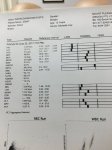
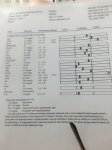
@Yong tagged me about the labs and I have a few different thoughts for you. I've had four CKD cats, three who were stable for several years and passed from something else.
First, elevated amylase in cats is insignificant; it's an indicator of pancreatitis in dogs, but not cats. The half Life of amylase is very short so levels can change frequently during the day. The ultrasound will help but the lab test for pancreatitis is the snapfPL if done right there in the vet's office or the specfPL if the labs are sent out. You might want to read my
Primer on Pancreatitis for more info.
It's too soon for him to be on daily subq fluids if it's for the CKD. Until the creatinine is above 3.5, he should get as much fluid as possible from drinking water or from you adding extra water to food which will be tough with YA. If you can get the BFF or another canned food, you can add lots of water to it. Subq fluids are a treatment for pancreatitis but I'd want to be sure he has it before I started giving fluids esp daily fluids.
The reason I am cautious about fluids is because if there are any unknown heart issues, subq fluids can quickly overwhelm the heart. I always think it's best to have an echo done before giving longterm daily fluids.
Phosphorus control is
critical in how the kitty will feel with CKD. I think it is one of the biggest priorities to longevity. Elevated P can really make kitty feel bad and if you multiply the P level by Ca (calcium), a result between 60 and 70 increases the risk of tissue calcification. He is there so that means you can't just get the P down by feeding a lower P food.
I would not feed a food that is higher in P and hope the binder will work if he will eat one that is lower in P because you have some work to do to get his P down and I think you will have to be aggressive. If he absolutely won't eat a lower P food, then your options are more limited.
While the most important thing is for him to eat, the lower P food you can get, the better but you will also need the binder because his target for P level is 4.5. I believe you are outside the US but I'm not sure where or what you have access to. The food tables (there are US and outside of US) from Tanya's will help you but also remember you need to keep an eye on sodium as well but,
for right now, getting the P down is the priority. The renal prescription diets as the lowest P and are quite effective in getting it down but they are way too high in carbs.
You also can't just dump binder on food. I, personally, think aluminum hydroxide powder is the best one...it's tasteless and inexpensive. I used to buy mine at
Thriving Pets which Janet also linked. Here is the discussion on
Phosphorus control, binders, and dosing. If you need help on the dosing, pls let me know. The binder needs to be mixed into the food, allowed to sit a bit, and then fed. The binder binds the P in the food, not the cat.
Your vet should check his blood pressure. Many CKD cats have high BP and it can usually be controlled easily with a a drug like amlodipine although some cats require a combination of drugs.
And finally, because of his anemia, he does need B vitamins but not just oral methylB12. To properly address anemia, he also needs a multi B. The discussion on
B Vitamins on Tanya's can guide you in what to buy based on your location.
It's also critical to address that anemia and get the drop to stop and hopefully increase the HCT. Once the HCT gets below 20%, more significant measures have to be taken.
Please tag me if you have questions.



 . Let's try giving 1.0U as long as PS is over 200 and when if he gives 170 - 200 while starting this new consistent dosing, skip the first time, get a before bed test to see how he's doing on his own. If he does go up, then next time we'll try 0.25U between 170-200 if you'll be there to monitor him for a bit
  . He's looking good!