5% lidocaine ointment to numb ear skin for lancing?

Status
Not open for further replies.

Ken & Tara

Member Since 2016
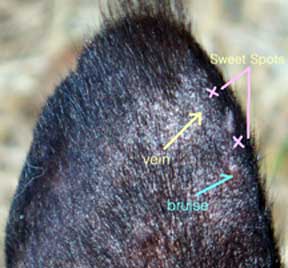
Tara freaks out bad when I prick her ear, the insulin shot in the back area is a breeze in comparison, particularly with the 31 gauge needle. Yesterday morning I was successful with a lancing (33 gauge), getting enough for the meter, but she freaked bad. I attempted, and failed, a second time that evening, and I didn't have the desire to prick her again, I didn't get enough blood, just a tiny bit, not enough for the meter. I'm trying for just outside the vein, between it and the edge of the ear. Should I try for the vein itself?

Had anyone else besides us been in the house, they would have thought I was trying to kill my cat. She was muzzled and bagged, which for her is essential. Even the vet uses a cone now that he's been bitten by her. We should have named her "Terrible Tara", except she's a really nice cat with a lot of love in her for us, as long as we aren't messing with her skin, pulling her hair, or trying to prick her.

I've wondered about trying the paws, and then I remembered the claws, and I think I'll rule that out just on that basis alone. Is there a less sensitive place to prick the ear?

I have some 5% lidocaine ointment that I ordered some years ago online and don't use for anything else, it's all printed in Spanish, but it seems to be oil based, similar to petroleum jelly but a little less viscous. I think I'll try that. Is there any reason why I should not?

This morning we used that 5% lidocaine ointment, applied to both sides of the ear flap where we intended to prick, a very tiny application, set the timer for 3 minutes, and then fumbled with the rest of the procedure, even the meter timed out. I finally had my partner prick her ear, and we got enough blood. This was maybe 6 minutes after ointment application, and maybe the 4th or 5th prick. She didn't object nearly as much, though she still reacted, perhaps there was 70-80% improvement in her perceived pain.

Are there any other alternatives? I recently read that Orogel is supposedly 20% benzocaine. Is benzocaine better than lidocaine for numbing? Is there a prescription ointment that the vet can supply that's optimum for this purpose? Are there any long-term dangers in using a numbing ointment everyday on a cat?

Are there electronic (frequency wave power) nerve blockers which are safe to use near the brain? Any other pain-reducing options?

Any thoughts are appreciated.
 
Some other have used similar numbing treatments. Just make sue it is most removed when yu tryto get blood into the strips since that and vasoline to can clog the end of the strips.
A 33 gauge is a very think lancet to us j a cat. A lot of her use the larger ones, 25-27 gauge, since it is easier than the normal 30-31 guage.
 
Here's something I wrote up for others that needed help with testing...maybe it'll help you too!

It can be really helpful to establish a routine with testing. Pick one spot that you want your "testing spot" to be (I like the kitchen counter because it's got good light and it's at a good height....it also already blocked 2 escape routes due to the wall and the backsplash) It can be anywhere though...a rug on the floor, a table, a particular spot on the couch...wherever is good for you. Take her there as many times a day as you can and just give her ears a quick rub and then she gets a yummy (low carb) treat. Most cats aren't objecting so much with the poking..it's the fooling with their ears they don't like, but once they're desensitized to it and learn to associate a certain place with the treats, they usually start to come when they're called! Or even when they hear us opening the test kit!

You also have to remember...you're not poking her to hurt her...you're testing her to keep him safe and understand what's going on inside her body. There's just nothing better than truly understanding what's going on inside your kitty's body and with this disease, the more knowledge you have, the more power you have against it. The edges of the ears have very few pain receptors, so it really doesn't hurt them. Also, if you're nervous and tense, it's going to make your kitty nervous and tense too. As silly as it might seem, try singing! It forces you to use a different part of your brain!

It's also important to make sure her ear is warm. A small sock filled with a little rice and microwaved or a small pill bottle filled with warm water (check temp against your wrist like you would a baby bottle) works well

Finding the right "treat" will be a great help too! Freeze dried chicken, bonito flakes, little pieces of baked chicken...whatever low carb treat you can find that he really enjoys will help him to associate the testing with the treat! China's Achilles heel was baked chicken, so I'd bake a piece, chop it into bite sized pieces, put some in the refrigerator and freeze the rest to use as needed. It didn't take long for her to come any time I picked up the meter!
 
Some other have used similar numbing treatments. Just make sue it is most removed when yu tryto get blood into the strips since that and vasoline to can clog the end of the strips.
A 33 gauge is a very think lancet to us j a cat. A lot of her use the larger ones, 25-27 gauge, since it is easier than the normal 30-31 guage.
Thank you for the tip. Not much was coming out with my 33 gage ones. I'm new to this and the pharmacist recomended smaller because she figured it would hurt less. Live and learn. Going to get some bigger ones for sure.
 
Do you use a lancing device. I freehand because mine reacts badly to the sound of the lancing device.
Started free hand the last couple of times. Much easier. Just cant see where to put that big pen lancing device. Getting nice amount of blood even with the ultra fin lancets.
 
Hi!!
We have a pretty good thing now that I figure out his sensitive "too" sensitive spots.
With Drevon he drapes his paws over my leg (I sit cross legged not he floor with him) I talk to him.... after I put the strip in the meter I kind of gently rub and then gently pinch the very outer edge of the ear about 1/3 the way down (he prefers his left ear) but the pressure I think is like when we pluck eyebrows-it lessons the pluck.
Also the 45 degree angle has really made a difference. At first I thought I was supposed to poke the vein--that was not appreciated by Drevon:confused:
After I get the blood I immediately rub his ear and put a little pressure on it--then he gets a treat.
I have never used a device --I prefer holding the lancet.
 
  • Assemble all your materials and wash your hands.
  • Position your cat so both of you are comfortable.
  • Locate a vein on your cat's ear by shining a flashlight behind it. The vein will look like a red string and should be near the edge of the ear. If you are using a paw pad, use the large pad.


  • ear_web.jpg

    Photo courtesty of Pawprints and TEN
  • Use the cloth or sock to warm the ear or paw pad before pricking to increase blood flow and enlarge the capillaries and veins. Alternatively, gently massage the area with your fingertips.
  • Position the lancet and do the prick.
  • Touch the tip of the test strip to the top of the blood drop at a slight angle.
  • If necessary apply slight pressure to the prick site for a few seconds to stop the bleeding.
  • Wait for the glucometer to give the final reading. Most glucometers will warn you if there is insufficient blood on the test strip.
  • Record the date, time, and glucose reading in a notebook. Your meter will store a lot of data, but you should always back up your data manually or, if available with your meter, download the data to your computer periodically.
 
Here's something I wrote up for others that needed help with testing...maybe it'll help you too!

It can be really helpful to establish a routine with testing. Pick one spot that you want your "testing spot" to be (I like the kitchen counter because it's got good light and it's at a good height....it also already blocked 2 escape routes due to the wall and the backsplash) It can be anywhere though...a rug on the floor, a table, a particular spot on the couch...wherever is good for you. Take her there as many times a day as you can and just give her ears a quick rub and then she gets a yummy (low carb) treat. Most cats aren't objecting so much with the poking..it's the fooling with their ears they don't like, but once they're desensitized to it and learn to associate a certain place with the treats, they usually start to come when they're called! Or even when they hear us opening the test kit!

Thanks Chris! This morning Tara was waiting near the table we use, it's stainless steel, similar to what the vet uses. We do have a routine, and she always gets fed afterwards as her treat, but the ear lancing is new in the last two days. I hope you're right that she gets used to it! We haven't yet progressed to feeding her first, then shooting.

You also have to remember...you're not poking her to hurt her...you're testing her to keep him safe and understand what's going on inside her body. There's just nothing better than truly understanding what's going on inside your kitty's body and with this disease, the more knowledge you have, the more power you have against it. The edges of the ears have very few pain receptors, so it really doesn't hurt them. Also, if you're nervous and tense, it's going to make your kitty nervous and tense too. As silly as it might seem, try singing! It forces you to use a different part of your brain!

Tara sure fooled me about those pain receptors! It makes some sense they might evolve with fewer in their ears, since in the wild their ears tend to get torn up in their territorial disputes with other cats.

It's also important to make sure her ear is warm.
A small sock filled with a little rice and microwaved or a small pill bottle filled with warm water (check temp against your wrist like you would a baby bottle) works well

We've been using our own fingers to warm her ears. The rice-filled sock is a great idea.

Finding the right "treat" will be a great help too! Freeze dried chicken, bonito flakes, little pieces of baked chicken...whatever low carb treat you can find that he really enjoys will help him to associate the testing with the treat! China's Achilles heel was baked chicken, so I'd bake a piece, chop it into bite sized pieces, put some in the refrigerator and freeze the rest to use as needed. It didn't take long for her to come any time I picked up the meter!

We have been feeding her canned food afterwards, the unusual treat is worthwhile. I picked up some freeze-dried shrimp, the local store didn't have freeze-dried salmon, which is her favorite canned food flavor. Whew, that was pricey when figured per lb, :eek: $0.50 per gram! I don't know whether she'll like it or not, they also had turkey and chicken, and neither one is her favorite. Next time we grocery shop maybe we'll buy some salmon and bake it up for her, then chop it and freeze.
 
Hi!!
We have a pretty good thing now that I figure out his sensitive "too" sensitive spots.
With Drevon he drapes his paws over my leg (I sit cross legged not he floor with him) I talk to him.... after I put the strip in the meter I kind of gently rub and then gently pinch the very outer edge of the ear about 1/3 the way down (he prefers his left ear) but the pressure I think is like when we pluck eyebrows-it lessons the pluck.
Also the 45 degree angle has really made a difference. At first I thought I was supposed to poke the vein--that was not appreciated by Drevon:confused:
After I get the blood I immediately rub his ear and put a little pressure on it--then he gets a treat.
I have never used a device --I prefer holding the lancet.

Hi Jayla, Devon is spoiled! :) Just kidding! We'll try the angle, I was pressing straight down. I'm probably going to let my partner do it a few times, she seems more talented with the lance. I'll observe her technique.
 
Hi Jayla, Devon is spoiled! :) Just kidding! We'll try the angle, I was pressing straight down. I'm probably going to let my partner do it a few times, she seems more talented with the lance. I'll observe her technique.
Devon is VERY spoiled!! I love him to pieces:rolleyes:
he has now decided the pure bites chicken is a bit too hard and desires cat man do freeze dried (this week)
not spoiled at all;)
 
We have been feeding her canned food afterwards, the unusual treat is worthwhile. I picked up some freeze-dried shrimp, the local store didn't have freeze-dried salmon, which is her favorite canned food flavor. Whew, that was pricey when figured per lb, :eek: $0.50 per gram! I don't know whether she'll like it or not, they also had turkey and chicken, and neither one is her favorite. Next time we grocery shop maybe we'll buy some salmon and bake it up for her, then chop it and freeze.

China didn't like any of the freeze dried treats either...that's why we moved to baked chicken, but recently I found ONE she actually likes!! The Orijen Wild Boar treats! The Orijen treats aren't as "dry" as a lot of the other freeze dried treats and that may have been the difference. We'd tried just about every protein source available in "freeze dried", but she wasn't having any of it.

If you do find a protein source that Tara likes, you can try to find it in dog treats and just crumble them up some to make them "cat-sized"....the dog treats are usually cheaper per ounce than the cat treats are
 
China didn't like any of the freeze dried treats either...that's why we moved to baked chicken, but recently I found ONE she actually likes!! The Orijen Wild Boar treats! The Orijen treats aren't as "dry" as a lot of the other freeze dried treats and that may have been the difference. We'd tried just about every protein source available in "freeze dried", but she wasn't having any of it.

If you do find a protein source that Tara likes, you can try to find it in dog treats and just crumble them up some to make them "cat-sized"....the dog treats are usually cheaper per ounce than the cat treats are

She had zero interest in the freeze-dried shrimp. :banghead: None at all. Your story reminded me, the other day we made carne asada burritos. In the past, I've chopped the meat up raw, but when cooked the cubes of beef are a little too large. So I roasted a London broil until it hit 140 °F using a low-temperature oven (haven't graduated to sous vide yet). It's a little to rare for us to eat, but for the burritos, it got finely diced then pan fried a second time with salsa fresca, and Tara wanted some really bad. We gave a little to her, and she ate it. I just remembered we didn't eat all of it, and we have some diced in the freezer, stashed away and forgotten for when we make another batch of salsa!
 
Most lancet pens come with a clear cap you can use instead of the opaque cap. The clear cap is used for humans for alternate (other than the finger tips) site and also results a deeper penetration of the lancet.
 
Most lancet pens come with a clear cap you can use instead of the opaque cap. The clear cap is used for humans for alternate (other than the finger tips) site and also results a deeper penetration of the lancet.

I noticed the clear cap had no depth adjustment on it. On several of my failed freehand lancings, we noted Tara's ear bled from the bottom side, so I was punching all the way through her ear, yet we still didn't get a reading. My partner does better, last night she used a 30 gauge lance, and I don't know if it was that larger gauge, or whether the vein was punctured, but there was excessive bleeding.

We decided to not use the lidocaine ointment, there are some references online that claim it's toxic to cats, particularly benzocaine. Yet, lidocaine mixed with epinephrine is reportedly used in feline surgeries, so it's a bit difficult to take the warnings seriously. Yesterday afternoon, Tara vomited and had a soft stool, since this was after the numbing ointment by about 8 hours, it is possible it's related, though we think a hairball is more likely (there was some hair in the vomit).
 
Last edited:
Status
Not open for further replies.
Back
Top