


Home testing is one of the most important things we can do for our diabetic cats to help keep them safe while using insulin. Home testing involves pricking the cat’s ear or paw pad for a small drop of blood and applying that drop on a handheld glucose meter. It can sound overwhelming, especially for someone without any medical or caregiver experience. But it gets easier.
This article is about glucose meters commonly used and recommended by the Feline Diabetes Message Board (FDMB) community. It won’t focus heavily on comparison of the specifications of each meter, but more focused on real-world feedback.
What matters when choosing a glucose meter for your cat
Most meters will technically work. The differences show up in day-to-day use. They all have the same function at their core, testing the blood on a test strip and interpreting that to provide a reading. But, there are some subtle differences that can improve quality of life for you and your cat, and that you might not think to look at when starting off and selecting a meter.
- Blood sample size
- Cost of test strips
- Cost of meter
- Local availability
- “Human” or “Pet” meter
Pet meters versus human meters
Before we get into the different brands of meters, there are some important points to make about pet-specific meters versus human-specific. For years, caregivers on the Feline Diabetes Message Board (FDMB) used regular human glucose meters as pet-specific meters didn’t even exist. Much of the dosing guidance historically shared on FDMB is based on human-meter numbers. Nowadays, pet meters are recommended a lot by veterinarians. They’re calibrated using different assumptions about feline versus human red blood cell distribution. What that means in practice is we would expect the readings of a pet meter to be similar to what would show up in a lab setting. That’s useful for lab comparison, but it doesn’t necessarily make them more useful for day-to-day home management. Typically, pet meters will read higher than human meters due to how they’re calibrated. So, since we’re not comparing to values in a lab on a daily basis, what’s more important is consistency and reliability of the meter. That’s where human meters often have an advantage, they’re generally less expensive and more available locally, which is important for the amount of testing diabetic caregivers do.
A best practice we’ve found on the FDMB is to pick a meter type and stick with it. If money is no object, and a pet meter makes you feel more confident with testing, that’s totally fine. Where it gets difficult is trying to compare meter types and bouncing between the two. It makes interpreting the blood glucose numbers and trends much more difficult.
Glucose meters caregivers succeed with
Note: this is not an exhaustive list. Just some of the more popular meters and pros/cons. This list is focused on meters available in the United States.
- Contour Next

Amazon: Contour Next Gen Kit
- Human meter
- 0.6 µL blood sample size
- “Second chance sampling” for fewer wasted strips
- Available at local stores and pharmacies in the US/Canada
- Starter kit comes with some strips and lancets to get you started
- Reasonably priced, $19.97 on Amazon
- Strips are $0.38 each on Amazon
- ReliOn
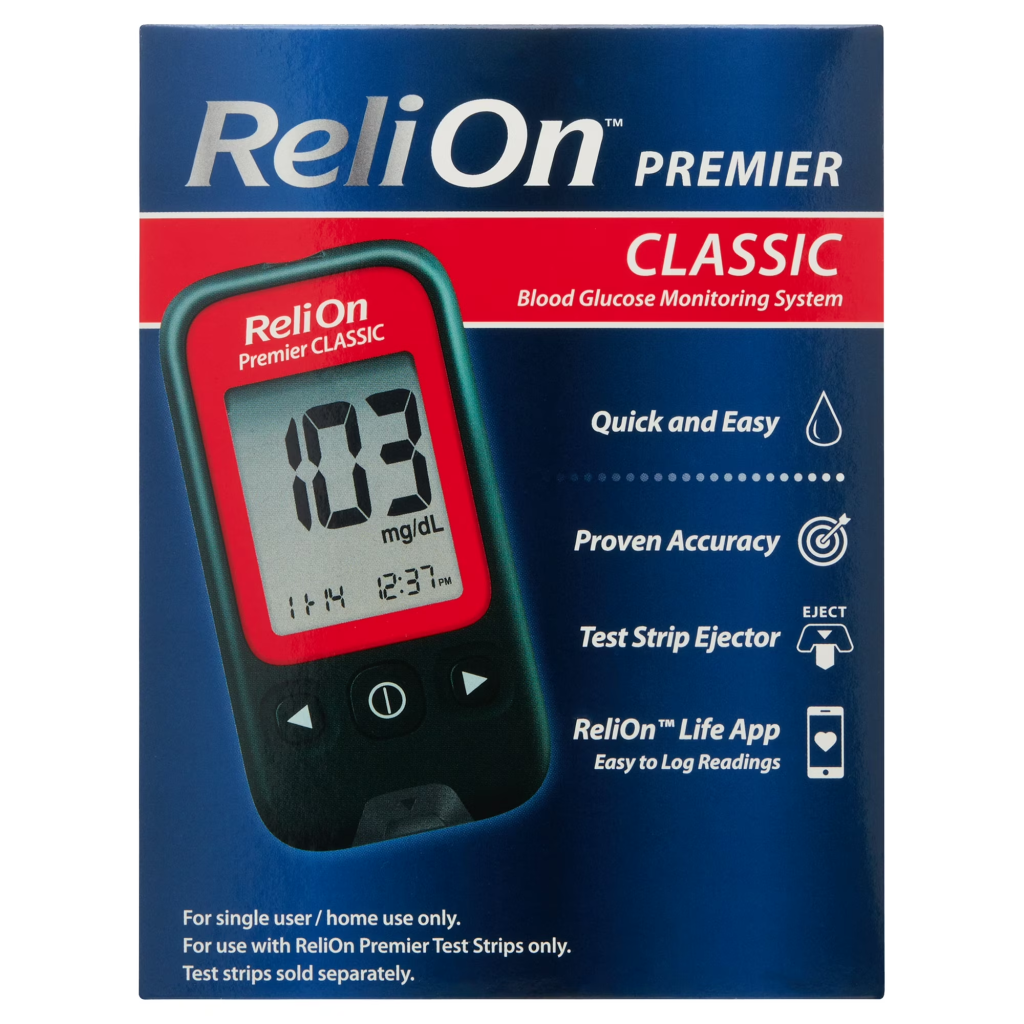
Walmart: ReliOn Classic
- Human meter
- 0.5 µL blood sample size
- Available at Walmart, Walmart exclusive though
- Best price, $9.00 at Walmart
- Strips are $0.18 each at Walmart
- AlphaTRAK 3
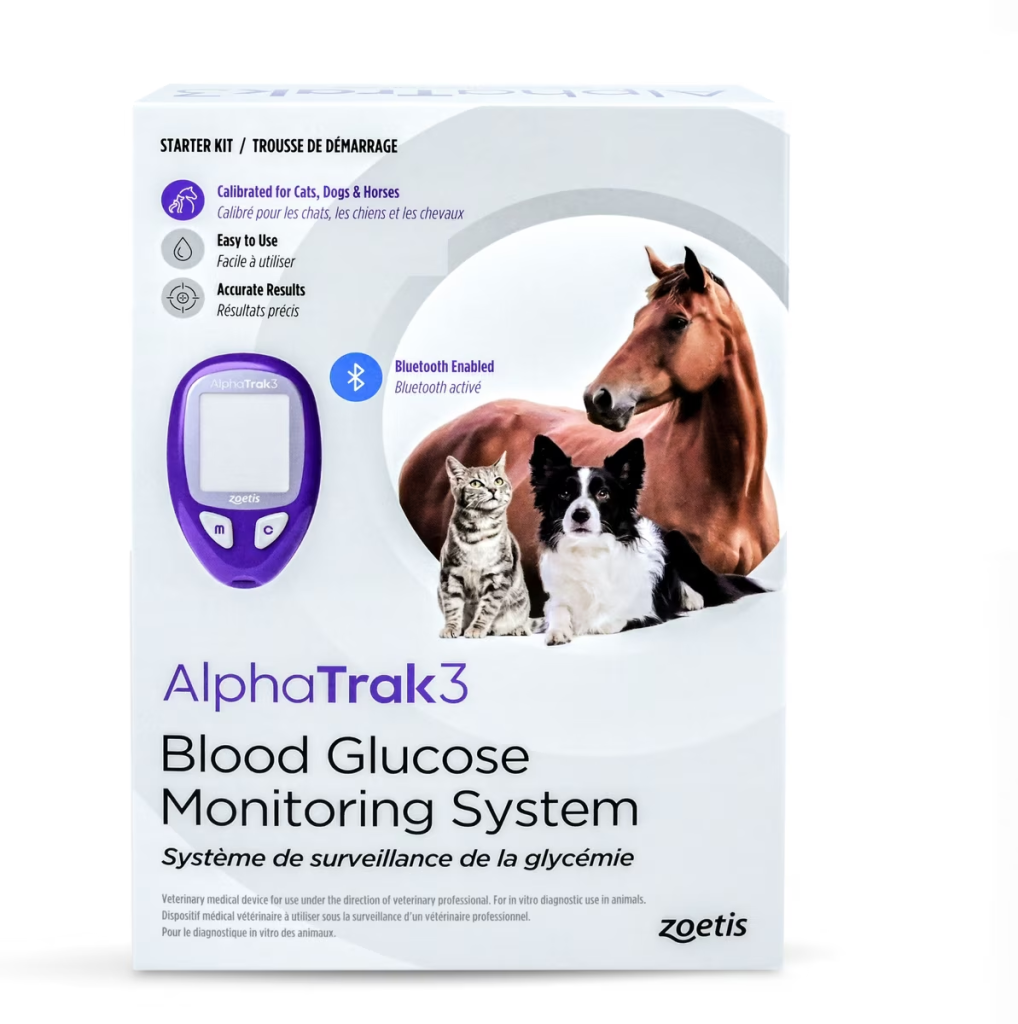
Chewy: AlphaTRAK 3, Amazon: AlphaTRAK 3 Kit
- Pet meter
- Smallest blood sample size of 0.3 µL
- Available mostly online
- Expensive, currently ~$66 on Chewy/Amazon
- Strips are the most expensive, $1.23 each on Chewy/Amazon
- True Metrix
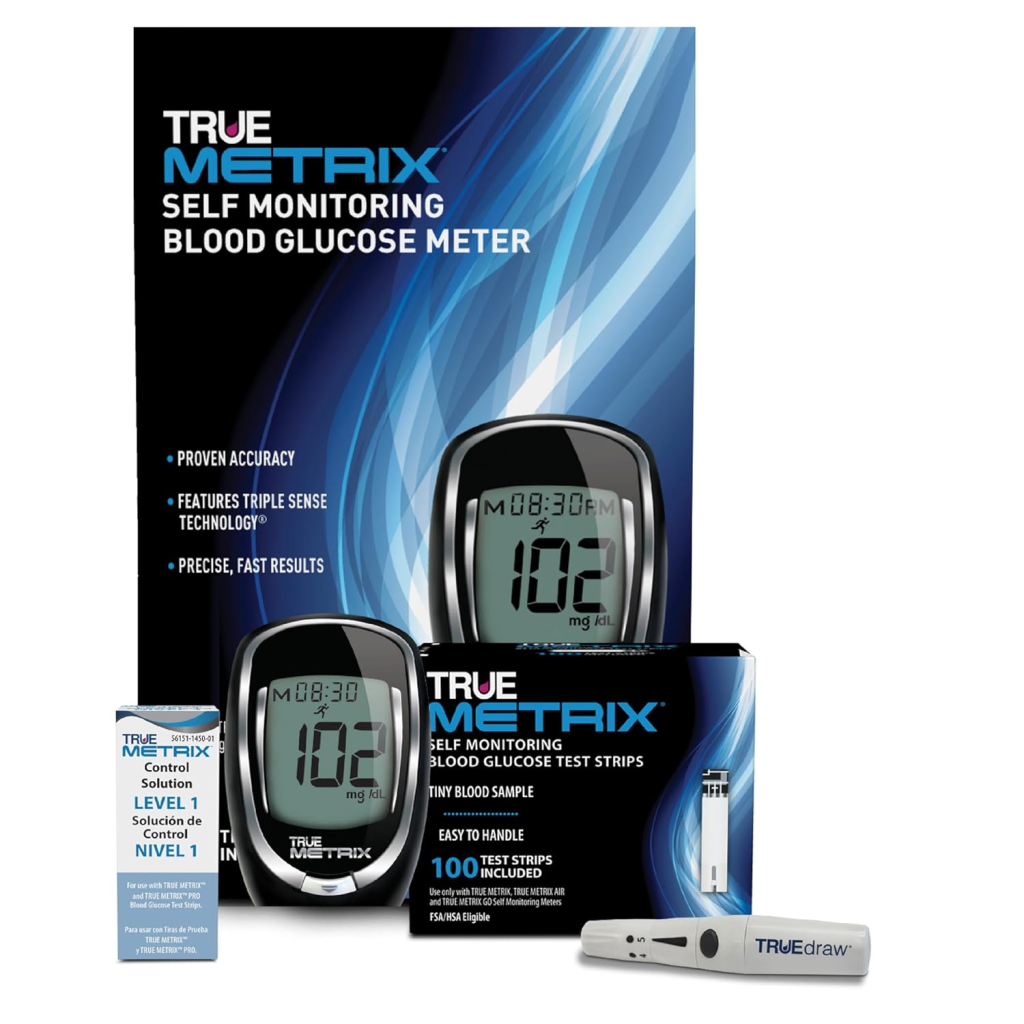
Amazon: TRUE METRIX Kit
- Human meter
- 0.5 µL blood sample size
- Available online, some stores
- Reasonably priced, ~$29 on Amazon
- Strips are $0.27 each on Amazon
- FreeStyle Libre Continuous Glucose Monitor
- Human calibration
- Requires prescription in the US
- Useful in specific situations, but not a replacement for a handheld meter
- More information on CGMs here.
**Prices pulled above from 12/18/2025.
Occasionally we see the OneTouch, PetTest, and the Accu-Chek, but not as frequently as the above. And I’m sure there are some more niche meters or meters from other countries I’m missing. More meter options here.
How to choose the right meter for your specific situation
What are your priorities? Cost often points to the ReliOn from Walmart. Smallest blood sample size caregivers will usually look at the AlphaTRAK. Contour Next is a good overall human meter.
A best practice we’ve found on the forum is to keep a backup meter in case something happens to your main meter, drop it, faults out, etc. at 3AM. Consider that as well when weighing the cost of the total cost of the meters.
The difference in test strip pricing might seem small, but when most caregivers are testing anywhere from 4 to 10+ times a day, it adds up quickly.
How your meter choice matters
There are different safety numbers depending on if you’re using a pet or a human meter. On FDMB, commonly used take-action thresholds are 50 mg/dL on a human meter, where with the pet meter we use 68 mg/dL. Outside of those thresholds and consistency, the exact meter matters far less than regular testing.
What matters most is knowing which meter type you’re using and applying guidance consistently to that meter.
Where to go if testing feels intimidating
If testing feels intimidating, these FDMB resources help walk you through it step by step:
- Hometesting Links & Tips
- Testing and Shooting Tips
- Getting Started with Continuous Glucose Monitors (CGMs)
- Useful in specific situations, but not a replacement for a handheld meter for dosing decisions.