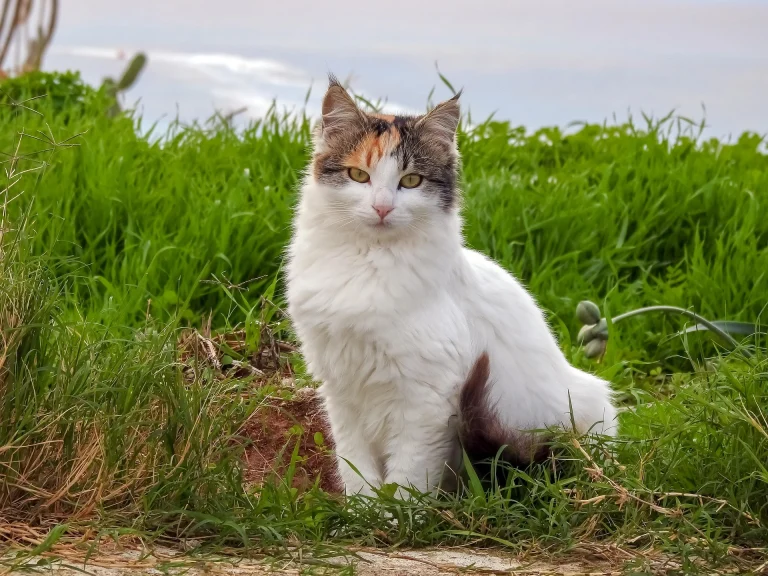

Managing used cat litter is one of the unglamorous but unavoidable parts of living with cats. How caregivers handle litter disposal affects odor, cleanliness, daily routines, and overall stress in the home. There is no single “right” method. Different households settle on different systems based on space, number of cats, physical ability, and tolerance for smell.
One product that comes up in caregiver discussions on the Feline Diabetes Message Board (FDMB) is the Litter Genie, often alongside broader conversations about whether dedicated litter disposal units are worth it at all. This article looks at common disposal approaches caregivers use, where products like Litter Genie fit in, and the trade-offs people report after living with them.
What a Litter Disposal Unit Is (and Isn’t)
A litter disposal unit is a sealed container designed specifically for scooped cat waste. Instead of bagging litter and immediately taking it outside, caregivers drop the waste into the unit, which traps odors until the container is full and ready to be emptied. It is not a litter box, not a replacement for scooping, and not a permanent storage solution. It simply holds used litter between trash runs in a more controlled way.
Why Some Caregivers Find Them Useful
Odor control is the most commonly cited benefit. When functioning properly, sealed disposal units can significantly reduce the smell that builds up in regular trash cans, especially in apartments or smaller homes.
Convenience is another major factor. Being able to scoop and drop waste into a nearby container instead of walking it outside multiple times a day can make litter box maintenance feel less disruptive. This matters in multi-cat households, for caregivers with mobility limitations, or during bad weather.
Some caregivers also find that having a dedicated disposal container makes scooping more consistent. When the process feels quick and contained, it is easier to stay on top of daily maintenance.
Commonly Recommended Litter Disposal Units
- Litter Genie
Price: $59.99
Amazon: Litter Genie, Chewy: Litter Genie
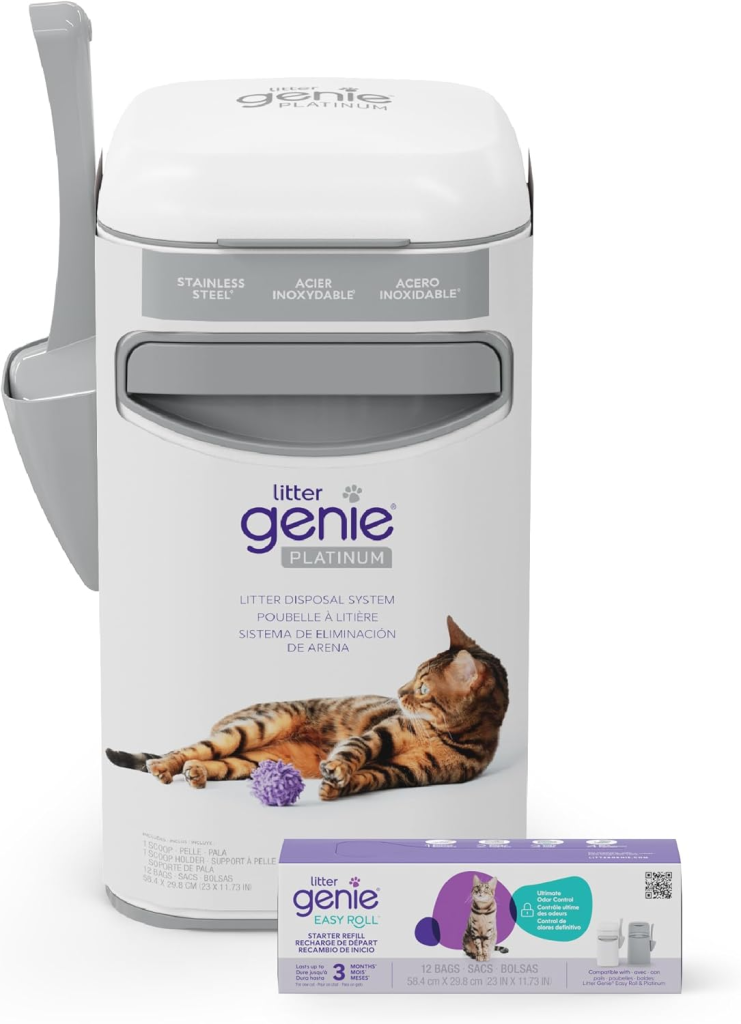
Litter Genie is a commonly used litter disposal system among cat caregivers. It is a sealed pail designed to hold scooped litter between trash days and reduce odor inside the home. These systems use proprietary refill cartridges, which means ongoing refill costs should be factored in.
Caregivers note that opening size matters. Some litter scoops are wider than the opening on certain models, which can make scooping less convenient unless a smaller scoop is used. The Litter Genie product line includes multiple sizes and styles, with differences in capacity, footprint, and materials, which may matter depending on space and number of cats.
- Diaper Genie
Price: $51.89
Amazon: Diaper Genie
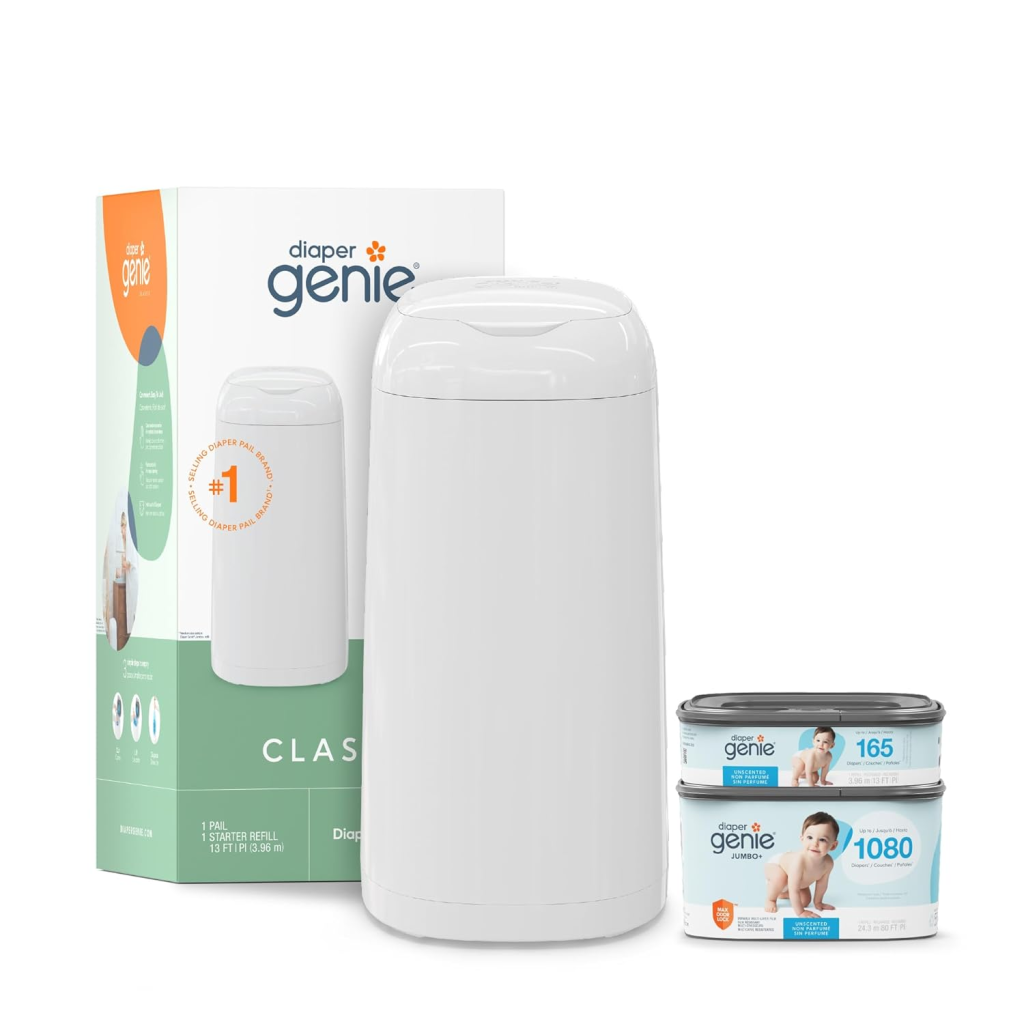
Diaper Genie uses a similar sealed-pail concept but is marketed for disposable diapers rather than cat litter. Some caregivers choose it as an alternative because of familiarity or availability.
Like Litter Genie, it relies on proprietary refill bags. It is not designed specifically for cat litter, so factors like opening size, scoop fit, and long-term odor control may vary depending on litter type and usage patterns.
- PetFusion Portable Cat Litter Disposal
Price: $99.99
Amazon: PetFusion, Chewy: PetFusion
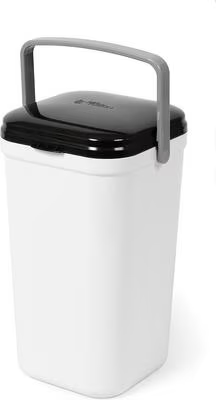
PetFusion’s disposal unit takes a simpler, more minimalist approach compared to cartridge-based systems. It does not rely on proprietary refill cartridges and is designed to work with standard bags.
Caregivers who prefer fewer proprietary components or want a system that is easier to clean long-term often look at this style of disposal unit. Odor control relies more on sealing and routine maintenance rather than layered refill systems.
Common Drawbacks Caregivers Report
Cost is the most frequent complaint. Systems that rely on proprietary refill cartridges or bags add an ongoing expense that some caregivers find hard to justify compared to standard trash bags.
Odor control is not foolproof. Overfilling, improper sealing, or placing the unit in a warm area can allow smells to escape. Over time, plastic containers may also absorb odors and become harder to fully clean.
Space can be an issue as well. Larger units may feel bulky in tight living areas, and some caregivers find that a smaller, simpler setup fits their home better.
Other Ways Caregivers Dispose of Litter
Caregivers managing unregulated diabetic cats often report dealing with larger volumes of soiled litter. Increased urination is common when blood glucose is not yet well controlled, which can make litter box maintenance more demanding. In these situations, disposal methods that reduce odor and allow more frequent scooping without disruption may feel more important than in households with regulated or non-diabetic cats.
Many caregivers stick with traditional methods and are satisfied with them.
Some scoop daily into small bags and take them straight to an outdoor trash can with a tight-fitting lid. Others double-bag litter and store it in a dedicated trash bin until pickup day. This approach is simple, low-cost, and flexible, though it may involve more frequent trips outside.
Another common option is using a regular trash can or diaper pail lined with standard bags. These setups lack proprietary refills and can be easier to clean or replace if odors build up.
Some caregivers prefer very simple, low-cost setups. A common example is using a small compost or kitchen scrap container with a charcoal odor filter, lined with inexpensive household trash bags. When emptied regularly, this can control smell reasonably well without proprietary refills or specialty equipment, making it an appealing option for those prioritizing cost and simplicity.
In multi-cat households, caregivers sometimes designate a single centralized disposal bin to keep litter waste separate from household trash, regardless of whether it’s a specialty product or a standard container.
Safety and Environmental Considerations
Caregivers generally avoid flushing cat litter, even products marketed as “flushable,” due to concerns about plumbing systems, wastewater treatment, and environmental contamination.
Dumping or burying litter outdoors is also commonly avoided. Cat waste can introduce pathogens into soil and water, and most caregivers prefer sealed disposal through household trash.
Some people experiment with biodegradable bags or plant-based litters to reduce plastic waste, though experiences vary and performance is inconsistent.
So, Is a Litter Genie or Similar Worth It?
For some caregivers, especially those sensitive to odor or looking to reduce daily trips outside, a dedicated disposal unit can make litter box care feel easier and more manageable. For others, the added cost and maintenance outweigh the convenience.
There is no universal answer. The best system is the one that fits your space, routine, and comfort level while keeping litter box care consistent and hygienic. Many caregivers try one approach, adjust over time, and land somewhere in between specialized products and simple household solutions.
Resources: