Regulating dosage

Status
Not open for further replies.

ab1g

Member Since 2015
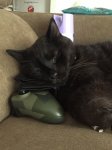
So I found out a few months ago that my cat Jack is diabetic :(. The whole thing definitely came as a shock but he's been a trooper and on the plus side, I just found this forum! I am still in the "figuring out his dosage" phase and I've gradually worked Jack up(with vet visits) to 3 units of prozinc twice a day. My issue is, is I know jack still isn't regulated as he's still peeing a lot and is always thirsty. I understand there is some sort of home test I can do to check glucose levels, but my questions are: is it difficult? Is it expensive? I've heard it's pretty painful for the cats as well.

I'm tempted to raise Jack to 3.5 units 2x/a day then going back to my vet to check his levels but I really can't afford to come and to be told to "raise him another half unit then come back". Any suggestions or advice? Jack is a 15 pound Bombay cat :) thanks in advance!
 

Attachments

  • image.jpg
    image.jpg
    45.4 KB · Views: 45
Hi and welcome to FDMB
We all home test our kitties here on the forum. It is not hard...it does take a few days to get used to doing it but then it is old hat! Your cat will get used to it quickly as well.
We suggest you test in the same place each time so the cat associates it with testing. We also always give a small treat each time so the cat gets to associate testing with treats.
If you live in the US a lot of people get their monitor from Walmart ......a Relion micro or a Relion prime.
Here is a link to how to home test
http://www.felinediabetes.com/FDMB/threads/testing-and-shooting-tips.85113/

Here is a link to setting up the spread sheet to record the blood sugar levels. If you have trouble setting it up post and someone will help you.

http://www.felinediabetes.com/FDMB/threads/fdmb-spreadsheet-instructions.130337/

I would not increase the dose of insulin until you are testing the BSLs ...blood sugar levels....and know how low the dose is taking your cat. BSLs are nearly always higher at the vets due to cat stress.
Home testing will keep your cat safe and is much cheaper than going back and forth to the vet.
We have very experienced people here who can help you with dosing.
Looking forward to hearing back from you
 
Hi and welcome to this forum. I am still pretty new here (my cat was diagnosed in August) You will get all the information you need here to help manage your cat's diabetes. It is totally overwhelming at first - I was constantly nauseated for the first 6 weeks. But it does get better.
Several things - home testing is incredibly important- it is impossible to manage without it. And it is quite easy to do - turns out cats don't have many nerve endings in their ears, so it doesn't seem to bother them as much as one might think. If you go to the home page of the forum, you can find links for home testing - they take you step by step. There are several different monitors - i use Alpha Trak2 - the pet monitor, but most people on the forum use a monitor from walmart. I think the experienced members on the forum would advise you not to increase the dose until you can home test and you know what his blood glucoses are running. Please post to the prozinc forum - those of us using that insulin can help you with dosing. Diet is also important - low carb wet food - this link (on the home page of the forum) will help you get a good overview -in fact, best thing for you to do now is 1) read all the info for newbies on the home page, and also the stickies on the prozinc forum 2) home test asap 3) low carb wet food
We're all in this together, and everyone wants Jack to be happy and well regulated very soon - I'm sure some of the more experienced members will chime in with more tips.
 
Last edited:
What are you feeding Jack?
We recommend wet/canned food which is low carbohydrate.
We do not commend dry food. It is much higher in carbohydrates and has very little moisture in it.
Jack needs extra fluids because he is peeing so much. One way to do this is to add some water to his canned food and make it a bit soupy. Until you have his BSL s under control he will continue to pee more and be thirsty, and probably be hungrier.
Would you mind telling up your name please!
 
Hi there! I wanted to chime in and agree that home testing is easy AND safe. Plus (bonus) it saves you tons of money since you won't need to go to the vet just to check glucose numbers! Would you be willing to give it a try? It takes a bit of getting used to, but we can help.

The amount of insulin you are giving is a lot without any preshot tests to see where he's at. If you do start home testing, we can definitely help figure out a good dosage to bring his levels down and help him get regulated!
On a side note, if you aren't testing at home, I wouldn't change food. We do prefer low carb, canned food, but since it can drop their BSL over 100 points overnight, I'd be worried about how that affects him without home testing.

Welcome to FDMB!
 
A lot of good information above. Home Testing is so important to keep your kittie safe. As Rachel mentioned above, your dose is on the high side and with home- testing you might be able to reduce that. I will add that the Relion PRIME test strips are 1/2 the price of the Relion Micro. We will be here to help you every step of the way. Just ask and someone will be able to help you. And welcome.
 
Thanks @Rachel for mentioning not changing the food until testing.........I should have mentioned that.
What Rachel says is very important....do not change the food if you are feeding dry food or high carb canned food until you are testing the blood sugars, because the blood sugars can drop a lot if you change to low carb, and if you are not testing the BSLs Jack could drop too low. But if you are testing you can keep him safe.
 
Welcome to the message board, the best place you never wanted to be.

There are 4 things you'll need to manage your kitty's diabetes:
- You - without your commitment, the following won't work.
- Home blood glucose monitoring with an inexpensive human glucometer such as the WalMart Relion Confirm or Target Up and Up (the pet ones will break your budget!). This saves you the cost of going to the vet for curves and done regularly, removes the need for a fructosamine test. All of our insulin guidelines use human glucometer numbers for reference.
- Low carb over the counter canned or raw diet, such as many Friskies pates. See Cat Info for more info. If already on insulin, you must be home testing before changing the diet. Food changes should be gradual to avoid GI upsets - 20-25% different food each day until switched. There are 2 low carb, dry, over the counter foods in the US - Evo Cat and Kitten dry found at pet specialty stores and Young Again 0 Carb found online.
- A long-lasting insulin such as ProZinc, Lantus, BCP PZI, or Levemir. No insulin lasts 24 hours in the cat, so giving it every 12 hours is optimal for control.
 
Status
Not open for further replies.
Back
Top