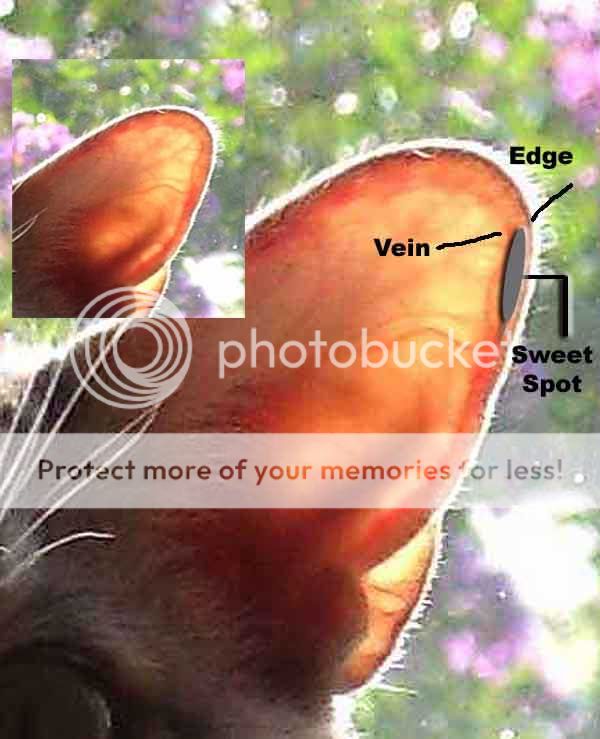
Perry provided some great suggestions regarding testing. You can also 'scoop' blood onto your fingernail and test from there if your kitty is squirmy.
I wouldn't use the info on low pre-shots quite yet. Those instructions are more relevant once you are data ready. Instead, take a look at the starred, sticky note regarding
becoming data ready.
What I would add to Perry's and Laurie's suggestions is a bit of behavioral training. Over the course of the next several days, pick up your kitty and take him to the spot that you test and just let him hang out and give him a treat. Don't test -- just treats. Fiddle with his ears -- but give scratches, tell him what a good boy he is, be affectionate, etc. Let him begin to associate the test spot with more than just getting poked and you're being upset. The more confident you feel, the easier it will be for both of you.
We don't typically suggest that you base giving a shot on the BG test once you've fed. Generally, the hour after you feed, you'll see a food spike. Two hours after you've fed, the numbers
should be close to your pre-shot test since this is around the time that Lantus onset begins. Right now, you don't yet have data to be shooting numbers that are under 100. We encourage newbies to post if you get a number under 150. A great deal will depend on whether you can closely monitor when you have a low pre-shot test. If you can't get tests, you don't know whether your cat's numbers are dropping into too low of a range where you can intervene with high carb food.
If you can, testing in an hour and every 3 hours would be great. We don't encourage testing just once a week the way your vet suggested. At this point, though, if you can get a pre-shot test every time and one test in each of the AM and PM cycles would be very good. Try to get the spot checks somewhere toward the middle of the cycle.
A few deep breaths and remember, you can do this. We've had people who are phobic of needles and blood overcome their fear and become expert at testing. You really can do this!
I also agree -- I think your cat needs less insulin.