Dasha and Kabosu
Member Since 2021
Hi everyone,
My cat is a real Six Dinner Sid who lives with multiple families, eats several dinners and does whatever he wants. I probably should not say "my" cat, but I just can't do otherwise. I love him very much and I worry a lot about his health.
A little story about how I got to know him (which you can skip, as it's not related to diabetes):
TL;DR: He's outdoor/indoor visiting multiple people, but I believe we are his favourite humans
We live in a gated apartment complex in the suburbs of Dublin, Ireland. Three years ago, a big tabby cat showed up at my door insisting I had to let him in. In fact, he was so dedicated that he then broke into the apartment through the window (which we found hilarious, because it involved quite some jumping and balancing on the railing). After that, he started coming here regularly (although we did not feed him initially), he'd just sleep on the couch and sometimes try to jump on our bed and sleep there (which I also did not allow initially). I posted his photo on a local Facebook page, and managed to get in contact with his owners. Turned out they had recently moved to the area. Their new house had only a small garden with no mice, so the cat possibly decided to "look for a better life" elsewhere. He used to come back to them to sleep and eat, but had eventually stopped doing this. The woman actually said they used to have two cats that'd go for a walk together, but the other one was run over by a car when crossing the street going back home. So she believed it was safer for that cat to stay with us or someone else in the same complex.
On most days he was usually spending 10-15 hours in our apartment. He became like a family member to us, and I believe he liked us too, as he brought us many presents over these years: dozens of mice, some of which were still alive, and even a couple of birds. I could see he started trusting us, as he'd allow us to pick him up and would even purr when I would carry him around. He also often slept on his back with his belly totally unprotected.
About the cat
He's a neutered male tabby who must be around 8-9 years old.
Symptoms
He started gaining weight about two years ago and was ~6.5kg this July. Then he suddenly lost a lot of weight, stopped hunting, started sleeping on the floor instead of the bed/sofa, started drinking a lot (I rarely saw him drinking water before). He also stopped visiting us very often, and would go to the neighbours on the ground floor instead. I was heartbroken, but now I think that was because it was hard for him to climb the stairs and/or window.
He also got a lot of hair mats on his lower back/hip area.
I could hear him make "chewing" sounds when he'd lie on the floor trying to sleep. I think that was because he was nauseous. I actually saw him vomiting a few times, and sometimes intense "chewing" would happen just before.
Diagnosis and Treatment
We took him to the vet a few weeks ago, and his blood tests showed 21mmol/l blood glucose, and also glucose in his urine (which was a challenge to collect, as he pees outside). His fructosamine was high but close to the borderline (not sure what the number was, that's what the vet said). The vet initially prescribed him 1IU of Caninsulin twice a day, which they told us to increase to 2IU after a few days as that did not have much effect. They also prescribed him dry Diabetic Royal Canin.
He's been on Caninsulin for more than a week now. His blood glucose still stays around 20mmol/l. I'm home testing it using a OneTouch Verio human glucometer. I've noticed it sometimes goes to 14-16mmol/l a few hours after the injection but it is back to 20 or more at the time of injection. I've read on Caninsulin web that cats should not get more than 2IU per injection in the first 2-3 weeks of treatment, so I don't think we can increase the dose just yet.
I believe he is probably feeling slightly better than before, as I could see him jump on the couch a few times, and even entering through the window which requires quite some exercise. He's still mostly lying on the floor though, and obviously not feeling very well.
This is how his BG numbers (in mmol/l) look like:
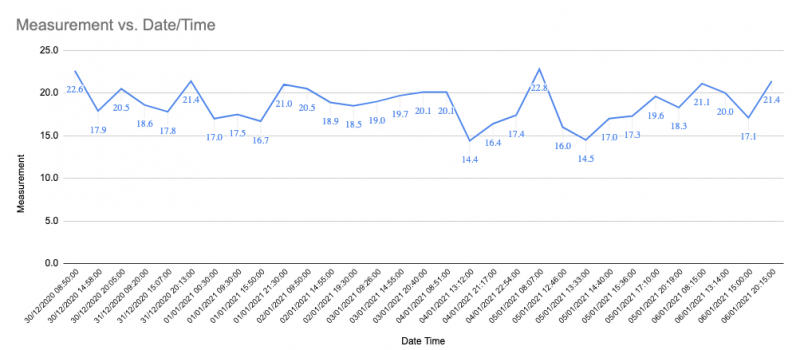
link to the graphic.
Regulating his diet is a real challenge, as he goes everywhere. I talked to many neighbours and also put a collar on him saying "Diabetic, DO NOT FEED", but there is always a chance he'll eat something not so appropriate. Also, keeping his feeding on schedule is close to impossible so we let him graze.
I wanted to contact my vet soon with the recent BG measurements, and would like to gather a bit of information before that. I'm seeing that many people use a different type of insulin, maybe I could suggest that to my vet.
I would appreciate any advice!
Have a nice day everyone!
My cat is a real Six Dinner Sid who lives with multiple families, eats several dinners and does whatever he wants. I probably should not say "my" cat, but I just can't do otherwise. I love him very much and I worry a lot about his health.
A little story about how I got to know him (which you can skip, as it's not related to diabetes):
TL;DR: He's outdoor/indoor visiting multiple people, but I believe we are his favourite humans
We live in a gated apartment complex in the suburbs of Dublin, Ireland. Three years ago, a big tabby cat showed up at my door insisting I had to let him in. In fact, he was so dedicated that he then broke into the apartment through the window (which we found hilarious, because it involved quite some jumping and balancing on the railing). After that, he started coming here regularly (although we did not feed him initially), he'd just sleep on the couch and sometimes try to jump on our bed and sleep there (which I also did not allow initially). I posted his photo on a local Facebook page, and managed to get in contact with his owners. Turned out they had recently moved to the area. Their new house had only a small garden with no mice, so the cat possibly decided to "look for a better life" elsewhere. He used to come back to them to sleep and eat, but had eventually stopped doing this. The woman actually said they used to have two cats that'd go for a walk together, but the other one was run over by a car when crossing the street going back home. So she believed it was safer for that cat to stay with us or someone else in the same complex.
On most days he was usually spending 10-15 hours in our apartment. He became like a family member to us, and I believe he liked us too, as he brought us many presents over these years: dozens of mice, some of which were still alive, and even a couple of birds. I could see he started trusting us, as he'd allow us to pick him up and would even purr when I would carry him around. He also often slept on his back with his belly totally unprotected.
About the cat
He's a neutered male tabby who must be around 8-9 years old.
Symptoms
He started gaining weight about two years ago and was ~6.5kg this July. Then he suddenly lost a lot of weight, stopped hunting, started sleeping on the floor instead of the bed/sofa, started drinking a lot (I rarely saw him drinking water before). He also stopped visiting us very often, and would go to the neighbours on the ground floor instead. I was heartbroken, but now I think that was because it was hard for him to climb the stairs and/or window.
He also got a lot of hair mats on his lower back/hip area.
I could hear him make "chewing" sounds when he'd lie on the floor trying to sleep. I think that was because he was nauseous. I actually saw him vomiting a few times, and sometimes intense "chewing" would happen just before.
Diagnosis and Treatment
We took him to the vet a few weeks ago, and his blood tests showed 21mmol/l blood glucose, and also glucose in his urine (which was a challenge to collect, as he pees outside). His fructosamine was high but close to the borderline (not sure what the number was, that's what the vet said). The vet initially prescribed him 1IU of Caninsulin twice a day, which they told us to increase to 2IU after a few days as that did not have much effect. They also prescribed him dry Diabetic Royal Canin.
He's been on Caninsulin for more than a week now. His blood glucose still stays around 20mmol/l. I'm home testing it using a OneTouch Verio human glucometer. I've noticed it sometimes goes to 14-16mmol/l a few hours after the injection but it is back to 20 or more at the time of injection. I've read on Caninsulin web that cats should not get more than 2IU per injection in the first 2-3 weeks of treatment, so I don't think we can increase the dose just yet.
I believe he is probably feeling slightly better than before, as I could see him jump on the couch a few times, and even entering through the window which requires quite some exercise. He's still mostly lying on the floor though, and obviously not feeling very well.
This is how his BG numbers (in mmol/l) look like:
link to the graphic.
Regulating his diet is a real challenge, as he goes everywhere. I talked to many neighbours and also put a collar on him saying "Diabetic, DO NOT FEED", but there is always a chance he'll eat something not so appropriate. Also, keeping his feeding on schedule is close to impossible so we let him graze.
I wanted to contact my vet soon with the recent BG measurements, and would like to gather a bit of information before that. I'm seeing that many people use a different type of insulin, maybe I could suggest that to my vet.
I would appreciate any advice!
Have a nice day everyone!



 ! Really, it's just a much better insulin for cats, hopefully Kabosu-san does well on it.

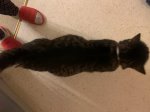

 . He's such a nice guy who loves sharing with his humans haha. Honestly, I think he is too weak right now to hunt... He won't play as he used to.