New Member Sep 3, 2021 First Post - Cheshire

Status
Not open for further replies.

Garfield DingDong

Member Since 2021
Cheshire is 17 and used to weigh close to 19lbs. I noticed that he has been eating less & losing weight so I brought him to the vet. His blood test reveals a bg level 25mmol/L. Vet also suspected pancreatitis & fatty liver.
Vet started him on 2iu Lantus insulin twice a day last Tuesday. After his second dose, his bg dropped drastically to as low as 2.9mmol/L. Vet told me to skip one injection and start again with 1iu twice daily. 3 days have passed and his bg level remains at 20ish to out of range.
Vet ups his dosage to 1.5iu twice daily day before yesterday and his bg level still remains about the same until this morning which dropped from 22.6mmol/L to 7.2mmol/L in 9 hours.
He's also not eating much on his own and I have to syringe feed him 300g per day. He has almost lost 3lbs in one month.
He's my first sugar kitty so I am not sure how long it takes to get the bg level to normal.
Any idea/suggestions?
 
Welcome. Was a blood test, Specfpl, run for pancreatitis? Fatty liver happens when cats lose weight too fast and don’t eat enough. What medication did your vet send you home with? He needs nausea medication. There’s cerenia which you vet should have given you. Get an RX for ondansetron, a human medication that works really well and can be given every 8 hours. The two meds work differently and can both be given togetherif necessary . Cerenia is given every 24 hours. You might need an appetite stimulant. I like the hunan one. An RX is needed though, cyproheptadine. It can be given twice a day. Vets often use mirtazapine but I didn’t like the reaction my cat had to it. A milder form that people say works well is mirtaz.

There’s lots of information on pancreatitis in the pancreatitis handbook. I’ll be back with the link.
https://felinediabetes.com/FDMB/threads/a-primer-on-pancreatitis.83108/
 
Looks like your vet started you on too high a dose. We usually recommend a starting dose of 0.50-1U wit increases in 0.25U.

Too much insulin can sometimes look like not enough insulin - when the dose is too high and the cat drops too low on that dose, the cat's body fights to stay alive. The liver and the pancreas will release stored hormones and sugars to bring it back up fast so too much insulin can actually look like it's not enough! This happens when a cat is started at too high a dose, or the dose is increased by too large amounts (so you bypass a good dose) and when you don't have enough tests to know how low the cat is going on a dose.

Here's a link to the dosing protocols we follow here:
Dosing Methods: Start Low, Go Slow (SLGS) & Tight Regulation (TR)

Since you are hom testing, if you set up a spreadsheet as per our format, we can help you witjh dosing. I can set-up your spreadsheet for you to enter the data.
How to Create a Spreadsheet


What food are you feeding Cheshire and are you using a human meter or a pet meter?
 
Did blood test & ultrasound.

He had pancreatitis 7 years ago when he's 10. No flareup in between through.

We are using the FreeStyle LibreLink Abbott for human use.

Feeding him ID can now which the vet said is the best for him now with his other complications - pancreatitis & fatty liver.

Will look into the spreadsheet now.

Thanks
 
There is no special diet for pancreatitis. Were you given nausea meds? He’s not wanting to eat because nauseous.
 
Hi,

I just tried the spreadsheet. I guess I need the owner's permission to edit.

I have looked at Bandit's Spreadsheet and I am not too sure what data should be filled for row 4.

Does +1 mean 1am/1pm & so forth?

I really dun want to bother you but if you dun mind, please kindly help me to set up the spreadsheet. Please lemme know what info you need. Thanks heap!

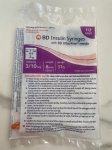
As for unit of the insulin, I am not sure if we are talking about the same measurement. 0.5iu is already very very tiny, it's like half of a drop and that's the smallest unit on the syringe. It's impossible to go down to 0.25ui :p The syringe I am using is U-100 1ml 30G5/16. The insulin is Lantus Insulin Glargine 100IU/ml.
 
Feeding him ID can now which the vet said is the best for him now with his other complications - pancreatitis & fatty liver.
Can you check what is the carb% of this food? Is this wet food or dry food?
You can use this carb calculator to get a rough estimate of carb%. Look at Dry Matter Carbohydrates at the very end.
http://scheyderweb.com/cats/catfood.html


I really dun want to bother you but if you dun mind, please kindly help me to set up the spreadsheet. Please lemme know what info you need. Thanks heap!
I can set up your spreadsheet and signature. It is not probem at all :-)
Will send you a PM with the details I need. Look for it in the Inbox at the top right corner of this page.


As for unit of the insulin, I am not sure if we are talking about the same measurement. 0.5iu is already very very tiny, it's like half of a drop and that's the smallest unit on the syringe. It's impossible to go down to 0.25ui :p The syringe I am using is U-100 1ml 30G5/16. The insulin is Lantus Insulin Glargine 100IU/ml.
Yes, we are talking about the same insulin and the same units of measurement. We use U-100 syringes of 30unit (0.3 ml) capacity. In the US and UK/EU, you get syringes with half unit marks so it makes it easy to measure in multiples of 0.25U. In Australia/NZ you get 0.3ml syringes but without the half unit marks. Which country are you in?
 
Can you check what is the carb% of this food? Is this wet food or dry food?
You can use this carb calculator to get a rough estimate of carb%. Look at Dry Matter Carbohydrates at the very end.
http://scheyderweb.com/cats/catfood.html


I can set up your spreadsheet and signature. It is not probem at all :)
Will send you a PM with the details I need. Look for it in the Inbox at the top right corner of this page.


Yes, we are talking about the same insulin and the same units of measurement. We use U-100 syringes of 30unit (0.3 ml) capacity. In the US and UK/EU, you get syringes with half unit marks so it makes it easy to measure in multiples of 0.25U. In Australia/NZ you get 0.3ml syringes but without the half unit marks. Which country are you in?
I am in Hong Kong China. There's half unit marks on the syringes but it's already awfully small for half a unit :( 0.25ui is thiner than my nails......... And with the stopper of the syringe, it's really impossible to gauge the difference of that 0.25iu. It must be my failing eyesight :rolleyes:
 
I am in Hong Kong China. There's half unit marks on the syringes but it's already awfully small for half a unit :( 0.25ui is thiner than my nails......... And with the stopper of the syringe, it's really impossible to gauge the difference of that 0.25iu. It must be my failing eyesight :rolleyes:
That's because you are looking at 1ml syringes with 100 unit capacity. The 0.3ml syringes with 30 unit capacity are much easier to read! :-)
 
That's because you are looking at 1ml syringes with 100 unit capacity. The 0.3ml syringes with 30 unit capacity are much easier to read! :)
It's a 0.3mL syringe already :cat: Or am I wrong?
 

Attachments

  • IMG_1336.jpg
    IMG_1336.jpg
    64.3 KB · Views: 181
It's a 0.3mL syringe already :cat: Or am I wrong?
Yes they are! And they have half unit markings as well! Each mark is 0.5U and between the two is 0.25U.
We use magnifiers to see properly. The zoom function of a smartphone camera provides excellent magnification.

Insulin Care & Syringe Info: Proper Handling, Drawing, Fine Dosing

Btw, Hills I/D wet is 23-24% carbs which is high carb. A diabetic cat needs to eat food that is low in carbs and low phosphorus (on account of his CKD). But for now you want to find a food that Cheshire likes. Because he needs to eat. Once he is eating properly, we can worry about transitioning him to a suitable diet. Is it possible that he doesn't like the I/D? Is there a food he really likes?

 
Yes they are! And they have half unit markings as well! Each mark is 0.5U and between the two is 0.25U.
We use magnifiers to see properly. The zoom function of a smartphone camera provides excellent magnification.

Insulin Care & Syringe Info: Proper Handling, Drawing, Fine Dosing

Btw, Hills I/D wet is 23-24% carbs which is high carb. A diabetic cat needs to eat food that is low in carbs and low phosphorus (on account of his CKD). But for now you want to find a food that Cheshire likes. Because he needs to eat. Once he is eating properly, we can worry about transitioning him to a suitable diet. Is it possible that he doesn't like the I/D? Is there a food he really likes?
He's got pancreatitis & fatty liver & vet said i/d is the most suitable one for him now.
 
To the best of my knowledge there is no special food for pancreatitis or fatty liver. Any food he eats happily is good - especially for fatty liver. He needs to eat.
Did the vet suggest a feeding tube to get food into him?

Suggestions on How to Stimulate Kitty's Appetite
We syringe feed him 2.25 cans of i/d everyday, separate into 4 meals. Vet said if we fail to syringe feed him then we will need a feeding tube. He's very easy to syringe feed though.
 
Based on the data in your SS, I would hold the 1.5U for a few days and see how he does. Looks like you gave a lower dose this morning after seeing that lower preshot.
Lantus is dosed based on nadirs and not on preshots. If you get a number you are uncomfortable shooting, please don't feed and post here for advice.

The normal blood sugar range for a cat is 2.8 to 5.5 mmol on a human meter.
 
Based on the data in your SS, I would hold the 1.5U for a few days and see how he does. Looks like you gave a lower dose this morning after seeing that lower preshot.
Lantus is dosed based on nadirs and not on preshots. If you get a number you are uncomfortable shooting, please don't feed and post here for advice.

The normal blood sugar range for a cat is 2.8 to 5.5 mmol on a human meter.
I lower the insulin to 1ui as instructed by the vet this morning. He told me to stay with 1ui for today which I just did. Will speak to him again tomorrow.
 
My cat had chronic pancreatitis for years and in fact that is likely what led to him becoming diabetic. . All the experts say diet is almost never the cause although a very high fat diet is not recommended. If you look at the handbook link and read what the experts say you will see I am right. I’ll click on one and give you a link to one of the shorter ones for you to read.

I didn’t think Max was nauseous because he wasn’t vomiting. I though he was just picky. When he was in the right amount of ondansetron (zofran) he started eating well. What medications are you giving Cheshire?

I will get you that link.
 
My cat had chronic pancreatitis for years and in fact that is likely what led to him becoming diabetic. . All the experts say diet is almost never the cause although a very high fat diet is not recommended. If you look at the handbook link and read what the experts say you will see I am right. I’ll click on one and give you a link to one of the shorter ones for you to read.

I didn’t think Max was nauseous because he wasn’t vomiting. I though he was just picky. When he was in the right amount of ondansetron (zofran) he started eating well. What medications are you giving Cheshire?

I will get you that link.
Burprenorphine 0.8mg/ml Sublingual Solution
Methycobal Tab 500mcg (Vitamin B12)
Metoclopramide Tab 5mg
Metronidazole Tab 200mg
Mirtazapine Tab 2mg

I didn't feed him Mirtazapine anymore as it doesn't help his appetite. Switched to Cyproheptadine HCI 4mg this morning but still doesn't work :(

So we just syringe feed him 4 times a day.......
 
Burprenorphine 0.8mg/ml Sublingual Solution
Methycobal Tab 500mcg (Vitamin B12)
Metoclopramide Tab 5mg
Metronidazole Tab 200mg
Mirtazapine Tab 2mg
One thing to consider about the nausea meds you are using, this is from the section on “Antiemetic therapy” from the IDEXX guide on pancreatitis, which I find to be very helpful and easy to follow


“Metoclopramide (Reglan®) is a popular antiemetic in cats and is still used by many practitioners. However, metoclopramide is a dopamine antagonist and inhibits vomiting by blocking the central nervous system (CNS) dopamine receptors in the chemoreceptor trigger zone (CRTZ). It is probably not a very good antiemetic in cats because they are reported to have few CNS dopamine receptors in the CRTZ. Dolasetron (Anzemet®) and ondansetron (Zofran®) act on the serotonin 5-HT3 receptors in the CRTZ and are very effective in cats. Lastly, although maropitant citrate (Cerenia®) is only labeled for use in dogs, it has become a popular and effective antiemetic for use in cats and acts on the neurokinin (NK) receptors in the vomiting center and can be used at 1/2 of
the dog dose.”

A combination of both Cerenia and Ondansetron (Zofran) works best for my cat when she has pancreatitis. Also, at least for my cat, Metronidazole very much upset her stomach and made her nauseous when she was on it.

Link the the IDEXX primer
https://www.idexx.com/files/spec-fpl-treatment-for-feline-pancreatitis.pdf
 
You don’t have a good nausea medication. I think you were given me to loperamide fir nausea. Cats don’t have a receptor for it like dogs do. I suspect your vet is more used to treating dogs. You need ondansetron even more than cerenia as it works better for nausea and cerenia for vomiting. Until the nausea is controlled it will be hard to get him to eat on his own. You have the added complication of fatty liver so it’s super important he eat enough. I just looked at the most recent article on the link to the handbook. It reiterates this. It explains everything but is very technical.

I used cyproheptadine, a human antihistamine that was common,unused as an off label appetite stimulant before mirtazapine was available and still much prefer that to mirt. The cat that got it was agitated and very vocal. It only worked short term. You don’t want to stimulate the appetite of a nauseous cat so please get a better nausea medication ASAP. Don’t feed food you want him to eat long term as he might develop food aversions.
 
You don’t have a good nausea medication. I think you were given me to loperamide fir nausea. Cats don’t have a receptor for it like dogs do. I suspect your vet is more used to treating dogs. You need ondansetron even more than cerenia as it works better for nausea and cerenia for vomiting. Until the nausea is controlled it will be hard to get him to eat on his own. You have the added complication of fatty liver so it’s super important he eat enough. I just looked at the most recent article on the link to the handbook. It reiterates this. It explains everything but is very technical.

I used cyproheptadine, a human antihistamine that was common,unused as an off label appetite stimulant before mirtazapine was available and still much prefer that to mirt. The cat that got it was agitated and very vocal. It only worked short term. You don’t want to stimulate the appetite of a nauseous cat so please get a better nausea medication ASAP. Don’t feed food you want him to eat long term as he might develop food aversions.
I will check with the vet. Cheshire doesn't have vomiting issues though even without the med. Is it ok not to feed him anti-nausea med if he's not having that issue?
 
I will check with the vet. Cheshire doesn't have vomiting issues though even without the med. Is it ok not to feed him anti-nausea med if he's not having that issue?
I would definitely ask for the ondansetron, as that is for nausea. I don’t think it would hurt to ask for the Cerenia as well if they will give you some. It mainly controls vomiting, but it can help with nausea as well and it also helps a little bit with inflammation which may be helpful depending on what’s causing the nausea
 
I will check with the vet. Cheshire doesn't have vomiting issues though even without the med. Is it ok not to feed him anti-nausea med if he's not having that issue?

Yes. If nauseous he won’t want to eat. You are giving a medication for nausea already that isn’t good for cats. It just doesn’t work. Read what Sarah quoted above. I would eliminate metoclopramide. It never occurred to me that Max was nauseous as he didn’t vomit either. First he hit very picky and then he barely ate. His pancreatitis was chronic and the only symptom he had every time it reared it’s ugly head was inappetence. At first I needed to give cyproheptadine too but once I figured out how much ondansetron was needed I rarely needed an appetite stimulant.

If your vet doesn’t want to give you the nausea medication I suggest please print the article at the top of the list in the handbook and share with him/her. It’s the most recent one and your vet should know of the team who wrote it.
 
Also, does he have diarrhea? If not metronidazole can be constipating once the diarrhea is gone.
 
If you can handle another group I suggest you join the feline pancreatitis board on groupsio. Very informative caring people there. I know one of the mods personally.
 
Here’s another article to read.

https://www.idexx.com/files/spec-fpl-treatment-for-feline-pancreatitis.pdf


Here’s another article to read.

https://www.idexx.com/files/spec-fpl-treatment-for-feline-pancreatitis.pdf


Then why is he getting metronidazole?
I thought that's for his pancreatitis. Vet did mention that he prescribed anti-nausea if Cheshire does not have vomiting beuz the med can help him with his guts!? He said his guts are not moving much ......... I am bringing Cheshire for a revisit tomorrow and will check with the vet.
 
I thought that's for his pancreatitis. Vet did mention that he prescribed anti-nausea if Cheshire does not have vomiting beuz the med can help him with his guts!? He said his guts are not moving much ......... I am bringing Cheshire for a revisit tomorrow and will check with the vet.
Ok. That Med will help if a motility issue but will not help for nausea. Ask for the meds I suggested. If you read any of the literature both I suggest are meds of choice for nausea. Metronizadole will constipate so that one makes no sense b
 
Status
Not open for further replies.
Back
Top