

TommyTheCat
Member Since 2026
We are looking for help on what to do for our cat. After spending $11K on recent ER care, we are limited on what we can afford to do next. Questions are numbered throughout message below.
Background & Initial Hospitalization:
*Dental History: Had almost all of his teeth extracted 2 months ago. He was eating well shortly after the procedure, but started becoming picky with food until he was eating less and less. While we were gone on vacation he barely ate at all, leading to severe illness and an emergency room admission.
*Initial Diabetes Diagnosis (July 20, 2026): Hospitalized for anorexia, lethargy, and jaundice. Diagnostics revealed feline triaditis (pancreatitis, cholangiohepatitis, and enteritis) along with secondary diabetic ketosis/DKA (BG 352), elevated ketones 4.1
*Hospital Care: Treated with IV fluids, antibiotics (Unasyn/Clavamox), an insulin CRI. An esophageal feeding tube was placed prior to discharge.
Current Status
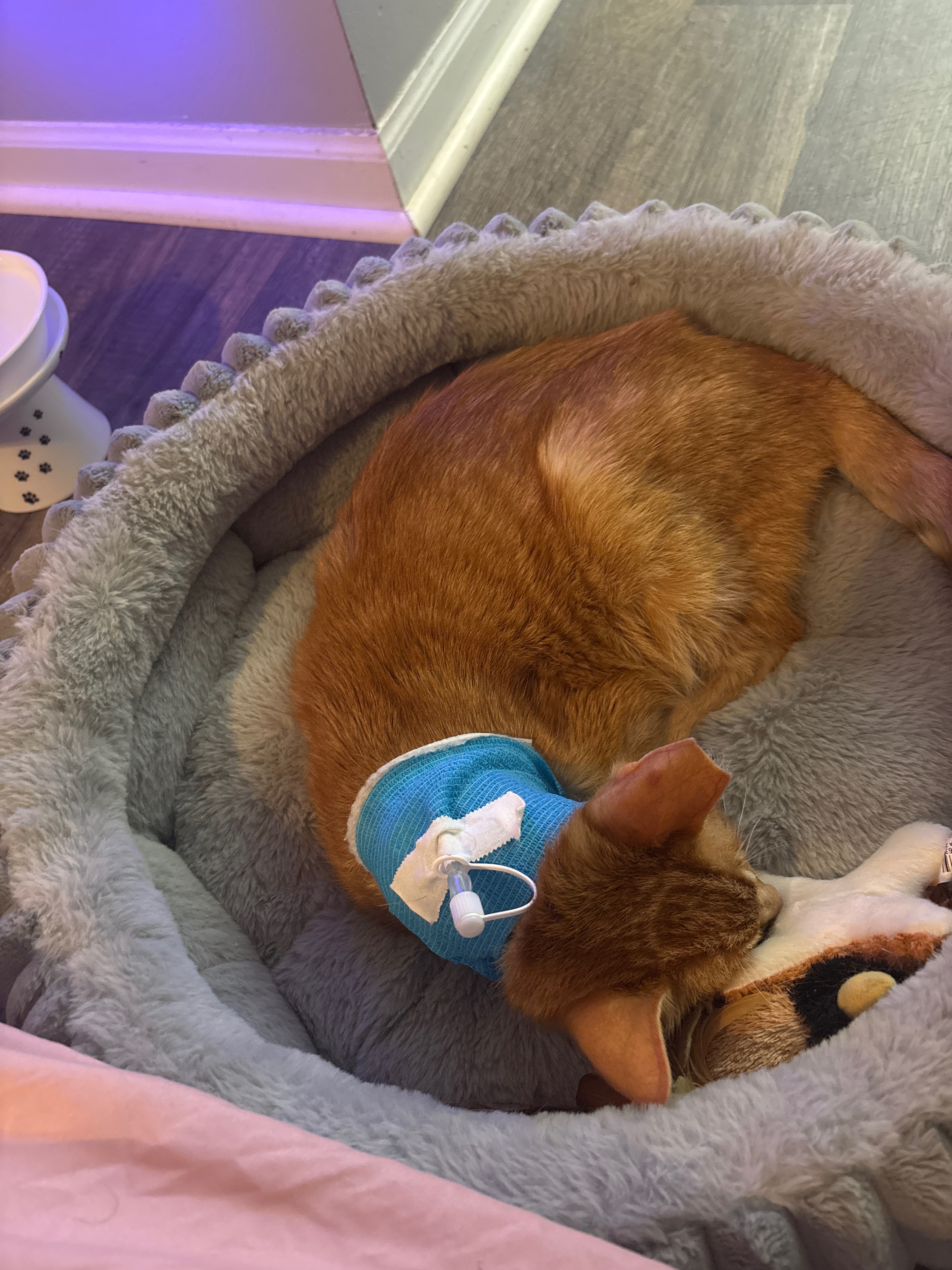
*Clinical Improvement: Tommy is acting much brighter and has been eating on his own (now it’s the opposite problem with a ravenous appetite), so tube feedings are no longer being administered (feeding tube is still in)
*Current Diet: weight has remained stable since his ER admission (being monitored).
He is eating Fancy Feast Classic Pate only (no dry food or other additions), and is being fed whenever he is hungry which feels like it’s way too often.
Question 1: Is it ok to be feeding so much? He’s eating 6-7 cans a day (and would eat more if we let him).
Medications Discontinued: Anti-nausea meds, gabapentin, and appetite stimulants (mirtazapine) have been stopped.
Lab Status: Follow-up labs at ER showed overall improvement with most of his issues (4 days after discharge), and overall things appear to be moving in the right direction.
Current Challenges:
Insulin Non-Responsiveness / Consistently High Glucose
Current Protocol: Glargine (Lantus) given via U-100 syringes, currently dosing .2 units, every 12 hours
However, his blood glucose readings remain extremely high.
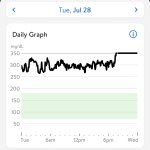
I attached readings from when the freestyle libre was working (and he was at .1 and .15 units of lantus).
Libre stopped working. We have just started to test on the ear instead. I see that we are supposed to make an excel sheet, which I will figure out soon. In the meantime…
Readings:
7/30
10pm 376 *1st test using blood from the ear
7/31
7:25am 363
7:30am .2 insulin given
12:30pm 324
7:20pm 432
7:30pm .2 insulin given
Had a few failed test attempts that night. The machine kept reading error.
8/1
7:20am 360
7:30am .2 insulin given
12:15pm 351
7:25pm 403
7:30pm .2 insulin given
10:00pm 379
8/2 gave ears a break and didn’t test. Worried we are hurting him. .2 insulin given at 7:30am & 7:30pm
8/3 7:25am 310
7:30am .2 insulin given
12:30pm 349
He eats prior to insulin. And constantly!… which may be messing up our number but we don’t know what else to do.
Question 2: His ears are so red from where we have been poking his ears. Worried we are hurting him and not sure if we should be re-poking the same red spots or not?
Can anything be done to help or improve the redness?
But the bigger issue is: There is still no clear drop or proper nadir following insulin administration! Based on the libre (the ear tests are still new for us). See attached screenshots from when the libre was still working and not just reading HI all the time like it does now.
Question 3: what protocols or adjustments have others seen work when a cat appears completely non-responsive to Lantus post-DKA/triaditis?
We moved insulin dose from 0.1 to 0.15 (both when we were using the libre only) to 0.2 (the same day we started manual testing on 7/30/26) without guidance from the vet. This is because we did everything at an ER and spent all of our money. We will find a primary vet when our next paycheck comes. This .2 dose has been held steady since 7/30 PM.
Question 4: How long do we stay at this dose and how do we handle dose increases safely?
Persistent Diarrhea- he has developed loose stools/diarrhea over the last 4 days (with very strong odor).
Tried: FortiFlora and pumpkin, with no improvement.
Question 5: What dietary adjustments, specialized probiotics, or over-the-counter anti-diarrheal strategies are commonly recommended for post-triaditis/diabetic cats with this added GI issue?
Overall we aren’t sure what we should be doing in regards to insulin dosing, along with how to properly manage feeding schedules (and constant need for food) to balance keeping him satiated and maintaining his weight, while his glucose levels remain unregulated.
Any help would be greatly appreciated.
We plan to see a vet to have the libre and feeding tube removed, along with asking for guidance either this Friday when our next paychecks come, or the following Monday (depending on availability).
Background & Initial Hospitalization:
*Dental History: Had almost all of his teeth extracted 2 months ago. He was eating well shortly after the procedure, but started becoming picky with food until he was eating less and less. While we were gone on vacation he barely ate at all, leading to severe illness and an emergency room admission.
*Initial Diabetes Diagnosis (July 20, 2026): Hospitalized for anorexia, lethargy, and jaundice. Diagnostics revealed feline triaditis (pancreatitis, cholangiohepatitis, and enteritis) along with secondary diabetic ketosis/DKA (BG 352), elevated ketones 4.1
*Hospital Care: Treated with IV fluids, antibiotics (Unasyn/Clavamox), an insulin CRI. An esophageal feeding tube was placed prior to discharge.
Current Status
*Clinical Improvement: Tommy is acting much brighter and has been eating on his own (now it’s the opposite problem with a ravenous appetite), so tube feedings are no longer being administered (feeding tube is still in)
*Current Diet: weight has remained stable since his ER admission (being monitored).
He is eating Fancy Feast Classic Pate only (no dry food or other additions), and is being fed whenever he is hungry which feels like it’s way too often.
Question 1: Is it ok to be feeding so much? He’s eating 6-7 cans a day (and would eat more if we let him).
Medications Discontinued: Anti-nausea meds, gabapentin, and appetite stimulants (mirtazapine) have been stopped.
Lab Status: Follow-up labs at ER showed overall improvement with most of his issues (4 days after discharge), and overall things appear to be moving in the right direction.
Current Challenges:
Insulin Non-Responsiveness / Consistently High Glucose
Current Protocol: Glargine (Lantus) given via U-100 syringes, currently dosing .2 units, every 12 hours
However, his blood glucose readings remain extremely high.
I attached readings from when the freestyle libre was working (and he was at .1 and .15 units of lantus).
Libre stopped working. We have just started to test on the ear instead. I see that we are supposed to make an excel sheet, which I will figure out soon. In the meantime…
Readings:
7/30
10pm 376 *1st test using blood from the ear
7/31
7:25am 363
7:30am .2 insulin given
12:30pm 324
7:20pm 432
7:30pm .2 insulin given
Had a few failed test attempts that night. The machine kept reading error.
8/1
7:20am 360
7:30am .2 insulin given
12:15pm 351
7:25pm 403
7:30pm .2 insulin given
10:00pm 379
8/2 gave ears a break and didn’t test. Worried we are hurting him. .2 insulin given at 7:30am & 7:30pm
8/3 7:25am 310
7:30am .2 insulin given
12:30pm 349
He eats prior to insulin. And constantly!… which may be messing up our number but we don’t know what else to do.
Question 2: His ears are so red from where we have been poking his ears. Worried we are hurting him and not sure if we should be re-poking the same red spots or not?
Can anything be done to help or improve the redness?
But the bigger issue is: There is still no clear drop or proper nadir following insulin administration! Based on the libre (the ear tests are still new for us). See attached screenshots from when the libre was still working and not just reading HI all the time like it does now.
Question 3: what protocols or adjustments have others seen work when a cat appears completely non-responsive to Lantus post-DKA/triaditis?
We moved insulin dose from 0.1 to 0.15 (both when we were using the libre only) to 0.2 (the same day we started manual testing on 7/30/26) without guidance from the vet. This is because we did everything at an ER and spent all of our money. We will find a primary vet when our next paycheck comes. This .2 dose has been held steady since 7/30 PM.
Question 4: How long do we stay at this dose and how do we handle dose increases safely?
Persistent Diarrhea- he has developed loose stools/diarrhea over the last 4 days (with very strong odor).
Tried: FortiFlora and pumpkin, with no improvement.
Question 5: What dietary adjustments, specialized probiotics, or over-the-counter anti-diarrheal strategies are commonly recommended for post-triaditis/diabetic cats with this added GI issue?
Overall we aren’t sure what we should be doing in regards to insulin dosing, along with how to properly manage feeding schedules (and constant need for food) to balance keeping him satiated and maintaining his weight, while his glucose levels remain unregulated.
Any help would be greatly appreciated.
We plan to see a vet to have the libre and feeding tube removed, along with asking for guidance either this Friday when our next paychecks come, or the following Monday (depending on availability).



 I think it's used often with IBD kitties. Fortiflora never cut it for my boy Pants, Proviable Forte did very little, pumpkin moved the needle. S. Boulardii was decently helpful but expensive for its shelf life and my ADHD -- kept leaving it out of the fridge by mistake. My vet ended up prescribing us Nutramax Proviable Fiber Supplement With Prebiotics Powder, which has worked the best for Pants most recently. All options worth exploring. My Pants has not had triaditis nor IBD, but he is diabetic and has loose stool issues with nearly any change in diet or meds