Welcome to FDMB!
We have tons of information to help you navigate Pusheen's feline diabetes (FD). And, if. your brain feels scrambled, that's pretty much where everyone who is starting out on this journey feels. You're in good company!
So, a few basics to help you get started. This is a link to a post on
helping us to help you. There are instructions in the post on setting up your signature so we don't keep pestering you for the same information over and over again. There's also instructions for setting up a spreadsheet. We use the spreadsheets to track our kitty's progress and so othes can offer input on dosing, etc. There's also other information you'll need (e.g., putting together a "hypo" kit) once you start using insulin.
This is a link to information on
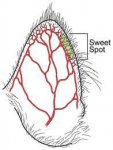
home testing. There's general information, suggestions, and videos. One point -- you don't want to actually poke the vein otherwise, it will look like a murder scene. You prick along the outer edge of the ear next to the vein. It also takes a while for the capillary bed along the edge of the ear to get built up so don't get frustrated if it's more of a challenge to draw blood. There's also no one "best" meter. We do, however, suggest getting a human meter. Many people here use the Walmart Relion brand meter. The strips are the least expensive available. Many vets will tell people to get a pet meter because a human meter won't be accurate for a cat. They also rarely know that strips for a pet meter cost about $1.00 each (vs 17 cents for Relion strips). The vets perceptions about meters is odd since many vets are now recommending continuous glucose monitors (e.g., Freestyle Libre) that are human meters.
It will be helpful if you start to get Pusheen used to testing. Spend some time scratching her ears and giving her treats (low carb treats!) for letting you give her the attention.
Also, you are correct. Getting your kitty started on a low carb diet makes very good sense. This is a link to a
food chart that has the carbohydrate information that you'll need to make choices. Fancy Feast pates (Classic) are good choices. You will have lots of options! We consider low carbohydrate to be less than 10% although, most members feed their cat a diet that's in the range of 5% (give or take). You'll want to have some medium carb (10 - 15%) and high carb food (over 15%) on hand once you start insulin.
As far as insulin, no matter what your vet suggests, you want to push for the insulins that are recommended by the American Animal Hospital Association guidelines. They recommend either Lantus (the generic is glargine) or Prozinc. Other insulins do not have the duration to compensate for a cat's fast metabolism. (Many vets like to recommend Vetsulin which is better for dogs and not so good for cats.)
Just one other question... How did your vet diagnose Pusheen? Was it by a glucose test in the office or on a lab test? Ideally, you want to have a fructosamine test. This test will give a result that is an average over the span of a few weeks and is reliable for diagnosing diabetes. The stress of being at the vet's office can easily raise blood glucose levels.
Please let us know if you have question. The members here are very generous with their information and help.