Hello, and welcome to FDMB.
And here's a huge reassuring (((HUG))) for you.
Very few people get the hang of hometesting right away. It can take a little getting used to, for both you and your kitty.
When my cat was diagnosed seven and a half years ago he was 7 kilos of pure 'attitude', so I knew I was only going to be able to test him if he agreed to it.
I started very gradually. I'd pop him up onto my desk, talk to him, hold his ear for a few seconds, and then give him a treat.
Then I'd pop him up onto my desk, set up the test kit, and then hold his ear, and give a treat.
Then I'd click the lancet pen against his ear, and give him a treat. etc.
When I came to do a test 'for real' I crumbled a few low carb treats for him to munch on, and quickly did the test while he was eating the treats. He wasn't bothered by having his ear pricked at all. I was amazed (and relieved...)
Tips I found most useful for actually getting blood are:
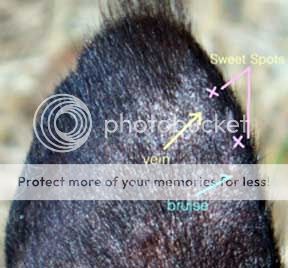
1. Putting a teensy weensy smidge of vaseline on the outer edge of the ear; it helps the blood to 'bead up' and stops it disappearing into the fur.
2. Being sure to put pressure against the inside of the ear (opposite side to where you're pricking). The lancet needs something to resist, otherwise it can just push the ear away. I press lightly on the inside of the ear with my finger, but some folks use a little cotton wool or folded tissue.
And always reward the kitty for a test attempt, whether the attempt is successful or not.
Here's a page of pics and info that may help:
http://www.sugarpet.net/bloodtst.html
You
will get the hang of this. Just give yourself a little time. Be patient. And remember to breathe...
Eliz