Libre advice

Kristy Marie

Member Since 2020
Hi! My cat, T-Burgs is going in to have the Libre implanted on Monday. He was diagnosed with Diabetes in October and has been consistently high when having his spot checks and all day curves done at our vet every week/other week. Our vet suggested we do this because his high readings could be due to his stress level at the hospital/clinic.... I guess we're just worried, and uninformed from actual kitty parents if it hurts him? If the readings are accurate? Any tips for keeping it on him? Any information and advice AT ALL would be greatly appreciated. Ahh! This kitty mama's anxiety is back, after I was finally feeling good about doing the actual insulin injections. I feel so bad for my sweetest handsome man. Thank you in advance for any thoughts!
 
:bighug:Hi :bighug:.

First, welcome! The Libre is not an implant so nothing is going inside of him requiring a procedure. It actually sits on top of the skin and a tiny filament will enter the skin and into what is called the interstitial fluid compartment to get glucose readings. The glucometer you use gets glucose reading from the blood compartment.
It is not painful for T-Burg :). I put them on my T at home. It is very quick. There is a “click” sound when the applicator has been applied and sometimes that startles a cat a little.

One question is do you know what the higher readings have been when he is getting them done at the vets office? If not, please ask :). The Libre readings range from 40 up to 500. Even if a cat is having many readings over 500 where the Libre will just read “HI”, the Libre is still worth using because it will pick up any & all fast drops as well as rises. It is able to pick up the dynamic speed & trends of changes vs only static glucose readings where often you may have no clue what came before or after a drop or a rise or how fast it was....all important info for determining not only if the insulin is consistent, but also if it has decent duration of action.

If you are capable of doing BG checks, you can choose to do a check if you see a HI or LO to get the info. That is an advantage of AT2 pet meters if you have a cat that is having BG above 500. The AT2 range is 20-750 and VERY accurate. Many human meters do not read up to 750.

In the end, the goal is to get a lot of data to see trends and again, the dynamic trends which are only able to be seen with a CGM vs BG readings alone.

The endocrinologists who validated the Libre with cats recommend placement on the neck/dorsal lateral neck & then put a Kitty Kollar over it
To provide additional protection. IF a cat is extremely thin (sick) sometimes (not often) an alternative location will have to be used. I will link a pic of my Ts Libre as example. Using very little or no glue with the adhesive that is already part of the sensor is key. They have found that it is more often the additional glue vs the CGM adhesive that will cause skin irritation resulting in them trying to scratch at the area.

Please ask if they are going to use a Libre 1 or the Libre2 WITH alarms. There are some key differences between the 2, including with the readings when they get into lower ranges.

Also, ask if they have created what is called an Institutional ID. This allows the vet to see what is happening & even be your trust co pilot throughout the process with understanding readings and then telling you what to do/not do, be concerned not concerned :).

I LOVE the CGM. I know it’s one more thing but trust me....it will be a valuable tool to be able to use moving forward. You’ve got this :bighug::bighug:!!!
 

Attachments

  • 90BA77AA-CCD5-450C-AFD5-E8F0EF2F8611.png
    90BA77AA-CCD5-450C-AFD5-E8F0EF2F8611.png
    513.2 KB · Views: 77
Hello and welcome. I'm glad you are going to be able to get some home data on your kitty's blood sugar. I had one cat who was consistently a lot higher at the vet due to stress. It's very important to do blood sugar tests when kitty is home. That way you can find out if the high numbers at the vet are due to vet stress, or the dose being too high or too low. We've had quite a few people here try the Libre on their cats, with varying degrees of success.

Learning to home test with a regular meter would be a very good idea too, though it doesn't have to be the AT. Our dosing methods were written using human meters. It doesn't matter if my cat is 500, 600, or 700 - they are all just too high. Let us know if you'd like to learn to test at home yourself. We've got lots of tips and videos to help. Besides being cheaper than the vet, it's a lot more convenient.
 
If you eventually decide to use the one protocol they use here (that was based on a paper used to try to help cats go into remission), it was based on BG data from human meters (run lower than AT2 readings), so in order to get guidance from members on dosing for that specific protocol, you will need to use a human meter :).

However, with respect to the AT2, especially early with DM diagnosis and especially if your cats BG is running over 500, it definitely, without question, matters what that specific number is. The reason being is that if your cat is is 500 vs 700 that is a 200 point spread. I’m currently helping with a cat who was dropping from 655 into the 100s (AT2) as well as sometimes dropping from 400s to 70. Between the AT2 & the Libre2 info used together, specialists were more quickly & easily able to understand exactly what was happening (Libre removes a lot of guessing about glucose changes—what happens in real time vs snippets of time) & they ended up being able to know that an insulin change was needed sooner vs later. This resulted in not having to mess around with the same insulin for months, which often results in a cat remaining in primarily higher #s for weeks or even months with only a few days or hours out of those higher #s :(...unregulated and in danger of a problem.

Hopefully, your cat is under 500 and this is all a
non issue:), but IF he is running above 500, getting the specific info regarding BG so that you know the extent of the drops with the insulin dosing is very, very important. Having the Libre will provide the data regarding the speed of the drops as well as the speed of any increases back to higher glucose......again, this is extremely important information that enables specialists to guide treatment more quickly & easily :).

I hope this was not confusing :bighug:! It is a process of learning :bookworm: & it does take time and does often cause some anxiety at first:nailbiting:. The BG checking, doing curves at home, using a Libre (and eventually you may even be putting them on him on your own :rolleyes:), adjusting dosing & following the protocol here (if you decide to do so) are all things that you will eventually be able to do with great confidence:bighug: (& support from others when needed :p). If you learn about & decide to use the protocol here, you will have plenty of support from members/moderators :).

Have a great Tuesday:D!
 
20201222_082640.jpg
Wow! I cannot express enough how thankful I am for you taking the time to give us so much information. I am just reading this so I will sit down soon and break it all down in to parts, so I can get a better understanding of all of this..... So, one thing is, T-Burgs readings were consistently high at the vet, no real drops and no significant increases. He was staying between 380 and 450 throughout the day. He is currently on 3 units of Lantus. They had upped him to 4 and he went into a zombie like (hypo?) state at home and we administered karo syrup to his gums. He was ok after about 30 minutes and ate some food. The initial emergency hospital vet said he could never get him quite regulated (he was hyperglycemic and we rushed him in, not knowing what was wrong). He was sent home on one unit after being there for 4 days. We are so new to this and although I googled what I could, I wish I had known the important questions to ask. Our normal vet gave us the link to this site and WHAT A LIFESAVER. I don't feel like such an idiot with all of this. I would cry in the beginning just learning to do the injections.
I am concerned with the comments from both vets "T-Burgs is kind of an enigma to us" and "He has us scratching our heads" are just a few.
They will also be doing a blood test on Monday for (oh my goodness, the name has slipped my mind!) Mega...... something. A syndrome caused by a tumor in the pituitary gland in brain? That'll be another thread, depending on the results. Ahh!
Now I'm rambling. Lol
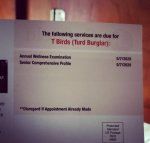
I really appreciate all of your help and I FOR SURE will be sitting down today and writing down all of these important questions you suggest I should ask our vet. I would have had ZERO idea and just sent him in to have the Libre put on. I will attach a file to show the scrip for what Libre it is. THANK YOU SO SO MUCH!
 

Attachments

  • 20201222_082640.jpg
    20201222_082640.jpg
    15.8 KB · Views: 86
  • 20201222_082654.jpg
    20201222_082654.jpg
    13.5 KB · Views: 72
Hello and welcome. I'm glad you are going to be able to get some home data on your kitty's blood sugar. I had one cat who was consistently a lot higher at the vet due to stress. It's very important to do blood sugar tests when kitty is home. That way you can find out if the high numbers at the vet are due to vet stress, or the dose being too high or too low. We've had quite a few people here try the Libre on their cats, with varying degrees of success.

Learning to home test with a regular meter would be a very good idea too, though it doesn't have to be the AT. Our dosing methods were written using human meters. It doesn't matter if my cat is 500, 600, or 700 - they are all just too high. Let us know if you'd like to learn to test at home yourself. We've got lots of tips and videos to help. Besides being cheaper than the vet, it's a lot more convenient.
Hi! Thank you so much for your response. I have just recently been turned on to this SUPER HELPFUL message board/site. I will definitely have to look into these videos and could use all the tips I can get! I am so worried that I will not do these readings correctly and I'm so worried about the pricking for blood part. It took me 2 months to be "okay" with the injections. Our vet said the Libre was a great alternative to this for a short period, however, I do get that for the long run we will have to learn to be ok with the regular meter testing and will appreciate any advice and tips you all could give. In the meantime, I will be watching a hundred videos on how it works. Thank you so much! Have a wonderful day and stay safe.
 
:bighug:Hi :bighug:.

First, welcome! The Libre is not an implant so nothing is going inside of him requiring a procedure. It actually sits on top of the skin and a tiny filament will enter the skin and into what is called the interstitial fluid compartment to get glucose readings. The glucometer you use gets glucose reading from the blood compartment.
It is not painful for T-Burg :). I put them on my T at home. It is very quick. There is a “click” sound when the applicator has been applied and sometimes that startles a cat a little.

One question is do you know what the higher readings have been when he is getting them done at the vets office? If not, please ask :). The Libre readings range from 40 up to 500. Even if a cat is having many readings over 500 where the Libre will just read “HI”, the Libre is still worth using because it will pick up any & all fast drops as well as rises. It is able to pick up the dynamic speed & trends of changes vs only static glucose readings where often you may have no clue what came before or after a drop or a rise or how fast it was....all important info for determining not only if the insulin is consistent, but also if it has decent duration of action.

If you are capable of doing BG checks, you can choose to do a check if you see a HI or LO to get the info. That is an advantage of AT2 pet meters if you have a cat that is having BG above 500. The AT2 range is 20-750 and VERY accurate. Many human meters do not read up to 750.

In the end, the goal is to get a lot of data to see trends and again, the dynamic trends which are only able to be seen with a CGM vs BG readings alone.

The endocrinologists who validated the Libre with cats recommend placement on the neck/dorsal lateral neck & then put a Kitty Kollar over it
To provide additional protection. IF a cat is extremely thin (sick) sometimes (not often) an alternative location will have to be used. I will link a pic of my Ts Libre as example. Using very little or no glue with the adhesive that is already part of the sensor is key. They have found that it is more often the additional glue vs the CGM adhesive that will cause skin irritation resulting in them trying to scratch at the area.

Please ask if they are going to use a Libre 1 or the Libre2 WITH alarms. There are some key differences between the 2, including with the readings when they get into lower ranges.

Also, ask if they have created what is called an Institutional ID. This allows the vet to see what is happening & even be your trust co pilot throughout the process with understanding readings and then telling you what to do/not do, be concerned not concerned :).

I LOVE the CGM. I know it’s one more thing but trust me....it will be a valuable tool to be able to use moving forward. You’ve got this :bighug::bighug:!!!
Also, what a beautiful fur baby you have!
 
Hi.

So, it sounds like they are running the IGF-1 test & trying to determine if he has hypersomatotropism (HST) which many still refer to as Acromegaly. The specialists are working on moving away from the Acro name because not all cats with HST, especially if it is caught early, will have acromegaly. Acromegaly refers to the clinical features (enlargement of paws, chin, skull, organs like the heart) that eventually develop in cats with HST. These happen because of the excessive secretion of growth hormone released by the tumor.

In the past, the standard plan was do the IGF-1 test 6-8 weeks after the cat has been treated with insulin. Today, if you are able to manage it from a financial standpoint, you can get the test done earlier than 6-8 weeks from starting insulin and IF that IGF-1 is elevated early that is helpful info. If the result is beyond 92 on the MSU test & into even the low 100s, there is no need to repeat the IGF-1 test at 6-8 weeks & the recommendation would be to run a CT scan to look for the tumor. Statistically speaking, a cat diagnosed with DM & into the 100s on the MSU, as per endo experts for HST, there is >95% chance that cat will have a pituitary tumor.

This is exactly what was done with the cat I am currently working with & sure enough—HST was confirmed by CT after an early IGF-1 came back at 145. The local vets wanted to wait but fortunately we had an expert who was able to confirm that the next step would be CT vs waiting & Re running the IGF-1. A partial MRI was also done because the plan for this cat is surgery to remove the tumor.

However, one step at a time :rolleyes: & once you get that test & results, you are able to take the next step in decision making. Otherwise, it can become very overwhelming:bookworm:. It is really excellent that your vet is asking to run the test :). I have been sharing with people that the current recommendation, & it is going to take some time for it to reach all vets, is to test EVERY new diabetic cat because for many cats, HST is what is causing the DM. In the past, it was only cases like T-Burgh or cats with acro features, high doses of insulin etc that were being tested:banghead:.

I am happy you are going to watch the videos to learn how to do home testing :bighug:. There are many tips and definitely reach out as you start trying if you run into issues and need/want ideas:). Trust me when I say we have all been through the learning process :nailbiting: & empathize with you :bighug:.
Members will be there to provide ideas or just support :).

Back to Libre. IF they use Libre2 (it has LO & HI alarms :)) you must have a windows based computer. The Libre2s app is still sitting at the FDA waiting on approval. It is approved in Europe but stuck in limbo here. What this means is that you must use the Libre2 reader to scan the sensor & in order for the info to be sent to your vet & to be put in LibreView, you must download the data from the reader to the computer. It is not complicated but if you only have an Apple computer, you will need to make sure you get the original Libre and not Libre2.
There are some vets who have no idea there is a Libre2 so it may not be an issue for you :). Worth asking about. Let me know & if you need help with getting everything in place I will be happy to walk you through it so you aren’t trying to figure it all out next week when they put the sensor on him:eek::cool:!

Looking forward to seeing T-Burghs picture:D!
 
First off, I cannot thank you enough for all the information you have taken your time to provide me with. I now have a list of questions for my vet, which she will appreciate, as she was the one to highly recommend this site and encouraged me to ask questions and come back with questions for her that I might not (definitely don't ) know to ask!
There is still so much I don't understand but I feel so much more optimistic that I will get it! With the help of "seasoned DB" purrents, such as yourself!
Secondly, hmmm. Ridiculous story behind "T-Burgs" name.
It is actually the nicer nickname, short for Turd Burglar....
We have 8 cats now. At the time Turd showed up in our yard, we had 4. We were "not taking in anymore!" However, after months of trying to locate owners, pulling ticks off of him, feeding him, etc., we decided to take him in "JUST TO GET HIM FIXED AND CHECKED OUT!"
We planned on fostering him and I put the word out that we were looking for a home for this amazingly awesome dude. I told my bf to come up with a Ridiculous name for him to have so we don't get attached to it. He was so pleased with himself when he blurted out "TURD BURGLAR".
Fast forward 2 weeks later, my friend is looking for a kitty playmate for her rescue cat and she takes Turd home.... for one night.
I gave her all my helpful tips on how to integrate new kitty with old kitty, but something went awry and she called in tears the next day "I don't know what to do! My cat chased "Ralphie" under the bed and he hasn't come out since last night! My son is so upset and my cat won't even look at me!"
Already invested and in love with Turd Burglar, my bf rushed over and went in to the bedroom he was in and said "Turd, where you at, bud?"
And with an excited meow, Turd emerged from under the bed and ran straight to the carrier that Fred was holding open..... So needless to say, He knew he was Turd Burglar and the rest is history.
 
Hi and welcome! You've gotten some really good advice already! This is the best place; it's really made a difference in how I've treated my cat. One thing I would add: if they're going to be testing IGF (for acromegaly), ask them to also check IAA (insulin autoantibodies) at the same time. The blood sample goes to the same lab as the IGF test, so it's not that expensive to add it on so long as you're already sending the sample there. IAA is another condition that can cause insulin resistance, and it makes sense to test for both of them at once. (I did this and it turned out my cat was positive for IAA but his IGF test was normal. If I had just done the IGF test it would have taken longer to figure out why we couldn't get his glucose down.) Best of luck!
 
What a funny story....and SO heart warming :bighug:! Love that your BF went right over to get his buddy back. How amazing of both of you to rescue another cat :). He is the most handsome man :D. We ended up with 3 black cats (tiny bit of white on chest or tummy) in a similar way except for the temporary home situation :cool:.
 
Back
Top