Introductions!

Emily & Lucy

Member Since 2025
Hello, I'm Emily! I'm joining this forum on behalf of my girl Lucy who was diagnosed with diabetes yesterday!

About Me:
Name: Emily
Age: 29
Gender: Nonbinary (She / They pronouns are fine!)
Location: Canada
Hobbies: Artwork and Video Games
Occupation: Receptionist at a Vet Clinic!

About Lucy:
Name: Lucifer
Age: 11
Breed: DSH Tortoiseshell
Sex: Female (I asked her gender and pronouns but I can't translate "meow" to English)

I've first started to notice symptoms about a year ago. First it was weight loss, but I chalked it up to "she's older now and life is stressful at this moment". Next it was appetite, but I reasoned it was the new food I switched her to. Next it was increased water intake, which had my bells ringing but I still delayed an appointment for the time being (I planned to book one soon, but I needed to get a stable income first)

Finally, she wet the bed while asleep and I couldn't take it anymore! I messaged my coworkers (that I've only known for a week!), and they rushed me into the clinic at 9pm on Christmas Eve to run some tests. Results came back that my girl was diabetic, and they set me up with some wet food, syringes, a bottle of insulin, and a bunch of helpful guides to research.

I have a proper exam for her on Sunday (Dec 28th) and I'm gonna ask so many questions - but if you know of anything good to write down let me know!
 
Welcome!

What insulin did the vet prescribe? Lantus and ProZinc are good insulin choices and are available in Canada.

What wet food are you feeding? Prescription food is not needed at all. Fancy Feast Gourmet pates and many other commercially available canned foods are fine for cats just as long as the carbs are under 10%. There's a Canadian food chart here: Links to FOOD CHARTS Home cooked and raw are also options..

You'll need to test your cat's blood glucose levels at home. Most people test from the ear but some use the newer CGMs. Some vets discourage testing for one reason or another but you don't need the vet's permission to test. A human blood glucose meter works just fine. You don't need an expensive pet specific meter.

There are lots of Canadian members here who can provide more Canadian-specific advice and tips, @Wendy&Neko @Karolina & Nestle @Briana + Binx @Kat & Trixie @Lara & Luciole (Lu)
 
Hello Emily & Lucy! You've come to the right place! :bighug:

What's going to help immensely is if you set up a spreadsheet to track how Lucy is doing, and information about her in your signature. You can find how to do that in helping us to help you.

For a blood glucose meter, I don't know where in Canada you're located - I'm in Quebec - but just go to any Shopper's Drug Mart, and get a Bayer Contour Meter. That's only one option but it's widely-used and something you can get immediately. It's crucial to be testing Lucy to see how she's doing, not only to keep her safe, but to give her the best chance possible to go into remission.

As @squeem3 mentioned, there's a lot of good food options for Lucy. Most important is no dry food because it's too high in carbs, and isn't really great for cats, period. And to avoid gravy foods, because they're medium to high carb also. Although when you get your hypo kit set up, you want to have a few cans of these foods on hand, in case you ever need them.

There's a lot of food options, though. A lot of people feed Fancy Feast pates. My cat, it turns out, does really well on limited ingredient food, so I give her RAWZ and Koha rabbit pate. Every cat is different so you'll find out what works best for Lucy. And as squeem3 mentioned, do not buy any of these "veterinary" foods from your vet's office. There are much cheaper, healthier options available.

It's usual to have a lot of questions, because there's a lot of info to absorb. But quickly it just becomes part of your daily routine. Often vets are not super-knowledgeable about feline diabetes, or have outdated ideas about how to manage it. So don't hesitate to question it, based on what you learn here. We often end up educating the vets.

Let us know any questions you have, and looking forward to getting Lucy regulated and doing well!

Only one thing we need: a picture! 😺 so we can ooh and aah over Lucy!
 
Welcome!

What insulin did the vet prescribe? Lantus and ProZinc are good insulin choices and are available in Canada.

What wet food are you feeding? Prescription food is not needed at all. Fancy Feast Gourmet pates and many other commercially available canned foods are fine for cats just as long as the carbs are under 10%. There's a Canadian food chart here: Links to FOOD CHARTS Home cooked and raw are also options..

You'll need to test your cat's blood glucose levels at home. Most people test from the ear but some use the newer CGMs. Some vets discourage testing for one reason or another but you don't need the vet's permission to test. A human blood glucose meter works just fine. You don't need an expensive pet specific meter.

There are lots of Canadian members here who can provide more Canadian-specific advice and tips, @Wendy&Neko @Karolina & Nestle @Briana + Binx @Kat & Trixie @Lara & Luciole (Lu)
Thank you so much! I messaged my coworker what type of insulin Lucy is on and she said it's Lantus!

She's currently being transitioned to the wet food my coworker gave me (Purina DM Wet Food) but Fancy Feast is what I usually get (it isn't her main food, but definitely a little snack as a treat!) so I'll definitely switch her over once I got things figured out. As far as I know, Fancy Feast (Original Pate!) is great but nothing with gravy in it?

I'll probably get a glucose monitor but funnily enough - my roommate is diabetic. I could definitely as for recommendations in regards to it for sure - she knows a lot!

Thank you for the warm welcome! I haven't really used forums so I apologize in advance if I break etiquette (I've read the articles, but some things are "common sense" and I overthink everything haha)
 
Hello Emily & Lucy! You've come to the right place! :bighug:

What's going to help immensely is if you set up a spreadsheet to track how Lucy is doing, and information about her in your signature. You can find how to do that in helping us to help you.

For a blood glucose meter, I don't know where in Canada you're located - I'm in Quebec - but just go to any Shopper's Drug Mart, and get a Bayer Contour Meter. That's only one option but it's widely-used and something you can get immediately. It's crucial to be testing Lucy to see how she's doing, not only to keep her safe, but to give her the best chance possible to go into remission.

As @squeem3 mentioned, there's a lot of good food options for Lucy. Most important is no dry food because it's too high in carbs, and isn't really great for cats, period. And to avoid gravy foods, because they're medium to high carb also. Although when you get your hypo kit set up, you want to have a few cans of these foods on hand, in case you ever need them.

There's a lot of food options, though. A lot of people feed Fancy Feast pates. My cat, it turns out, does really well on limited ingredient food, so I give her RAWZ and Koha rabbit pate. Every cat is different so you'll find out what works best for Lucy. And as squeem3 mentioned, do not buy any of these "veterinary" foods from your vet's office. There are much cheaper, healthier options available.

It's usual to have a lot of questions, because there's a lot of info to absorb. But quickly it just becomes part of your daily routine. Often vets are not super-knowledgeable about feline diabetes, or have outdated ideas about how to manage it. So don't hesitate to question it, based on what you learn here. We often end up educating the vets.

Let us know any questions you have, and looking forward to getting Lucy regulated and doing well!

Only one thing we need: a picture! 😺 so we can ooh and aah over Lucy!
Thank you so much! It's a bittersweet emotion to be here, but I'm glad there's a community :]

I'm located within Toronto! I'd go out and get a glucose monitor today but I'm looking at those snow squalls outside and I'm a little hesitant haha. My roommate's diabetic so I'll be sure to ask her for recommendations on glucose monitoring! She's away on vacation right now, but she's incredibly helpful.

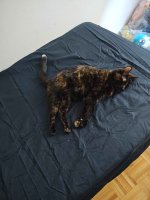
Oh yeah! Here's a Lucy Tax for everyone, notice her white tipped tail (which I affectionately call the "good spot" or her "beacon")
 

Attachments

  • IMG_20250930_123642400.jpg
    IMG_20250930_123642400.jpg
    380.7 KB · Views: 10
Hi Emily and Lucy and welcome! You're in the right place to get started. I'm just outside of Toronto so hit me up if you have any questions. We have many wonderful members here willing to help and guide you through this process. I'm happy you found us so fast.
🤗🐱❤️
I've recently moved to live within Toronto! (I won't give exact locations, but I can easily take line 1)

I used to live in Northern Ontario (From SSM to ThunderBay to a small town on HWY 11) so it's a big jump being in the city! Did you know Vets are incredibly scarce up north? I'm certainly glad I moved - imagine poor Lucy!
 
Lucy is a beauty!

As soon as you can, please get a glucometer. It's actually dangerous to be shooting blind - injecting insulin without finding out what effect it is having.
I don't mean to freak you out, but this is important, and could end up in another emergency visit.

So if you have the ability to take an Uber, for example, or get delivery, it would be a very good idea.
 
Fancy Feast pates are fine. Anything in gravy will be too high in carbs but keep a few cans on hand to use for a hypo. The high carbs will elevate blood glucose levels and stabilize them longer than honey / syrup. Take a look at the food chart (linked above) for other low carb brands of food you can feed.

Any blood glucose meter that uses a 0.3 ul drop of blood will work. Test strips can be pricey so many people choose a meter that has inexpensive test strips. Not sure if your roommate can help with this as she probably has diabetic supplies covered by health insurance. You can shop around online to see what test strips in Canada are generally priced at.

Most people use the Lantus pens instead of the 10 ml bottle. A single 3 ml pen lasts to the last drop which can be a few months later, depending on the cat's dose. The box of 5 pens is basically at least a year's supply. The 10 ml bottle may last anywhere from less than a month to a few months.
 
I know you're brand new to this, and having to take in a lot of info, but it's surprising that the vet gave you insulin, without emphasizing the importance of testing your cat's blood glucose levels. The vet gave you a great insulin, Lantus, and syringes, but the crucial part that's missing is monitoring your cat's blood glucose levels. This is key, and literally a lifesaver.

We want to help you get to the right amount of insulin to give Lucy, but it's extremely important that she doesn't go to low, which is called hypoglycemia, or a "hypo".

With cats that are starting out on insulin, we monitor their BG levels especially closely for the first several days, as there's no guarantee of how insulin will affect your cat. I'm assuming/hoping your vet started you off with what's the common standard dosage of 1 unit every 12 hours. What dosage did the vet advise you to give Lucy?

When you get your glucometer, please get a hypo kit together. These posts explain how to build your kit, and what hypos are, and what to do if your cat is experiencing one. But the most important thing is to prevent your cat from having one.

Sticky - jojo and bunny's HYPO TOOL BOX

Sticky - How to treat HYPOS - THEY CAN KILL! Print this Out!!
 
I know you're brand new to this, and having to take in a lot of info, but it's surprising that the vet gave you insulin, without emphasizing the importance of testing your cat's blood glucose levels. The vet gave you a great insulin, Lantus, and syringes, but the crucial part that's missing is monitoring your cat's blood glucose levels. This is key, and literally a lifesaver.

We want to help you get to the right amount of insulin to give Lucy, but it's extremely important that she doesn't go to low, which is called hypoglycemia, or a "hypo".

With cats that are starting out on insulin, we monitor their BG levels especially closely for the first several days, as there's no guarantee of how insulin will affect your cat. I'm assuming/hoping your vet started you off with what's the common standard dosage of 1 unit every 12 hours. What dosage did the vet advise you to give Lucy?

When you get your glucometer, please get a hypo kit together. These posts explain how to build your kit, and what hypos are, and what to do if your cat is experiencing one. But the most important thing is to prevent your cat from having one.

Sticky - jojo and bunny's HYPO TOOL BOX

Sticky - How to treat HYPOS - THEY CAN KILL! Print this Out!!
To be fair - I was squeezed in on Christmas Eve after hours only because I was going there to attend to the boarding animals. The person I was working with is a Vet Tech, and while our boss (the main Veterinarian) came in momentarily to read the charts, he wasn't there to give me the details - my Vet Tech co-worker was.

I did ask about the Glucometer and she said "it's important we try to stabilize it first" which, I trusted her judgment on. I'm no professional but I both work tomorrow (Saturday) and have a proper appointment the next day (Sunday) to triple check the oversight.

She's on the 1 unit / 12 hour method currently

I'm building up a Hypo Kit at the moment - my apartment has some of the items already (like high carb fancy feast), it's just missing the glucometer stuff!

My roommate (who's diabetic) told me she has a second glucometer I can use, it's just missing the strips. Unfortunately she's on vacation until tomorrow night but it's soon at the very least.
 
That's great that your roommate has a second glucometer you can get started with. You should be able to get the strips at any drugstore.

The "it's important we try to stabilize it first" comment is puzzling, because monitoring blood glucose levels is how you regulate diabetics.
 
That's great that your roommate has a second glucometer you can get started with. You should be able to get the strips at any drugstore.

The "it's important we try to stabilize it first" comment is puzzling, because monitoring blood glucose levels is how you regulate diabetics.
Yeah I'm confused too, they showed me how to take her glucose levels and everything so I assumed it'd be immediate. When I asked the appropriate time to test she said that so (shrugs)

I'm just tryna be careful for now - I'm keeping an eye on her behaviour like a mother hen! I'll let you know when I get to work tmrw and I'll definitely press for an answer about it.
 
They might not actually know - it sounds like it - but we do here, and you're in good hands.
And you're doing great, with already setting up your signature, and assembling your hypo kit.

Have a peek at the Lantus/Levemir/Biosimilars forum, and you'll see how people do their daily posts with their cats' BG number readings.

You don't have to post daily, but many people do, and it's especially important when you're new because the more experienced advisors will be able to help you so you become confident in your knowledge. The forum is full of very caring, friendly people.

And have a look at the stickies at the top of the forum, as they explain the nuts & bolts of daily life, like how to test, what the insulin depot is, stuff like that. The new to the group sticky is full of good info.

BTW, with my first diabetic cat, my experience getting started was similar to yours. Halfway good info, but then shrugs ;)
 
It sounds like you have some great resources at your disposal!! Like Lara suggested, I'd encourage you to read over the sticky notes at the top of the Lantus board. Those posts will provide you with a bit of background on how Lantus works as well as the methods we follow for dosing.

Just a note for your colleagues at work. They suggested an "OK" food option. The DM is "prescription" diabetic food. However, there was a class action suit in the US that the pet food manufacturers lost. Consumers pointed out that there is nothing in most of the prescription pet foods that require a prescription nor are those foods able to address any of the conditions the foods are supposed to help. For example, the prescription diabetic dry foods can be incredibly high in carbohydrates. It would be like a diabetes specialist telling their human patient that it's fine to consume ice cream, cake and candy.

This is a link to information on cat foods available in Canada. The list may be a bit dated. Lara may be able to fill you in on what's most easily available and low in carbs.
 
Hey Emily and Lucy, how did everything go at the vet today?

Thanks for mentioning the cat foods available in Canada list, Sienne and Gabby (GA), because that is indeed very out of date, and I should take it on as a project to update it and figure out accurate carb values using the converter. If I am smart enough, heaven help me.

The cat foods available in Canada list in no way reflects the actual variety of cat food available here, which is likely very similar to the USA, plus our own homemade brands, such as:
Nutrience
First Mate
Canada Fresh
Oven Baked Tradition
Boreal
Acana
Orijen
Kasiks
Go!
Now
Smack

I often buy cat food online from Homes Alive Pets, and here's their listing of Canadian-made canned cat foods. There are some very high-quality foods there. Global Pet Foods also has an excellent range of foods. You have some wonderful food stores available in Toronto.

But again, the foods we have available in Canada go far beyond what me make ourselves. For Lu, her food is made in the US but available here, and that's Koha Rabbit and RAWZ Rabbit, as well at the Vital Essential freeze-dried patties in rabbit and pork, with beef and duck fhe other cats.

I can't speak for all of the foods I've listed above, but I've seen First Mate mentioned as medium-high carb, so you want to avoid that.

Oven-Baked Tradition is under 10%, which we consider to be low carb, giving these values for their food:
Cat pâté Rabbit: Carbohydrate: 7.66%. 97 cal per 100g (Contains ocean fish and pork liver)
Cat pâté Boar: Carbohydrate: 7.75%. 97 cal per 100g (Contains pork liver)
Cat pâté Duck: Carbohydrate: 4.83%. 98.5 cal per 100g (Contains herring and ocean fish)
Cat pâté Quail: Carbohydrate: 7.94%. 89 cal per 100g (Contains turkey)

I hope this is helpful. As Sienne mentioned, the vet foods are problematic. It's not surprising that your colleagues would recommend them, as vets get their nutrition training from the big companies who get them to sell their food. But these diets are typically not make with good, or even appropriate ingredients, and are far more expensive than healthy food from a pet food store.
 
Hey Emily and Lucy, how did everything go at the vet today?

Thanks for mentioning the cat foods available in Canada list, Sienne and Gabby (GA), because that is indeed very out of date, and I should take it on as a project to update it and figure out accurate carb values using the converter. If I am smart enough, heaven help me.

The cat foods available in Canada list in no way reflects the actual variety of cat food available here, which is likely very similar to the USA, plus our own homemade brands, such as:
Nutrience
First Mate
Canada Fresh
Oven Baked Tradition
Boreal
Acana
Orijen
Kasiks
Go!
Now
Smack

I often buy cat food online from Homes Alive Pets, and here's their listing of Canadian-made canned cat foods. There are some very high-quality foods there. Global Pet Foods also has an excellent range of foods. You have some wonderful food stores available in Toronto.

But again, the foods we have available in Canada go far beyond what me make ourselves. For Lu, her food is made in the US but available here, and that's Koha Rabbit and RAWZ Rabbit, as well at the Vital Essential freeze-dried patties in rabbit and pork, with beef and duck fhe other cats.

I can't speak for all of the foods I've listed above, but I've seen First Mate mentioned as medium-high carb, so you want to avoid that.

Oven-Baked Tradition is under 10%, which we consider to be low carb, giving these values for their food:
Cat pâté Rabbit: Carbohydrate: 7.66%. 97 cal per 100g (Contains ocean fish and pork liver)
Cat pâté Boar: Carbohydrate: 7.75%. 97 cal per 100g (Contains pork liver)
Cat pâté Duck: Carbohydrate: 4.83%. 98.5 cal per 100g (Contains herring and ocean fish)
Cat pâté Quail: Carbohydrate: 7.94%. 89 cal per 100g (Contains turkey)

I hope this is helpful. As Sienne mentioned, the vet foods are problematic. It's not surprising that your colleagues would recommend them, as vets get their nutrition training from the big companies who get them to sell their food. But these diets are typically not make with good, or even appropriate ingredients, and are far more expensive than healthy food from a pet food store.
Thank you so much!! I'll look into these now as my homework for the night!
 
Back
Top